
Pickaxe Mountain: Iran's Underground Nuclear Facility in Trump's Crosshairs
The escalating confrontation between the United States, Israel, and Iran has drawn renewed international scrutiny to hidden nuclear infrastructure across the Zagros range, where geological depth and diplomatic maneuvering now shape the trajectory of potential conflict.
Geopolitical Context: US-Iran Strikes and Trump's Direct Threat
The 13th consecutive night of US strikes on Iran has intensified focus on Pickaxe Mountain, the suspected nuclear-linked facility 1.5km south of Natanz. President Trump stated on the Hugh Hewitt Show that the United States would "take out Pickaxe Mountain" with "a nice, big, fat shot right near the front door." This threat follows Operation Midnight Hammer in June 2025, during which US and Israeli forces struck Natanz, Fordow, and Isfahan but left Pickaxe Mountain untouched.
Regional dynamics reveal competing strategic goals. Iran seeks to preserve its nuclear infrastructure under granite cover, while the United States and Israel aim to prevent any path to weapons-grade material. Gulf states watch the escalation closely, concerned that prolonged conflict could disrupt energy flows and invite Iranian retaliation through proxies.
President Trump further remarked during the same interview that “We don't see any activity there. They're not doing very well with their nuclear situation. Every time we hear about it, we blow it up,” invoking the phrase “nuclear dust” to describe the potential scattering of enriched material across the Zagros range. These comments arrive against the backdrop of the Abraham Accords, whose framework of Arab-Israeli normalization has altered the regional calculus by encouraging Sunni Gulf states to coordinate more closely with Israel on containment measures while still hedging against Iranian retaliation that could imperil their sovereign wealth fund holdings in global energy markets.
Analysts note that the Accords have created new diplomatic channels for intelligence sharing, yet they have also sharpened Iran’s perception of encirclement, prompting accelerated hardening of underground sites. The interplay of these normalization efforts with ongoing military exchanges underscores how economic interdependence in the Gulf now intersects directly with nuclear risk management.
What Is Pickaxe Mountain: Location and Construction Details
Pickaxe Mountain, known in Persian as Kuh-e Kolang Gaz La or Hammer Mountain, lies in the Zagros Mountains 220km south of Tehran. Excavation began in 2020 after the US withdrawal from the JCPOA. The site features two deep tunnel complexes buried 80-100 meters beneath solid granite rock.
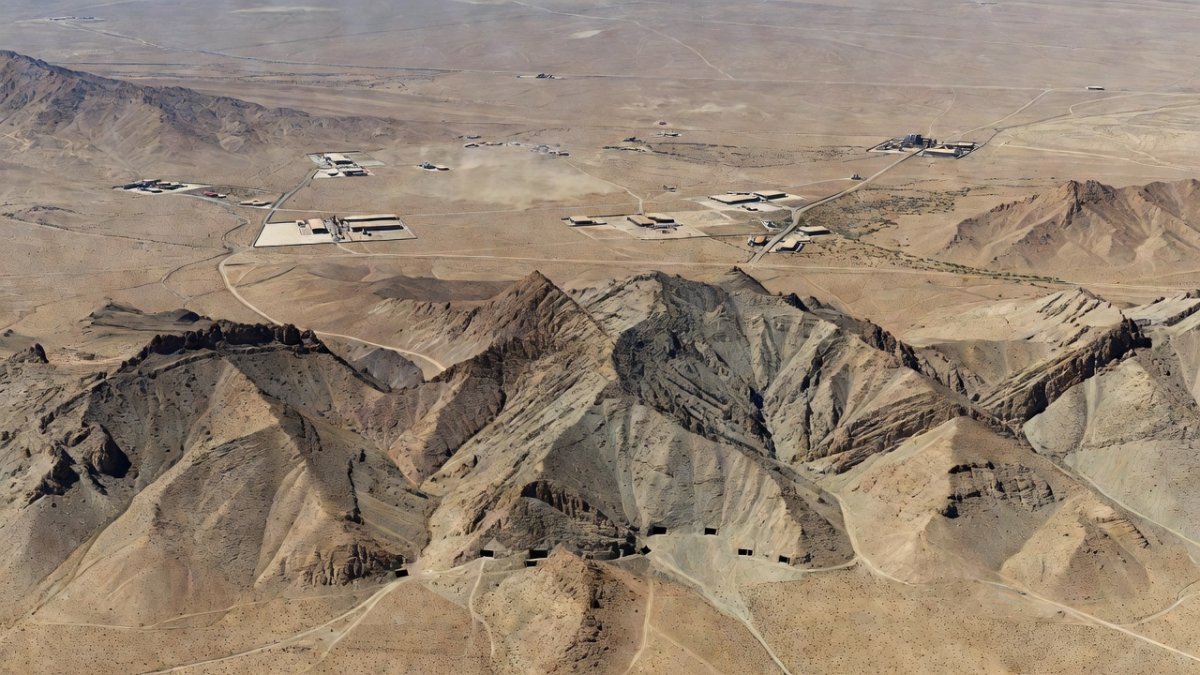
Iran maintains the facility serves only centrifuge assembly and manufacturing, not enrichment. Satellite imagery from the Institute for Science and International Security shows continued vehicle movement at western tunnel entrances, indicating ongoing construction despite international scrutiny.
The Zagros Mountains’ folded limestone and granite formations provide exceptional natural bunker protection, with seismic stability and minimal fracture zones that complicate both detection and penetration by conventional munitions. OSINT613 analysis of commercial satellite imagery confirms that “Pickaxe Mountain has been under construction for several years, but it has remained largely outside public attention,” allowing Iran to expand the complex with reduced risk of preemptive exposure.
Geological surveys indicate that the depth and rock density exceed those of earlier sites, offering layered defense against both kinetic strikes and potential cyber or electronic warfare aimed at disrupting ventilation and power systems essential for centrifuge operations.
The Nuclear Question: 60% Enrichment and IAEA Restrictions
Iran holds 440kg of uranium enriched to 60%, a stockpile that shortens the timeline to 90% weapons-grade material. IAEA Director General Rafael Grossi noted in March that Iran had signaled plans for nuclear activity at the site, describing it as part of a “systematic intention to put their most sensitive facilities underground.”
No IAEA inspector has entered Pickaxe Mountain. The New York Times reported in April that enriched material may have been transferred there. Israel assesses that Iran has quietly moved thousands of centrifuges into the complex, raising proliferation concerns beyond declared civilian use.
Ynet reporting corroborates Israeli intelligence assessments that “Israel believes Iran quietly moved thousands of centrifuges to Pickaxe Mountain,” a development that would allow rapid scaling of enrichment once the facility becomes operational. A September 2025 IAEA-Iran cooperation deal had been intended to grant inspectors limited access to new sites, yet Tehran subsequently cast doubt on implementation, citing security concerns and accusing the agency of politicization. The IAEA Board of Governors convened an emergency session in October 2025 and passed a resolution demanding full transparency on undeclared sites, though enforcement mechanisms remain limited without Iranian compliance.
These access restrictions compound verification challenges, as the 60 percent stockpile already represents a technical threshold from which further enrichment to weapons-grade levels could occur within weeks if political decisions shift. Regional experts emphasize that the absence of on-site monitoring creates a verification vacuum that heightens miscalculation risks for all parties.
Military Calculus: Why Pickaxe Survived and Bunker-Buster Limits
Pickaxe Mountain escaped targeting in both Operation Rising Lion and Operation Roaring Lion. The GBU-57 bunker-buster penetrates only 60 meters, falling short of the facility's 80-100 meter depth. Blaise Misztal of JINSA described the site as deeper, larger, and more fortified than Fordow, potentially the location for any jump to military-grade enrichment.
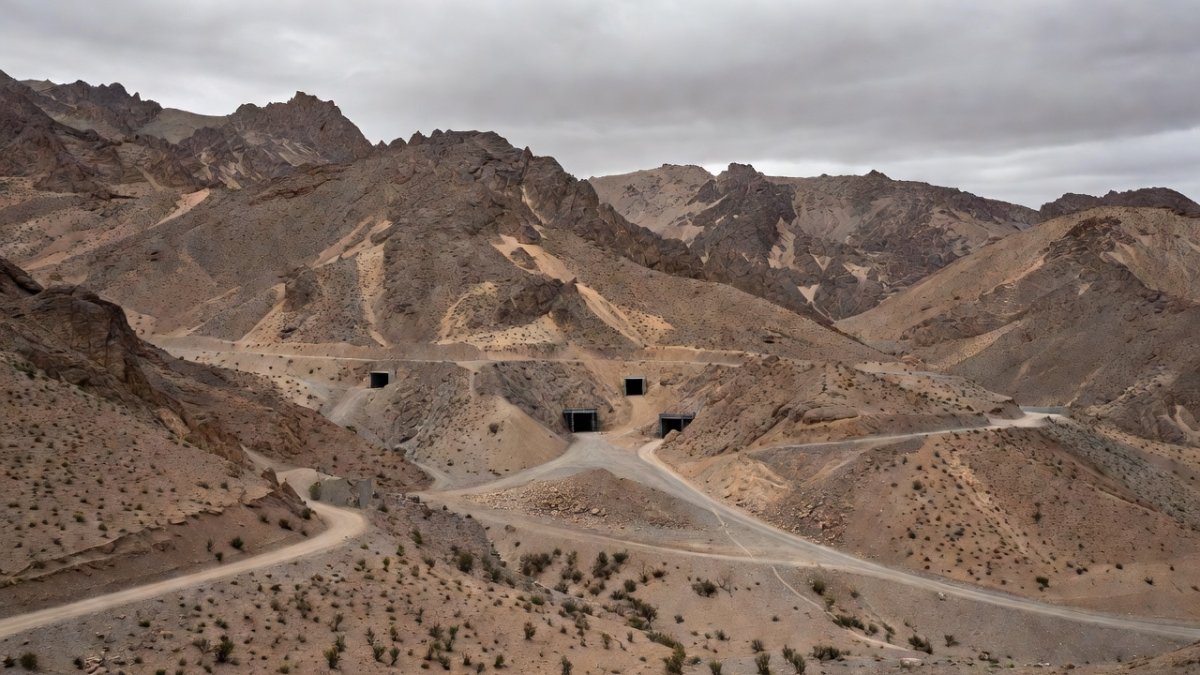
Mark Dubowitz of the Foundation for Defense of Democracies suggested that destruction might require chemical agents to render the tunnels inaccessible to humans for decades. An unnamed Iranian security official warned of a "devastating response" to any attack on the mountain.
Unlike Fordow, which was also carved into a mountain but sits at shallower depths, Pickaxe Mountain’s additional burial layers render existing U.S. and Israeli munitions insufficient without multiple sequential strikes or experimental payloads. Trump’s reference to leaving “nuclear dust” scattered across the landscape reflects awareness that partial destruction could disperse radioactive material rather than neutralize the program entirely.
The unnamed Iranian security official elaborated that “If Trump carries out his threats, we will respond destructively — and the price will be paid by American soldiers and his regional allies,” signaling Tehran’s intent to escalate through asymmetric means should the mountain be struck. Such statements complicate Israeli and American planning by raising the specter of wider regional involvement.
Regional Dynamics: Gulf Concerns and Energy Security
Gulf states view Pickaxe Mountain through the lens of energy market stability and Iranian leverage over the Strait of Hormuz. Secretary of State Marco Rubio cautioned that Iranian control of the strait would set a "dangerous precedent." Oil prices have already reached a one-month high amid the escalating US-Iran exchanges.
Sunni Arab governments balance support for non-proliferation with fears that sustained strikes could trigger wider Shia-Sunni proxy confrontations across Iraq, Syria, and Yemen. Turkey monitors the situation for any shift in great-power influence that might affect its own regional posture.
Brent crude has climbed above $92 per barrel, exposing Gulf sovereign wealth funds to volatility that could erode returns on diversified global portfolios. The UAE has expressed particular alarm over potential disruptions to its port infrastructure and LNG exports, while Saudi Arabia has quietly reinforced its eastern province defenses amid fears of Houthi-linked retaliation. Russian Foreign Minister Sergey Lavrov’s recent meeting with Iranian counterpart Abbas Araghchi at the Shanghai Cooperation Organization summit underscored Moscow and Beijing’s shared interest in preventing further escalation that might disrupt energy supplies or invite Western sanctions on their own regional projects. Both powers extended diplomatic cover by blocking stronger UN measures against Tehran.
These external alignments provide Iran with diplomatic cover while complicating unified international pressure, as Gulf states weigh the benefits of continued Abraham Accords integration against the immediate costs of supply-chain disruptions. Sustained prices above $90 could shave 0.4 percentage points from global GDP growth in 2026 according to IMF projections, amplifying pressure on energy-importing economies.
Strategic Implications: Escalation Risks and Next Steps
US Defense Secretary Pete Hegseth placed the cost of the ongoing campaign at $375 billion. If Pickaxe Mountain remains operational, Iran could accelerate enrichment beyond 60% with reduced detection risk. Analysts note that any future strike would require capabilities beyond current bunker-busters or acceptance of prolonged radiological and chemical effects.
The interplay between Israeli intelligence assessments, US military options, and Iranian hardening of underground sites points to continued tension. Proposed diplomatic tracks remain stalled while construction at the mountain proceeds and the IAEA continues to lack access.
The $375 billion expenditure already incurred raises questions about sustained American political will, particularly as domestic debates intensify over the trade-offs between military spending and economic priorities. Public opinion polls show declining support for open-ended operations once costs exceed $300 billion, potentially constraining future appropriations. Should construction at Pickaxe Mountain continue unchecked, the facility could emerge as the centerpiece of a more resilient Iranian enrichment architecture, forcing future decision-makers to contemplate options that include acceptance of a latent nuclear capability or acceptance of significant collateral environmental damage.
Regional powers are therefore recalibrating deterrence postures, with Gulf states accelerating investments in missile defense while quietly exploring back-channel communications to avert miscalculation. The convergence of geological advantages, intelligence gaps, and great-power maneuvering suggests that Pickaxe Mountain will remain a focal point of Middle East security dynamics for years to come.
By Malik Hassan, Staff Writer
This article was produced with AI-assisted research and editorial support. Reporting is based on sources cited in the article.
What's Your Reaction?
 Like
0
Like
0
 Dislike
0
Dislike
0
 Love
0
Love
0
 Funny
0
Funny
0
 Wow
0
Wow
0
 Sad
0
Sad
0
 Angry
0
Angry
0
Middle East Correspondent at Global1.News. Based in Beirut, covering politics, conflict, energy, and society across the Middle East. Brings context and depth to a region often reduced to headlines.











Comments (0)