
Internal PMO Polls Showed Broad Canadian Backing for Pipeline Initiative
Internal PMO Polls Showed Broad Canadian Backing for Pipeline Initiative Throughout the negotiations last fall and earlier this year between Ottawa and the provincial governments in Alberta and British Columbia, Prime Minister Carney has been guided by a series of internal government polls that showed a significant majority of Canadians were broadly in favour of his plan to pus
Internal PMO Polls Showed Broad Canadian Backing for Pipeline Initiative
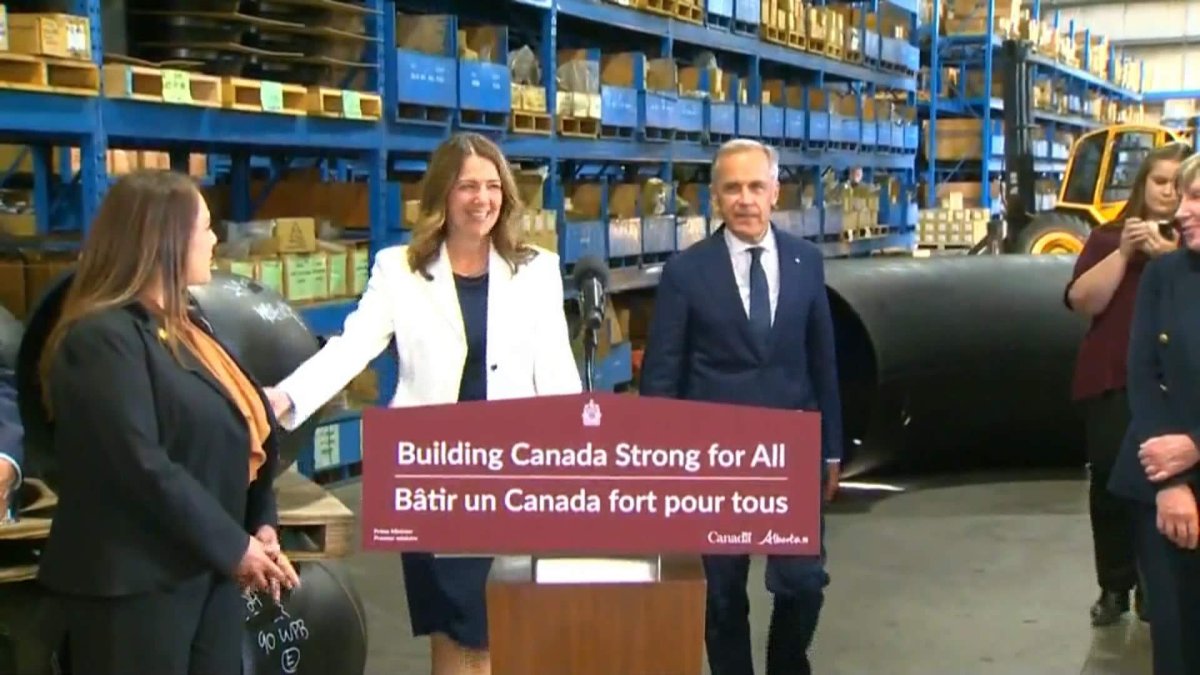
Throughout the negotiations last fall and earlier this year between Ottawa and the provincial governments in Alberta and British Columbia, Prime Minister Carney has been guided by a series of internal government polls that showed a significant majority of Canadians were broadly in favour of his plan to push a new oil pipeline to the Pacific Coast, according to documents obtained by Global News. These findings provided key insights into public sentiment at a critical juncture in federal-provincial energy discussions.
The Story
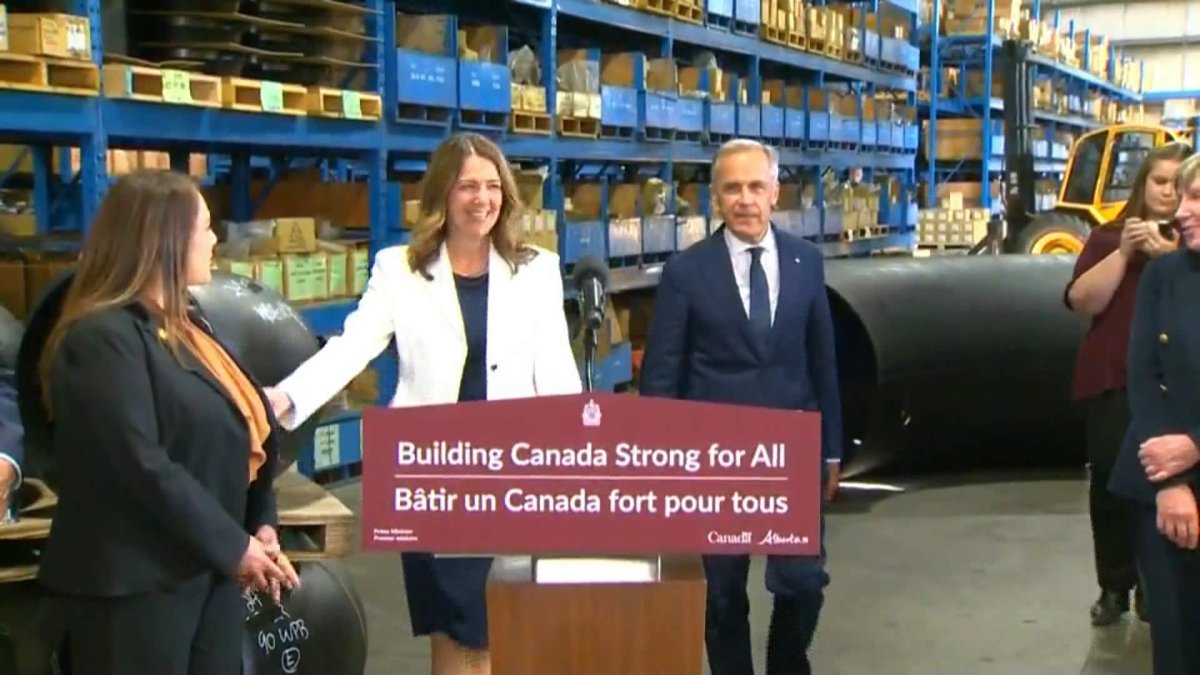
The internal polling conducted by the Privy Council Office offered Prime Minister Carney and his team detailed data on Canadian attitudes toward energy infrastructure. Documents obtained through access-to-information requests reveal that the polling occurred during active negotiations with Alberta and British Columbia. The results indicated consistent majority support across regions, which likely influenced the timing and framing of the November 27 announcement of the Memorandum of Understanding with Alberta. This agreement set the stage for the subsequent deal to advance a new oil pipeline to the Pacific Coast. The polling program delivered weekly snapshots that helped shape strategic decisions within the federal government.
These surveys were not isolated events but part of an ongoing effort to monitor opinion on resource development. With 2,000 respondents in the November rounds and 1,000 in the December follow-up, the data reflected a cross-section of national views. The findings underscored that support remained resilient even when questions highlighted potential environmental concerns. This resilience appears to have reassured the Carney government as it moved forward with the Canada-Alberta energy co-operation framework.
Origins of the PCO Weekly Polling Program
The Privy Council Office weekly polling program was first instituted by Prime Minister Justin Trudeau's staff in 2015. It supplies public opinion data to the prime minister, cabinet, senior Prime Minister's Office staff and deputy ministers on a range of issues. Although the program is administered by non-partisan bureaucrats at the PCO, it operates under the supervision of partisan political staff inside the PMO. Political staff work with bureaucrats to design each week's questions, ensuring the topics align with current government priorities.
Since its launch more than a decade ago, the program has become a routine tool for tracking sentiment on federal initiatives. It covers economic matters, social policies and, increasingly, energy and natural resource projects. The structure allows the government to gather timely feedback without relying solely on external pollsters. This internal mechanism has provided continuity across administrations, including the transition to Prime Minister Carney.
November Polling Results
Twice in the middle of last November, the Privy Council Office included several questions in its weekly polling program to determine how Canadians felt about a new oil pipeline and other energy and natural resource projects. In two successive polls for the weeks ending Nov. 23 and Nov. 30, the PMO-supervised poll asked a simple question of 2,000 Canadians in a live-agent telephone poll: Do you support new or expanded oil pipelines? Among those surveyed, 67 per cent said they supported a new or expanded oil pipeline.
Even more important from a political perspective, a majority in every region of the country said they supported an oil pipeline expansion, including 64 per cent support in B.C. and 56 per cent in Quebec. These regional breakdowns demonstrated that backing was not confined to traditional energy-producing provinces. The data suggested that public opinion had shifted toward acceptance of expanded infrastructure as a means to increase energy exports.
The Leading Question and Its Results
The PMO-supervised pollster went deeper and asked what, to many pollsters, would be considered a leading question in which the question might be designed to skew the response. The leading question, in this case, appeared to be skewed towards opponents of a new oil pipeline. The question put to survey participants in this live-agent telephone poll was: "One way of increasing energy exports to overseas markets is to build new pipelines. However, despite their contribution to the economy, some point out that building pipelines involves cutting corridors across ecosystems, with impacts on nature and habitat, and pipelines come with risks of leaks and spills. Given that, do you support new or expanded pipelines?"
And yet, even with that leading question, support for a new oil pipeline was only slightly diminished, with 62 per cent saying they still supported a pipeline. And again, there was a majority in every region, including Quebec, who supported an oil pipeline. The modest drop from 67 per cent to 62 per cent indicated that the environmental framing did not substantially erode overall approval. This outcome provided the Carney government with evidence that core support remained steady despite potential counter-arguments.
December Follow-Up Survey
Carney's PMO would have had some of that data when, on Nov. 27, it announced the Memorandum of Understanding with Alberta that would lead to this week's agreement to build a new oil pipeline to the Pacific. The week after announcing the Canada-Alberta MoU, the PMO-supervised pollsters wanted to be sure they were on the right track when it came to public opinion. From Dec. 1-7, another 1,000 Canadians were surveyed and, this time, they were asked: "As you may have heard, Canada and Alberta have signed a new energy co-operation agreement outlining the conditions that must be met for a new oil pipeline to the Pacific. In your opinion, is the Government of Canada's decision to sign this new agreement with Alberta a good or bad decision for the country?"
It was a win again for the Carney government, with 53 per cent of respondents overall approving and a plurality in every region, including B.C. and Quebec, agreeing it was a good decision for the country. The December results reinforced the earlier findings by focusing specifically on the intergovernmental agreement rather than the pipeline concept in isolation. This sequential approach allowed the government to test both general and specific policy support.
Implications for Federal-Provincial Relations
The polling data arrived during sensitive negotiations involving Ottawa, Alberta and British Columbia. Strong national and regional support likely encouraged federal officials to proceed with the energy co-operation agreement. The consistent majorities in British Columbia and Quebec suggested that the pipeline plan could navigate provincial concerns more effectively than previous projects. Federal-provincial relations in the energy sector have often been marked by tension, yet these figures pointed to a window of public tolerance.
By grounding decisions in weekly polling, the Carney government demonstrated an evidence-based approach to resource policy. The results highlighted opportunities for collaboration across jurisdictions while acknowledging differing regional priorities. This dynamic continues to shape discussions on how best to balance economic development with environmental considerations in a federation.
Pipeline Politics and Canadian Energy Policy
Canadian energy policy has long centred on the challenge of moving resources to tidewater markets. The internal polls provided fresh context for ongoing debates about pipeline expansion. With 67 per cent initial support dropping only to 62 per cent under more critical questioning, the data indicated durable public backing for infrastructure that could increase overseas exports. This resilience matters in a country where energy contributes significantly to federal and provincial revenues.
The findings also connect to broader economic realities, including labour market impacts in resource sectors and the need for stable investment frameworks. As Canada navigates transitions in global energy demand, such polling helps inform how federal policy can align with provincial interests in Alberta and British Columbia while addressing concerns in other regions.
What Happens Next
The Canada-Alberta agreement now moves toward implementation, guided in part by the polling insights gathered last fall. Officials will monitor ongoing public opinion as regulatory processes advance. The Privy Council Office program is expected to continue supplying weekly data that can track shifts in sentiment as construction planning proceeds. Stakeholders in industry, environmental organisations and provincial capitals will watch closely for any changes in the 53 per cent approval level recorded in December.
Future surveys may explore additional dimensions such as economic benefits, environmental safeguards and Indigenous consultation outcomes. The Carney government has signalled its intent to maintain transparency around these metrics while advancing the pipeline project. This measured approach reflects the polling program's role in supporting informed decision-making at the federal level.
Tags: energy policy, oil pipelines, federal-provincial relations, Privy Council Office, public opinion polling, Alberta, British Columbia, Quebec, Canadian economy
By Alex Thompson, Staff Writer
This article was produced with AI-assisted research and editorial support. Reporting is based on sources cited in the article.
What's Your Reaction?
 Like
0
Like
0
 Dislike
0
Dislike
0
 Love
0
Love
0
 Funny
0
Funny
0
 Wow
0
Wow
0
 Sad
0
Sad
0
 Angry
0
Angry
0

Canada Correspondent at Global1.News. Based in Toronto, covering Canadian politics, energy, trade, and US-Canada relations. Provides the Canadian perspective on North American and global affairs.













Comments (0)