
Trump Section 301 Tariffs Hit Mexico With 10% Duties
In a recent DW News report on the new USTR measures, the Trump administration's July 23 announcement detailed Section 301 tariffs that took effect July 24 2026 on 60 economies representing 99.4 percent of US imports. The policy replaces the expiring temporary 10 percent global tariff under Section 122 of the Trade Act of 1974 and follows the Supreme Court's February 2026 Learning Resources v. Trump ruling that struck down earlier IEEPA-based tariffs.
In a recent DW News report on the new USTR measures, the Trump administration's July 23 announcement detailed Section 301 tariffs that took effect July 24 2026 on 60 economies representing 99.4 percent of US imports. The policy replaces the expiring temporary 10 percent global tariff under Section 122 of the Trade Act of 1974 and follows the Supreme Court's February 2026 Learning Resources v. Trump ruling that struck down earlier IEEPA-based tariffs. Mexican families along the border and in rural heartlands now brace for ripple effects that touch everything from factory shifts to avocado harvests.
Mexico Braces for 10% Forced Labor Tariffs on Key Exports
Mexico City, Mexico — The new duties land squarely on maquiladoras and farm communities already woven into North American supply chains, raising costs for auto parts, electronics, and fresh produce headed north. Workers and growers alike watch as the 10 percent rate compounds existing tariffs, threatening the steady paychecks and seasonal income that sustain colonias and ejidos from Tijuana to Michoacán.
Legal Basis Shifts from IEEPA to Section 301
The USTR under the Trump administration chose Section 301 of the Trade Act of 1974 as the legal foundation after the Supreme Court invalidated IEEPA tariffs in February 2026. This change allows targeted duties on countries accused of weak enforcement against forced labor imports. The July 23 announcement specified that 17 trading partners including Mexico, Canada, the UK, the EU, India, and Indonesia face 10 percent duties because they maintain forced labor import prohibitions on paper but allegedly fail to enforce them effectively.
Seventeen partners received the lower rate after showing some progress on paper, yet USTR still flagged enforcement gaps that now trigger the new duties. The shift gives the administration a more durable tool while keeping pressure on trading partners to tighten labor oversight at ports and factories.
Rate Structure and Mexico's 10 Percent Tariff
Ten additional countries that agreed to address forced labor through trade agreements also received the 10 percent rate. Forty-three other economies face 12.5 percent duties. India secured the lower 10 percent rate after adopting additional enforcement measures since June. The tariffs apply on top of existing duty stacks and affect billions in cross-border commerce between the United States and its top trading partner, Mexico.
Mexico specifically received the 10 percent rate because it has a forced labor law yet USTR claims enforcement remains ineffective. USMCA-compliant goods may qualify for exemptions if they meet rules-of-origin requirements, offering limited relief for some auto and electronics supply chains. Smaller exporters without dedicated compliance teams now scramble to document origin before shipments cross the border.
Maquiladora Workers Feel the Squeeze in Border Colonias
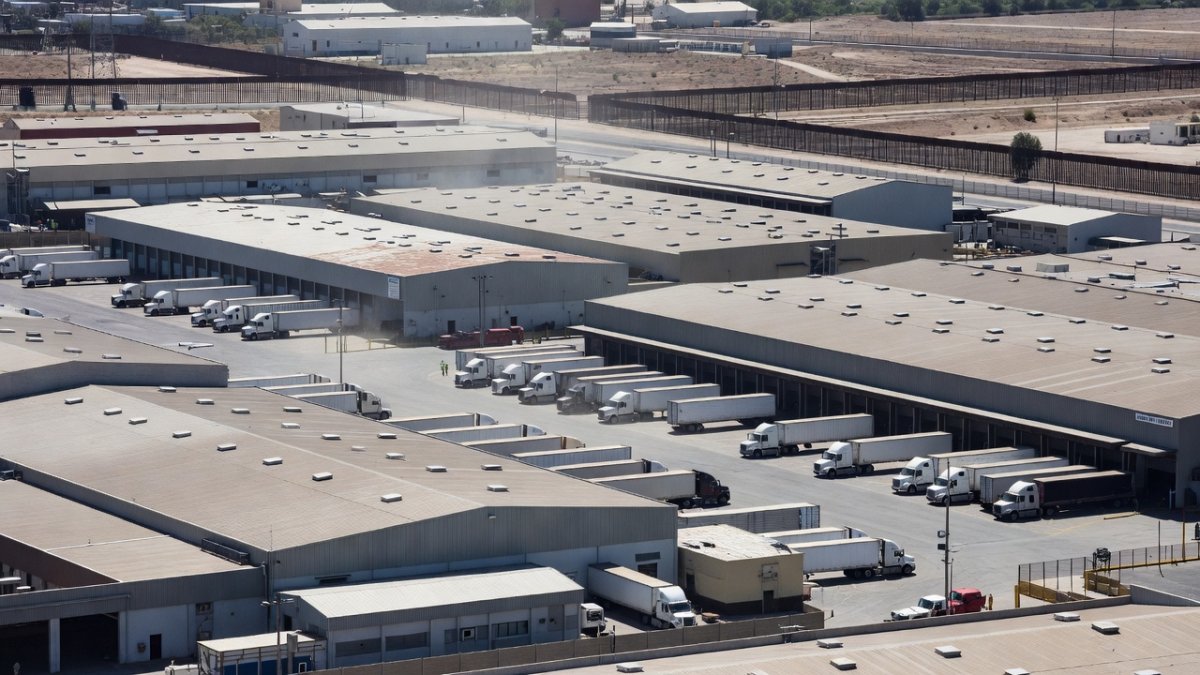
In the bustling maquiladora hubs of Tijuana and Ciudad Juárez, workers at plants operated by General Motors, Ford, Bosch, Flex, and Lear Corporation are already feeling the squeeze from renewed tariff threats, with production lines idling as export orders slow. The IMMEX program, which currently oversees 5,821 active initiatives across the border region, has long supported these assembly operations, yet recent data from CONEVAL highlights how over 40 percent of manufacturing households in these colonias live below the poverty line, a figure that could spike if tariffs disrupt the steady flow of components.
Families in the colonias surrounding Ciudad Juárez and Tijuana now face reduced shifts at plants producing auto parts and appliances for US markets. Workers who assemble components for General Motors and Ford suppliers report shorter hours as companies calculate the added 10 percent cost. Local economies thrive on the multiplier effect, where maquiladora wages sustain not just viviendas in neighborhoods like Anapra but also transportation cooperatives and food vendors serving thousands of shifts each week.
Compared to the 2018-2020 tariff episodes under previous administrations, today's pressures hit harder because supply chains have grown even more intertwined, leaving fewer alternatives for the estimated 1.2 million border workers. In Matamoros and Nogales, families recount how a single plant closure ripples outward, forcing jornaleros into informal gigs while children drop out of school to help with household costs.

Agricultural Exports and Campesino Livelihoods at Risk
Tomato, avocado, and berry growers in Michoacán and Jalisco see higher costs for shipments to US supermarkets. Many small-scale farmers who sell through ejido cooperatives worry that the new duties will reduce orders from US buyers already navigating stacked tariffs. Farmers in Michoacán's avocado groves and Sinaloa's tomato fields are voicing deep concern as tariffs threaten exports of aguacate, jitomate, berries, and even tequila from Jalisco, crops that generate billions in annual revenue under USMCA rules.
Small-scale producers operating through the ejido system, many of whom rely on seasonal jornaleros for harvests, worry that phytosanitary inspections and new tariff layers will compound existing restrictions, squeezing already thin margins. The interaction with USMCA's seasonal labor provisions adds another layer of complexity, where day laborers from Michoacán and Jalisco often cross for peak seasons only to return with remittances that sustain local schools and clinics.
Sheinbaum Administration Explores Diplomatic and Legal Options
President Claudia Sheinbaum's administration has begun consultations with the Secretaría de Economía and the SRE to explore USMCA dispute mechanisms and bilateral talks. Officials in Palacio Nacional note that Mexico remains the United States' top trading partner and that the tariffs risk disrupting integrated North American supply chains. President Claudia Sheinbaum's administration is actively coordinating through the Secretaría de Economía and the Secretaría de Relaciones Exteriores to explore USMCA Chapter 31 dispute mechanisms, building on Andrés Manuel López Obrador's legacy of pragmatic yet firm negotiations with Washington.
Morena party leaders are debating how to balance assertive diplomacy with domestic economic priorities, while INEGI projections warn of potential GDP drags if tariffs persist beyond initial months. Business chambers like Concanaco, Coparmex, and the Consejo Coordinador Empresarial have joined these efforts, urging swift bilateral talks to protect integrated supply chains. These moves reflect a broader strategy rooted in Mexico's long history of navigating trade tensions, with officials emphasizing dialogue over escalation to safeguard the livelihoods of millions.
Critics Question Whether Tariffs Combat Forced Labor or Mask Protectionism
Democrats in Congress and Mexican labor groups argue the measures represent protectionism disguised as human rights enforcement. They point out that the tariffs add costs without addressing root causes of labor violations inside Mexico or other targeted nations. Critics in both countries argue that the tariffs represent protectionism dressed in human rights rhetoric, with Democratic voices in the US highlighting divisions within trade policy circles over their true intent.
Mexican labor rights groups and organizations like the Centro de Reflexión y Acción Laboral point to the irony of forced labor claims when maquiladora conditions often involve long hours and limited protections, urging reforms that address root causes rather than punitive measures. Questions linger about effectiveness, as evidence from past sanctions shows limited impact on labor practices while harming vulnerable workers on both sides of the border. Civil society in Mexico calls for collaborative solutions that uplift communities instead of isolating them, preserving the cultural and economic ties that bind North American neighbors.
What to Watch For
USMCA-compliant shipments may still avoid the new duties if documentation satisfies customs review, yet many smaller exporters lack the resources to prove origin quickly. Families in border communities and rural pueblos now track every shipment announcement from the USTR while local governments in Sonora and Baja California prepare support programs for displaced workers. Community leaders in industrial states are watching closely, hopeful that legal avenues will yield results before rural and border economies suffer deeper setbacks.
The policy's long-term effects on daily life in Mexican manufacturing hubs will depend on exemption approvals and any future adjustments by the Sheinbaum administration. Mexican communities along the frontier, deeply tied to these industries, face not just job losses but a broader erosion of the social fabric that has defined border life for generations. Human stories emerge from packing sheds where workers describe the anxiety of watching prices fluctuate, knowing their children's futures hinge on stable agricultural trade.
By Rosa Martinez, Staff Writer
This article was produced with AI-assisted research and editorial support. Reporting is based on sources cited in the article.
What's Your Reaction?
 Like
0
Like
0
 Dislike
0
Dislike
0
 Love
0
Love
0
 Funny
0
Funny
0
 Wow
0
Wow
0
 Sad
0
Sad
0
 Angry
0
Angry
0

Latin America/Andes Correspondent at Global1.News. Based in Bogota, covering politics, environment, energy, and social movements across the Andean region. Passionate about environmental journalism and communities protecting their land.











Comments (0)