
Slavutych and Futaba Forge Nuclear Disaster Cooperation Agreement
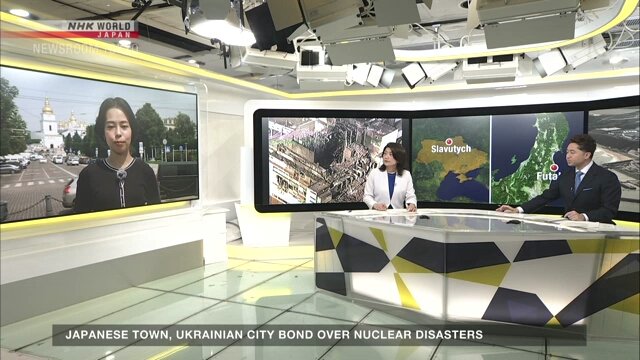
In a notable step connecting communities shaped by the world’s only INES Level 7 nuclear accidents, the Ukrainian city of Slavutych near Chornobyl and Japan’s Futaba Town in Fukushima Prefecture have signed a formal cooperation agreement. The June 26 2026 online signing enables direct exchanges on reconstruction, environmental monitoring, resident relocation and renewable energy without relying on national intermediaries.
In a notable step connecting communities shaped by the world’s only INES Level 7 nuclear accidents, the Ukrainian city of Slavutych near Chornobyl and Japan’s Futaba Town in Fukushima Prefecture have signed a formal cooperation agreement. The June 26 2026 online signing enables direct exchanges on reconstruction, environmental monitoring, resident relocation and renewable energy without relying on national intermediaries. This municipal link arrives as both towns mark major anniversaries amid ongoing challenges from the 1986 and 2011 disasters.
Slavutych and Futaba: A Nuclear-Linked Cooperation Agreement
Tokyo, Japan – July 24, 2026 — Two municipalities half a world apart, each shaped by the most severe nuclear accidents in history, have found common ground in a cooperation agreement that bypasses national diplomacy to exchange practical lessons on recovery, environmental restoration, and renewable energy.
The Slavutych-Futaba Agreement
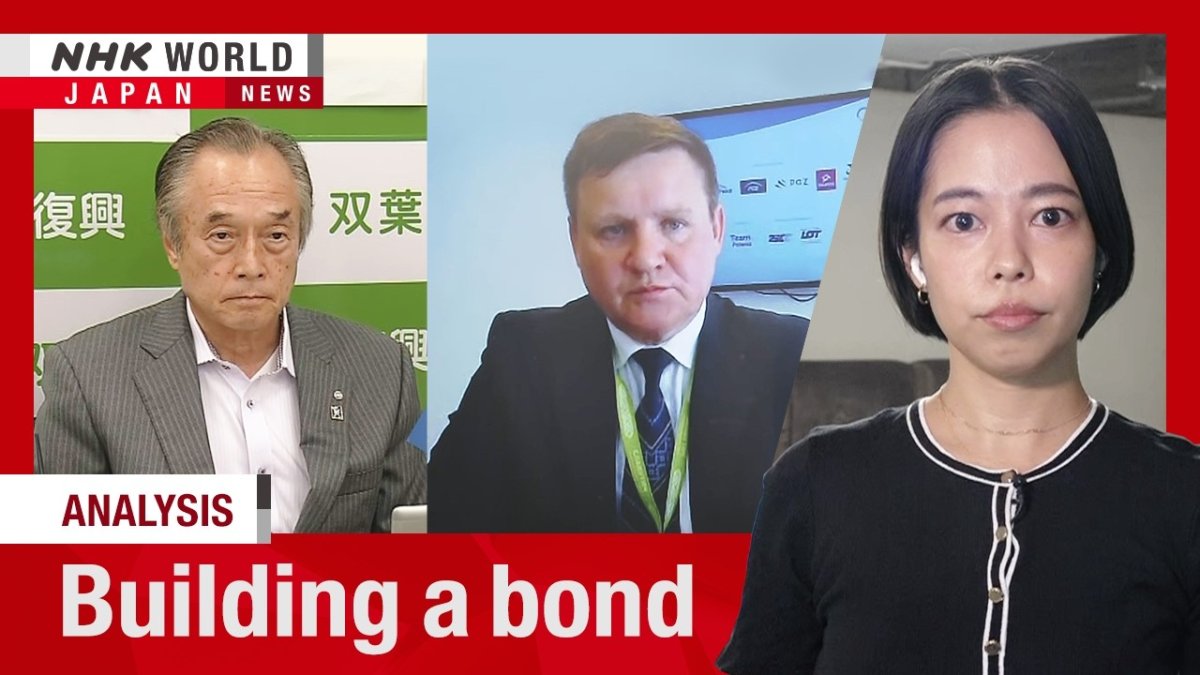
The Ukrainian city of Slavutych near the Chornobyl nuclear power plant and Futaba Town in Fukushima Prefecture concluded a formal cooperation agreement on June 26 2026. Mayors Yurii Fomichev and Izawa Shiro completed the signing through an online ceremony because of Russia’s ongoing invasion of Ukraine. The pact focuses on reconstruction efforts, lessons from nuclear accidents, resident exchanges, environmental conservation and renewable energy promotion.
Mayor Fomichev stated that Slavutych has sought to offer whatever cooperation it can since the tragedy. Mayor Izawa expressed hope that reconstruction in both municipalities will advance through shared experiences and educational and cultural exchanges. The agreement marks a direct municipal link between two communities that experienced the world’s only INES Level 7 nuclear accidents.
Two Nuclear Disasters, 15 Years Apart
The Chornobyl accident occurred in April 1986, placing 2026 at the 40-year mark. The Fukushima Daiichi accident took place in March 2011, placing 2026 at the 15-year mark. Both events received the highest International Nuclear Event Scale rating of Level 7, yet they differed in reactor design, immediate causes and long-term management approaches.
Slavutych lies roughly 50 kilometers northeast of the Chornobyl plant inside Ukraine’s Kyiv region. Futaba Town sits inside the Fukushima Prefecture evacuation zone that was established after the 2011 tsunami and reactor failures. The new agreement creates a channel for both towns to compare recovery timelines and resident relocation outcomes without relying on national government intermediaries.
The 40-year mark since the Chornobyl accident and the 15-year mark since the Fukushima Daiichi accident in 2026 underscore how recovery processes unfold across vastly different national contexts. Slavutych officials have drawn on four decades of experience managing exclusion zones and resident relocation, while Futaba Town has applied lessons from a more recent event that required rapid establishment of evacuation protocols following the tsunami and reactor failures. These timelines allow both municipalities to compare how long-term environmental monitoring and community rebuilding evolve when national governments face competing priorities, including infrastructure repair and public health tracking.
The agreement creates direct channels for exchanging data on evacuation zone management without intermediaries, highlighting differences in how each site has handled ongoing radiation risks. Slavutych’s position 50 kilometers from the Chornobyl plant has shaped its focus on sustained agricultural recovery and worker safety programs, whereas Futaba’s location inside the Fukushima Prefecture evacuation zone has emphasized gradual infrastructure restoration. By linking these experiences, the pact supports practical comparisons of relocation outcomes and environmental conservation measures that both communities have pursued since their respective INES Level 7 events.
Regional implications extend to how each town integrates renewable energy into post-accident planning. The 2026 timing coincides with dual anniversaries that encourage renewed attention to decommissioning timelines and resident health monitoring, areas where Slavutych and Futaba can share operational insights developed over their respective recovery periods. This municipal-level exchange supplements broader international frameworks by focusing on localized outcomes rather than national policy alone.
Japan’s Nuclear Policy and Fukushima Reconstruction
Japan’s Ministry of Economy, Trade and Industry continues to coordinate decommissioning work at Fukushima Daiichi through TEPCO. Futaba Town has pursued gradual return of residents alongside infrastructure rebuilding that includes new public facilities and industrial sites. The 2026 agreement adds a municipal-level dimension to these national efforts by linking directly with a foreign counterpart that faced a comparable scale of displacement.
Green Transformation policies promoted by METI emphasize expanded renewable capacity in Fukushima Prefecture. The Slavutych partnership introduces opportunities for joint study of solar, wind and biomass projects that could support both communities’ post-accident economic plans. Japanese officials have noted that such exchanges can supply practical data on community-scale energy systems that complement larger grid projects.
Ukraine’s Nuclear Lessons Amid Wartime
Russian forces occupied the Chornobyl site early in the 2022 invasion, creating additional radiation monitoring and safety risks that Ukrainian authorities had not previously encountered. Slavutych officials have since worked with the International Atomic Energy Agency on enhanced safeguards and emergency protocols. The 2026 agreement allows Futaba representatives to learn from these updated wartime procedures while sharing Japan’s accumulated experience in long-term environmental monitoring.
Ukrainian nuclear operators continue to maintain the six reactors at the Rivne, Khmelnytskyi and South Ukraine plants under IAEA oversight. The municipal link with Futaba provides a secondary channel for technical dialogue that operates alongside formal government-to-government routes. Both sides have identified resident health monitoring and soil remediation techniques as priority topics for initial information exchange.
Cross-Border Nuclear Disaster Cooperation
The Slavutych-Futaba pact represents one of the few direct municipal agreements between communities affected by separate INES Level 7 events. It bypasses some of the diplomatic constraints that can slow national-level talks during active conflict. Japanese and Ukrainian specialists can now compare data on evacuation zone management, psychological support programs and agricultural recovery without requiring high-level political approval for each exchange.
Global nuclear safety bodies have previously encouraged such city-to-city links as supplements to IAEA and OECD Nuclear Energy Agency frameworks. The agreement’s emphasis on renewable energy also aligns with broader international goals of reducing reliance on aging nuclear infrastructure in regions that have already experienced major accidents. Observers in Tokyo note that the partnership could serve as a model for other Japanese municipalities seeking overseas counterparts with similar post-disaster profiles.
The Slavutych-Futaba pact operates alongside formal government-to-government routes by providing a secondary channel for technical dialogue on resident health monitoring and soil remediation. Russian forces occupied the Chornobyl site early in the 2022 invasion, introducing radiation monitoring and safety risks that Ukrainian authorities addressed through enhanced IAEA safeguards and emergency protocols. Futaba representatives can now examine these updated wartime procedures while contributing Japan’s accumulated experience in long-term environmental monitoring.
Global nuclear safety bodies have encouraged city-to-city links as supplements to IAEA and OECD Nuclear Energy Agency frameworks, and the agreement’s emphasis on renewable energy aligns with international goals of reducing reliance on aging nuclear infrastructure. The direct municipal connection bypasses some diplomatic constraints that can slow national-level talks during active conflict, enabling specialists to compare evacuation zone management and psychological support programs without requiring high-level political approval for each exchange.
Japanese and Ukrainian participants anticipate that documented outcomes from these exchanges could inform future METI-supported programs in nuclear safety and clean energy. The partnership demonstrates how communities affected by separate INES Level 7 events can pool knowledge on agricultural recovery and community rebuilding, offering a model for other municipalities seeking overseas counterparts with similar post-disaster profiles.
Future Outlook
Initial activities under the agreement are expected to include virtual workshops on reconstruction planning and reciprocal visits once security conditions permit. Both towns have listed renewable energy pilot projects as early candidates for joint study, potentially covering small-scale solar installations and biomass utilization from contaminated land remediation. Slavutych officials have expressed interest in learning from Futaba’s experience with temporary housing and community center design.
Longer-term possibilities include student exchange programs and joint environmental monitoring databases. The 2026 timing, coinciding with the dual anniversaries, provides a symbolic window for sustained engagement. Japanese participants anticipate that documented outcomes from these exchanges could inform future METI-supported international cooperation programs in the nuclear safety and clean energy fields.
The agreement demonstrates how two municipalities separated by geography and conflict can still pool practical knowledge on recovery from the most severe nuclear accidents recorded. Continued implementation will depend on stable communication channels and the willingness of both communities to maintain momentum beyond the initial signing.
The 2026 timing, coinciding with the dual anniversaries, provides a symbolic window for sustained engagement that could expand the cooperation model to other disaster-affected communities. Japanese participants anticipate that documented outcomes will inform METI-supported international programs, particularly those advancing Green Transformation initiatives and Society 5.0 objectives through practical data on community-scale energy systems.
Continued implementation will depend on stable communication channels and the willingness of both communities to maintain momentum beyond the initial signing. The agreement demonstrates how two municipalities separated by geography and conflict can pool practical knowledge on recovery from the most severe nuclear accidents recorded, potentially shaping future approaches to post-accident economic planning and environmental conservation.
By Kenji Tanaka, Staff Writer
This article was produced with AI-assisted research and editorial support. Reporting is based on sources cited in the article.
What's Your Reaction?
 Like
0
Like
0
 Dislike
0
Dislike
0
 Love
0
Love
0
 Funny
0
Funny
0
 Wow
0
Wow
0
 Sad
0
Sad
0
 Angry
0
Angry
0

Japan Correspondent at Global1.News. Tokyo-based voice covering Japanese politics, technology, economy, and culture. Tracks the intersection of tradition and innovation in one of the world's most dynamic societies.














Comments (0)