
Trump Iran Funeral Remark: US Gave Khamenei Week Off for Mourning
The six-day funeral of slain Iranian Supreme Leader Ayatollah Ali Khamenei has created an unexpected diplomatic pause in US-Iran hostilities, drawing international delegations from over 100 countries while President Trump used his America 250 address at Mount Rushmore to declare that Washington had given Tehran "a week off for a funeral." The intersection of the Islamic Republi
The six-day funeral of slain Iranian Supreme Leader Ayatollah Ali Khamenei has created an unexpected diplomatic pause in US-Iran hostilities, drawing international delegations from over 100 countries while President Trump used his America 250 address at Mount Rushmore to declare that Washington had given Tehran "a week off for a funeral." The intersection of the Islamic Republic's largest state funeral since 1989 with America's Independence Day celebrations underscores the complex interplay between military pressure, religious ritual, and regional realignment that continues to define Middle East geopolitics.
Trump's Funeral Remark and Iran's Week of Mourning: A Strategic Pause in US-Iran Hostilities
Beirut, Lebanon – July 4, 2026 —
Trump's Provocative Remark at Mount Rushmore
During his July 3 2026 address at Mount Rushmore President Donald Trump stated that the United States had given Iran a week off for the funeral of Ayatollah Ali Khamenei. He added that Washington had knocked the hell out of Iran and that Tehran was dying to settle. The comment came one day before the six-day national mourning period began on July 4.
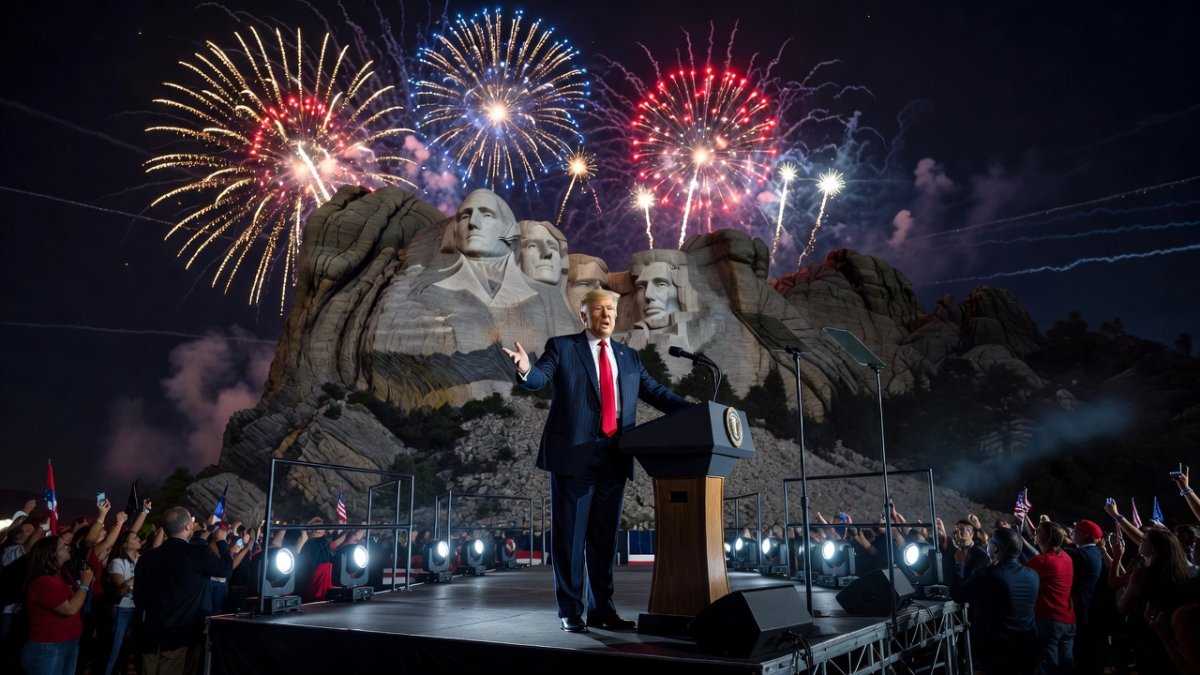
Trump framed the pause in military pressure as an act of American generosity. He noted that the funeral processions would run through Tehran Qom and Mashhad before burial on July 9. Observers counted the remark as part of ongoing campaign rhetoric ahead of planned talks with Israeli Prime Minister Benjamin Netanyahu.
The statement immediately drew reactions from Iranian officials who viewed it as an attempt to undermine the solemnity of the largest public mourning since Ayatollah Ruhollah Khomeini in 1989. US-Iran backchannel communications were already scheduled to resume after July 9. Analysts noted that the timing risked hardening positions on both sides.
Background to the February 2026 US-Israeli Strike
Ayatollah Ali Khamenei was killed in a joint US-Israeli precision strike on February 28 2026. The operation targeted a secure facility near Tehran and ended four months of heightened regional alerts. Iranian state media reported that the strike also destroyed several nuclear-related sites under IAEA monitoring.
Following the assassination enrichment levels at Natanz and Fordow facilities rose above 60 percent according to leaked Iranian nuclear agency data. IAEA inspectors were denied access after March 15 2026. The pause in monitoring left enrichment estimates uncertain for the subsequent four months.
Regional governments including Saudi Arabia and the UAE expressed private concern over the resulting power vacuum. Oman maintained discreet contacts with both Washington and Tehran. The strike shifted the balance within Iran's Supreme National Security Council.
The Six-Day Funeral Procession Logistics
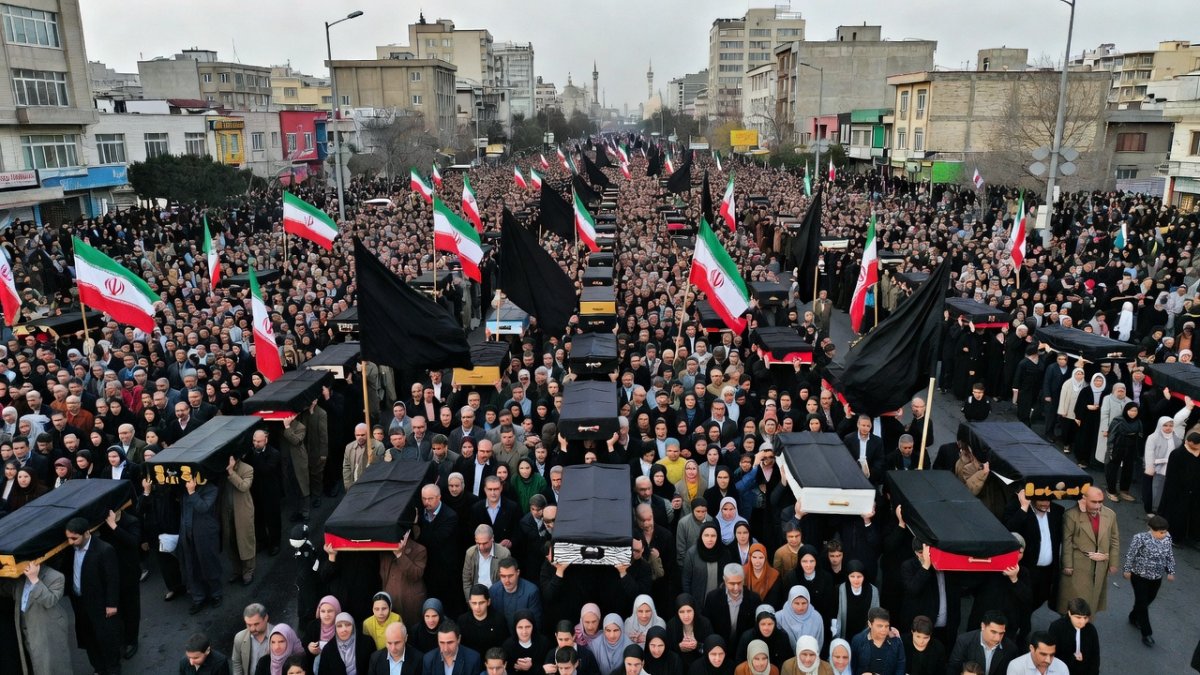
Iranian authorities organized a six-day funeral route beginning July 4 in Tehran and moving to Qom on July 6 before reaching Mashhad on July 8. The final burial was set for July 9 at the Imam Reza Shrine. State television estimated 15 to 20 million mourners would participate making it the largest such event since 1989.
Security forces deployed 250 000 personnel along the route to prevent incidents. An Iranian army general publicly warned foreign actors against any attacks during the mourning period. The warning referenced Hezbollah and Houthi capabilities as potential response mechanisms.
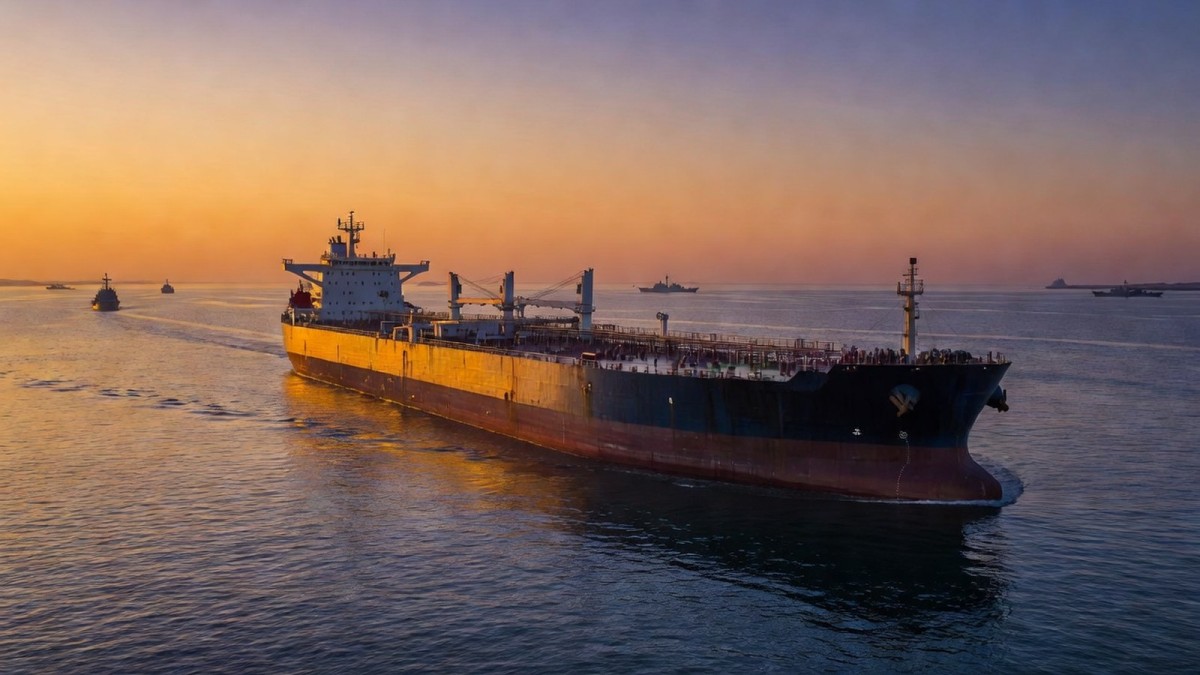
Domestic economic activity slowed as markets closed for the duration. Oil exports through the Strait of Hormuz remained steady at 1.8 million barrels per day. OPEC+ partners monitored the situation for any supply disruptions.
International Delegations and Diplomatic Presence
More than 100 countries sent representatives to the funeral events. Saudi Arabia dispatched its deputy foreign minister marking the first high-level attendance since the March 2023 Beijing rapprochement agreement. The move signaled continued thaw despite ongoing proxy frictions.
Oman fielded a senior delegation that included the foreign minister. The sultanate positioned itself as a potential mediator once talks resumed after July 9. Qatar and Egypt also sent mid-level officials reflecting cautious engagement.
Gulf sovereign wealth funds totaling approximately 3 trillion dollars watched the proceedings for investment signals. UAE officials privately discussed possible energy coordination if succession stabilized. The broad attendance underscored Iran's enduring regional weight.
Pause in US-Iran Peace Negotiations
Direct and indirect US-Iran talks scheduled for early July were placed on hold until after the July 9 burial. American negotiators cited the need to respect the mourning period while Iranian counterparts used the time to consolidate internal positions. The pause affected discussions on sanctions relief and nuclear limits.
Trump's Mount Rushmore comment further complicated the atmosphere. Iranian Foreign Ministry statements described the remark as disrespectful to millions of mourners. Backchannel messages through Oman indicated that Tehran sought written assurances before resuming.
Israeli officials expressed satisfaction with the delay. Netanyahu prepared for a July 12 meeting with Trump to coordinate next steps. Both sides acknowledged that proxy restraint would be essential during the pause.
Security Warnings and Proxy Network Readiness
An Iranian Revolutionary Guard Corps commander issued a public statement on July 2 warning against any external interference during the funeral. The statement referenced Hezbollah units in Lebanon and Houthi forces in Yemen as ready to respond. Iraqi Popular Mobilization Forces also raised alert levels.
Syrian militia groups aligned with Tehran reduced visible movements to avoid escalation. US Central Command maintained increased surveillance flights over the Gulf. No major incidents occurred in the first three days of mourning.
Analysts assessed that the warning served both deterrent and domestic consolidation purposes. Proxy leaders awaited succession clarity before committing to sustained operations. The period of restraint was expected to last at least until July 10.
Iran's Nuclear Program Under Uncertainty
With IAEA monitoring paused since March 2026 enrichment at Fordow reached an estimated 63 percent according to Western intelligence assessments. Stockpiles of near-weapons-grade material grew by roughly 25 kilograms per month. Iranian officials maintained that the program remained peaceful.
US and Israeli intelligence shared updated estimates during the Netanyahu-Trump preparations. Both countries discussed potential re-imposition of certain sanctions if enrichment continued unchecked. European parties urged restraint until after the funeral.
The nuclear file remained central to any future negotiation framework. Iranian negotiators signaled willingness to accept limits in exchange for full sanctions removal. The succession process would determine who holds final authority on these concessions.
Succession Dynamics After Khamenei
The question of Khamenei's successor dominated internal Iranian debates during the mourning period. Potential candidates included senior clerics aligned with the Revolutionary Guard and pragmatic figures favored by elected officials. No clear frontrunner had emerged by July 3.
Supreme Leader selection requires approval from the Assembly of Experts whose next plenary session was set for late July. Raisi-era officials positioned themselves for influence while reformist voices called for broader consultation. The process carried risks of factional confrontation.
Regional actors including Turkey and Saudi Arabia monitored the transition closely. A stable succession could accelerate Saudi-Iran economic projects agreed in 2023. Prolonged uncertainty risked renewed proxy activations across the Levant and Gulf.
Abraham Accords and Regional Realignment
The funeral period intersected with ongoing implementation of the Abraham Accords. Israel and several Gulf states continued security and technology cooperation despite the Iranian mourning. Netanyahu planned to raise the issue during his July 12 meeting with Trump.
Saudi Arabia balanced its deputy foreign minister's attendance with continued normalization talks with Israel. UAE investments in Israeli defense firms remained active. The accords framework provided an alternative diplomatic channel if US-Iran talks stalled further.
Oman and Qatar used the funeral to explore quiet bridging roles. Their delegations held side meetings with Iranian and Saudi representatives. These contacts could shape post-funeral regional architecture.
OPEC+ Dynamics and Economic Stakes
Iran maintained its OPEC+ production quota of 3.4 million barrels per day throughout the mourning period. Saudi Arabia and Russia coordinated to prevent price spikes. Gulf sovereign wealth funds valued at 3 trillion dollars stood ready to absorb any market volatility.
Energy ministers from OPEC+ members held virtual consultations on July 5. They agreed to monitor Iranian exports closely after July 9. Any disruption at the Strait of Hormuz would trigger coordinated releases from strategic reserves.
Economic stabilization formed a key incentive for all parties to avoid escalation. Iranian officials signaled interest in renewed OPEC+ coordination once succession questions were settled. The funeral pause therefore carried both political and commercial weight.
By Malik Hassan, Staff WriterThis article was produced with AI-assisted research and editorial support. Reporting is based on sources cited in the article.
What's Your Reaction?
 Like
0
Like
0
 Dislike
0
Dislike
0
 Love
0
Love
0
 Funny
0
Funny
0
 Wow
0
Wow
0
 Sad
0
Sad
0
 Angry
0
Angry
0
Middle East Correspondent at Global1.News. Based in Beirut, covering politics, conflict, energy, and society across the Middle East. Brings context and depth to a region often reduced to headlines.










Comments (0)