
Pear Lake Wildfire Forces Evacuation of Clinton, B.C.
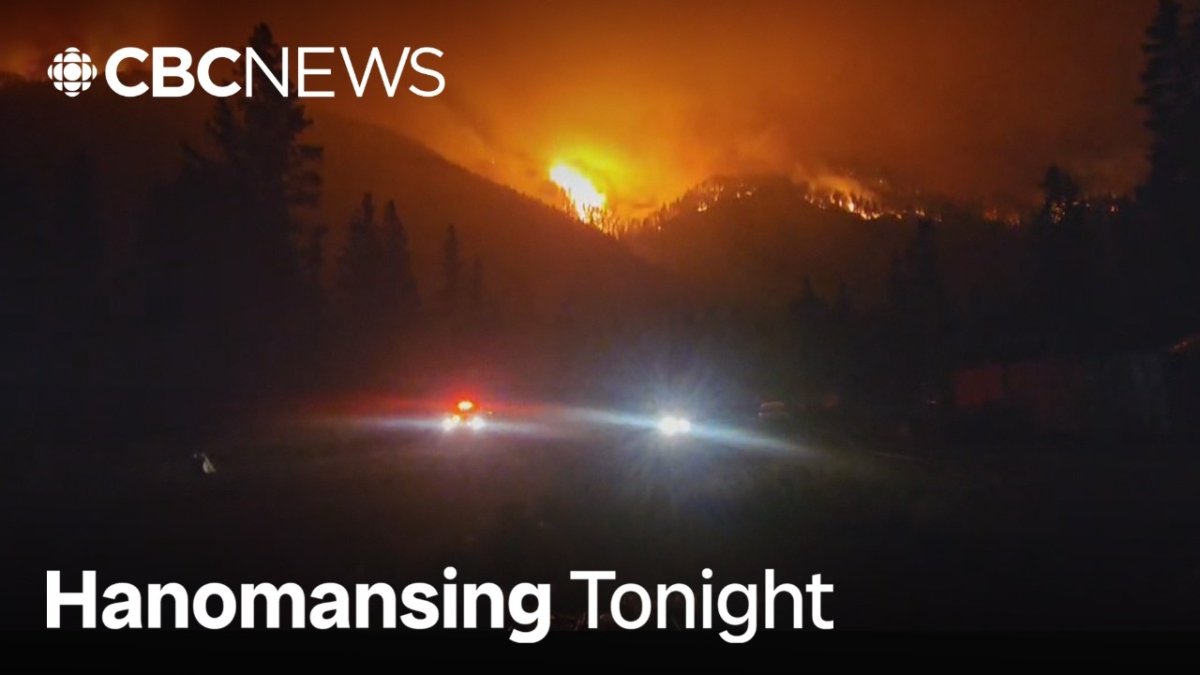
In a recent CBC News report on Hanomansing Tonight, Clinton rancher Mary Ann McKenzie described the thick orange-and-black smoke as oppressive while fleeing with lung problems and wearing a mask. The Pear Lake wildfire, discovered July 17 as a lightning-caused blaze roughly 20 kilometres southwest of Clinton, B.C., has combined with other fires to form the Big Bar Complex, prompting the Village of Clinton evacuation order on Friday July 24 and the closure of Highway 97. Pear
In a recent CBC News report on Hanomansing Tonight, Clinton rancher Mary Ann McKenzie described the thick orange-and-black smoke as oppressive while fleeing with lung problems and wearing a mask. The Pear Lake wildfire, discovered July 17 as a lightning-caused blaze roughly 20 kilometres southwest of Clinton, B.C., has combined with other fires to form the Big Bar Complex, prompting the Village of Clinton evacuation order on Friday July 24 and the closure of Highway 97.
Pear Lake Wildfire Forces Evacuation of Clinton, B.C., as Big Bar Complex Grows
Clinton, B.C. – July 25 — The Village of Clinton with a population of roughly 650 residents received an evacuation order on Friday July 24 after the Pear Lake wildfire exhibited Rank 4-5 fire behaviour and crossed Kelly Lake Road in multiple locations under 35 km/h southwest winds.
Discovery and Rapid Growth of Pear Lake Wildfire
The Pear Lake wildfire was discovered on July 17 after lightning ignition approximately 20 km southwest of Clinton in the Thompson-Nicola Regional District. By July 24 the fire had expanded to 44.7 square kilometres while displaying Rank 4-5 behaviour with organised flame fronts and independent spot fire growth. BC Wildfire Service crews reported spot fires in multiple locations that challenged direct suppression efforts as winds gusted to 35 km/h from the southwest.
Evacuation Orders Across the Region
The Village of Clinton evacuation order on July 24 placed at least 280 addressed properties under order in the Thompson-Nicola Regional District. An additional 87 properties in the Fill, Chasm and Jesmond areas received new evacuation orders in recent days. Highway 97 closed for nine kilometres between Clinton Cemetery Road and Mound Road to support emergency operations.
Local Leadership and Resident Accounts
Clinton Mayor Roland Stanke stated the situation was extremely bad and declared he was going to lose his house any minute. Mary Ann McKenzie, a Clinton rancher with lung problems featured in the CBC News Hanomansing Tonight video, described conditions as oppressive while fleeing through thick orange-and-black smoke. Kamloops Search and Rescue deployed 12 members to Clinton to assist with evacuation order delivery.
The evacuation process in the Clinton area unfolded rapidly after the Pear Lake wildfire crossed containment lines, with TNRD officials directing residents to travel east on Meadow Lake Road to Highway 97, then north on Highway 24 toward Kamloops. Evacuees have been directed to reception centres in Kamloops where BC Emergency Health Services and the Canadian Red Cross provide medical screening, temporary shelter, and financial assistance registration. Twelve members of Kamloops Search and Rescue have been deployed to assist with welfare checks, with additional personnel from South Cariboo Search and Rescue expected to arrive for mutual aid support.
Support services include pet-friendly accommodations at designated centres and coordination through EmergencyInfoBC for real-time updates on road access and order expansions. Resident accounts highlight the challenge of moving livestock and household animals under short notice, with one Clinton-area rancher, McKenzie, describing how neighbours pooled trailers to evacuate horses and cattle before the Highway 97 closure fully isolated the community. Local leadership continues to stress that warming and drying conditions forecast for the coming week leave little margin for error in protecting remaining properties.
Scale of the Big Bar Complex
The Big Bar Complex reached a total of 259.5 square kilometres or 25,952 hectares by July 24 and includes the Pear Lake, Fiftynine Creek and French Bar Creek wildfires. The Fiftynine Creek fire alone measured 167.2 square kilometres with Rank 5 behaviour featuring an organised flame front and independent spot fire growth. Emergency Management Minister Bowinn Ma confirmed at least a dozen properties destroyed by the Fiftynine Creek fire.
Commissioner Ma stated during the briefing that the Big Bar Complex had reached 259 square kilometres of burned area, with aggressive fire behaviour forcing BC Wildfire Service crews to pull back to safe zones as flames advanced rapidly through steep terrain. The three fires within the complex — the Pear Lake wildfire, the French Bar Creek fire, and the Fiftynine Creek fire — sit in close geographic proximity along the Fraser River corridor north of Clinton, where dry fuels and wind patterns have allowed them to interact and intensify. The French Bar Creek fire, in particular, has shown the most erratic growth, merging with spot fires across rugged canyons and threatening to link further with the Fiftynine Creek blaze, which expanded from 40 square kilometres to 167.2 square kilometres in roughly one week.
Compared with historical BC wildfires in the Cariboo region, the current 259 square kilometre footprint already exceeds the average size of individual fires recorded during the severe 2017 and 2018 seasons, when the province saw multiple complexes surpass 200 square kilometres only after weeks of sustained burning. Analysis of BC Wildfire Service data shows that this season's early lightning-driven ignition has compressed what used to be a month-long growth phase into days, raising concerns that total area burned could eclipse the 1.2 million hectares recorded province-wide in 2018 if warming and drying conditions persist. Incident Commander Hugh Murdoch noted that the weather forecast offers no significant relief from nature in the foreseeable future, underscoring how the complex's scale now rivals some of the largest single-season events in Cariboo history.
Provincial Lightning and Wildfire Activity
Approximately 34,000 lightning strikes occurred across British Columbia over the past week, triggering dozens of new fires including roughly 180 blazes from one major storm. More than 90 active wildfires now burn across the province under 25 evacuation orders. Power disruptions have been reported in multiple regions due to the spreading fires.
The storm event that triggered the current outbreak produced 33,380 lightning strikes across British Columbia, igniting dozens of fires in regions including Kimberley in the East Kootenays, Quesnel in the Cariboo, and the Boston Bar area where several fires have already merged. Prime Minister Mark Carney remarked that this fire season's intensity reflects a "new normal" driven by prolonged drought and extreme weather, stressing that federal resources stand ready to support provincial efforts, including potential deployment of Canadian Armed Forces personnel and aircraft if requested by BC. Twenty-five evacuation orders are currently in effect, displacing thousands of residents whose exact numbers EmergencyInfoBC continues to update as assessments proceed.
Federal assistance discussions have centred on military aid such as helicopters and logistics teams, though no formal Canadian Armed Forces mobilisation has been announced yet. The Highway 97 closure between Vancouver and Prince George has compounded access challenges for both evacuees and responders, forcing detours that add hours to travel times. With approximately 20 properties already reported damaged or destroyed, the scale of provincial lightning activity has stretched initial attack resources thin, prompting mutual aid requests that now extend beyond regional boundaries.
Expert Analysis of Fire Season Trends
Prime Minister Mark Carney described the current season as one of the most intense wildfire seasons on record, highlighting federal-provincial coordination challenges in British Columbia. UBC Professor Lori Daniels noted that the 2026 fire season falls within the 30-year average in number of fires yet intensity remains notably higher, a pattern that directly affects BC Wildfire Service resource allocation and Emergency Management BC planning.
Professor Daniels of the University of British Columbia provided a detailed analysis showing that higher intensity fires now exhibit flame lengths exceeding 30 metres and rapid upslope runs that overwhelm standard containment lines within hours. Practically, this means ground crews must retreat more frequently, relying instead on aerial retardant drops that become less effective once fires establish deep in timber stands. Her data on BC interior drying trends indicate that average summer vapour pressure deficit has risen 15 percent since 2000, creating fuel conditions that allow fires to burn through the night rather than exhibiting the diurnal lull historically used for overnight suppression.
Climate change context reveals that the Cariboo and Thompson-Nicola regions are experiencing earlier snowmelt and extended fire seasons by roughly three weeks compared with the 1980s baseline. Daniels warned that without accelerated federal climate adaptation funding for fuel management and community resilience programs, future seasons could see annual burned area routinely exceed two million hectares. She emphasised that current trends point to a structural shift requiring long-term investment rather than reactive annual budgets.
Concerns Over Fire Merging and Future Risks
Clinton Mayor Roland Stanke expressed concern that the Pear Lake and Fiftynine Creek fires could merge, further threatening the community and surrounding ranch lands. Crews have been pulled back from front lines on the Fiftynine Creek fire for safety reasons amid the Rank 5 behaviour. These developments underscore the need for strengthened provincial defence strategies and cross-jurisdictional cooperation between the Thompson-Nicola Regional District and the BC Wildfire Service.
By Alex Thompson, Staff Writer
This article was produced with AI-assisted research and editorial support. Reporting is based on sources cited in the article.
What's Your Reaction?
 Like
0
Like
0
 Dislike
0
Dislike
0
 Love
0
Love
0
 Funny
0
Funny
0
 Wow
0
Wow
0
 Sad
0
Sad
0
 Angry
0
Angry
0
Canada Correspondent at Global1.News. Based in Toronto, covering Canadian politics, energy, trade, and US-Canada relations. Provides the Canadian perspective on North American and global affairs.












Comments (0)