
Trump's New Forced Labor Tariffs Hit Mexico With 10% Rate
As the first light touches the maquiladoras along our northern border, Mexican families are already feeling the weight of new U.S. tariffs that threaten the jobs and stability they have worked so hard to build. These Section 301 measures, now in force, arrive without warning or grace period, strikin
As the first light touches the maquiladoras along our northern border, Mexican families are already feeling the weight of new U.S. tariffs that threaten the jobs and stability they have worked so hard to build. These Section 301 measures, now in force, arrive without warning or grace period, striking at the heart of communities from Monterrey to Oaxaca and reminding us how trade decisions made far away ripple straight into our kitchens and workshops. In Mexico City, the mood is one of quiet determination mixed with concern for the neighbors and small businesses that keep our neighborhoods alive.
Trump Forced Labor Tariffs Hit Mexico Exports July 2026
Mexico City, Mexico — As detailed in the DW News YouTube video uploaded this morning, the new Section 301 tariffs under the Trade Act of 1974 took effect at 12:01 a.m. EST on July 24, 2026, replacing the expired temporary 10% global tariff and imposing 10% or 12.5% duties on goods from 60 countries.
Tariffs Activate After Supreme Court Ruling
The Supreme Court struck down earlier IEEPA tariffs in a 6-3 ruling in February 2026, clearing the path for the current measures that target forced labor concerns. Mexico faces the 10% rate along with 16 other trading partners including Canada, the EU, and the UK, while 43 countries including China, Japan, South Korea, and much of Latin America face the 12.5% rate.
USMCA-compliant goods from Mexico remain exempt, a key detail confirmed during the three days of negotiations that concluded in Mexico City on July 23, 2026. The exemptions also cover steel, aluminum, autos, civilian aircraft, and rare earth minerals.
President Claudia Sheinbaum’s Morena-led government quickly coordinated with the Secretaría de Economía and SRE to issue compliance guidelines, echoing the pragmatic approach AMLO took during the original USMCA negotiations. Opposition voices from PAN and PRI in Congress criticized the lack of earlier contingency planning, warning that the 10% rate could widen the trade deficit already tracked by INEGI at 2.8% of GDP in the first quarter of 2026.
Banxico data showed the peso weakening 4.3% against the dollar in the week after the ruling, hitting import-dependent manufacturers in Monterrey’s industrial corridor hardest. Maquiladora workers in Ciudad Juárez recall the 2018-2019 tariff scares under the first Trump administration, when similar uncertainty led to temporary layoffs before USMCA exemptions were secured.
Critics within Mexico argue the forced-labor framing masks broader protectionist goals, especially as the legacy of AMLO’s nearshoring push now faces new documentation hurdles that smaller firms in Tijuana’s border colonias may struggle to meet.
Across kitchen tables in Mexico City’s Iztapalapa and in the workshops of Guadalajara, people are already asking how these rules will touch the next generation of workers who keep our economy moving.
Mexico City Negotiations Shape USMCA Response
Officials from the Sheinbaum administration met with U.S. counterparts in Mexico City through July 23 to address the tariffs during ongoing USMCA renegotiation talks. Mexico sends 80% of its exports to the United States, making the 10% rate on non-compliant goods a direct pressure point on supply chains in Monterrey and Guadalajara.
A second Section 301 probe on manufacturing overcapacity could add further tariffs on Mexico, China, the EU, and India if implemented. Countries such as India, Honduras, Trinidad and Tobago, and Sri Lanka lowered their rates by adopting forced labor bans, but Mexico has not yet pursued that path.
Sheinbaum’s team, including officials from the Presidencia and Secretaría de Economía, spent three days in Mexico City pressing U.S. negotiators to expand the list of exempt sectors, building on the bilateral trust established during AMLO’s final term. PAN legislators in the Senate called for greater transparency, while PRI voices urged a joint strategy with Canada to avoid being singled out in future rounds.
INEGI’s latest export figures reveal that 78% of Monterrey’s auto-parts shipments already meet USMCA rules, yet many small suppliers in Guadalajara’s tech parks remain unsure how to certify compliance quickly. Historical precedent from the 2019 steel tariffs shows that Mexican firms eventually adapted, but only after months of costly paperwork that disproportionately burdened family-owned operations.
The possibility of a second Section 301 probe on manufacturing overcapacity has prompted quiet outreach to Central American partners, though Morena hardliners insist Mexico should not adopt forced-labor bans simply to win tariff relief.
Effects on Mexican Export Sectors
Maquiladora workers in Ciudad Juárez and Tijuana now face uncertainty because many electronics and auto parts shipments must prove USMCA compliance to avoid the 10% duty. Small business owners in colonias around Mexico City report higher costs for imported components used in local manufacturing.
Farmers in Oaxaca and rural ejido communities that ship produce to U.S. markets worry about added expenses if documentation falls short. The tariffs replace the temporary measure that expired at midnight on July 23, 2026, leaving no grace period for adjustment.
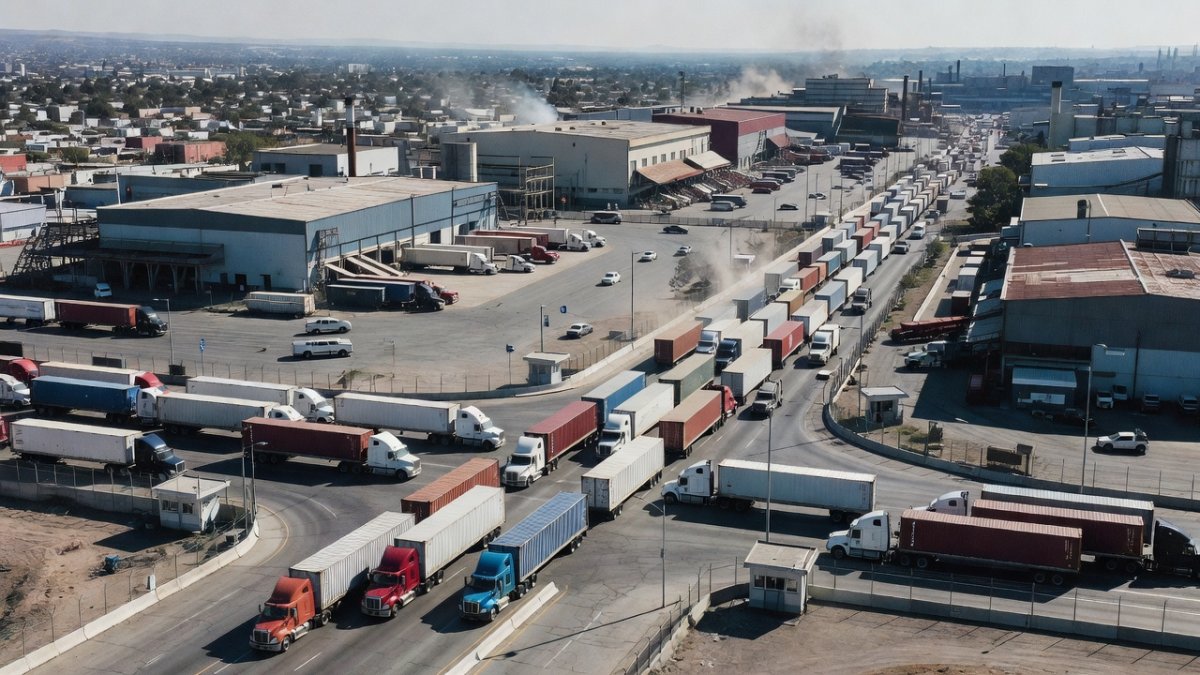
Workers at maquiladoras in Tijuana’s Otay Mesa industrial zone describe rushed training sessions on new certificates of origin, fearing that even minor paperwork errors could trigger the 10% duty on electronics bound for U.S. warehouses. CONEVAL’s 2025 poverty update already flagged rising living costs in these border communities, and local union leaders worry the tariffs will accelerate automation that reduces entry-level jobs.
Campesinos in Michoacán’s avocado-growing ejidos and Sinaloa’s tomato fields face parallel pressures, as U.S. buyers demand stricter traceability that small producers lack the resources to provide. Secretaría de Economía data from 2024 showed agricultural exports to the U.S. reached $18.2 billion, yet many family farms still operate without digital record systems.
These developments revive memories of the 1994 NAFTA transition, when sudden rule changes devastated rural economies before safety nets were established, leaving today’s small business owners in Mexico City’s Iztapalapa colonias anxious about imported component costs.
Latin American Countries Face Higher Rates
Twenty-five percent tariffs on Brazilian exports took effect on July 23, 2026, one day before the broader rules. Much of Latin America falls under the 12.5% category, hitting exporters in Central America and the Caribbean who lack USMCA-style exemptions.
The EU faces the 10% rate despite its own Forced Labor Regulation scheduled for December 2027, showing that regional regulations alone do not guarantee relief. Honduras and Trinidad and Tobago secured lower rates through new bans, a route not yet taken by most Latin American governments.
While Honduras and Trinidad and Tobago secured lower rates by enacting new labor laws, Mexico’s Morena government has so far resisted similar measures, preferring to defend USMCA exemptions through direct diplomacy with Washington. Sheinbaum’s administration points to IMSS labor inspections as evidence of existing safeguards, yet critics from PAN argue this stance leaves Mexican exporters at a disadvantage compared with Central American competitors.
INEGI trade statistics indicate that non-USMCA shipments from Mexico to the U.S. still account for nearly $45 billion annually, much of it routed through Ciudad Juárez crossings where delays already compound costs. The 25% tariff on Brazilian soy and beef that took effect July 23 offers a cautionary parallel, reminding Mexican agricultural regions how quickly regional supply chains can fracture.
Regional analysts note that the EU’s 10% rate despite its own 2027 Forced Labor Regulation underscores how political leverage, rather than regulatory alignment alone, determines outcomes in these disputes.
These regional shifts remind us that Mexico’s story is woven into a larger Latin American tapestry, and the choices made in one capital often echo in the markets of another.
Impact on Mexican Families and Workers
Families in working-class neighborhoods of Monterrey and Guadalajara already pay higher prices for household goods after previous tariff rounds, with the Congressional Joint Economic Committee estimating U.S. families have paid $3,500 more under Trump tariff policies overall. Mexican consumers connected to cross-border supply chains feel similar pressure through rising input costs.
Healthcare workers at IMSS facilities note that equipment imports could become more expensive, while teachers in public schools in Mérida report concerns about classroom supplies sourced from affected countries. The Harris Poll/Guardian survey found 70% of Americans report paying more due to tariffs, a pattern mirrored in Mexican border communities.
Households in Guadalajara’s working-class neighborhoods and Monterrey’s San Pedro Garza García have already seen grocery and appliance prices climb after earlier tariff episodes, with CONEVAL estimating an additional 1.2 million people fell into moderate poverty between 2024 and 2025 partly due to imported inflation. IMSS clinic directors report rising requests for assistance from maquiladora families whose overtime hours are being cut amid uncertainty.
Teachers in Mérida’s public schools and healthcare staff in border IMSS hospitals describe delayed shipments of classroom materials and medical equipment, echoing the supply disruptions felt during the 2020 pandemic. Historical peso fluctuations tracked by Banxico show that each previous tariff round widened inequality between northern industrial zones and southern agricultural states.
These pressures fall heaviest on migrant families who shuttle between Tijuana assembly plants and U.S. markets, underscoring how trade policy ripples through everyday community life far from the negotiating tables in Mexico City.
Critics Question Forced Labor Pretext
Democrats including Richard Neal and Linda Sánchez called the forced labor justification a pretext for broader trade restrictions. Former WTO deputy director Alan Wolff stated there is no evidence that changing the U.S. rationale will materially reduce forced labor.
Peterson Institute economist Chad Bown warned that the tariffs divert U.S. and allied attention from the trade war that should be fought. These comments circulated in Mexico City as the Sheinbaum administration prepared its next round of USMCA talks.
Sheinbaum’s Morena allies in Congress have echoed U.S. Democratic concerns that the forced-labor rationale serves broader geopolitical aims, while PAN and PRI lawmakers demand a clearer national strategy to protect export jobs. Former AMLO trade officials now advising the current administration privately note that similar pretexts were used in 2019, yet Mexico ultimately secured exemptions through persistent bilateral engagement.
Peterson Institute warnings cited in Mexican media have circulated widely among economists at Banxico, who fear diverted attention from genuine labor-rights improvements already underway via IMSS reforms. Small exporters in Ciudad Juárez worry that prolonged uncertainty will deter new investment, regardless of the eventual legal outcome.
The debate highlights a deeper tension: whether Mexico should invest in stronger domestic enforcement or continue relying on USMCA carve-outs that have historically shielded the bulk of its trade.
Next Steps for Mexico and the Region
With USMCA negotiations continuing after the July 23 Mexico City meetings, Mexican officials are prioritizing documentation systems to keep more shipments exempt. A second manufacturing overcapacity probe could bring additional duties on Mexico if the administration moves forward.
Rural communities and indigenous groups in southern Mexico watch closely, knowing that any new tariffs would compound existing challenges from inflation and supply disruptions. The tariffs remain in force unless altered through bilateral agreements or further court action.
Secretaría de Economía teams are accelerating digital certification platforms to help firms in Monterrey and Tijuana prove USMCA compliance before the next round of talks, a direct response to lessons from the 2018-2019 tariff episodes. Sheinbaum has instructed SRE diplomats to explore trilateral coordination with Canada, mindful that PRI and PAN governors in border states are already lobbying for federal support.
Rural communities in Oaxaca and indigenous groups in Chiapas watch the manufacturing overcapacity probe closely, knowing any new duties would compound existing challenges documented by INEGI in southern poverty rates. The tariffs remain in force unless altered through bilateral agreements or further court action, leaving families across Mexico’s industrial and agricultural heartlands bracing for prolonged volatility.
Ultimately, the coming months will test whether Mexico’s institutional memory from previous trade shocks can translate into faster adaptation and stronger protections for the workers and small businesses that sustain local economies.
By Rosa Martinez, Staff WriterThis article was produced with AI-assisted research and editorial support. Reporting is based on sources cited in the article.
What's Your Reaction?
 Like
0
Like
0
 Dislike
0
Dislike
0
 Love
0
Love
0
 Funny
0
Funny
0
 Wow
0
Wow
0
 Sad
0
Sad
0
 Angry
0
Angry
0

Latin America/Andes Correspondent at Global1.News. Based in Bogota, covering politics, environment, energy, and social movements across the Andean region. Passionate about environmental journalism and communities protecting their land.













Comments (0)