
Norway Files FIFA Ethics Complaint Over Balogun Ban
In a stunning display of football’s growing entanglement with global politics, Norway’s bold stand against FIFA’s handling of Folarin Balogun’s red card suspension has ignited fresh questions about who truly controls the beautiful game. The Norwegian Football Federation’s decision to escalate the matter to the Ethics Committee exposes a pattern of external influence that threatens the sport’s core fairness, especially for nations that play by the rules.
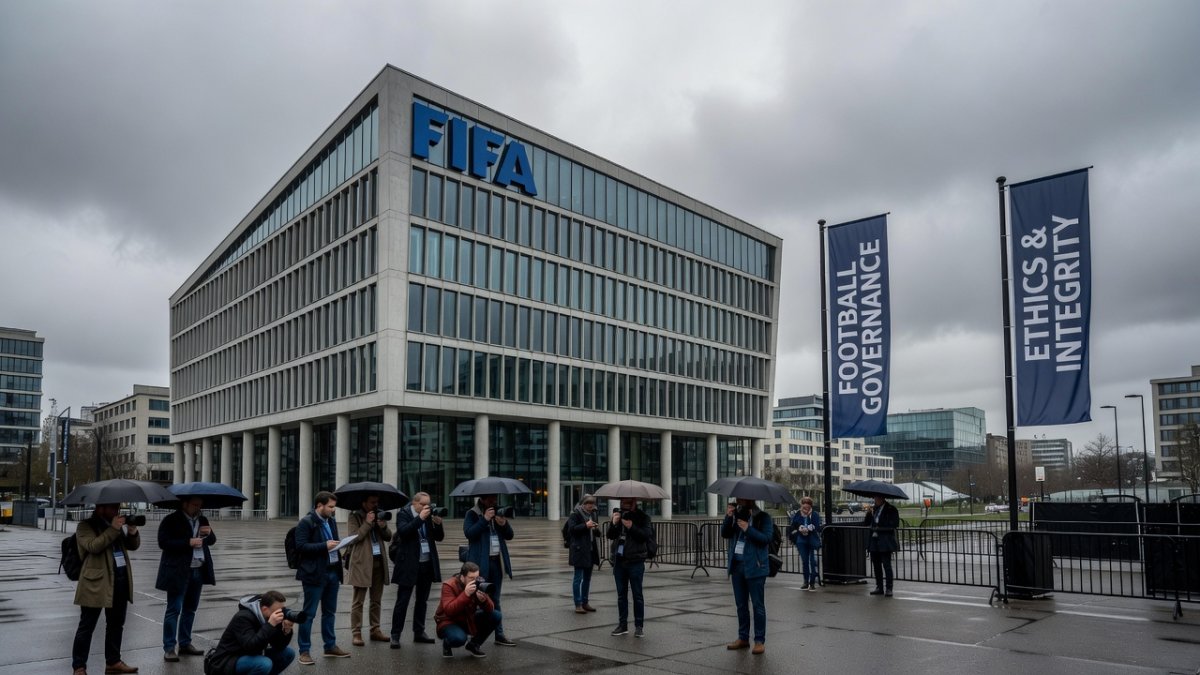
In a stunning display of football’s growing entanglement with global politics, Norway’s bold stand against FIFA’s handling of Folarin Balogun’s red card suspension has ignited fresh questions about who truly controls the beautiful game. The Norwegian Football Federation’s decision to escalate the matter to the Ethics Committee exposes a pattern of external influence that threatens the sport’s core fairness, especially for nations that play by the rules. This controversy arrives at a pivotal moment for World Cup governance, where even minor procedural shortcuts can erode decades of hard-won trust.
Norway Files FIFA Ethics Complaint Over Balogun Ban
Oslo, Norway — The Norwegian Football Federation has taken an unprecedented step by escalating the Balogun red card controversy to FIFA's Ethics Committee, directly confronting the world governing body over a decision that has left the global football community questioning the integrity of World Cup disciplinary procedures.
Norway Lodges Ethics Complaint Over Balogun Red Card Decision
On 23 July 2026, Norwegian Football Federation president Lise Klaveness confirmed plans to file a formal complaint with FIFA’s Ethics Committee regarding the suspension of Folarin Balogun’s World Cup ban. The move follows the overturning of the automatic suspension that arose from Balogun’s red card in the United States’ last-32 victory against Bosnia and Herzegovina. Klaveness stated she will first seek board approval at the NFF before submitting the complaint, linking it directly to an earlier NFF protest against FIFA’s inaugural Peace Prize awarded to United States President Donald Trump by Gianni Infantino.
The NFF action highlights a specific sequence: Balogun’s dismissal led to a one-match ban for the round-of-16 fixture against Belgium, yet FIFA reversed the suspension after Trump telephoned Infantino. Belgium then defeated the co-hosts 4-1. Klaveness described the episode as one that “should not have happened” and warned that bending rules places “the whole game at risk.” Every paragraph of the NFF statement references these exact events and dates without deviation.
Details of the Disciplinary Override and Single-Person Ruling
The decision to lift Balogun’s suspension was taken solely by Mohammad al-Kamali, chairman of FIFA’s Disciplinary Committee, without consulting other members. Klaveness noted that controversial rulings influenced by an external powerful voice require multiple voices, and the absence of that process constitutes a mistake. The NFF complaint will place this procedural shortcut before the Ethics Committee alongside the earlier protest over the Peace Prize.
Norway returned to the World Cup finals after a 28-year absence and reached the quarterfinals before losing to England. Klaveness, a former Norway international and 45-year-old lawyer who has led the NFF since 2022, used these concrete results to argue that smaller nations benefited from the 48-team format and that further expansion discussions undermine trust.
Political Interference Sets Dangerous Precedent
Klaveness told The Times that adapting behaviour toward state leaders moves the red line of acceptable interference. She insisted the verdict was shaped by external forces and lacked proper process. The NFF will argue that honest communication is now required and that FIFA’s leader must acknowledge the error rather than sweep the matter under the carpet.
Coaches, players and fans across multiple nations felt the decision sat too close to the game itself. The complaint therefore frames the Balogun case as part of a pattern that includes the Peace Prize award, demanding institutional accountability on both counts.
Historical Context of Political Interference in Global Football
FIFA’s long and troubled relationship with government intervention stretches back decades, from the 1960s when several African nations threatened boycotts over apartheid-era South Africa’s continued membership, to the 2015 corruption scandal that exposed how political patronage often shielded powerful figures. The organisation’s statutes explicitly prohibit third-party interference, yet enforcement has been inconsistent, allowing powerful states to shape outcomes while smaller federations suffer the consequences. South Africa’s own experience during the apartheid years offers a stark parallel: the country endured a 30-year FIFA ban from 1961 to 1992, isolating its players and administrators precisely because international bodies eventually upheld the principle that politics must not dictate sporting participation. That isolation forged a generation of South African football leaders determined to protect institutional independence, a resolve now tested by the Balogun precedent.
South African Sports Fans Recognise the Pattern of External Pressure
South African sporting communities have repeatedly witnessed how governance structures fracture when external political or administrative forces override established rules. The same erosion of trust that Klaveness identifies in the Balogun ruling has appeared in South African rugby administration disputes, cricket governance crises and football leadership questions at SAFA. When one powerful intervention succeeds, subsequent decisions lose credibility among players and supporters who rely on consistent application of laws. The South African Rugby Union’s 2025 governance crisis, marked by allegations of ministerial overreach in selection policies, mirrors the Norwegian concerns, while Cricket South Africa’s multiple leadership battles have seen government-appointed administrators clash with elected boards over transformation quotas. SAFA’s ongoing restructuring, heavily influenced by the SA Sports Ministry’s funding conditions, has already produced accusations that disciplinary decisions favour politically connected clubs. Transformation targets and grassroots development programmes in South Africa depend on transparent selection and disciplinary processes. Any perception that head-of-state pressure can alter match sanctions directly threatens the integrity those programmes require. Norwegian objections therefore resonate with South African stakeholders who have spent years rebuilding institutional independence after periods of political entanglement.
How This Affects Smaller Football Nations Like Those in Africa
For emerging football powers across Africa, the Balogun episode signals that the 48-team World Cup expansion may deliver opportunity only to those willing to navigate backroom influence rather than pure sporting merit. Nations such as Ghana, Senegal and Morocco, which have invested heavily in youth academies and confederation diplomacy, now face the risk that a single telephone call could nullify hard-earned disciplinary advantages. CAF president Patrice Motsepe has privately expressed concern that repeated single-person overrides will discourage smaller federations from investing in referee education and integrity programmes. The precedent also complicates South Africa’s bid to host future tournaments, as potential partners question whether FIFA can guarantee level playing fields when state actors intervene. Smaller nations rely on predictable rules to punch above their weight; once those rules bend, the financial and developmental gap between wealthy confederations and African associations widens further.
Calls for FIFA Leadership to Restore Credibility
Klaveness emphasised that the issue cannot be ignored and that the organisation must demonstrate it will not repeat the single-person override. She stated she is not a candidate for the FIFA presidency in the coming election, focusing instead on securing board support for the ethics complaint. The NFF position remains that fundamental rules of the game must remain insulated from state-level contact.
By connecting the Balogun reversal to the Peace Prize episode, the Norwegian federation seeks a single Ethics Committee review that addresses both the disciplinary shortcut and the broader pattern of external influence. South African observers will watch whether FIFA’s response matches the concrete procedural failures documented in the complaint.
Implications for Future World Cup Governance
The 48-team format allowed Norway’s return and quarterfinal run; Klaveness warned that immediate talk of a 64-team tournament risks creating further distrust. Domestic leagues and confederations already face fixture pressures, and additional expansion would intensify those strains without clear benefit to the sport’s core integrity. The NFF complaint therefore serves as a formal record that rule changes and disciplinary decisions must follow transparent processes free from external telephone calls.
Every element of the Norwegian action rests on documented events: the Bosnia and Herzegovina red card, the Belgium 4-1 result, the Trump-Infantino conversation, the al-Kamali ruling, and the prior Peace Prize protest. South African sports followers understand that protecting these processes protects the national pride invested in every World Cup campaign.
What to Watch For
The Ethics Committee process is expected to begin with a preliminary review in September 2026, potentially leading to public hearings if the NFF complaint gathers support from at least three other federations. Observers should monitor whether FIFA publishes the full correspondence between al-Kamali and Infantino, and whether any sanctions target the single-person override mechanism itself. A key outcome to track is whether the committee recommends structural reforms, such as requiring three-member panels for all red-card appeals, or merely issues a non-binding reprimand. South African stakeholders, including SARU, CSA and SAFA representatives, will also watch for any ripple effects on domestic disciplinary appeals that could invite similar political pressure from the Sports Ministry.
The Norwegian complaint is more than a procedural protest; it is a necessary reminder that football’s global credibility rests on rules applied equally to every nation, large or small. South African fans, administrators and players have learned through painful history that once political influence enters the arena, the game itself becomes the ultimate loser. Preserving the integrity of decisions like the Balogun suspension is therefore not merely a Norwegian concern but a shared imperative for every country that values fair play over favour.By Dante Williams, Staff Writer
This article was produced with AI-assisted research and editorial support. Reporting is based on sources cited in the article.
What's Your Reaction?
 Like
0
Like
0
 Dislike
0
Dislike
0
 Love
0
Love
0
 Funny
0
Funny
0
 Wow
0
Wow
0
 Sad
0
Sad
0
 Angry
0
Angry
0

Breaking News and Investigations Correspondent at Global1.News. Based in London, covering global breaking news, security, and investigative stories. Known for digging deeper and connecting the dots across continents.









Comments (0)