
Amazon Rainforest Records Lowest Burned Area in Decades
The Amazon rainforest recorded its lowest burned area since 1985, with 3.1 million hectares scorched in 2025 compared to 15.8 million in 2024, according to MapBiomas data. The decline reflects stronger enforcement under President Lula and favorable La Niña weather conditions, but researchers warn the trend may not hold as El Niño threatens to extend dry seasons. With Brazil's October 2026 election approaching, Amazon protection has become a central campaign issue, splitting voters between economic development and environmental priorities.
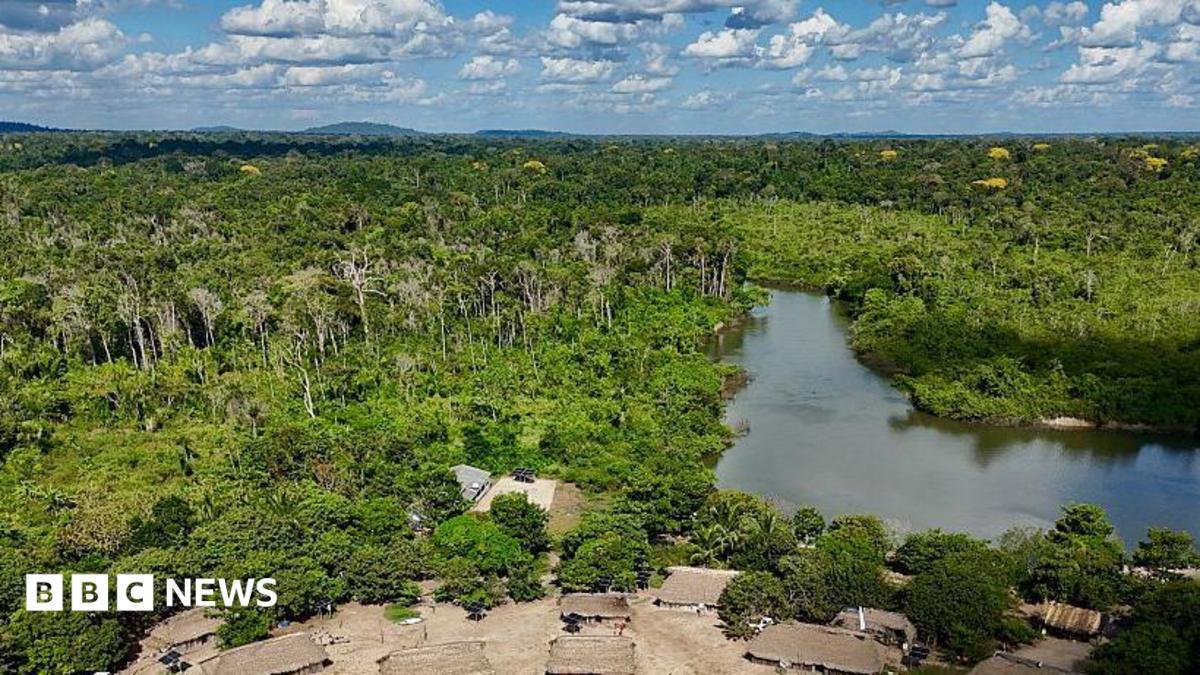
São Paulo, Brazil — After decades of choking smoke and scorched earth, the Amazon has delivered a rare victory: the lowest burned area since satellite records began in 1985. This drop from 15.8 million hectares last year to just 3.1 million this year means entire villages along the rivers of Pará and Amazonas can breathe again, while millions of tons of carbon stay locked in living trees instead of fueling the climate crisis. Yet the relief feels fragile, a single season’s grace that demands relentless enforcement if Brazil is to protect the forest that feeds rain across the continent and sustains our national future.
Amazon Rainforest Records Lowest Burned Area in Decades
The world's largest rainforest in Brazil experienced a dramatic reduction in the extent of land consumed by fire this year. Official mapping from MapBiomas shows that 3.1 million hectares burned across the Amazon region, marking the smallest total since records started in 1985. This figure stands in sharp contrast to the 15.8 million hectares scorched last year during an especially destructive season.
Communities living along the rivers of Pará and Amazonas states felt the difference directly. Fewer flames meant less smoke choking villages and fewer lost plots of land used for small-scale farming and fishing. The drop also eased pressure on indigenous territories where families have long defended their homes against advancing flames.
National attention now turns to whether this improvement can hold. The Amazon supplies moisture that feeds rainfall across central Brazil and supports agriculture in states far from the forest edge. A sustained reduction in burned area would protect those water cycles that millions of Brazilians rely on for daily life and economic stability.
The Amazon stands as the planet’s largest tropical rainforest and a critical carbon sink, storing roughly 150-200 billion tons of carbon while harboring 10% of all known species. This year’s drop to 3.1 million hectares burned, compared with the 15.8 million hectares scorched in the devastating 2019-2020 season, represents a land area the size of Belgium spared from flames—roughly equivalent to preserving an entire nation’s worth of forest canopy in a single year. Such a reduction signals more than statistics; it means millions of additional tons of CO2 stayed locked in living trees rather than released into the atmosphere, directly easing pressure on global climate targets.
Deforestation and fire are locked in a destructive cycle: loggers and ranchers clear vegetation, leaving behind dry, fragmented landscapes that ignite far more easily during the dry season. When canopy cover drops, humidity falls and leaf litter accumulates, turning once-resilient forest into tinder. The 2024 numbers show that curbing illegal clearing in key states like Pará and Mato Grosso has broken part of that cycle, yet experts warn that any relaxation of enforcement could reverse gains within a single dry season.
Ground-level reports from communities along the Transamazon highway confirm the difference: villages that once choked on smoke for weeks now report clearer skies and healthier crops. Still, the Amazon’s role in regulating rainfall across South America means these local victories carry continental weight—less burned forest today helps protect soybean harvests in Argentina and hydroelectric output in Brazil alike.
National Fire Totals Show Broad Improvement Across Brazil
Across all of Brazil the total area burned reached 12.7 million hectares this year. That number represents a steep fall from the 30 million hectares recorded last year. The improvement touched multiple biomes, from the cerrado savanna to the caatinga dry forest in the northeast.
Farmers in Mato Grosso and ranchers in Rondônia noticed fewer uncontrolled fires spreading into pasture and cropland. The lower totals reduced losses for families who depend on these lands for income and food production. Government agencies tracking the data credit a combination of enforcement and weather patterns for the change.
Still, the national picture remains uneven. Some regions continue to face repeated fire outbreaks tied to land clearing. Local authorities in Acre and Roraima continue patrols to prevent new ignitions during the dry months that affect daily routines in rural towns.
MapBiomas Experts Weigh Significance of the Numbers
Researcher Vera Arruda of IPAM and MapBiomas described the 2025 figures as significant. She noted that the data demonstrate it is possible to reduce the burned area across the country through coordinated action. Her team has tracked these trends since the mid-1980s and sees the current results as meaningful progress.
Arruda also issued a clear caution. The improvement does not yet allow anyone to conclude that this is an established trend. One year of lower numbers must be followed by continued monitoring before long-term patterns become clear to scientists and policymakers alike.
The highest total on record remains 30.7 million hectares from 2007. That earlier peak serves as a reminder of how quickly conditions can worsen when enforcement weakens and weather turns extreme. MapBiomas continues to update its maps so that officials in Brasília and state capitals have current information for planning.
MapBiomas and its partner IPAM have become indispensable watchdogs of Brazil’s land-use changes. MapBiomas processes satellite imagery from Landsat and Sentinel constellations, applying machine-learning algorithms trained on millions of ground-truth points to classify every hectare as forest, pasture, or cropland. IPAM complements this with field measurements of biomass and fire severity, producing annual reports that government agencies and international bodies now treat as authoritative.
Looking back to 1985, the data reveal a relentless upward trend in burned area until the mid-2000s, followed by sharp declines during strong enforcement periods and rebounds during lax years. The 2024 figure of 3.1 million hectares is the lowest since systematic records began, yet it sits within a broader pattern of volatility rather than steady improvement. Scientists at MapBiomas stress that single-year drops can mask underlying degradation if secondary forests continue to replace primary ones.
These organizations operate with transparent methodologies published online, allowing independent researchers to replicate findings. Their work has already shaped lawsuits against illegal miners and guided targeted enforcement in hotspots. Without such granular, yearly accounting, Brazil would lack the evidence needed to claim genuine progress or to course-correct when political winds shift.
Lula Administration Faces Test Ahead of October 2026 Vote
Protecting the Amazon formed a central promise of President Lula's campaign. He took office vowing zero deforestation starting on his first day in January 2023. The recent drop in burned area offers supporters evidence that enforcement measures can deliver results on the ground.
Critics point to the administration's approval of oil exploration near the mouth of the Amazon River as a contradiction. Environmental groups in Belém and Manaus argue that such projects risk new damage even as fire totals fall. The tension highlights the difficult balance between economic development and forest protection that voters will weigh next year.
The October 2026 election will put these policies under direct scrutiny. Candidates from multiple parties are already discussing Amazon governance in campaign stops across the north. Residents in forest communities watch closely because their livelihoods depend on stable land and clean air.
President Lula’s main challengers in 2026 are already positioning themselves around environmental credibility. Former President Jair Bolsonaro remains a potent force in conservative strongholds, while São Paulo Governor Tarcísio de Freitas and other right-wing figures court agribusiness voters by promising lighter environmental oversight. Recent Datafolha polling shows that 62% of Brazilians now rank Amazon protection as a top voting issue, up from 48% in 2022, with urban voters particularly sensitive to international criticism over deforestation.
Yet Lula’s own record reveals tension: his administration approved exploratory drilling near the mouth of the Amazon River even while pledging to end illegal mining. In Pará and Amazonas states, where voters feel the daily impact of both jobs and smoke, sentiment is split. A recent IBOPE survey found 54% of Pará residents support stricter enforcement against illegal loggers, but 41% worry that green policies will cost them employment in mining and cattle sectors.
Local leaders in Manaus and Belém emphasize that promises alone will not sway ballots. They want visible results—paved roads without new clearings, and federal funds that reach smallholder farmers rather than large estates. The 2026 contest will test whether Lula can deliver both economic growth and forest protection without alienating the very Amazonian voters who helped return him to office.
Contrast With Earlier Deforestation Surge Under Bolsonaro
During the previous administration deforestation rose 75 percent over three years. That increase brought more roads, more clearing for cattle, and more fires into previously intact forest. Many families in the Amazon remember the rapid changes to their surroundings during that period.
Lula's return shifted federal priorities toward stronger enforcement and international cooperation. The current reduction in burned area reflects part of that policy turn. Local organizations in Tocantins and Maranhão report more frequent visits from environmental agents compared with earlier years.
The contrast between the two periods remains a live political issue. Supporters of stricter protection argue that sustained funding for monitoring and community programs can prevent a return to higher fire totals. Opponents claim that economic growth requires more flexible land use rules in the northern states.
Weather Patterns and Long-Term Risks for the Forest
The decline partly reflects the end of the strong El Niño conditions that fueled last year's fires. Cooler La Niña weather helped limit fire spread across the basin this year. Farmers and indigenous leaders alike welcomed the temporary relief from extreme heat and drought.
MapBiomas warns that a return of El Niño could extend the dry season and raise fire risk again. The organization continues to track sea surface temperatures because changes in the Pacific directly affect rainfall in Acre, Amazonas, and Pará. Communities prepare each year for the months when vegetation becomes most flammable.
Tropical rainforests absorb vast amounts of carbon dioxide and shelter millions of species found nowhere else. Continued pressure from agriculture, logging, and shifting climate patterns threatens those functions. Brazilian scientists emphasize that protecting the remaining forest serves both national interests and global climate goals.
El Niño and La Niña cycles exert powerful influence over the Amazon’s fire regime. During strong El Niño years, rainfall across the southern and eastern Amazon can fall 30-50% below average, drying soils and extending the fire window by weeks. The 2023-2024 transition out of El Niño helped suppress burns, but climate models project that such favorable windows will narrow as global temperatures rise.
Drought acts as the spark multiplier: when the rainy season fails, even carefully managed pastures become flammable. Projections from Brazil’s National Institute for Space Research indicate that by 2050, parts of the southern Amazon could experience fire-conducive weather 60% more often under moderate emissions scenarios. This means today’s enforcement gains must be paired with adaptation measures—firebreaks, early-warning systems, and support for fire-free agriculture—if they are to endure.
Indigenous and quilombola communities already report shifting seasonal calendars, with planting windows moving earlier and smoke arriving sooner. These lived observations align with satellite data showing increased dry-season length. Without sustained investment in both protection and climate resilience, the record-low burns of 2024 risk becoming an outlier rather than the new normal.
By Elena Vasquez, Staff WriterThis article was produced with AI-assisted research and editorial support. Reporting is based on sources cited in the article.
What's Your Reaction?
 Like
0
Like
0
 Dislike
0
Dislike
0
 Love
0
Love
0
 Funny
0
Funny
0
 Wow
0
Wow
0
 Sad
0
Sad
0
 Angry
0
Angry
0

Latin America Correspondent at Global1.News. Based in Mexico City, covering politics, economics, energy, and culture across the region. Brings an on-the-ground perspective to stories spanning from the Rio Grande to Patagonia.












Comments (0)