
Chile's Atacama Desert Submerged — 13 Dead as Climate-Fueled Floods Devastate the North
The Atacama Desert, one of Earth's driest places, transformed into raging floodwaters after multiple powerful frontal systems and a Category 4 atmospheric river slammed northern Chile in July 2026. This catastrophe underscores Chile's acute climate vulnerability, where El Niño intensification now amplifies rainfall extremes across Latin America's arid zones, turning normally bone-dry landscapes into deadly torrents.
The Atacama Desert, one of Earth's driest places, transformed into raging floodwaters after multiple powerful frontal systems and a Category 4 atmospheric river slammed northern Chile in July 2026. This catastrophe underscores Chile's acute climate vulnerability, where El Niño intensification now amplifies rainfall extremes across Latin America's arid zones, turning normally bone-dry landscapes into deadly torrents.
Chile's Atacama Desert Submerged — 13 Dead as Climate-Fueled Floods Devastate the North
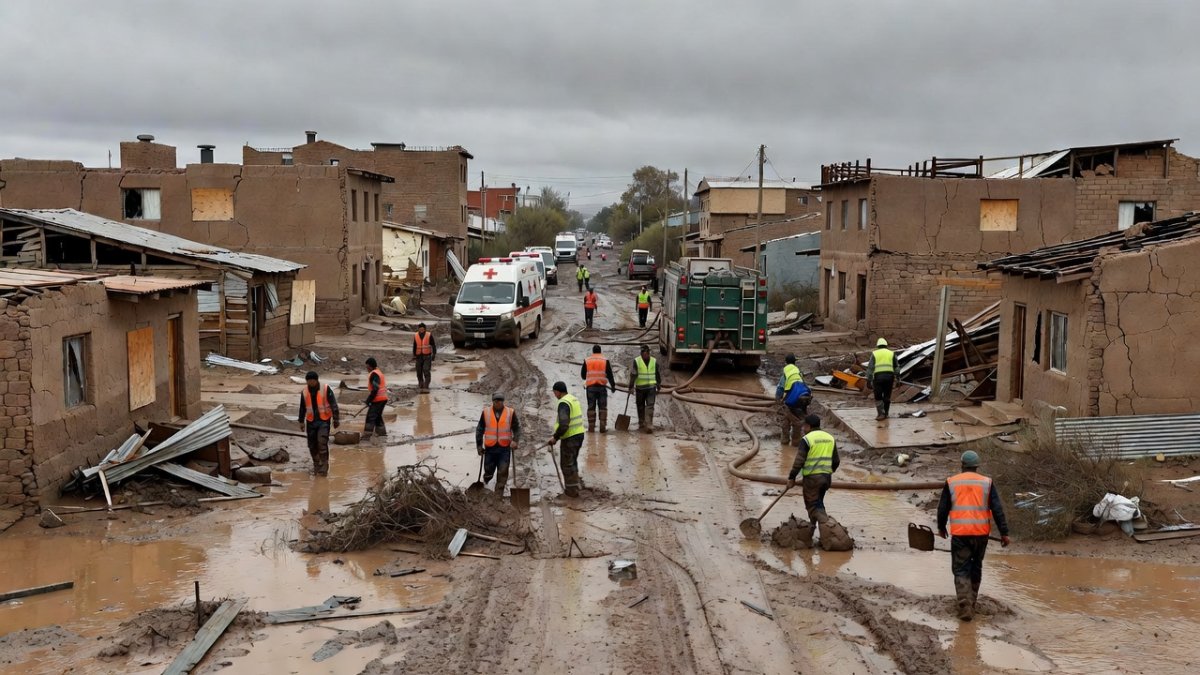
[Santiago, Chile — July 25, 2026] — Multiple powerful frontal systems combined with a Category 4 atmospheric river unleashed catastrophic flooding across the Atacama Desert and Coquimbo region in July 2026, killing at least 13 people and leaving 18 missing as of July 24 according to SENAPRED. Some stations recorded 200-450mm of rain in days, with areas like Freirina receiving multiple years' worth of precipitation in under two weeks, overwhelming the driest places on Earth and isolating over 100,000 residents at peak.
State of Catastrophe Declared as Death Toll Rises
President José Antonio Kast declared a state of catastrophe in Coquimbo and Huasco province of the Atacama region as the death toll reached 13 confirmed fatalities with 18 people still missing by July 24. SENAPRED Director Alicia Cebrián delivered the official balance, confirming 3,500 directly affected damnificados and highlighting the rapid escalation from initial rainfall warnings. The declaration enabled immediate military deployment for aerial rescues and aid distribution across isolated valleys. SENAPRED coordinated with Bomberos de Chile and Carabineros to manage evacuations from high-risk zones prone to aluviones. Over 1,100 homes were destroyed while more than 2,800 suffered damage or total loss, forcing 1,000 people into emergency shelters at the height of the crisis. These figures reflect the scale of destruction in communities unaccustomed to such volumes of water. The catastrophe declaration also unlocked resources for supply chains that later relied on partial reopening of Ruta 5. Alicia Cebrián emphasized ongoing monitoring as additional storm fronts approached. This response mirrors patterns seen in other Latin American nations facing intensified weather under shifting climate regimes.
Atacama's Arid Landscape Turns Deadly: The Science of Desert Flooding
The Atacama Desert's compacted soils possess extremely low permeability, causing rapid runoff that triggers flash floods whenever intense rainfall arrives. Normally dry quebradas such as Quebrada Alarcón activated violently, channeling debris and mud flows known as aluviones that swept through valleys and destroyed infrastructure. This physical reality turned modest precipitation events into lethal cascades across the Norte Chico. Historic precedents include similar catastrophic Atacama flooding in 2015 and 2017, events that already demonstrated the region's latent vulnerability. In July 2026, stations recorded 200-450mm within roughly ten days, with some locations receiving double their annual rainfall in that short window. Freirina experienced multiple years' worth of rain in mere days, overwhelming every drainage pathway. These dynamics produced river overflows, road collapses, and widespread power and water outages. The science reveals why even modest atmospheric rivers can devastate landscapes engineered by extreme aridity. Latin American arid zones share this same geological trap, where centuries of dryness create surfaces incapable of absorbing sudden moisture pulses.
El Niño Meets Climate Change: A Dangerous Recipe
El Niño conditions in 2026 enhanced winter rainfall across northern Chile, delivering the atmospheric river that pushed the Atacama and Coquimbo regions past their limits. A warmer atmosphere holds approximately 7 percent more moisture per 1°C of warming, directly amplifying the volume of water that fell in concentrated bursts. One analysis indicates that what was once a 1-in-50-year event now occurs roughly once per decade, compressing return intervals and straining every preparedness system. Chile's experience tracks broader Latin American patterns where El Niño phases interact with anthropogenic warming to intensify extremes in both arid and tropical zones. The combination produced sustained frontal systems that kept rivers and ravines swollen for days. Additional storm fronts were forecast to continue through late July, prolonging the threat. This dangerous recipe leaves communities with shrinking recovery windows between events. Data from SENAPRED shows how quickly isolation numbers climbed once roads failed under the enhanced rainfall totals. The pattern demands urgent regional cooperation across South America to build resilience against these accelerating cycles.
Humanitarian Crisis: Rescue, Aid, and the Long Road to Recovery
Military units deployed under the catastrophe declaration conducted aerial rescues using army helicopters and trucks, including dramatic operations that evacuated both residents and livestock from flooded valleys. SENAPRED distributed over 12 tons of hygiene kits, food, and bedding to affected communes including Vallenar, Freirina, Huasco, Tierra Amarilla, and Alto del Carmen. At peak, more than 1,000 people occupied emergency shelters while evacuations cleared high-risk zones along valleys and quebradas. Bomberos de Chile and Carabineros supported these efforts amid winds reaching 80-100 km/h that compounded rescue difficulties. The humanitarian operation addressed immediate needs for 3,500 damnificados while planning longer-term recovery for thousands more. Alicia Cebrián stressed that isolation figures dropped from over 100,000 to around 45,000 as routes gradually reopened, yet supply delivery remained restricted. These numbers illustrate the sustained pressure on response agencies. Latin American nations facing similar climate-driven disasters recognize that recovery stretches years when entire communities lose homes and livelihoods simultaneously. The coordinated response prevented higher casualties but exposed gaps in long-term adaptation funding.
Infrastructure and Economic Fallout in Mining Heartland
Coquimbo and Atacama represent key mining regions whose operations faced direct disruption from river overflows, aluviones, and road collapses along critical corridors. Ruta 5 suffered partial damage that forced time restrictions even after limited reopening for supply trucks. Power and water outages affected both residential areas and industrial sites, halting production in zones already stressed by the 200-450mm rainfall totals. Winds of 80-100 km/h toppled lines and scattered debris across mining access roads. Agricultural losses in Coquimbo's fertile valleys added another layer of economic damage as floodwaters destroyed crops and irrigation systems. The combined toll on mining and farming threatens regional GDP and employment in provinces that rely heavily on these sectors. SENAPRED's damage assessments documented over 2,800 homes impacted alongside critical infrastructure failures. President José Antonio Kast's catastrophe declaration facilitated military logistics to restore basic services. Chile's mining heartland now confronts the same climate-amplified risks confronting other Latin American extractive economies, where extreme weather increasingly collides with vital economic arteries.
Towns Cut Off: Vallenar, Freirina and the Atacama Interior
Vallenar, Freirina, Tierra Amarilla, and Alto del Carmen endured prolonged isolation as floodwaters severed roads and activated Quebrada Alarcón and other normally dry ravines. Peak isolation reached over 100,000 people before dropping to approximately 45,000, with many communities dependent on helicopter drops for food and medicine. Agricultural losses mounted in Coquimbo's valleys where fertile soils were stripped or buried under sediment. The 13 deaths and 18 missing persons reported by SENAPRED on July 24 underscore the human cost in these remote interior towns. Winds up to 80-100 km/h further damaged structures already weakened by relentless rain. Residents in Freirina witnessed multiple years of precipitation arrive in days, transforming quiet desert settlements into scenes of evacuation and debris clearance. Carabineros maintained security while Bomberos de Chile cleared access routes. These towns illustrate how climate extremes disproportionately strike Latin America's peripheral communities with limited redundant infrastructure. Recovery will require sustained national and regional support to rebuild both physical and economic foundations.
The Bottom Line — Chile's Climate Future in a Warming World
Chile's July 2026 floods reveal a future where El Niño-enhanced atmospheric rivers and warmer air masses will strike the Atacama and Coquimbo regions with greater frequency and intensity. The shift from 1-in-50-year events to roughly decadal occurrences demands accelerated adaptation across Latin America, where arid zones face parallel threats. Additional storm fronts forecast through late July extended the humanitarian burden on SENAPRED, Alicia Cebrián's teams, and military responders. President José Antonio Kast's state of catastrophe declaration provided necessary authority, yet long-term resilience requires investment in permeable infrastructure and early-warning systems. The 13 deaths, 18 missing, and thousands of damaged homes stand as stark reminders that inaction carries irreversible costs. Chile's experience offers lessons for neighboring countries confronting similar moisture surges in historically dry landscapes. Data-dense responses today can reduce tomorrow's isolation figures and agricultural losses. By confronting these realities with urgency, Latin American nations can transform vulnerability into coordinated strength against a warming climate.
By Elena Vasquez, Staff WriterThis article was produced with AI-assisted research and editorial support. Reporting is based on sources cited in the article.
What's Your Reaction?
 Like
0
Like
0
 Dislike
0
Dislike
0
 Love
0
Love
0
 Funny
0
Funny
0
 Wow
0
Wow
0
 Sad
0
Sad
0
 Angry
0
Angry
0

Latin America Correspondent at Global1.News. Based in Mexico City, covering politics, economics, energy, and culture across the region. Brings an on-the-ground perspective to stories spanning from the Rio Grande to Patagonia.













Comments (0)