
Europe's 2026 Heatwave Shakes Global Food Supply
The parched vineyards of Burgundy tell a story that spans two hemispheres. In July 2026, a historic heatwave across France and Spain has killed more than 8,000 people, destroyed billions of euros in crops, and sent shockwaves through global food markets — forcing Latin America's agricultural powerhouse into an unexpected role as the world's emergency breadbasket.
The parched vineyards of Burgundy tell a story that spans two hemispheres. In July 2026, a historic heatwave across France and Spain has killed more than 8,000 people, destroyed billions of euros in crops, and sent shockwaves through global food markets — forcing Latin America's agricultural powerhouse into an unexpected role as the world's emergency breadbasket. But as Brazil and Argentina rush to fill the gap left by Europe's scorched fields, a Super El Niño threatens to turn their own harvests to dust.
Europe's Scorching Summer: Record Heatwave Kills Thousands, Devastates Agriculture, and Reshapes Global Food Markets
Paris, France – July 24, 2026 —
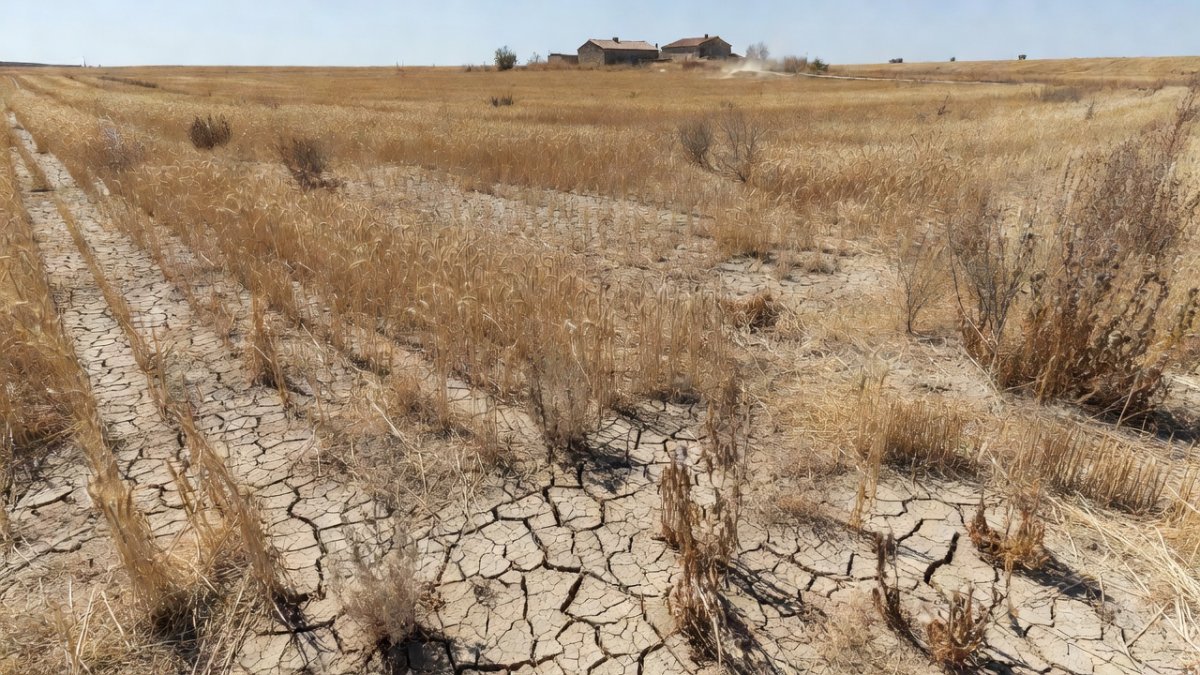
Europe's Scorched Summer — A Climate Emergency Unfolds
France recorded temperature anomalies of +4.2°C above the 1991-2020 baseline during the first half of meteorological summer, with central-western and Burgundy regions spiking +5 to +6°C. Soil moisture plunged to the lowest levels ever recorded for early-to-mid July amid a historic drought. Rain deficits reached 60-100% across many areas, hitting -80% in the Centre-West. France's June 2026 stood as the hottest on record, with a national average of 22.7°C, or +3.8°C above normal. Spain saw 44.3°C at Cartuja station in Granada on July 23, while Cogolin, France, hit 40.9°C and Barcelona reached 40.7°C—its hottest in 112 years. Météo-France issued repeated "vigilance orange canicule" alerts for multiple departments. Climate change is making Mediterranean heatwaves more frequent and intense. These extremes have already reshaped the summer narrative for millions. The data confirm an unprecedented meteorological assault on the continent.
Record Heat, Brutal Toll: 5,764 Dead in France Alone
The human cost proved staggering. France suffered 5,764 excess deaths during the June 17-July 2 heatwave, the deadliest since 2003 when 15,000 perished. Over half of those excess deaths clustered on the peak days of June 25-27. Spain recorded 2,680 heat-attributed deaths for the summer total, including 151 in just three days during the latest wave. Ninety percent of heat-related deaths were among people over 65. Nearly eight out of ten fatal drownings in France occurred during heatwave vigilance periods. These figures underscore the vulnerability of aging populations under prolonged thermal stress. Latin American health officials are already studying these patterns as similar extremes threaten their own elderly communities. The numbers reveal a crisis that extends far beyond temperature readings alone.
French hospitals reported unprecedented strain during the peak heat days, with emergency services facing surges of heatstroke, dehydration, and cardiovascular complications. Funeral homes in affected regions were reportedly overwhelmed as the death toll mounted. Spain's Ministry of Health activated heat emergency protocols across Andalusia, Catalonia, and the Madrid region as temperatures soared past 44°C. The World Health Organization issued renewed guidance for vulnerable populations across Europe, emphasizing the particular danger to outdoor workers, the elderly, and those with chronic conditions — warnings that resonate strongly in Latin American cities where extreme heat is becoming a recurring threat from São Paulo to Mexico City.
Agriculture in Ruins: €2.1 Billion and Counting
EU and UK grain harvests were cut by nearly 9 million tonnes in four weeks, reaching the lowest levels since 2018. France was worst affected, losing approximately 4.1 million tonnes—half the EU total—with estimated economic losses around €2.1 billion. Some French farmers reported 50-70% losses on affected crops. Corn output plunged to a 20-year low in France. Livestock die-offs struck Brittany's industrial poultry and pig farms. Wheat was struck during its critical grain-filling stage in central and southern France. The Coordination Rurale union called for expanded water storage reservoirs. Direct agricultural damage reached €2 billion. Banque de France noted the French economy showed good resilience overall, yet agriculture faces acute strain. These losses now ripple outward, creating urgent demand that Latin American producers are positioned to meet. The scale of destruction marks a turning point for European food security.
The damage extended across virtually every agricultural sector. Summer crops like maize, soybeans, and sunflowers showed "great suffering" according to French agrometeorologists, with satellite imagery revealing scorched pastures and defoliated forests. Winter crops produced early, poor harvests. Truffle production in Périgord — a luxury industry worth millions — faces an uncertain season despite its later harvest window. French farming unions emphasized that while farmer-to-farmer solidarity offers some relief, it cannot offset losses reaching 50% on individual plots. They have called on the government for practical solutions including expanded water storage reservoirs to capture winter rains, evidence-based crop protection policies, and a shift from purely observational responses to active adaptation measures.
Global Food Shock — Europe's Loss Is the World's Problem
Wheat prices rose amid the shortages. Europe now faces higher import needs for corn from Ukraine and other suppliers. The EU crop loss exceeds the combined output of Austria, Ireland, and the Netherlands. A Super El Niño is forming, with Niño 1+2 at +3.87°C and basin-wide anomalies near +2.4°C. Models suggest this could become the strongest El Niño since records began, with a median estimate around 3.6°C. These developments intensify pressure on global grain markets already strained by European shortfalls. Latin American exporters watch closely as price signals strengthen. The interconnected nature of food systems means no region remains isolated from the crisis. Every lost tonne in France translates into new opportunities and risks thousands of kilometers away.
For Latin America, the food price implications cut both ways. Higher global grain prices boost export revenues for Brazil and Argentina's agricultural sectors — a welcome tailwind for economies still recovering from inflationary pressures. But rising wheat and corn prices also hit food-importing nations across the region, particularly in the Caribbean and Central America where households spend a larger share of income on staple foods. The OECD and FAO have warned that climate-driven supply shocks of this magnitude could push an additional 10 to 20 million people into food insecurity across the Americas. The European heatwave thus becomes not merely a weather event but a structural challenge for food systems from Paris to Panama City.
Latin America Steps In: Record Harvests Meet Rising Demand
Brazil achieved a record grain harvest of approximately 356 million tonnes, including 179 million tonnes of soy and 139 million tonnes of corn. Domestic soybean crushing hit a record 62.5 million tonnes in 2026, while corn use for ethanol rose sharply, approaching 30% of Centre-South output. Argentina posted a record 147.9 million tonnes of grain production, up 13% year-over-year, with corn forecast at 71.5 million tonnes, a 38% increase, and export revenues above $6 billion. Argentina's wheat planting was encouraged by strong global prices tied to EU losses. Higher global grain prices benefit Latin American exporters of Brazilian soy and corn as well as Argentine wheat and corn. EU import needs open fresh opportunities for South American suppliers. These record volumes position the region as a critical stabilizer in the global food system. The contrast with Europe's devastation could not be sharper.
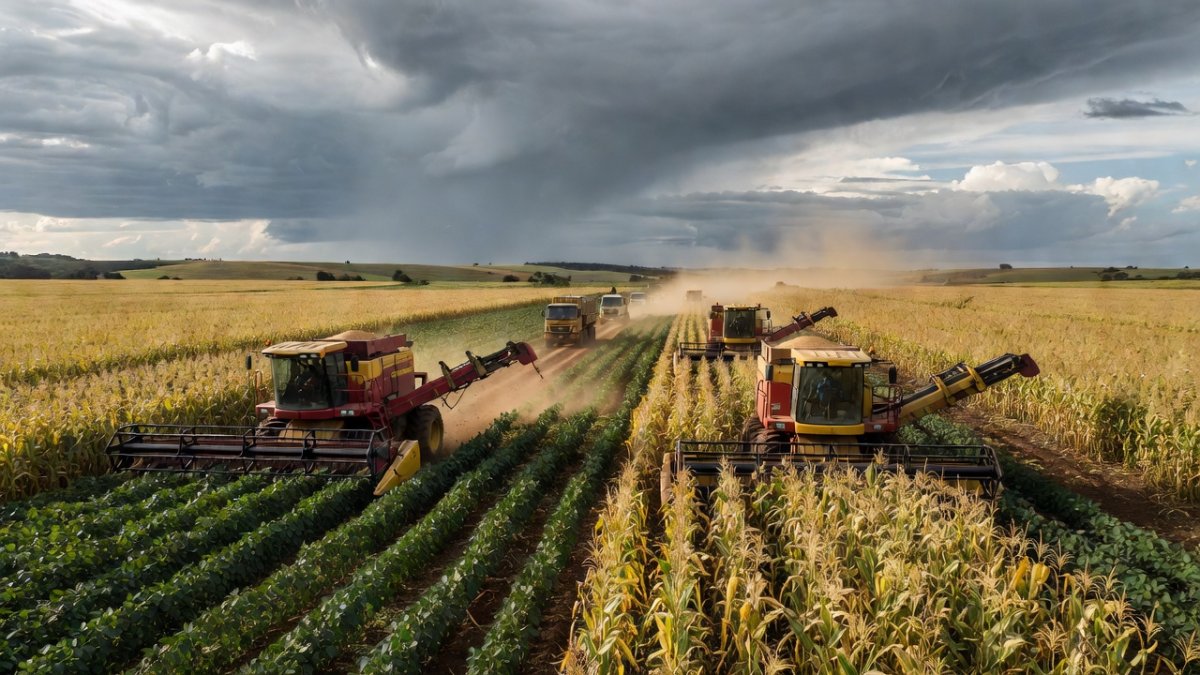
But the Climate Crisis Has No Borders — Super El Niño Looms
Brazil's safrinha second-crop corn faced drought stress in Mato Grosso. A June 2026 cold outbreak brought frost risks to Argentina, Uruguay, Paraguay, and southern Brazil. The Super El Niño threatens drought and heat in Brazil's North, Northeast, and Amazon regions alongside excess rain in the South. Pantanal saw active fires in July 2026, prompting Brazil-Bolivia joint firefighting training in Corumbá. Burned area in the Brazilian Amazon dropped 80% in 2025 versus 2024, reaching the lowest since 1985. July marks the start of the dry season in the Amazon, with early drying signs already visible from the developing El Niño. Conservation groups warn of heightened fire risk peaking in 2027. These overlapping threats show how climate extremes spare no hemisphere. Latin America's gains remain fragile against the same forces battering Europe.
Brazil's Environment Ministry has closely monitored deforestation and fire data, with INPE satellite systems tracking early warning signs across the Amazon basin. The burned area in the Brazilian Amazon dropped 80% in 2025 compared to 2024, reaching the lowest levels since satellite records began in 1985 — a testament to strengthened enforcement under the current administration. Yet July marks the onset of the dry season, and the developing El Niño carries the potential to reverse these hard-won gains. Across the border in Bolivia, authorities have deployed over 60 military personnel for joint firefighting training in Corumbá, reflecting a growing recognition that the Pantanal — one of the world's most biodiverse wetlands — cannot be protected by national boundaries alone.
The Bottom Line — What Comes Next for a Warming Hemisphere
The July 2026 heatwave has exposed the acute vulnerability of food systems to accelerating climate change. While Latin America supplies critical relief through record harvests, the same El Niño dynamics and shifting rainfall patterns now threaten those very gains. French resilience masks deep agricultural wounds, and Mediterranean heatwaves will only grow more frequent and intense. Policymakers across both regions must accelerate adaptation, from water infrastructure in France to fire prevention in the Amazon. The data from 5,764 French deaths to Brazil's 356 million tonnes of grain tell one interconnected story. Latin America stands at the center of the response, yet faces its own climate reckoning. The hemisphere's future depends on recognizing these shared stakes before the next record falls.
By Elena Vasquez, Staff WriterThis article was produced with AI-assisted research and editorial support. Reporting is based on sources cited in the article.
What's Your Reaction?
 Like
0
Like
0
 Dislike
0
Dislike
0
 Love
0
Love
0
 Funny
0
Funny
0
 Wow
0
Wow
0
 Sad
0
Sad
0
 Angry
0
Angry
0

Latin America Correspondent at Global1.News. Based in Mexico City, covering politics, economics, energy, and culture across the region. Brings an on-the-ground perspective to stories spanning from the Rio Grande to Patagonia.















Comments (0)