
Thailand Cuts 2026 Auto Target Amid Mideast War Disruptions
Thailand's automotive industry has lowered its 2026 production target from 1.5 million vehicles to 1.45 million as export routes face disruption from regional conflict in the Middle East. The Federation of Thai Industries cited shipping delays through the Strait of Hormuz and shifting tariff policies as primary factors behind the revision.
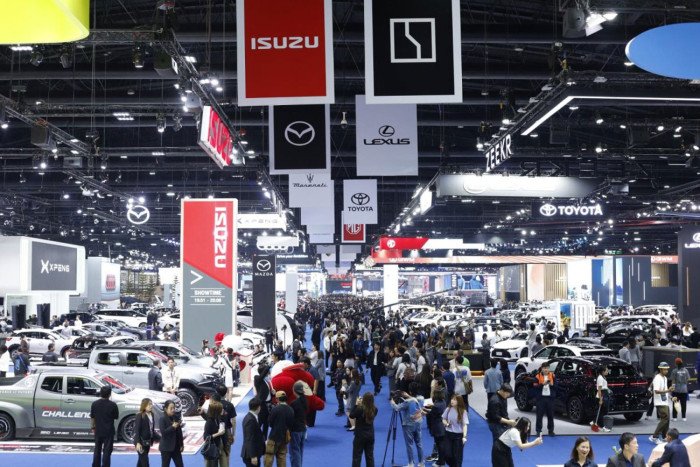
Thailand's automotive industry has lowered its 2026 production target from 1.5 million vehicles to 1.45 million as export routes face disruption from regional conflict in the Middle East. The Federation of Thai Industries cited shipping delays through the Strait of Hormuz and shifting tariff policies as primary factors behind the revision. A brief diplomatic opening on June 17, when Washington and Tehran signed a memorandum of understanding, had raised hopes of eased tensions, yet the agreement collapsed within days and left exporters facing continued uncertainty.
Mideast War Hits Thailand's Auto Heartland as FTI Cuts Production Target
Bangkok, Thailand — Vehicle output in April 2026 fell to 103,794 units, a 22.20 percent drop from March, according to Federation of Thai Industries data. The decline pushed monthly production to a five-year low and prompted the industry group to cut its full-year target. Production has followed a steady downward path since the 1.9 million units recorded in 2022, falling to 1.7 million in 2023, 1.6 million in 2024 and 1.55 million in 2025. The Eastern Economic Corridor, long regarded as the heart of Thailand's "Detroit of the East" reputation, absorbed much of the immediate pressure as plants in Rayong and Chonburi reduced shifts.
Thailand's Auto Sector Faces Fresh Challenges in April 2026
The Federation of Thai Industries reported April 2026 production at 103,794 units, down 22.20 percent from the previous month. Output has followed a downward trend since peaking near 1.9 million units in 2022, with totals of 1.7 million in 2023, 1.6 million in 2024, and 1.55 million in 2025. Production clusters in Rayong, Chonburi, Samut Prakan, and Ayutthaya absorbed the immediate impact as assembly lines reduced shifts. The Thai Ministry of Commerce is tracking supplier effects across these provinces, including parts flows that reach into Isaan supply chains where smaller factories provide components for the eastern hubs.
Export Markets in the Middle East Feel the Strain
Export shipments fell 36.20 percent year-on-year in April 2026, with volumes to the Middle East dropping more than 38 percent. Thailand's main export destinations in the region are Saudi Arabia, the UAE, Oman, Kuwait, and Qatar. The first half of 2026 recorded 421,144 units exported overall, an 8.32 percent decline from the same period in 2025. Disruptions at the Strait of Hormuz forced rerouting that added time and cost to deliveries. The Middle East remains Thailand's third-largest vehicle export market and supports employment in eastern industrial zones. Additional pressure comes from U.S. tariff policy changes and growing competition from Chinese electric-vehicle makers that are expanding global reach while CO2 emission rules tighten on internal-combustion-engine shipments.
Production Figures for the First Five Months of 2026
Total vehicle production for January through May 2026 reached 587,759 units, a 1.13 percent decrease compared with the same period in 2025. Parts manufacturers supplying the eastern clusters adjusted output in line with the lower assembly rates. The Thai Ministry of Commerce continues to monitor inventory levels and employment data in the affected provinces, where worker communities in Rayong and Chonburi rely on steady plant schedules for household income and local services.
Surapong Paisitpatanapong Issues Warning on Export Targets
Surapong Paisitpatanapong, advisor and spokesman for the Automotive Industry Club at the Federation of Thai Industries (FTI), stated earlier this month that Thailand may miss its annual export target if the current conflict lasts beyond three months. The Federation has already lowered the export goal from 950,000 to 900,000 vehicles while keeping the domestic target unchanged at 550,000. Surapong Paisitpatanapong noted that prolonged closure of key shipping lanes would require further cuts, adding the direct remark: "If the war does not stop, we may need to cut the target again." Board of Investment officials in Chonburi are reviewing the impact on manufacturers operating in the Eastern Economic Corridor.
Domestic EV Adoption Offers a Bright Spot
Domestic electric vehicle sales rose 140 percent year-on-year to 22,275 units in the first five months of 2026. Internal combustion engine sales fell 33.7 percent to 8,114 units over the same period. Overall domestic sales increased 17.3 percent to 58,724 units. Board of Investment incentives have supported assembly operations by Chinese manufacturers including BYD and Great Wall Motor in the Eastern Economic Corridor. The shift has created new supplier networks in Ayutthaya and neighboring provinces while offsetting some of the decline in traditional vehicle output. These developments help cushion effects on Thailand's GDP and trade balance, though sustained growth will depend on stable energy policy and continued investment.
Regional Competition and ASEAN Trade Implications
Thailand competes with Vietnam for automotive investment within ASEAN. Chinese electric vehicle makers have increased their presence in both countries, while tightening CO2 emission standards affect traditional internal combustion engine exports. The Board of Investment maintains incentives aimed at preserving Thailand's role as a regional assembly base. Extended disruptions through the Strait of Hormuz could shift sourcing decisions among buyers in Southeast Asia, adding another layer of complexity to an already delicate export environment.
Looking Ahead for Thai Communities and Industry
The Federation of Thai Industries and the Thai Ministry of Commerce are coordinating measures to protect remaining export volumes to the Middle East while supporting growth in the domestic electric vehicle segment. Communities in Rayong and surrounding provinces depend on steady production for local employment and services. Industry officials continue to assess options to maintain Thailand's position in regional automotive trade, mindful that any further deterioration in Middle East shipping conditions could require additional adjustments to production plans.
By Ann Srisawat, Staff WriterThis article was produced with AI-assisted research and editorial support. Reporting is based on sources cited in the article.
What's Your Reaction?
 Like
0
Like
0
 Dislike
0
Dislike
0
 Love
0
Love
0
 Funny
0
Funny
0
 Wow
0
Wow
0
 Sad
0
Sad
0
 Angry
0
Angry
0

Southeast Asia Correspondent at Global1.News. Based in Bangkok, covering Thai and Southeast Asian politics, economy, technology, and culture. Deep regional perspective on one of the world's most dynamic regions.













Comments (0)