
Trump Tariffs 2026: UK Loses Edge on US Trade Deal
President Donald Trump’s decision to impose fresh tariffs of between 10% and 12.5% on imports from 60 countries, effective from 24 July 2026, has sent a jolt through British boardrooms already braced for prolonged transatlantic uncertainty. The measures, justified under Section 301 of the Trade Act of 1974 and aimed at nations judged to have weak rules against forced labour, cover virtually every significant trading partner of the United States.
President Donald Trump’s decision to impose fresh tariffs of between 10% and 12.5% on imports from 60 countries, effective from 24 July 2026, has sent a jolt through British boardrooms already braced for prolonged transatlantic uncertainty. The measures, justified under Section 301 of the Trade Act of 1974 and aimed at nations judged to have weak rules against forced labour, cover virtually every significant trading partner of the United States. For UK exporters who believed last year’s bilateral understanding with Washington would deliver a lasting edge, the announcement has revived familiar anxieties about being caught between American protectionism and European collective bargaining power.
The timing could scarcely be worse. British manufacturers are still adjusting to post-Brexit rules of origin, while the pound’s recent volatility has already squeezed margins on dollar-denominated contracts. Although the UK secured the lower 10% rate negotiated by Sir Keir Starmer’s government, the absence of any preferential margin over the EU leaves many firms wondering whether the vaunted “Global Britain” strategy has delivered tangible advantage. Supply-chain managers in the Midlands and Scotland are now recalculating landed costs for components and finished goods that will face the new duties within days.
Downing Street’s measured response masks deeper frustration. Officials had hoped the Supreme Court’s earlier rejection of broader national-security tariffs would open space for a more stable UK-US trading relationship. Instead, the administration in Washington has simply shifted legal ground, using forced-labour enforcement as the rationale for duties that will affect nearly all American imports. The result is a policy that feels both punitive and indiscriminate to many British observers.
Trump's Section 301 Tariffs Hit UK Exporters Despite Starmer Deal
London, UK – July 24, 2026 — USTR Jamieson Greer confirmed the tariffs replace the expiring Section 122 temporary duties that ran for 150 days, following the Supreme Court’s February 2026 ruling that struck down earlier IEEPA-based measures. Countries with forced labour import prohibitions or firm commitments receive the lower 10% rate, while others face 12.5%. India secured a reduction to 10% after demonstrating progress, yet the UK now finds itself aligned with the EU rate despite its separate trade agreement.
The Scope of the New Tariffs
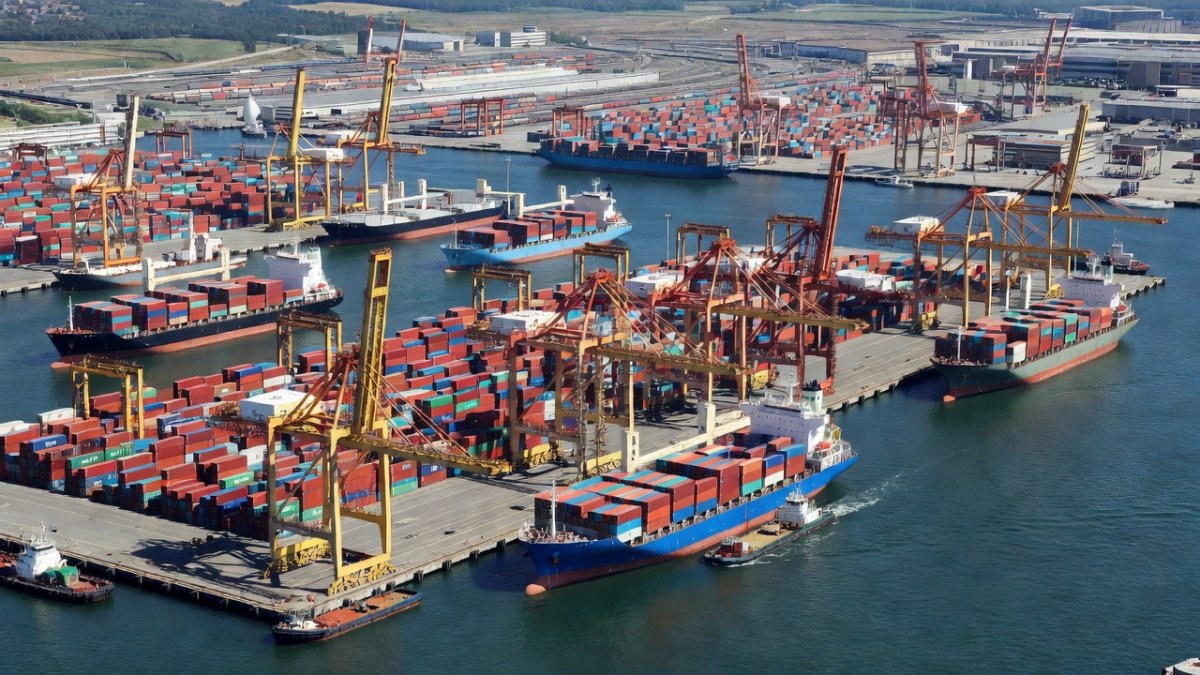
The 60 targeted nations account for virtually every major trading partner supplying the United States. Goods already in transit receive exemption until 28 July 2026, giving companies a narrow window to adjust logistics. USTR Jamieson Greer stated: “The United States has had a forced labor import ban for nearly a century, and rigorously enforces it; it’s well past time for our trading partners to do the same.” Additional Section 301 investigations will soon cover 16 further countries representing 70% of US imports.
Legal Foundation and Historical Context
Section 301 allows the president to address unfair foreign trade practices. Trump previously deployed it against China during his first term, and those duties survived multiple court challenges. The current action rests on claims of insufficient enforcement of forced labour import bans rather than broader national security arguments rejected by the Supreme Court earlier this year. This shift provides a more durable legal footing while expanding pressure across dozens of economies simultaneously.
How the Tariffs Work: Rates, Exemptions and Transition
The two-tier structure distinguishes between partners that have demonstrated credible action against forced labour and those that have not. Nations able to show either statutory prohibitions on such imports or binding commitments to introduce them qualify for the 10% rate. All others face 12.5%. The United Kingdom, the European Union and India sit in the lower tier, while several emerging economies remain at the higher level pending further review.
These duties replace the temporary Section 122 tariffs that operated for 150 days after the Supreme Court invalidated earlier IEEPA measures in February. The transition is deliberately compressed: goods already on the water enjoy a four-day grace period until 28 July, after which the new rates apply in full. USTR officials have signalled that the 16 additional countries now under investigation will face similar scrutiny, potentially widening the tariff net to cover an even larger share of US imports.
UK Position and Emerging Competitive Disadvantage
The UK retains the 10% rate Sir Keir Starmer negotiated last year, yet the EU now enjoys equivalent treatment under its own commitments. British firms therefore compete on equal tariff terms with European rivals despite the UK’s independent trade deal. Downing Street expressed disappointment and pledged to “continue to engage constructively,” but analysts note the absence of any preferential margin for UK goods.
Business and Trade Secretary Kemi Badenoch described the outcome as “deeply unsatisfactory” and confirmed that fresh representations would be lodged in Washington within the fortnight. The CBI warned that the uniform rate risked “eroding the commercial value” of the bilateral understanding secured in 2025, while the British Chambers of Commerce called for urgent coordination with EU counterparts to avoid a fragmented lobbying effort that could further weaken Britain’s hand.
The irony is stark. Having championed independent trade deals as the dividend of Brexit, the UK now finds itself tariff-equivalent to the bloc it left. The Supreme Court ruling that invalidated the earlier IEEPA tariffs removed the very leverage ministers had hoped to exploit for a more advantageous arrangement. Without a meaningful preference over European competitors, the political narrative of “Global Britain” looks increasingly threadbare to exporters who must absorb the same 10% levy as their continental rivals.
Sectoral Impacts on British Manufacturing and Exports
UK manufacturing faces immediate cost pressures on components shipped to American assembly plants. Automotive exporters, already navigating post-Brexit rules of origin, must absorb the 10% levy on finished vehicles and parts. Scotch whisky producers anticipate higher landed prices in key US states, where the spirit previously benefited from tariff-free access under earlier agreements. Financial services firms report indirect effects as clients reassess supply-chain financing tied to transatlantic trade volumes.
In the Midlands, automotive suppliers warn that the cumulative burden of rules-of-origin paperwork and the new tariff could push some contracts into loss-making territory. Jaguar Land Rover and Aston Martin have both flagged potential price increases for US-bound models, while smaller tier-two firms supplying wiring harnesses and electronics face even tighter margins. Industry estimates suggest the sector could lose up to £180 million in the first year alone.
Scottish distilleries are equally exposed. The US remains the largest export market for Scotch whisky, worth more than £1 billion annually. With no tariff-free carve-out available, producers anticipate a 6–8% rise in shelf prices that could dampen volume growth just as the category recovers from pandemic-era disruption. Welsh steel exporters and Northern Irish manufacturers of precision engineering components report similar recalibrations, with several firms already exploring alternative markets in Asia and the Middle East.

Expert Reactions and Economic Analysis
John Diamond of the Baker Institute described the policy as “a little bit ridiculous to think that over 60 major trading partners, including countries in the EU, are really relying on that much forced labour.” UK business groups have echoed concerns that the uniform rate undermines the value of bilateral negotiations. The Channel 4 News programme “Trump slaps new US tariffs on dozens of countries” examined how these duties ripple through everyday supply chains from Birmingham factories to Highland distilleries.
Trade policy academics at the London School of Economics argue the measures risk undermining the credibility of the WTO’s dispute-settlement system. Professor Emily Jones noted that while Section 301 actions have historically targeted single countries, the current broad-brush approach invites accusations of arbitrary discrimination. Canadian officials have already signalled they will seek carve-outs for critical minerals, while the EU is preparing a coordinated legal challenge at the WTO.
Comparisons with the EU response are instructive. Brussels has moved swiftly to align its forced-labour due-diligence rules with US expectations, securing the 10% rate for member states. Canada, by contrast, has adopted a more confrontational tone, threatening retaliatory tariffs on US agricultural exports. The divergence leaves the UK awkwardly positioned between two larger partners whose strategies may ultimately determine the longevity of the new tariff regime.
Global Reactions and the Risk of Retaliation
The European Commission has condemned the tariffs as “disproportionate” and warned of possible countermeasures if negotiations fail. China has already lodged a formal complaint at the WTO, while Canada is considering mirror duties on American whiskey and motorcycles. Several ASEAN nations have privately expressed alarm that their own exports could be swept into future Section 301 rounds.
Analysts fear a cycle of tit-for-tat escalation reminiscent of the 2018–2019 trade war. Retaliatory measures targeting US agricultural and aerospace exports would hit American heartland states, potentially hardening political support for the tariffs rather than softening it. For Britain, caught between Washington’s assertiveness and Brussels’ collective response, the diplomatic space for independent manoeuvre appears increasingly narrow.
Next Steps for UK Trade Policy
Downing Street has instructed the Department for Business and Trade to prepare fresh representations to Washington ahead of the additional investigations. Officials are also examining whether enhanced domestic forced labour legislation could unlock future concessions. British chambers of commerce have urged ministers to coordinate with EU counterparts to prevent a fragmented response that would further erode UK competitiveness in the American market.
The timeline for the next wave of Section 301 actions is tight. Investigations into the additional 16 countries are expected to conclude by October, with possible tariff adjustments taking effect before the end of the year. Ministers are therefore racing to demonstrate legislative progress that could justify a further reduction or exemption for British goods.
Longer term, the episode raises fundamental questions about the viability of a comprehensive UK-US trade agreement. Without a durable exemption from these duties, any future deal risks being undermined by the same unilateral measures that have now levelled the UK with the EU. Officials in Whitehall are quietly exploring whether closer alignment with European standards on forced labour might offer the most pragmatic route to restoring competitive parity, even if it sits uneasily with the government’s post-Brexit rhetoric.
By Erica Thornton, Staff Writer
This article was produced with AI-assisted research and editorial support. Reporting is based on sources cited in the article.
What's Your Reaction?
 Like
0
Like
0
 Dislike
0
Dislike
0
 Love
0
Love
0
 Funny
0
Funny
0
 Wow
0
Wow
0
 Sad
0
Sad
0
 Angry
0
Angry
0

US Politics and Policy Correspondent at Global1.News. Based in Washington DC, covering American politics, policy, elections, and the courts. Knows how the system works and tells you what it actually means.












Comments (0)