
Meta Just Quit the Clean Energy Club — and the AI Gas Boom Is Only Getting Started
Meta quietly left the RE100 renewable energy initiative after funding a dozen natural gas power plants for its Hyperion AI data center in Louisiana. The green hyperscaler pledge is dead — and AI infrastructure is burning gas to stay online.
Meta Just Quit the Clean Energy Club — and the AI Gas Boom Is Only Getting Started
Let me tell you something that landed in my feed yesterday that I'm still turning over in my head.
Meta — the company that spent a decade telling us it was all-in on renewable energy — quietly left the RE100 corporate clean energy initiative. No fanfare. No press release. Just a quiet exit while they were simultaneously announcing their tenth natural gas power plant for AI data centers in Louisiana.
I've been watching this contradiction build for months. Every hyperscaler has pledged carbon neutrality by 2030. Every single one is now building or funding natural gas infrastructure to keep their AI dreams alive. And nobody in the industry wants to talk about what that actually means — for the climate, for the power grid, or for the rest of us running real infrastructure who have to deal with the consequences.
The Meta Story — Ten Years of Green Credentials, Gone in a Quiet Exit
RE100 is the corporate renewable energy initiative that companies join to signal they're serious about clean power. Members commit to sourcing 100% of their electricity from renewables. Meta had been a member for a decade. They were the poster child for corporate renewable procurement — signing massive PPAs, building solar farms, telling everyone how committed they were.
On July 23, 2026, TechCrunch broke the news: Meta left the group. The company didn't announce it. It was discovered through a routine check of RE100's membership roster. One day they were listed. The next day they weren't. No explanation, no transition plan, no "we're evolving our approach" blog post. Just gone.
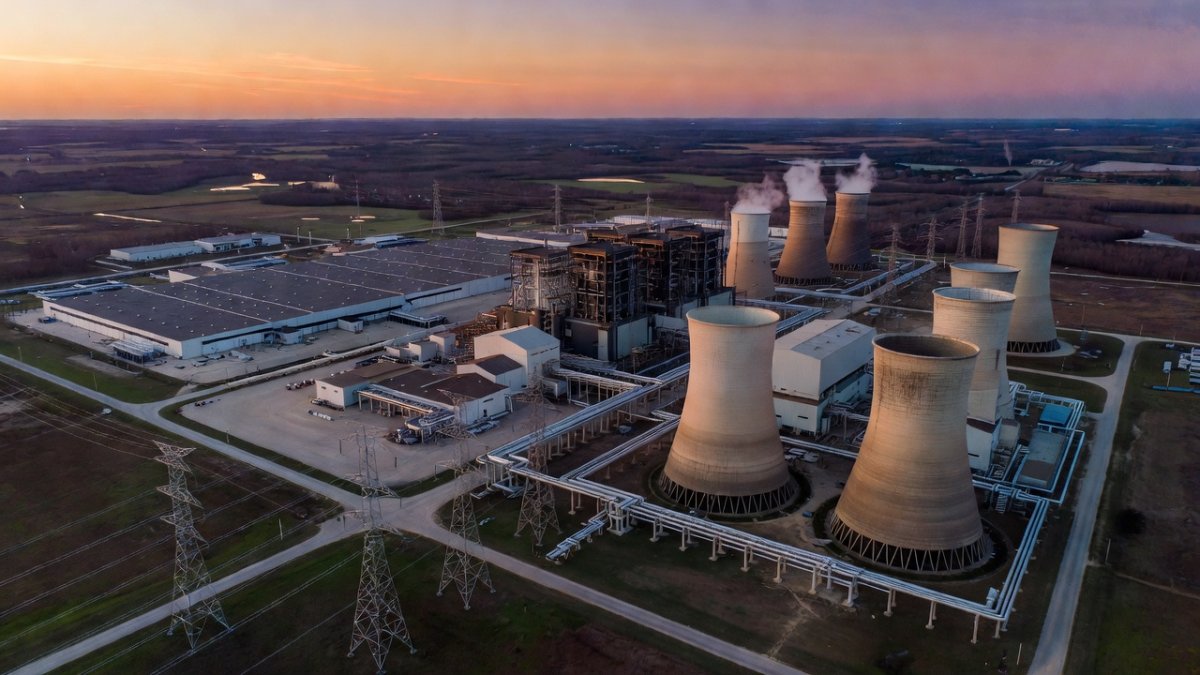
And the timing couldn't be more damning. Over the past twelve months, Meta has funded the construction of at least a dozen natural gas power plants. Three large gas plants in Louisiana approved in February. Seven more in April. Combined capacity pushing 7.5 gigawatts. Enough electricity to power the entire state of South Dakota.
Let that sink in for a second. One company, one data center campus, will consume as much power as a whole US state.
The Numbers — 10 Gas Plants, 240 Miles of Transmission, Zero Precedent
The Hyperion data center in Richland Parish, Louisiana, is the largest single AI infrastructure project ever built. Four million square feet. Five gigawatts of target capacity. A $27 billion price tag funded through a joint venture with Blue Owl Capital.
Meta's agreement with Entergy Louisiana is unprecedented in scale. Seven new natural gas-fired power plants totaling 5.2 gigawatts of generation capacity. Three more approved earlier bringing the total to roughly 7.5 GW. Two hundred and forty miles of new 500-kilovolt transmission lines. Grid-scale battery storage. Even nuclear power uprates thrown in as a nod to anyone still paying attention to the energy mix.
This isn't a pilot program or a hedge. This is Meta becoming a utility company because the existing grid can't handle what they need. They're not buying power from existing plants — they're financing the construction of new ones from scratch because no utility was going to build 7.5 GW of generation capacity on spec. Meta had to guarantee the demand to make the economics work.
And it gets worse. A single 1-gigawatt data center running 24/7 on natural gas releases 438 metric tons of nitrogen oxides and 149 metric tons of fine particulate matter every year. Multiply that by 7.5 GW and you're looking at over 3,200 tons of NOx and 1,100 tons of particulates annually from just one corporate campus. That's not a data center. That's a power plant complex that happens to run GPUs.
The RE100 Exit — Why It Matters Beyond the Optics
Leaving RE100 isn't just bad PR. It's a structural signal that the renewable energy procurement model has hit a wall it can't scale past.
RE100 worked when corporate demand was measured in hundreds of megawatts. You sign a PPA with a wind farm, you buy RECs to cover the gap, you claim 100% renewable. The accounting is fuzzy but the optics work. When your demand hits 7.5 GW — more than the entire commercial electricity market in some states — there aren't enough PPAs on the planet to paper over the gap. The math stops working.
Meta's spokesperson told TechCrunch the company "remained committed to matching its data center electricity usage with 100% clean and renewable energy." But they said that while building ten gas plants. You can't match 7.5 GW of gas-fired baseload power with solar panels that only generate 20% of the time. The numbers don't lie even when the press statements do.
Google Is Doing the Same Thing in Texas
Before anyone thinks this is a Meta-specific problem, Google announced its own natural gas-powered data center in Armstrong County, Texas, earlier this year. A partnership with Crusoe Energy to build a dedicated gas plant in the Texas Panhandle — population 1,900 — to power a new AI data center. Yale Environment 360 reported the move as "part of an ongoing about-face for the tech giant, which once pledged to be carbon neutral by 2030."
Let me be clear: Google was the pioneer of corporate renewable procurement. They were carbon neutral since 2007. They bought more renewable energy than any company on earth year after year. And now they're building gas plants in the Texas Panhandle because the AI compute demands have outstripped what any renewable portfolio can supply at the scale they need.
If Google — the greenest of the green hyperscalers — is building gas plants, the entire model is broken. This isn't a corner case. This is the new normal.
The Industry Pattern — Every Climate Pledge Is Getting Sacrificed for AI Compute
Look at what we're seeing across the entire hyperscaler landscape in 2026:
- Meta: Left RE100 after a decade. Ten gas plants in Louisiana. 7.5 GW of fossil generation.
- Google: Building gas-powered data centers in Texas after 20 years of carbon neutrality claims.
- Microsoft: Signed a deal to restart Three Mile Island. Their carbon footprint has grown 30% since their 2020 pledge to be carbon negative.
- Amazon: Bought a $650 million data center campus next to a natural gas plant in Pennsylvania. AWS's Scope 2 emissions keep climbing despite being the largest corporate PPA buyer in the world.
- Oracle: Their $165 billion Project Jupiter pipeline includes gas-powered data centers across multiple states. Two rejected financing attempts later, the environmental impact assessments haven't slowed them down.
Every single hyperscaler promised carbon neutrality by 2030. Every single one is now building or buying gas-fired generation because the grid can't handle 5 GW campus loads on intermittent renewables alone. The AI buildout has exposed the fundamental tension between compute growth and climate commitments — and compute is winning every time.
The BloombergNEF Warning — 20% of US Power by 2035
BloombergNEF published a report on July 21 that put numbers on this trajectory. Data centers will consume approximately 20% of total US electricity generation by 2035, up from 5.9% today. That's a quadrupling of data center power demand in less than a decade.
Twenty percent. One fifth of the entire US power grid feeding server racks.
And where is that power coming from? The existing grid is already struggling with renewable intermittency, baseload plant retirements, and transmission bottlenecks. There is no scenario where 20% of US generation can be added through renewables alone in ten years. The math forces gas into the mix whether anyone wants to admit it or not.
What This Actually Means for Independent Hosting Providers
I've been running hosting infrastructure for over a decade. Here's what this hyperscaler gas boom means for those of us who don't have $27 billion joint ventures with private equity firms.
First — power costs are going up everywhere. When hyperscalers finance gas plants, those plants don't exist in isolation. They pull gas supply from the same pipeline networks, drive up fuel prices, and tighten regional capacity margins. Every independent colo operator in Louisiana, Texas, and the broader Gulf region will face higher wholesale power rates as the hyperscalers outbid everyone for gas supply. Lock in your power contracts now and extend them as far as you can.
Second — the regulatory backlash is coming for natural gas too, not just data centers. Environmental opposition to data centers has focused on water consumption and community noise. Once the NOx and particulate numbers from these gas plants become common knowledge — and they will, because local air quality monitoring boards exist — the same communities that blocked data centers will start blocking gas plants. The eminent domain battles we've seen for transmission lines will look tame compared to the fights over gas plant siting in residential airsheds.
Third — the green premium is dying as a competitive differentiator. For years, independent hosting providers could position carbon-neutral colocation as a premium product. If Meta and Google can't credibly claim 100% renewable anymore, the bar drops for everyone. Customers who cared about green hosting are either going to accept "best effort" or stop asking. Don't invest heavily in green certification — the market is about to stop caring because the hyperscalers just normalized gas.
Fourth — watch for stranded asset risk. If carbon pricing or emissions regulations tighten in the next 3-5 years — and many jurisdictions are already discussing it — hyperscalers with 5-10 year gas plant commitments could face billions in carbon compliance costs. Independent operators who deploy efficient, future-proofed cooling and power infrastructure will be in a better position when the regulatory pendulum swings back.
The Structural Reality — The Green Hyperscaler Is Dead, and Nobody's Mourning
The uncomfortable truth that nobody in the industry wants to say out loud: the hyperscaler climate pledge was always contingent on compute growth staying within manageable bounds. AI broke that assumption.
You cannot train a GPT-5-class model on solar panels alone. You cannot run inference at global scale on battery storage. The 24/7 baseload power requirement of AI infrastructure is fundamentally incompatible with intermittent renewable generation at the current state of grid-scale storage technology. Every hyperscaler has done the math and realized the choice is between meeting climate targets and staying competitive in AI. They've all chosen AI.
And honestly? I don't blame them as business decisions. If I had to choose between keeping a climate pledge and staying competitive in the biggest technology shift since the internet, I'd choose competitive too. What I blame them for is the pretense — the press releases about 100% renewable matching while signing gas plant construction contracts. Just say it. "We need gas to power this buildout and we'll deal with the climate consequences later." At least that's honest.
The Bottom Line
Meta leaving RE100 is not a scandal. It's a confession. A quiet acknowledgement that every climate pledge made before 2023 was based on assumptions about compute growth that AI has blown apart.
Ten gas plants in Louisiana. 7.5 gigawatts. 3,200 tons of NOx per year. And that's just one company at one campus.
For independent hosting providers, the implications are clear: power costs rise, regulatory risk spreads to energy infrastructure itself, the green premium dies, and the hyperscalers are no longer the sustainability leaders they pretended to be. Position yourself for a market where power availability matters more than power marketing. Build efficient, stay lean, and don't bet your business on the idea that anyone in this industry is serious about their climate targets.
Because they're not. And the gas plants prove it.
— Allan Ali, Founder
This article was produced with AI-assisted research and editorial support. Reporting is based on sources cited in the article.
What's Your Reaction?
 Like
0
Like
0
 Dislike
0
Dislike
0
 Love
0
Love
0
 Funny
0
Funny
0
 Wow
0
Wow
0
 Sad
0
Sad
0
 Angry
0
Angry
0

Publisher of Global1.News. Automation architect, systems builder, and the guy making sure the truth gets published.













Comments (0)