
Micron Hiroshima HBM Plant: ¥1.5 Trillion AI Chip Push
Groundbreaking Event, Investment Scale, and Timeline Micron Technology marked a major milestone with the July 4, 2026 groundbreaking for its Hiroshima factory expansion. The project carries a total investment of ¥1.5 trillion, equivalent to $9.3 billion, focused exclusively on high-bandwidth memory production. This scale underscores the strategic importance of advanced memory i
Groundbreaking Event, Investment Scale, and Timeline
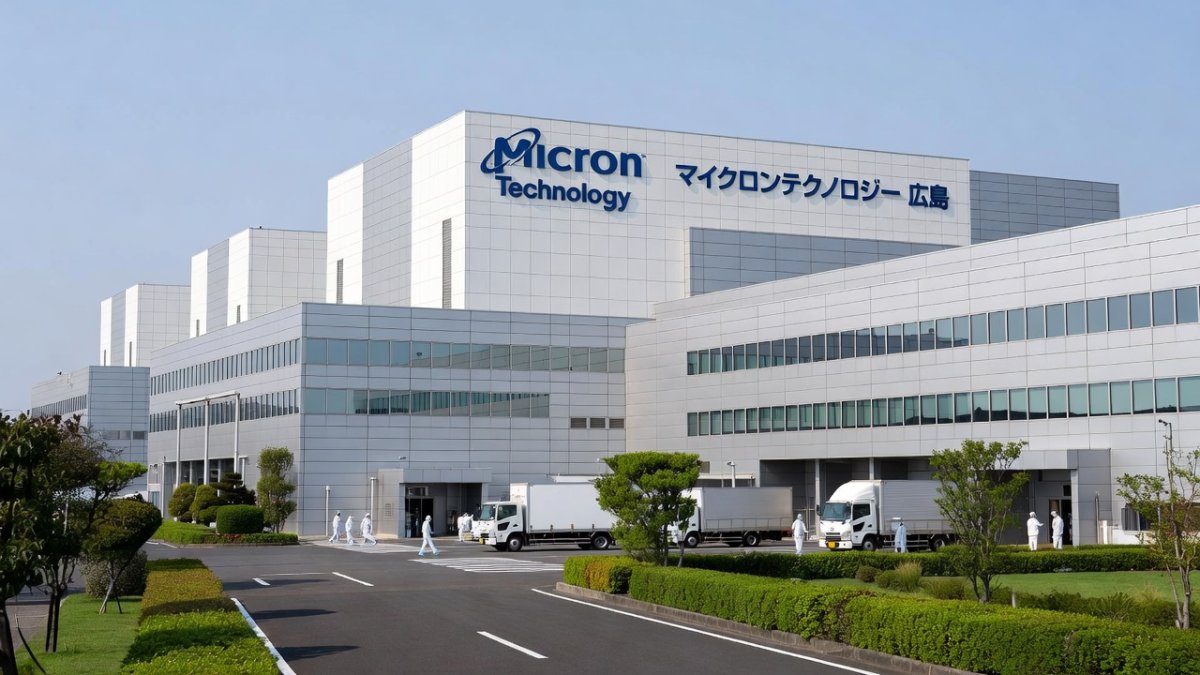
Micron Technology marked a major milestone with the July 4, 2026 groundbreaking for its Hiroshima factory expansion. The project carries a total investment of ¥1.5 trillion, equivalent to $9.3 billion, focused exclusively on high-bandwidth memory production. This scale underscores the strategic importance of advanced memory in next-generation computing infrastructure and highlights Micron's commitment to scaling capacity within Japan.
The expansion will be constructed entirely within the existing Hiroshima plant compound, allowing efficient use of established infrastructure and utilities. Construction activities began in May 2026, with initial shipments of HBM chips scheduled to commence in summer 2028. This compressed timeline reflects aggressive execution targets amid rising global demand for specialized memory components.
Analysts note that the investment positions the Hiroshima site as a critical node in the global semiconductor supply chain. By concentrating resources on HBM, Micron aims to address capacity constraints that have limited production of AI accelerators. The project's location in Japan also leverages the country's stable regulatory environment and skilled workforce.
Corporate Japan views this development as evidence of renewed foreign direct investment in advanced manufacturing. The timeline from groundbreaking to first shipments spans roughly two years, requiring precise coordination of equipment installation and process qualification. Success here could influence future expansion decisions by other memory manufacturers considering Japanese locations.
Hiroshima Facility History and Elpida Acquisition
Micron acquired the Hiroshima facility through its 2013 purchase of Elpida Memory following that company's bankruptcy proceedings. The acquisition provided Micron with an established production base in Japan, complete with cleanroom infrastructure and experienced engineering teams. This historical transaction laid the foundation for the current expansion plans announced more than a decade later.
The Elpida integration allowed Micron to maintain DRAM manufacturing capabilities in Japan while gradually shifting focus toward higher-value products. Over the subsequent years, the site continued operations under Micron's management, preserving employment and technical expertise within the local semiconductor ecosystem. The 2026 expansion builds directly on this legacy.
Japan's corporate sector has long recognized the Hiroshima plant as a symbol of resilience in the memory industry. Despite industry consolidation and shifts in global leadership, the facility retained its role in advanced process development. The new HBM project extends this trajectory by introducing cutting-edge packaging and memory technologies.
Stakeholders in corporate Japan emphasize that the 2013 acquisition prevented the complete loss of domestic DRAM capacity. The current investment demonstrates how strategic foreign ownership can sustain and upgrade Japanese manufacturing assets. This continuity supports broader efforts to maintain industrial know-how across generations of semiconductor technology.
Japan's Semiconductor Revival Strategy and Parallel Projects
Japan maintains significant strength in semiconductor materials and equipment but lost its position in finished chip leadership during previous decades. The Micron Hiroshima expansion aligns with national efforts to rebuild advanced manufacturing capabilities. Policymakers see memory production as a complementary pillar alongside logic chip initiatives.
Parallel projects illustrate this coordinated approach. TSMC's Kumamoto fab reached volume production in 2024, while Rapidus advances its 2nm process development in Hokkaido. These initiatives collectively aim to diversify Japan's role in the global supply chain beyond materials supply toward higher-value assembly and fabrication activities.
Industry observers note that memory and logic investments address different segments of AI hardware requirements. The Hiroshima project specifically targets HBM, which complements the logic-focused efforts in Kumamoto and Hokkaido. This segmentation allows Japan to participate across multiple layers of the AI accelerator value chain.
Corporate partnerships and government coordination remain essential to these revival strategies. The presence of multiple international players signals confidence in Japan's infrastructure and policy framework. Sustained progress across these sites could gradually restore elements of finished semiconductor production that had migrated overseas.
METI Subsidy Framework and Industrial Policy Goals
METI is expected to contribute up to $3.2 billion in subsidies toward the ¥1.5 trillion Hiroshima investment. This level of support reflects Japan's industrial policy emphasis on securing domestic capacity for strategically important technologies. Subsidies aim to offset capital intensity while encouraging technology transfer and local employment.
The framework prioritizes projects that strengthen supply chain resilience and advanced node capabilities. HBM production qualifies under these criteria due to its role in AI infrastructure. METI's involvement signals alignment between corporate investment plans and national economic security objectives.
Policy analysts highlight that subsidies alone cannot restore lost market share. Complementary measures, including workforce development and research collaboration, are necessary to maximize impact. The Hiroshima project serves as a test case for how public funding can accelerate private-sector execution in memory manufacturing.
Corporate Japan monitors these subsidy programs closely for signals about future priorities. Successful disbursement and project delivery could encourage additional investments by both domestic and foreign firms. The scale of METI support underscores the government's determination to participate meaningfully in the AI semiconductor ecosystem.
HBM Technology and AI Demand Drivers Through 2030
High-bandwidth memory chips enable the massive data movement required by AI accelerators. Their stacked architecture delivers significantly higher bandwidth than conventional DRAM, addressing performance bottlenecks in training and inference workloads. Micron's Hiroshima expansion directly targets this specialized segment of the memory market.
Demand for HBM is projected to grow substantially through 2030 as AI model complexity increases. Data centers and hyperscale operators require continuous improvements in memory capacity and speed to support larger parameter counts. This structural demand underpins the economic rationale for the ¥1.5 trillion investment.
Japan's materials expertise provides an indirect advantage in supporting HBM manufacturing. Advanced substrates, interconnects, and packaging materials sourced domestically can reduce supply chain vulnerabilities. The Hiroshima project integrates these strengths into finished memory production.
Long-term demand forecasts suggest that HBM will remain a critical constraint on AI hardware scaling. Production expansions such as the one underway in Hiroshima aim to alleviate these constraints. The 2028 shipment timeline positions Micron to capture a portion of this sustained growth trajectory.
Competitive Landscape Versus SK Hynix and Samsung
SK Hynix currently leads the HBM market, followed by Samsung in second place and Micron in third. Micron's Hiroshima expansion represents a deliberate effort to close the gap with the two Korean manufacturers. The scale of investment indicates determination to increase market share in this high-growth segment.
Competitive dynamics in HBM revolve around yield rates, stacking technology, and customer qualification timelines. Each manufacturer pursues incremental process improvements to meet the exacting specifications of AI accelerator designers. The Hiroshima facility will incorporate the latest available techniques to remain competitive.
Japan's position in this three-way race benefits from stable energy costs and policy support. While SK Hynix and Samsung maintain larger overall HBM volumes today, Micron's focused investment in Hiroshima could narrow the production differential over the coming years. Execution quality will determine the outcome.
Market analysts emphasize that customer diversification strategies by AI chip designers create opportunities for all three suppliers. No single company is expected to achieve complete dominance. Micron's Japanese production base offers geographic risk mitigation that may appeal to certain customers seeking supply chain resilience.
Timeline, Execution Risks, and Supply Constraints
The project timeline from May 2026 construction start to summer 2028 shipments leaves limited margin for delays. Equipment lead times for advanced memory production remain extended, requiring precise scheduling of deliveries and installations. Any slippage could affect Micron's ability to meet customer commitments.
Supply constraints in specialty materials and skilled labor represent ongoing challenges for all advanced semiconductor projects in Japan. The Hiroshima expansion must compete for these resources alongside TSMC's Kumamoto operations and Rapidus activities. Coordinated planning across projects helps mitigate bottlenecks.
Execution risks also include process qualification and yield ramp-up typical of new memory technologies. HBM production involves complex stacking and thermal management steps that demand rigorous validation. The existing Hiroshima infrastructure provides a foundation, yet new process modules still require extensive optimization.
Stakeholders in corporate Japan recognize that successful delivery of the 2028 timeline would strengthen confidence in the country's semiconductor revival. Conversely, delays could prompt reevaluation of investment strategies. The project's progress will serve as a visible indicator of Japan's ability to execute large-scale advanced manufacturing initiatives.
Tags: Micron Hiroshima, HBM chips, METI subsidies, Japan semiconductors, Elpida acquisition, AI memory demand, SK Hynix competition, TSMC Kumamoto, Rapidus Hokkaido, semiconductor supply chain
By Kenji Tanaka, Staff Writer
This article was produced with AI-assisted research and editorial support. Reporting is based on sources cited in the article.
What's Your Reaction?
 Like
0
Like
0
 Dislike
0
Dislike
0
 Love
0
Love
0
 Funny
0
Funny
0
 Wow
0
Wow
0
 Sad
0
Sad
0
 Angry
0
Angry
0

Japan Correspondent at Global1.News. Tokyo-based voice covering Japanese politics, technology, economy, and culture. Tracks the intersection of tradition and innovation in one of the world's most dynamic societies.













Comments (0)