
How To Get The Worst Sunburn Of Your Life
The Unseen Danger You can walk away from a day outdoors with a painful burn even when the sun never touched your skin directly. People assume shade, clouds, or cold air keep them safe, yet ultraviolet radiation finds ways through anyway. The result is surprise redness hours later and skin damage that adds up over time. When the Sun Sneaks Up on You Shade offers only partial pro
The Unseen Danger
You can walk away from a day outdoors with a painful burn even when the sun never touched your skin directly. People assume shade, clouds, or cold air keep them safe, yet ultraviolet radiation finds ways through anyway. The result is surprise redness hours later and skin damage that adds up over time.
When the Sun Sneaks Up on You
Shade offers only partial protection because scattered UV rays still reach skin from every direction. Sitting under a tree or umbrella blocks direct sunlight but leaves you exposed to rays bouncing off nearby surfaces. Many people discover this the hard way after hours at a park or patio without reapplying protection.
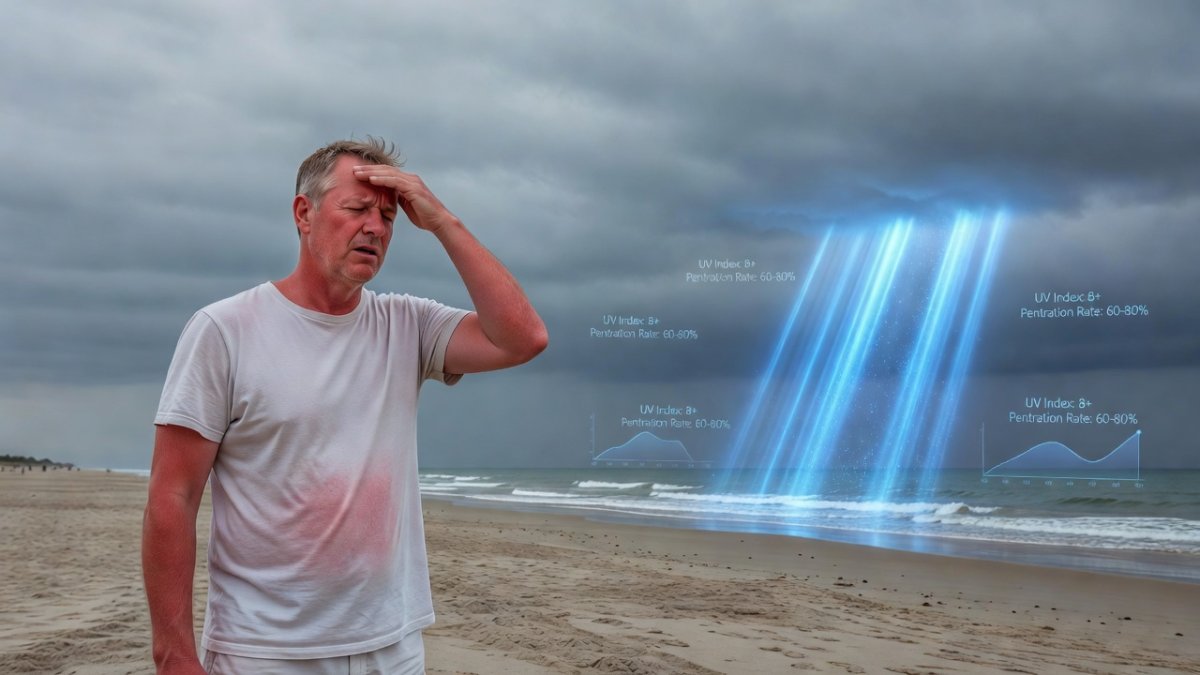
Cloudy days create a false sense of security since the sky looks overcast yet up to 80 percent of UV radiation still penetrates thin cloud cover. The light feels softer, so people stay outside longer without realizing the burn is building. Dense clouds reduce exposure more, but most days do not reach that level of protection.
Cold weather does nothing to stop ultraviolet rays even when temperatures sit well below freezing. Skiers and winter hikers often return with burned faces because the air feels crisp while the radiation remains intense at high altitudes. The same holds true on bright winter days near reflective surfaces.
Car and office windows let UVA rays pass straight through untreated glass while blocking most UVB. Drivers notice uneven tans on their left arms after long trips, and desk workers near large windows accumulate damage without ever stepping outside. These exposures happen daily yet rarely register as sun risk.
The Science Behind the Burn
UVB rays carry higher energy and cause the immediate redness and pain of sunburn by damaging the outer skin layers. UVA rays penetrate deeper, break down collagen, and contribute to long-term aging and cancer risk without always producing obvious burning first. Both types reach Earth even when visible light seems weak.
Reflection multiplies exposure in surprising places. Fresh snow bounces back 80 to 90 percent of incoming UV, sand reflects about 15 percent, and calm water sends roughly 10 percent back upward. These surfaces turn ordinary days into high-exposure events without extra heat to warn you.
Temperature has no direct link to UV intensity because the radiation travels independently of infrared heat that warms the air. A clear winter day at the beach or mountain can deliver more UV than a hot summer afternoon in the city depending on angle and reflection. The UV index measures this strength on a scale from 0 to 11 plus and guides real risk better than any thermometer reading.
Atmospheric scattering also plays a role on cloudy or hazy days when molecules and particles redirect rays downward from all angles. This diffuse UV lacks the sharp feel of direct sun yet still triggers DNA damage in skin cells. People underestimate it because the light appears softer and cooler.
Real-World Hotspots
Skiers at resorts above 8,000 feet face double the UV load from altitude and snow reflection, leading to quick burns on faces and necks even in subzero air. Many apply sunscreen only once in the morning and skip reapplication after sweating or wiping their faces. The result shows up as raccoon-eye patterns around goggles.
Drivers accumulate chronic exposure on their left sides during commutes, with studies showing higher rates of skin cancers on that arm and side of the face among frequent highway travelers. Office workers near south-facing windows receive steady UVA doses throughout the workday without noticing until cumulative damage appears years later as uneven pigmentation.
Beachgoers sitting under umbrellas still burn because sand and water reflect rays upward into shaded areas. Children playing in shallow water face extra risk since wet skin transmits more UV and they rarely reapply after every swim. These patterns repeat every summer yet catch families off guard each season.
Winter hikers on sunny trails experience similar surprises when cold air masks the burn until evening. Reflection from packed snow on open slopes adds intensity that shade from trees cannot fully block. The damage builds silently because no one expects sunburn when the air feels freezing.
Protecting Yourself Year-Round
Apply broad-spectrum SPF 30 or higher every morning to face, neck, and hands regardless of forecast or season. Reapply every two hours outdoors and immediately after swimming or heavy sweating to maintain the barrier. Choose products labeled water resistant when activity levels rise.
Wear UPF-rated clothing and wide-brim hats that block both direct and reflected rays better than ordinary fabrics. Long sleeves and pants made from tightly woven materials cut exposure dramatically without adding heat in warm weather. Dark colors and special sun-protective weaves outperform light cotton T-shirts.
Apply UV-blocking film to car side windows and home office glass to stop most UVA from reaching skin during daily routines. Keep a tube of sunscreen in the car and desk drawer for quick touch-ups. Check the daily UV index through weather apps and adjust plans or protection levels accordingly even on cloudy days.
Seek shade during peak UV hours between 10 a.m. and 4 p.m. when possible, but remember to treat shaded areas as partial protection only. Combine multiple strategies rather than relying on any single one to close the gaps that reflection and scattering create.
The Bottom Line
Sunburn risk hides in everyday settings because ultraviolet radiation ignores temperature, clouds, and shade in ways most people never learned. Consistent habits around sunscreen, clothing, and window protection close those gaps before damage accumulates. The science shows the burn builds the same way whether you feel heat or not. Treat UV exposure as a constant background factor rather than a fair-weather concern and your skin will stay healthier for decades.
By Allan Ali, Health & Science Correspondent
This article was produced with AI-assisted research and editorial support. Reporting is based on sources cited in the article.
What's Your Reaction?
 Like
0
Like
0
 Dislike
0
Dislike
0
 Love
0
Love
0
 Funny
0
Funny
0
 Wow
0
Wow
0
 Sad
0
Sad
0
 Angry
0
Angry
0

Publisher of Global1.News. Automation architect, systems builder, and the guy making sure the truth gets published.















Comments (0)