
Wildfires Across Hemispheres — Latin America's Diverse...
Simultaneous wildfires are scorching the planet this July 2026, from Canada's vast boreal crown fires exceeding 350,000 hectares to Spain's fast-moving Mediterranean blazes and Latin America's own burning Pantanal wetlands. These intercontinental infernos reveal sharply different fire ecologies shaped by climate, vegetation, and human influence.
Simultaneous wildfires are scorching the planet this July 2026, from Canada's vast boreal crown fires exceeding 350,000 hectares to Spain's fast-moving Mediterranean blazes and Latin America's own burning Pantanal wetlands. These intercontinental infernos reveal sharply different fire ecologies shaped by climate, vegetation, and human influence. Latin America's three major biomes — the Amazon, Cerrado, and Pantanal — offer a living laboratory for understanding how fire behaves across vastly different ecosystems in a super El Niño year.
Wildfires Across Hemispheres — Latin America's Fire Regimes
Brasília, Brazil — As Canada's boreal forests burn on a scale that chokes cities thousands of kilometers away and Spain's Mediterranean blazes force mass evacuations, Latin America confronts its own diverse and complex fire reality. The Pantanal wetlands are actively burning near the Bolivia border, the Amazon faces its annual dry season with warnings of worsening fires ahead, and the Cerrado savanna — an ecosystem that actually needs fire to thrive — stands at a crossroads of conservation and agriculture. Understanding why these fires behave so differently is the key to managing them.
Fires Without Borders — A Hemisphere Ablaze
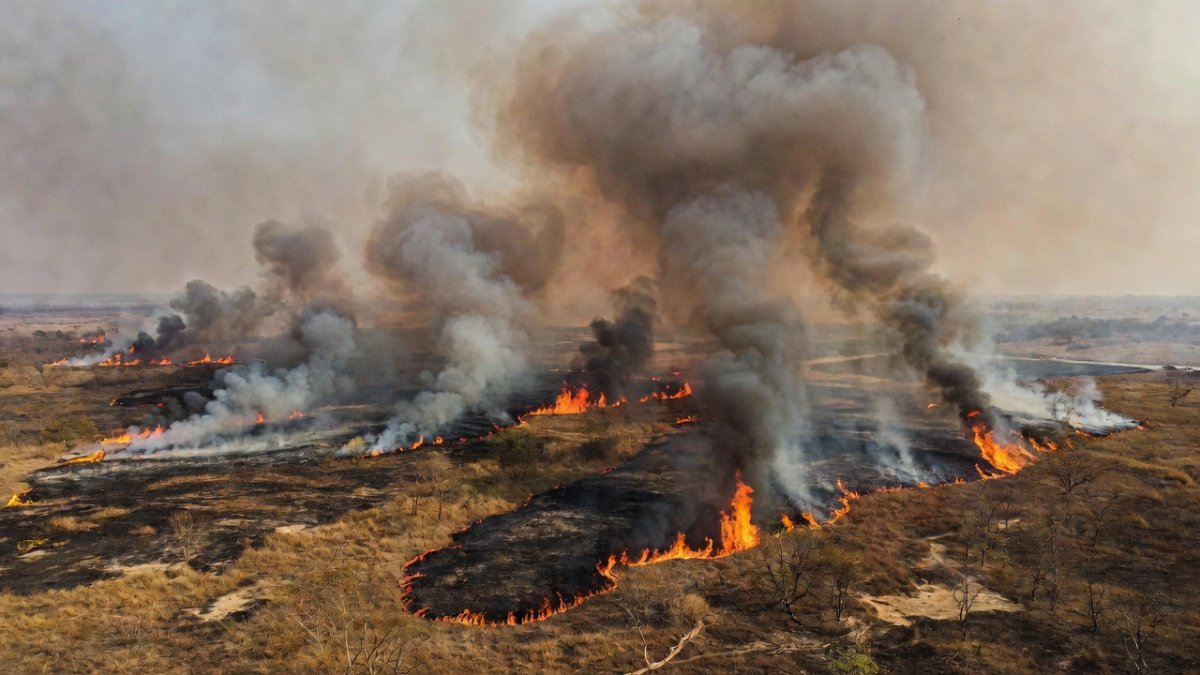
Canada’s Ontario fire alone has consumed more than 350,000 hectares, sending smoke that choked the US Midwest and threatened air quality at the World Cup final in New Jersey. These boreal fires are lightning-driven, stand-replacing crown fires that race through spruce, pine, and fir before smoldering in peat soils for weeks. In contrast, Spain’s Almeria fire burned roughly 7,000 hectares with 12-13 fatalities, while the Cinco Villas blaze reached 15,400 hectares and Guadalajara fires covered 9,000-12,000 hectares. Mediterranean fires spread rapidly through pine and maquis on steep terrain, fueled almost entirely by human ignition in the wildland-urban interface.
Scale and behavior diverge dramatically. Boreal fires create massive smoke plumes that cross international borders, while Mediterranean fires move quickly but remain smaller due to fragmented landscapes and aggressive suppression. Human factors also differ: lightning dominates in Canada, whereas 90 percent of Spanish ignitions trace to people. Both regions illustrate how fire regimes respond to vegetation type and climate, yet the ecological consequences vary from nutrient recycling in boreal peat to soil erosion in Mediterranean hills. These contrasts set the stage for examining Latin America’s own distinct fire stories.
The Amazon — A Forest That Shouldn't Burn
The Amazon rainforest evolved with centuries-long fire return intervals because its humid, closed canopy and moist understory rarely allow ignition. Native trees possess thin bark and lack fire adaptations, making them highly vulnerable to even low-intensity flames. Modern fires are almost entirely human-ignited through slash-and-burn agriculture and cattle ranching. These understory fires kill mature trees, open the canopy, and promote invasive grasses that carry future fires, creating a degradation cycle distinct from outright deforestation.
Climate tipping points loom large. Continued burning risks shifting large areas toward savanna-like vegetation, releasing the Amazon’s estimated 123 billion tons of carbon. Yet policy progress offers hope. Deforestation fell 38 percent in the first half of 2026 according to MapBiomas data and dropped 61.4 percent in May per INPE DETER—the lowest level in a decade. Brazil deployed more than 4,600 firefighters specifically for wildfire response. Environment Minister Marina Silva has warned that worsening drought conditions forecast by Inmet, Cemaden, and CPTEC/INPE could still trigger severe fire seasons in the second half of the year. Prevention and enforcement remain critical to protecting this fire-sensitive biome.
The Cerrado — Fire as a Force of Life
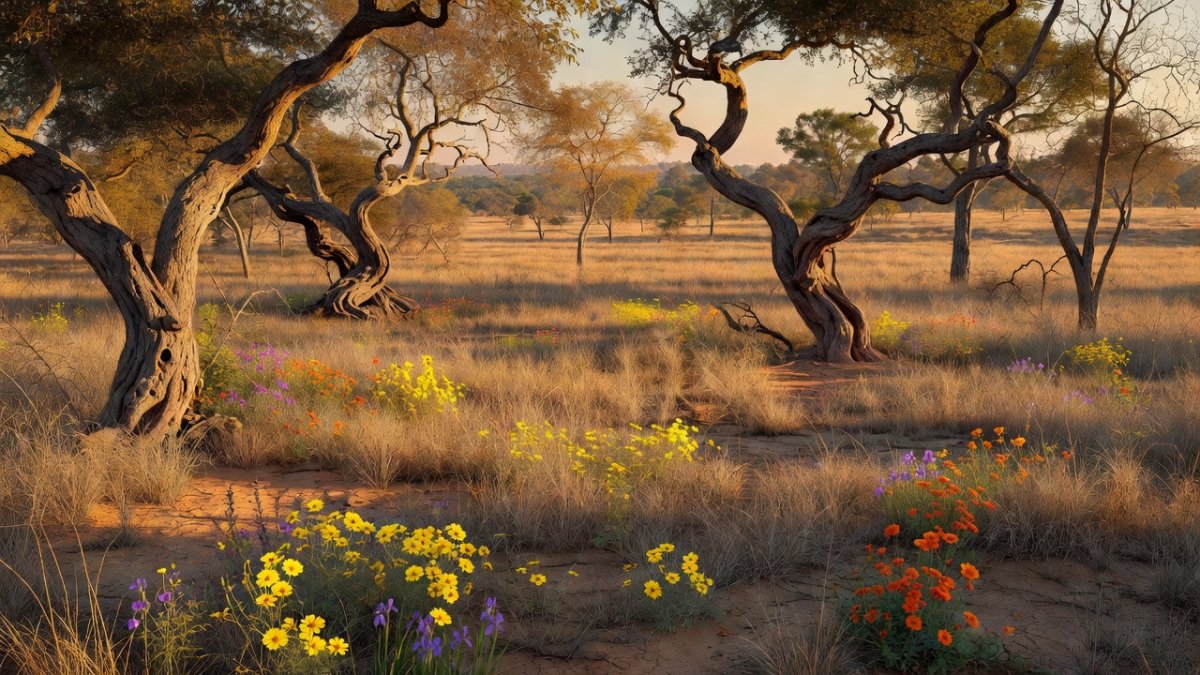
The Cerrado savanna represents a fire-dependent ecosystem where grassy understories and twisted trees thrive under a natural fire return interval of one to five years. Plants display remarkable adaptations including thick bark, underground storage organs called xylopodia, vigorous resprouting, and post-fire flowering. Fire maintains open structure, prevents woody encroachment, recycles nutrients, and supports exceptional biodiversity. Roughly 90 percent of the ecosystem’s carbon resides below ground in roots and soil, earning it the nickname “inverted forest.”
Prolonged fire suppression disrupts these dynamics, allowing dense woody growth that shades out native grasses and reduces habitat for specialized species. This stands in direct contrast to the Amazon, where fire destroys rather than sustains. Since the 1960s, more than 46 percent of native Cerrado vegetation has been lost, largely to soy expansion—a proportional loss exceeding that of the Amazon. Today, debate centers on prescribed burns and traditional Indigenous fire management as tools to restore ecological balance. Matching management to the Cerrado's evolutionary history is essential for conserving both biodiversity and below-ground carbon stores.
The Pantanal — A Wetland Burning
Active fires erupted in mid-July 2026 near Corumbá, Mato Grosso do Sul, close to the Bolivia border. Flames crossed into Bolivia’s Parque Nacional Otuquis, driven by winds exceeding 40 kilometers per hour, with smoke plumes visible across the frontier and potentially affecting Paraguay’s Chaco Central. The blaze began around July 16 in the Forte Coimbra area and was only partially contained by July 19. Historically, the Pantanal experienced seasonal, moderate fires that helped shape its mosaic of wetlands and grasslands.
Since 2020, however, mega-fires have become more frequent due to extreme drought. Upstream deforestation in the Cerrado and Amazon reduces regional rainfall and flooding, lengthening dry periods and drying out vegetation. Jaguars, caimans, and countless other species face direct threats as fires consume critical habitat. Cross-border coordination is now urgent because smoke and flames ignore political boundaries. The Pantanal’s shift from a seasonal fire regime to recurrent mega-fires underscores how human-driven changes in distant watersheds can transform wetland fire ecology, demanding integrated regional responses.
Super El Niño and the Climate Fire Accelerant
The 2026 super El Niño year has amplified fire activity across all three Latin American biomes and beyond. Dry seasons are lengthening, drought intensity is rising, and temperatures are climbing, creating conditions that favor ignition and spread. Globally, burned area from January through April already reached more than 150 million hectares—approximately 20 percent above previous records. In the Amazon, reduced rainfall dries fuels and increases lightning strikes. In the Cerrado, hotter conditions extend the burning window. In the Pantanal, diminished flooding leaves more biomass exposed.
Feedback loops intensify the crisis. Amazon fires release carbon and reduce transpiration, which further decreases regional rainfall and promotes more fire. Similar dynamics threaten the Cerrado’s carbon-rich soils and the Pantanal’s hydrological balance. Climate change does not merely add heat; it alters vegetation structure and moisture regimes, pushing ecosystems toward new fire regimes. Understanding these interactions is vital for anticipating where the next large fires will emerge and how they will behave in an increasingly unstable climate.
Living With Fire — Latin America's Management Challenge
Effective fire management in Latin America requires strategies tailored to each biome’s ecology. In the Amazon, priority lies with prevention, enforcement against illegal burning, and rapid response by the 4,600 deployed firefighters. In the Cerrado, prescribed burns and Indigenous fire knowledge help maintain the open structure that biodiversity depends upon. The Pantanal demands cross-border coordination, early warning systems, and restoration of upstream watersheds to moderate drought severity.
Organizations such as Land Alliance LAC are integrating traditional knowledge with modern monitoring to design culturally appropriate solutions. These approaches recognize that fire is not universally destructive; it can be a tool when applied at the right scale and season. Success depends on matching tactics to vegetation type, carbon storage patterns, and human land-use pressures. Without biome-specific policies, suppression efforts may backfire by allowing fuel accumulation or by ignoring the ecological role fire plays in savannas and wetlands.
The Bottom Line — A Fire Regime Awakening
Understanding fire ecology is essential for managing wildfires in a hotter world. Latin America functions as a living laboratory demonstrating how the same climatic driver—the super El Niño—produces radically different outcomes across the Amazon’s fire-sensitive forests, the Cerrado’s fire-dependent savannas, and the Pantanal’s drought-stressed wetlands. Data from 2026 show both the scale of the challenge and the potential for progress through targeted policies.
Success hinges on aligning management with each biome’s evolutionary history rather than applying uniform suppression. Brazil’s recent deforestation reductions and expanded firefighting capacity illustrate what coordinated action can achieve. Yet warnings from scientists and ministers remind us that climate feedbacks could erase gains quickly. By studying Canada’s boreal crown fires and Spain’s Mediterranean surface fires alongside Latin America’s diverse regimes, policymakers gain clearer insight into the tools needed to coexist with fire rather than simply fight it. The future of these ecosystems depends on that awakening.
By Elena Vasquez, Staff WriterThis article was produced with AI-assisted research and editorial support. Reporting is based on sources cited in the article.
What's Your Reaction?
 Like
0
Like
0
 Dislike
0
Dislike
0
 Love
0
Love
0
 Funny
0
Funny
0
 Wow
0
Wow
0
 Sad
0
Sad
0
 Angry
0
Angry
0

Latin America Correspondent at Global1.News. Based in Mexico City, covering politics, economics, energy, and culture across the region. Brings an on-the-ground perspective to stories spanning from the Rio Grande to Patagonia.















Comments (0)