
Finland Validates India's Russian Oil Strategy Under Price Cap
Finland's Foreign Minister Elina Valtonen has publicly endorsed India's purchases of Russian crude oil under the G7 price cap, stating that the mechanism was intended to maintain global energy supplies rather than punish compliant nations. This position aligns with India's sustained imports, which reached 1.5-2 million barrels per day during peak periods and now account for 35-

Finland's Foreign Minister Elina Valtonen has publicly endorsed India's purchases of Russian crude oil under the G7 price cap, stating that the mechanism was intended to maintain global energy supplies rather than punish compliant nations. This position aligns with India's sustained imports, which reached 1.5-2 million barrels per day during peak periods and now account for 35-40% of its total crude inflows, up sharply from roughly 2% before the 2022 Ukraine conflict. The endorsement arrives amid ongoing Western scrutiny of New Delhi's energy choices.
Finland's Endorsement Validates India's Energy Security Strategy Amid Price Cap Compliance
New Delhi – June 14, 2026 — Finland's recognition of India's adherence to the $60-per-barrel G7 price cap on Russian oil highlights the practical limits of sanctions designed primarily for market stability rather than geopolitical punishment. By confirming that compliant buyers like India are not targets, Valtonen's remarks reinforce New Delhi's long-standing defense of its energy imports as a matter of national interest, a stance consistently articulated by External Affairs Minister S. Jaishankar.
The Finnish Endorsement: What Was Said
Valtonen emphasized that the G7 price cap of $60 per barrel was crafted to prevent supply disruptions in global energy markets following the Ukraine conflict, not to impose blanket penalties on countries sourcing oil within those rules. Her comments directly addressed India's position, noting that purchases staying below the cap contribute to the mechanism's core objective of keeping energy accessible worldwide. This framing echoes Jaishankar's repeated assertions that India's decisions prioritize domestic requirements over external pressure.
The statement carries weight because Finland, as a NATO member with strong European alignment, rarely diverges from collective Western positions on Russia. By carving out explicit space for compliant importers, Valtonen effectively decoupled energy security from punitive sanctions narratives. Indian officials have long argued that the cap functions as a commercial benchmark rather than a political veto, and the Finnish remarks provide external validation for that interpretation.
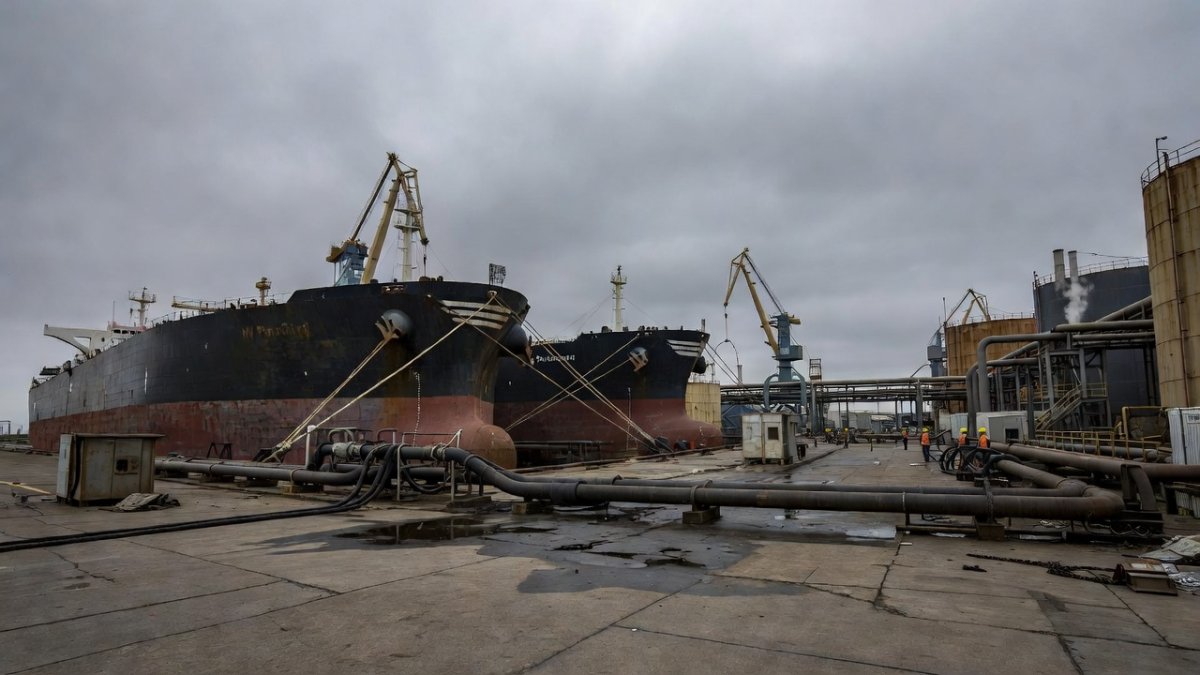
India's Crude Calculus: From 2% to 40%
India's import profile transformed rapidly after 2022. Russian crude's share rose from approximately 2% of total inflows to 35-40% at peak volumes of 1.5-2 million barrels per day. This shift occurred while transactions remained within the $60-per-barrel G7 cap, allowing Indian refiners to secure discounted feedstock without violating the price ceiling. The economics proved compelling: lower acquisition costs translated into higher margins on exported refined products, particularly diesel and gasoline shipped to Europe and other markets.
India's refining capacity, exceeding 250 million metric tons annually, enabled this model. Complex refineries processed heavy Russian grades into high-value fuels for export while meeting domestic demand. Energy security in this context directly supports public health outcomes by stabilizing fuel prices that influence transportation of medicines, operation of cold chains for vaccines, and overall inflation that affects household access to healthcare services. Disruptions in affordable energy would cascade into higher costs for hospitals and pharmaceutical logistics, underscoring why import diversification remains a core economic policy priority.
Strategic Autonomy vs Western Pressure
India's approach reflects its doctrine of strategic autonomy, balancing relations with the United States, Europe, and Russia without exclusive alignment. The G7 price cap itself was accepted by New Delhi as a voluntary commercial guideline rather than a binding political directive. Jaishankar has framed purchases as legitimate under this framework, preserving leverage in bilateral ties while avoiding over-dependence on any single supplier bloc.
This balancing act influences India-US relations by testing Washington's tolerance for New Delhi's independent energy choices. At the same time, it strengthens India-Europe commercial links through refined product exports. Within G20 dynamics, India's position demonstrates that major emerging economies can engage multiple power centers simultaneously, a model that avoids the zero-sum framing often pushed in Western capitals. The Finnish endorsement reduces friction in these relationships by clarifying that compliant behavior does not equate to sanctions evasion.
What This Means for Indian Consumers
Stable access to competitively priced crude has helped moderate domestic fuel inflation, which in turn supports broader economic resilience. Lower energy costs reduce pressure on household budgets, preserving spending capacity for nutrition, education, and medical care. Public health systems benefit indirectly when transportation and cold-storage expenses remain predictable, ensuring consistent delivery of essential drugs and vaccines across states.
Rupee-Ruble trade mechanisms further insulate India from dollar-denominated volatility, advancing gradual internationalization of the rupee in energy settlements. This reduces external vulnerabilities that could otherwise amplify inflationary shocks during global crises. Energy security thus functions as foundational economic policy with measurable public health dividends, preventing the kind of price spikes that historically correlate with increased malnutrition and delayed medical treatment in lower-income populations.
The Geopolitical Ripple Effect
Valtonen's comments signal potential softening in European attitudes toward compliant buyers, which could ease tensions within BRICS and G20 forums where energy access remains contentious. India-Europe ties stand to gain from continued refined-product trade, while the episode illustrates the limits of unilateral sanctions architecture in a multipolar energy market. Global energy flows are increasingly shaped by commercial realities rather than political diktats, a shift that favors countries with diversified supplier bases.
India's experience offers a template for other large importers navigating similar constraints. By adhering to the $60 cap while scaling volumes, New Delhi demonstrated that strategic autonomy can coexist with rule-based participation in Western-led mechanisms. This pragmatic stance strengthens India's hand in future negotiations over climate finance, technology transfer, and trade frameworks.
The Bottom Line
Finland's endorsement confirms that India's Russian oil imports, conducted at 1.5-2 million barrels per day within the $60 price cap and representing 35-40% of total crude needs, represent a successful application of multi-alignment. The strategy has delivered measurable gains in energy affordability, export competitiveness, and macroeconomic stability, all while advancing public health objectives through controlled inflation and reliable logistics. Far from undermining global rules, India's calibrated approach has exposed the price cap's original intent as market stabilization rather than punitive isolation, validating strategic autonomy as both economically rational and geopolitically effective.
— By Dr. Raj Patel, Staff Writer
This article was produced with AI-assisted research and editorial support. Reporting is based on sources cited in the article.
What's Your Reaction?
 Like
0
Like
0
 Dislike
0
Dislike
0
 Love
0
Love
0
 Funny
0
Funny
0
 Wow
0
Wow
0
 Sad
0
Sad
0
 Angry
0
Angry
0

India/South Asia Correspondent at Global1.News. Analytical voice with a background in science and health journalism. Based in New Delhi, covering Indian politics, education, healthcare, technology, and policy. Breaks down complex data into clear, actionable reporting.















Comments (0)