
Brazil's Amazon Sees Sharp Burn Decline in 2025
Amazon rainforest has shown remarkable resilience in 2025, with burned areas plummeting to historic lows that signal a potential turning point in the nation's environmental trajectory.
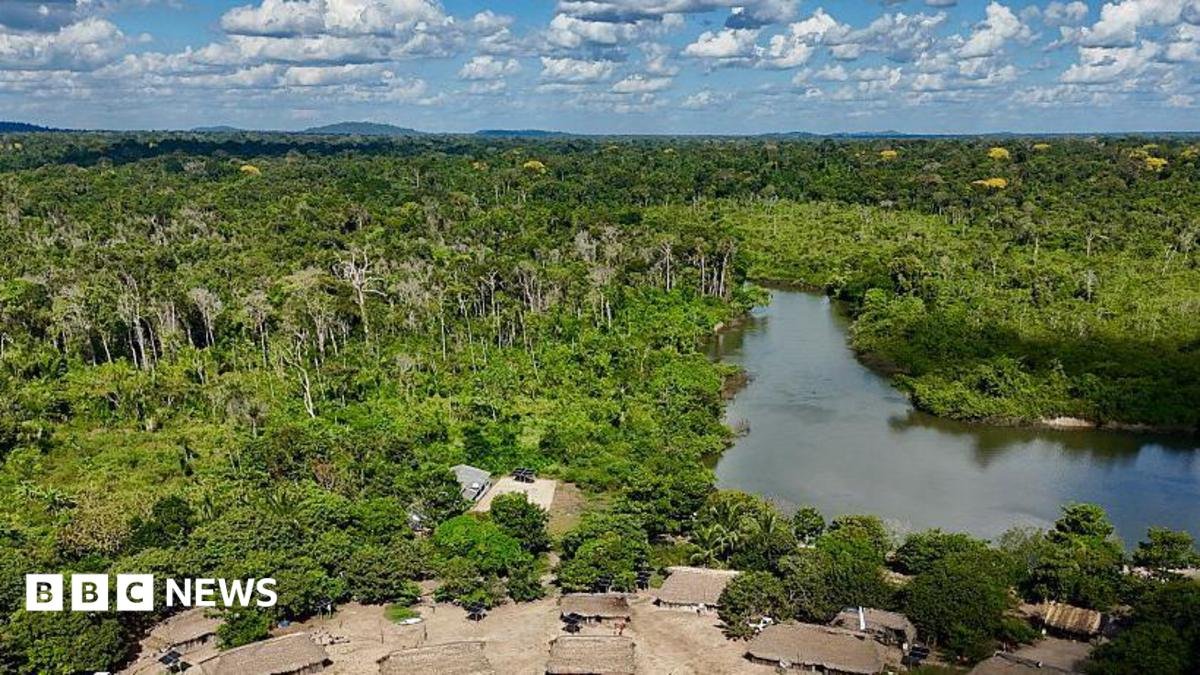
Amazon Burning Decline Signals Shift in Brazil's Environmental Strategy
Brasília, Brazil — A new MapBiomas assessment highlights measurable reductions in burned areas throughout the Amazon and the nation as a whole, offering fresh context for policy discussions in the capital and beyond.
Record Low Burned Area in the Amazon
The Amazon recorded just 3.1 million hectares burned during 2025, a sharp drop from the 15.8 million hectares devastated the previous year. This marks the smallest burned extent since MapBiomas began tracking such data in 1985. Across Brazil the total reached 12.7 million hectares, down from 30 million in 2024. These numbers stand in contrast to the historical peak of 30.7 million hectares burned nationwide in 2007.
From my vantage in Brasília, the 2025 figure of just 3.1 million hectares burned in the Amazon stands in stark relief against the devastation seen across other Brazilian biomes. The Pantanal wetlands, for instance, suffered repeated fire surges in recent decades, with 2020 alone scorching over 4 million hectares amid prolonged drought. The Cerrado savanna, Brazil's agricultural frontier, has consistently recorded higher annual burns, often exceeding 8 million hectares as soy and cattle expansion clears native vegetation. These contrasts highlight how the Amazon's 2025 low marks not just a national record but a biome-specific victory amid ongoing pressures that spare no corner of our territory.
The year 2024 had been catastrophic, with 15.8 million hectares lost in the Amazon alone, driven by an intense El Niño that dried forests and fueled uncontrolled blazes. What shifted in 2025 was a combination of La Niña cooling and targeted enforcement under renewed federal oversight, which curbed illegal land-clearing fires in states like Pará and Amazonas. While natural weather patterns played a decisive role, they alone cannot explain the drop below the 1985-2024 average; coordinated operations by environmental agencies disrupted the cycle of arson that had defined prior peaks, including the 2007 national high of 30.7 million hectares.
Yet this progress demands clear-eyed scrutiny. Enforcement policies have demonstrably reduced ignition points, but they must contend with the structural drivers of fire use in agriculture. Brazilian communities living along the forest edge know that sustained vigilance, not seasonal relief, will determine whether 2025 becomes a turning point or a fleeting reprieve.
Expert Analysis of the Positive Shift
Vera Arruda, a researcher at the Amazon Environmental Research Institute and coordinator at MapBiomas, described the 2025 results as significant evidence that burned areas can be reduced. She noted a 31 percent drop compared to the historical average, driven mainly by the lowest fire counts in the Amazon in 41 years. Arruda emphasized that while the figures represent positive news, they do not yet confirm an established trend or justify any reduction in prevention efforts. Her assessment draws from detailed satellite monitoring that covers multiple biomes and provides year-over-year comparisons grounded in consistent methodology.
Vera Arruda's assessment gains depth when viewed through the lens of institutions like IPAM, the Amazon Environmental Research Institute, which has long partnered with MapBiomas to refine fire monitoring across the basin. IPAM's field teams integrate satellite alerts with on-the-ground verification, providing the granular data that reveals how fire frequency in the Amazon fell to its lowest level in 41 years. This collaboration underscores a distinctly Brazilian capacity for rigorous environmental tracking that draws on both advanced technology and local knowledge from Indigenous territories and riverine communities.
MapBiomas methodology relies on annual satellite imagery processed through consistent algorithms, allowing precise year-over-year comparisons that filter out seasonal noise. By analyzing Landsat and Sentinel data across multiple biomes, the platform delivers reliable burned-area estimates dating back to 1985. Other key players, including INPE's PRODES and DETER systems alongside the University of São Paulo's remote-sensing labs, cross-validate these findings, creating a robust national network that strengthens Brazil's voice in global climate discussions.
Arruda rightly cautions against complacency. The 31 percent reduction below historical averages signals possibility, yet the data also shows that isolated good years have occurred before. Passionate commitment to prevention remains essential if Brazil is to convert this moment into lasting protection for the forest that sustains our climate stability and rural livelihoods.
Weather Patterns and Their Role
The decline partly stems from a shift away from the intense 2024 fire season, aided by cooler La Niña conditions rather than the warmer El Niño phase. MapBiomas reports indicate that such natural weather variations influence dry season length and fire risk across the rainforest. At the same time, the organization cautioned that a return to El Niño patterns could extend dry periods and heighten future fire threats. These climate dynamics intersect with Brazil's agricultural cycles, where states like Pará and Mato Grosso see seasonal pressures from land use that affect both smallholder farmers and large-scale operations.
Political Context Under Lula's Leadership
Protecting the Amazon formed a central pledge in President Luiz Inácio Lula da Silva's campaign four years ago. The latest burned-area reductions arrive as his administration prepares for the October re-election contest, providing concrete data that supporters can cite in regional debates. Lula's focus on enforcement and international cooperation has aligned with efforts by agencies monitoring deforestation across the northern states. Observers in Brasília note that these outcomes connect to broader Latin American discussions on balancing economic growth with forest conservation, particularly as neighboring countries face similar land-clearance challenges.
President Lula's return to office revived the PPCDAm plan, Brazil's flagship strategy for preventing and controlling Amazon deforestation, which had been dismantled during the Bolsonaro years when enforcement budgets were slashed and IBAMA agents faced political interference. Under the renewed framework, IBAMA operations intensified, targeting illegal mining and logging camps that often precede large-scale burning. International commitments, including renewed pledges to the Amazon Fund with contributions from Norway and Germany, have channeled resources into monitoring technology and community patrols, reversing the isolation that marked Brazil's environmental diplomacy from 2019 to 2022.
These measures stand in direct contrast to the previous administration's rhetoric that encouraged land occupation and weakened federal oversight. The resulting surge in burned areas during that period eroded Brazil's global standing and fueled conflicts with Indigenous groups and smallholder farmers who depend on forest integrity. Lula's approach has begun restoring credibility, aligning domestic enforcement with international cooperation in ways that echo Brazil's historical leadership in multilateral climate forums.
As the October 2026 re-election campaign approaches, the 2025 burned-area reductions offer tangible evidence supporters can cite. Yet opposition voices will question whether enforcement alone can withstand economic pressures from agribusiness. For Brazilian voters, the data represents both validation of current policies and a reminder that environmental protection must remain central to any credible vision for the nation's future.
Ecological Importance and Ongoing Risks
Tropical rainforests such as the Amazon support millions of species and, when intact, absorb large amounts of carbon dioxide that helps regulate global temperatures. Decades of land clearance for agriculture and logging, combined with climate change effects, have placed these ecosystems under sustained strain. The 2025 data shows improvement yet arrives against a backdrop where daily life in Amazonian communities depends on stable forest resources for income and food security. MapBiomas warnings about potential El Niño resurgence underscore the need for continued monitoring by research institutes and government bodies alike.
Implications for Brazil's Future Strategies
The national drop from 30 million to 12.7 million hectares burned reflects coordinated responses that could inform policies in other Latin American nations facing comparable fire seasons. Local economies in regions like the Amazon basin benefit when fire damage decreases, as reduced smoke and soil loss support farming and tourism activities. Arruda's call to maintain prevention efforts highlights the importance of sustained investment in early-warning systems and community training programs. These steps tie directly into Brazil's position within global climate talks, where measurable progress in the rainforest influences international perceptions and funding flows.
Maintaining the downward trend in burned areas requires scaling early-warning systems that combine satellite detection with rapid-response teams on the ground. Community-based monitoring programs, already operating successfully in parts of Acre and Rondônia, empower local residents to report fire outbreaks before they spread, turning traditional knowledge into a frontline defense. These initiatives must receive consistent federal funding rather than depending on sporadic international grants.
The Amazon Fund stands as a critical mechanism for channeling resources into such efforts, yet its full potential depends on transparent governance and expanded contributions from global partners. Brazil's experience shows that fire prevention yields co-benefits for agriculture and tourism by reducing smoke damage and preserving soil health. Without sustained investment, however, a return to El Niño conditions could erase recent gains across the basin.
Looking outward, Brazil's progress offers a model for Latin American neighbors facing similar challenges in the Chaco and Andean foothills. By linking domestic strategies to regional cooperation on climate resilience, our country can strengthen its position in global negotiations while ensuring that Amazonian communities continue to thrive alongside the forest that defines our national identity and ecological responsibility.
By Elena Vasquez, Staff WriterThis article was produced with AI-assisted research and editorial support. Reporting is based on sources cited in the article.
What's Your Reaction?
 Like
0
Like
0
 Dislike
0
Dislike
0
 Love
0
Love
0
 Funny
0
Funny
0
 Wow
0
Wow
0
 Sad
0
Sad
0
 Angry
0
Angry
0

Latin America Correspondent at Global1.News. Based in Mexico City, covering politics, economics, energy, and culture across the region. Brings an on-the-ground perspective to stories spanning from the Rio Grande to Patagonia.













Comments (0)