
US-Iran War: 13th Night of Strikes Spreads to Red Sea
In a recent BBC News report, the United States military has carried out a thirteenth consecutive night of air strikes on Iranian military targets, striking drone facilities and command centres in southern Iran while Iran's armed forces retaliated with drone attacks on American bases in Bahrain and Jordan, marking another grim milestone in a conflict now in its 22nd week with no end in sight.
In a recent BBC News report, the United States military has carried out a thirteenth consecutive night of air strikes on Iranian military targets, striking drone facilities and command centres in southern Iran while Iran's armed forces retaliated with drone attacks on American bases in Bahrain and Jordan, marking another grim milestone in a conflict now in its 22nd week with no end in sight.
Thirteenth Night of Fire: US-Iran War Shows No Signs of De-escalation as Conflict Spreads Across the Middle East
Moscow, Russia – 25 July 2026 — The United States and Iran exchanged heavy fire for the 13th consecutive night overnight, with US Central Command launching precision strikes against Iranian drone sites, command centres, and missile storage facilities in southern Iran, while Tehran's forces retaliated by targeting American military installations across the Gulf region with kamikaze drones. The sustained bombing campaign, now in its 22nd week since the war began on 28 February, has drawn warnings from both sides of a major escalation, with President Donald Trump threatening "major military punishment" against Iran over Houthi attacks on Saudi oil tankers in the Red Sea, expanding the theatre of conflict to a second critical shipping chokepoint.
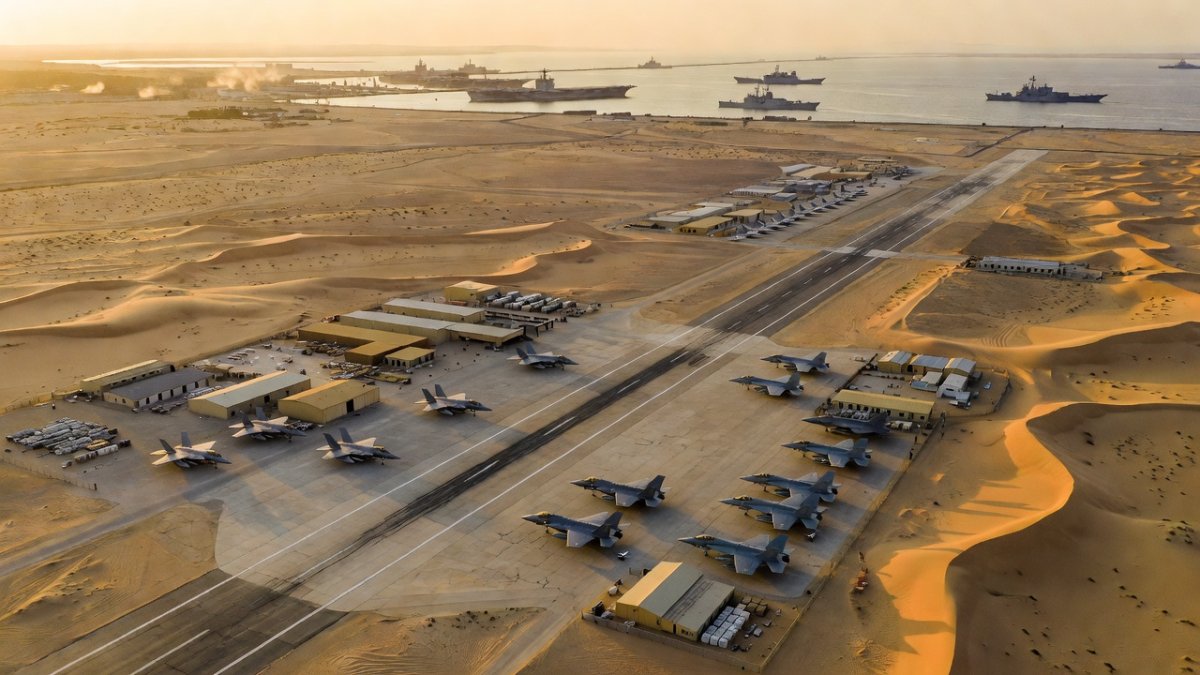
Thirteenth Consecutive Night: CENTCOM's Continuing Campaign
The US military's Central Command confirmed late Thursday that it had completed its 13th consecutive night of strikes on Iranian military positions, a campaign that has now become the longest sustained American aerial bombardment of Iran since the conflict began. In a social media statement, CENTCOM said the strikes targeted "Iranian drone sites, command centres and other military infrastructure" in southern Iran, specifically concentrating on the strategic port city of Bandar Abbas, which sits at the narrowest point of the Strait of Hormuz.
The stated objective of the campaign, according to CENTCOM, remains "to further diminish the threat Iran poses to civilian mariners and commercial vessels transiting the Strait of Hormuz," though traffic through the vital waterway remains at a crawl, with many shipping companies refusing to send vessels through waters that have become a active combat zone. Oil prices have responded sharply, with Brent crude topping $100 a barrel on Thursday for the first time since May, reflecting growing market anxiety over the security of the world's most important energy chokepoint.
The Pentagon continues to insist publicly that the Strait of Hormuz remains open for navigation, a position that grows increasingly difficult to maintain as the strikes continue and Iran retaliates against regional targets. The 13th night of bombing followed an established pattern: approximately two hours of precision strikes against military infrastructure, followed by CENTCOM's announcement that operations had concluded for the night — before the cycle resumes the following evening.
Iranian Retaliation: Drone Strikes on US Bases in Bahrain and Jordan
Iran's army announced on Friday that it had carried out drone strikes against several American military facilities and bases in Bahrain and Jordan, using Arash kamikaze drones to target what it described as "fuel tanks, large equipment warehouses and silos and the barracks of the US terrorist army forces" at Isa Air Base in Bahrain and the Al-Azraq base in Jordan, which serves as a key logistics hub for US operations in the region.
An AFP journalist in Bahrain confirmed hearing an explosion and the sounding of warning sirens in the country on Friday morning, though it was not immediately clear if the two events were directly linked. Jordan has not reported any new strikes on its territory. Tehran's position, articulated repeatedly throughout the conflict, is unambiguous: any facility or base in the Middle East that the US military uses for strikes on Iran is considered a legitimate target for retaliation, a doctrine that extends the conflict's geographic reach across much of the Gulf region.
Iran's Foreign Minister Abbas Araghchi, speaking at a foreign ministers meeting in Kyrgyzstan, warned that "any participation, cooperation or assistance in committing aggression against Iran will create international responsibility for the relevant parties" and that Iran "reserves its right to take all necessary measures within the framework of self-defence." Iranian state media reported that at least four people were killed in an overnight US strike on Iran's southwestern province of Khuzestan, near the city of Ahvaz, with deputy governor Valiollah Hayati confirming the casualties and describing the victims as civilians caught near a military storage site. In recent weeks Iran has also struck US interests in Kuwait, Qatar, Oman and Bahrain, prompting sharply different responses from each Gulf state: Kuwait issued a formal protest but avoided direct confrontation, Qatar maintained public neutrality while quietly reinforcing air defences, Oman called for immediate talks, and Bahrain strengthened coordination with US forces at Isa Air Base. These varied reactions underscore the widening regional fault lines, as Gulf capitals weigh the risks of hosting American assets against the threat of Iranian retaliation that now reaches multiple capitals.
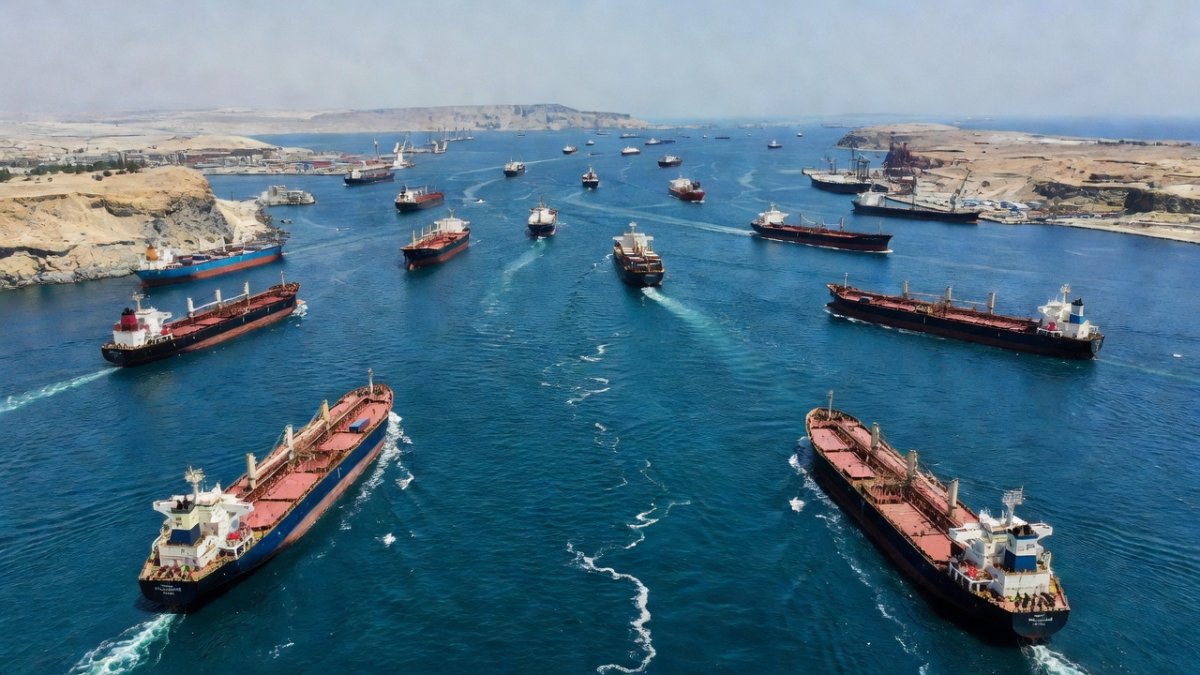
Trump's Escalation Threats and the Houthi Factor
President Donald Trump warned of "major military punishment" against Iran and the Houthis after Houthi fighters struck two Saudi oil tankers in the Red Sea, marking the expansion of the war to a second major shipping chokepoint at Bab el-Mandeb in addition to the Strait of Hormuz. Trump posted on social media: "If [the Houthis] do this again, the US will hold Iran responsible, in that the Houthis are a Surrogate and/or Proxy of Iran, and major military punishment will be inflicted upon Iran and, of course, the Houthis, themselves." The Houthis, who largely stayed out of the 2026 conflict until recently, have now rejoined the fight, linking the Red Sea theatre directly to the ongoing US-Iran exchanges. Signs that the US is preparing to escalate include the deployment of additional refueling aircraft to Israel, B-1 bombers departing UK bases, and dozens more medics sent to a base in Germany. Trump met with top advisers, including Defense Secretary Pete Hegseth, as he weighs options for a "massive attack." The Guardian reported that Trump says he is close to a decision on the largest-yet attack, raising the prospect that the 13th night of strikes could soon give way to a broader campaign involving multiple fronts.
Diplomacy in Ruins: Ceasefire Attempts Collapse
Iran reportedly rejected a US ceasefire offer delivered by Iraqi Prime Minister Ali al-Zaidi, though both sides have denied this report publicly. The June 2026 MoU, a 14-point deal that briefly reopened the Strait of Hormuz, collapsed within weeks. Trump declared the ceasefire "over" after the tanker attacks. Iran's top negotiator has sent mixed signals, with Speaker Mohammad Bagher Ghalibaf stating publicly that the "era of one-sided deals is OVER" while privately indicating openness to renewed talks under different terms, according to regional diplomats. Foreign Minister Abbas Araghchi stated that Iran is not ready for a deal under current conditions. US Secretary of State Marco Rubio assessed that Iran is "begging" for a deal but not ready to accept terms that would satisfy Washington. Qatari mediation efforts continue to fail because both sides demand preconditions the other refuses to meet, leaving diplomatic channels blocked and the military confrontation as the dominant dynamic.
Energy Markets and the Global Economic Impact
Brent crude has surged above $100 a barrel, up nearly 40 percent since the start of the war, as the Strait of Hormuz, which carries approximately 20 million barrels per day or 20 percent of global consumption, sees traffic reduced to a crawl despite Pentagon claims it remains open. Houthi attacks in the Red Sea threaten a second critical shipping lane, compounding supply concerns. Russia benefits from higher oil prices that bolster its budget but remains concerned about regional instability spreading to the Caucasus and Central Asia. China, heavily dependent on Gulf oil, is quietly pushing for de-escalation through back channels to protect its energy imports. European energy security has already been affected, with natural gas prices showing renewed volatility as traders price in the risk of further disruptions across multiple maritime routes.
Analysis — A Widening War With No Exit Strategy
The war has now expanded from the Strait of Hormuz to the Red Sea, from Iran to Yemen, and from military targets to economic infrastructure, creating a pattern of mutual escalation with no clear off-ramp. The collapse of the June MoU demonstrates that diplomatic channels are effectively blocked. Trump's threats of "major military punishment" may signal a new phase of escalation rather than de-escalation. For Russia, the prolonged US engagement in the Middle East provides strategic breathing room in Ukraine and the Caucasus. For China, the disruption to Gulf oil flows threatens economic stability. The key question that remains unanswered is what the US endgame in this conflict actually is, as both sides appear convinced that further military pressure will force the other to blink first.
The war grinds on, night after night, with no political solution in sight, as both sides appear convinced that further military pressure will force the other to blink first — a calculation that has proven wrong for 22 weeks and counting.
By Irina Volkov, Staff Writer
This article was produced with AI-assisted research and editorial support. Reporting is based on sources cited in the article.
What's Your Reaction?
 Like
0
Like
0
 Dislike
0
Dislike
0
 Love
0
Love
0
 Funny
0
Funny
0
 Wow
0
Wow
0
 Sad
0
Sad
0
 Angry
0
Angry
0

Russia/Eastern Europe Correspondent at Global1.News. Covering Russian politics, energy, security, and the shifting dynamics of the post-Soviet space. Provides clear-eyed analysis on one of the world's most opaque regions.












Comments (0)