
Europe Fires Signal Super El Niño Threat to Latin America
Europe Fires Signal Super El Niño Threat to Latin America Intro paragraph — The same heat that turned Portuguese pine forests into tinderboxes and forced 10,000 people from their homes in southern France is part of a global climate pattern now reaching across the Atlantic. As wildfires race across southern Europe, Latin America faces its own test. Southern Europe's Wildfire Cri
Intro paragraph — The same heat that turned Portuguese pine forests into tinderboxes and forced 10,000 people from their homes in southern France is part of a global climate pattern now reaching across the Atlantic. As wildfires race across southern Europe, Latin America faces its own test.
Southern Europe's Wildfire Crisis Is a Warning for Latin America's Coming Fire Season
Rio de Janeiro, Brazil — July 6, 2026 — The images arriving from the Mediterranean this week carry an unmistakable message for the eight nations that share the Amazon basin. While Portugal battles a 13,000-hectare inferno in Vouzela and France evacuates entire villages in the Pyrénées-Orientales, scientists at the World Meteorological Organization are already tracking sea-surface temperatures that point toward a Super El Niño capable of stripping moisture from South America’s forests by July 2027. The same atmospheric patterns now drying Mediterranean fuels will soon converge with the underlying warming trend that Climate Central has quantified across decades of fire-weather data. Latin American institutions from INPE to the Amazon Regional Observatory are watching both hemispheres, knowing that every hectare burned in Europe this summer represents a dress rehearsal for the dry season ahead. The numbers are not abstract; they are early indicators of how quickly conditions can shift from manageable to catastrophic when El Niño overlays decades of accumulated heat.
Flames Across Four Countries
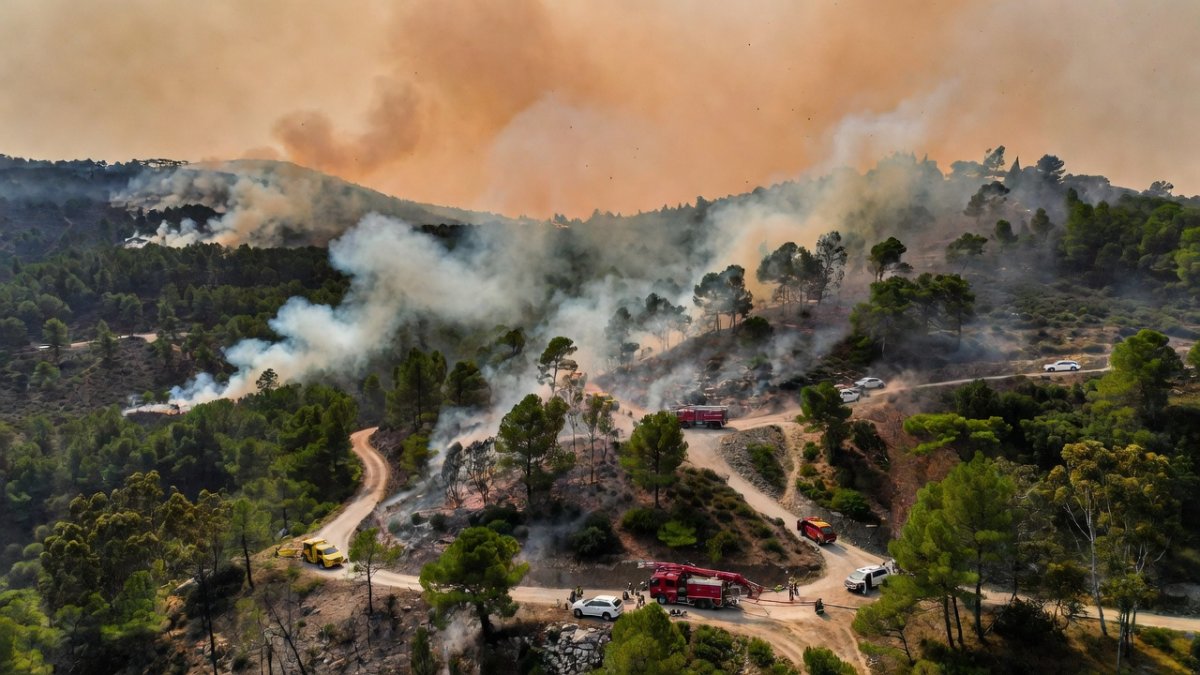
Portugal’s Vouzela fire alone consumed between 12,000 and 13,000 hectares, requiring more than 1,200 firefighters, 400 vehicles and 15 aircraft in a single operation. Spain dispatched 120 additional firefighters and 45 vehicles across the border while Italy contributed water-dropping planes. In France the Pyrénées-Orientales blaze scorched 1,650 to 2,200 hectares, forcing between 5,000 and 10,000 evacuations and deploying 600 to 750 firefighters. Greece faced simultaneous crises near Thessaloniki where three suburbs were evacuated amid toxic smoke from burning factories; five firefighters were hospitalized with injuries and respiratory problems, and care homes had to be moved. An earlier July 2 fire killed a father and his 12-year-old son, while a 76-year-old man was arrested on negligence charges. Across France, Spain and Portugal combined, between 17,000 and 19,000 hectares have already burned this season. The Tour de France organizers publicly warned that stages could be cancelled if fire conditions threaten spectators. These simultaneous outbreaks across four countries illustrate how quickly early-season heatwaves can overwhelm national capacities even in well-resourced European states.
When Neighbors Become Firefighters
Portugal’s Prime Minister Luis Montenegro took the unusual step of requesting standby aircraft not only from the EU Civil Protection Mechanism but also from Spain and Morocco, underscoring the scale of the emergency. The EU had already pre-positioned roughly 800 firefighters, 22 firefighting planes and five helicopters for the summer under the Copernicus EMS and EFFIS frameworks. Spain’s rapid deployment of 120 personnel and 45 vehicles to Portugal demonstrated how cross-border solidarity can multiply response capacity. Italy’s water-dropping aircraft arrived within days, while Morocco’s potential involvement marked a rare instance of North African resources supporting Mediterranean Europe. These coordinated movements reveal both the strength of existing mechanisms and their limits when multiple countries ignite at once. For Latin America, where the Amazon Regional Observatory already links eight nations through real-time satellite feeds, the lesson is clear: regional cooperation must be scaled before the next El Niño peak. Without equivalent pre-positioning of aircraft, personnel and funding, the coming dry season could overwhelm individual countries even if deforestation rates continue to fall.
Climate Attribution: Hotter, Drier, Longer
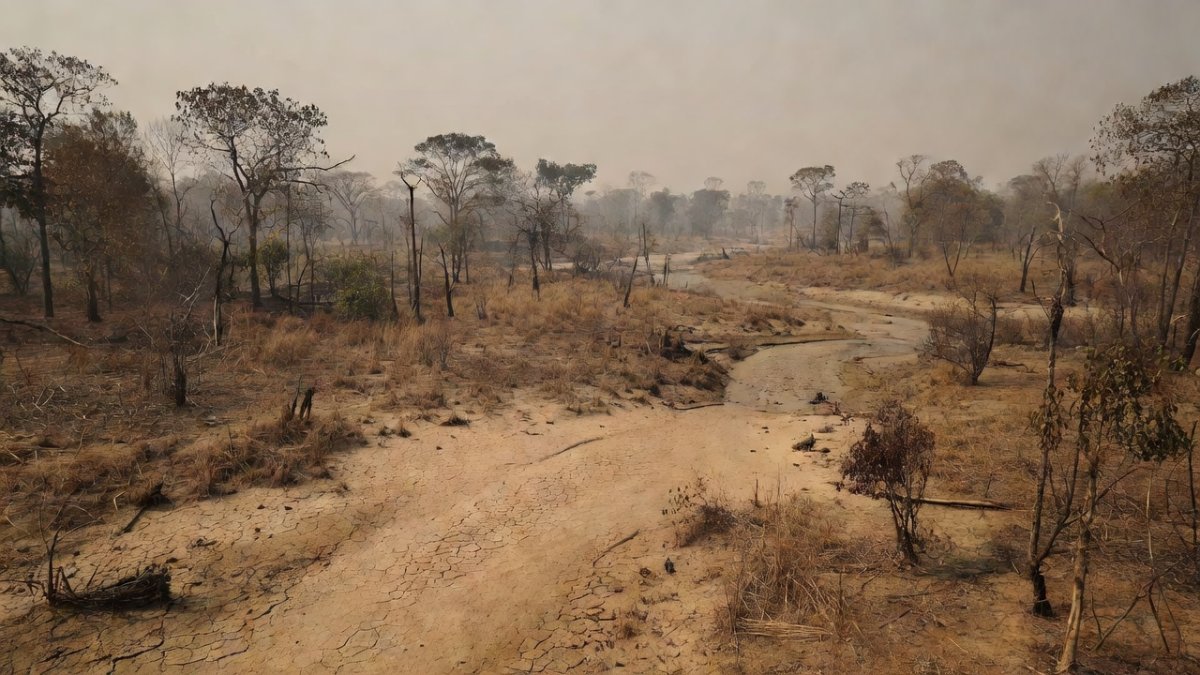
Climate Central’s attribution studies show that a substantial fraction of the increase in fire-weather days across southern Europe is directly traceable to human-caused warming. The early heatwaves that struck the Mediterranean this year left fuels drier for longer, extending the window in which any ignition can explode into a major blaze. Large-scale atmospheric patterns that intensified the heat are the same ones now influencing the equatorial Pacific, where NOAA data indicate an 80 percent chance of El Niño formation by August and a 90 percent likelihood of persistence into 2027. When these patterns align with the long-term warming trend, the result is not merely hotter summers but fundamentally altered fuel moisture across entire continents. Latin American scientists note that the Amazon’s dry season, normally July through October, will face the same combination of reduced rainfall and elevated temperatures. The European experience demonstrates that once thresholds are crossed, suppression resources become secondary to prevention; the fires simply outpace available aircraft and crews. This is the new baseline against which every Brazilian, Peruvian or Bolivian fire-management plan must now be measured.
Latin America on the Brink
The World Meteorological Organization has warned that the developing El Niño could reach Super El Niño status, producing record sea-surface temperatures that historically slash Amazon wet-season rainfall. Brazil recorded 19,462 fire foci in the first half of 2026, a 0.96 percent rise over 2025, even as June showed a 14 percent year-on-year decline. DETER alerts from INPE registered a 61.4 percent drop in Amazon deforestation in May—the largest monthly reduction on record—while cumulative alerts from August 2025 through May 2026 fell 37.5 percent. These gains remain fragile. The Pantanal, despite a 65 percent reduction in deforestation between 2022 and 2025, stays acutely vulnerable because El Niño droughts concentrate remaining moisture in fewer areas, turning the rest into tinder. Chile’s DMC has already linked current drought conditions to the same El Niño signal, prompting CONAF to suspend open fires in La Araucanía. The Federal Public Ministry has cautioned that climate change is amplifying both queimadas and floods across the Pantanal and Pampa biomes. Every percentage point of deforestation reduction must now be defended against an atmospheric regime that will test these ecosystems more severely than at any time in the satellite record.
Brazil's Preparedness: Operation Apoena
IBAMA launched Operation Apoena in June 2026 across seven Amazon states, combining preventive notifications, satellite monitoring through BDQueimadas and DETER, and zero tolerance for unauthorized burning. The operation explicitly targets the illegal use of fire during the critical pre-dry-season window. MMA and ICMBio personnel are coordinating with state environmental agencies to issue real-time alerts before small ignitions merge into larger complexes. These measures build on the observed 61.4 percent May deforestation drop and the broader 37.5 percent cumulative decline, yet officials acknowledge that enforcement alone cannot offset the rainfall deficits an El Niño will impose. The Amazon Regional Observatory’s eight-country monitoring network provides the data backbone, allowing cross-border tracking of both deforestation and active fire hotspots. Still, the European precedent shows that even sophisticated monitoring cannot substitute for reduced fuel loads and pre-positioned suppression assets. Brazil’s strategy therefore pairs aggressive enforcement with expanded community outreach, recognizing that the coming season will reward preparation far more than reaction.
The Pantanal, Chile, and the Andes
Despite the Pantanal’s 65 percent deforestation reduction since 2022, the biome’s hydrology makes it especially sensitive to the rainfall suppression El Niño typically brings. The Federal Public Ministry has documented how climate change intensifies both fire and flood extremes, leaving managers with narrower margins for error. In Chile, DMC forecasts and CONAF restrictions in La Araucanía already reflect the same Pacific warming signal now affecting Europe. The Andes themselves act as a transmission belt: reduced snowpack and earlier melt leave lower-elevation forests drier by mid-winter, extending the fire season southward. The Amazon Regional Observatory integrates these signals across national boundaries, supplying Copernicus-style data products to decision-makers from Colombia to Bolivia. Yet resource gaps remain stark compared with the EU Civil Protection Mechanism’s pre-positioned 800 firefighters and 22 aircraft. Without equivalent multinational surge capacity, a single ignition under Super El Niño conditions could replicate the multi-country crisis now unfolding in the Mediterranean. The lesson from Greece, Portugal and France is that regional solidarity must be built before the fires start, not after they merge.
The Bottom Line — A Shared Hemisphere of Fire
The 13,000 hectares burning in Portugal and the 2,200 hectares evacuated in France are not distant spectacles; they are data points on a curve that now bends toward Latin America. With an 80 to 90 percent probability of a persistent El Niño, the same atmospheric configuration that primed Mediterranean fuels will arrive over the Amazon and Pantanal during their most vulnerable months. Brazil’s 19,462 fire foci and Chile’s expanding drought restrictions already hint at the scale of the test. Institutions from IBAMA to the Amazon Regional Observatory have made measurable progress on deforestation, yet these gains will be measured against a hotter baseline that Climate Central has shown is no longer natural variability. The European response—rapid cross-border deployment of personnel and aircraft—offers a template, but Latin America must adapt it to its own geography and resource constraints. The choice is no longer whether to prepare, but whether preparation will match the velocity of the warming that is already here. By Elena Vasquez, Staff Writer
This article was produced with AI-assisted research and editorial support. Reporting is based on sources cited in the article.
What's Your Reaction?
 Like
0
Like
0
 Dislike
0
Dislike
0
 Love
0
Love
0
 Funny
0
Funny
0
 Wow
0
Wow
0
 Sad
0
Sad
0
 Angry
0
Angry
0

Latin America Correspondent at Global1.News. Based in Mexico City, covering politics, economics, energy, and culture across the region. Brings an on-the-ground perspective to stories spanning from the Rio Grande to Patagonia.














Comments (0)