
Tnuva Cottage Cheese Crisis Expands to White Cheese as German Technicians Refuse Travel
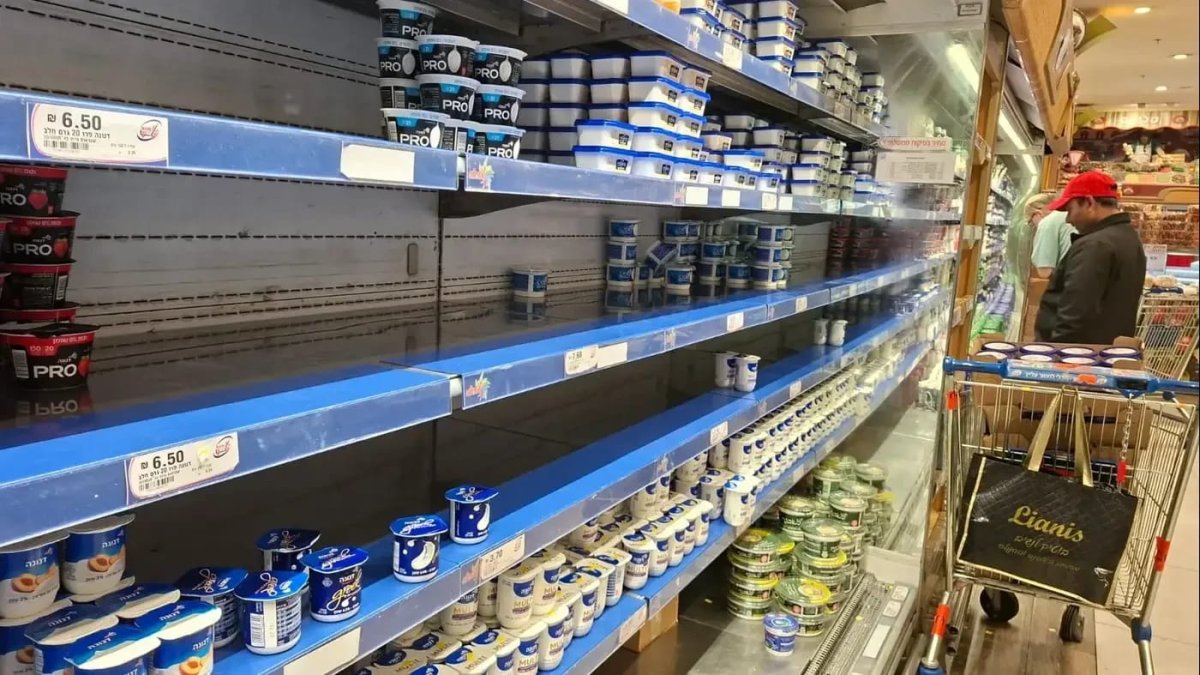
of Cottage Cheese and White Cheese Across Israel In recent weeks the shortage of cottage cheese produced by Tnuva has widened into a broader scarcity of white cheese products as well. Retailers report receiving only half the crates they order, with peripheral areas sometimes limited to a single tub per delivery. This situation has left shelves empty at chains including Shufersal and others, affecting both price-controlled items and higher-priced varieties that reach NIS 15.
The Expanding Shortage of Cottage Cheese and White Cheese Across Israel
In recent weeks the shortage of cottage cheese produced by Tnuva has widened into a broader scarcity of white cheese products as well. Retailers report receiving only half the crates they order, with peripheral areas sometimes limited to a single tub per delivery. This situation has left shelves empty at chains including Shufersal and others, affecting both price-controlled items and higher-priced varieties that reach NIS 15. The disruption traces directly to a computer malfunction at Tnuva's automated warehouse in the Alon Tavor industrial area of the Lower Galilee, where finished products remain stacked on pallets that cannot be dispatched to trucks.
Consumer Experiences in Neighborhood Stores and Supermarkets
Shoppers describe visiting multiple branches in the same area without finding any white cheese tubs, whether 9 percent fat, 3 percent, smooth, low-fat, or cream varieties. One consumer noted that the absence extends beyond basic cottage cheese into everyday dairy staples that families rely on for meals. This pattern reflects how the initial cottage cheese shortfall has prompted households to stockpile white cheese alternatives, accelerating demand and emptying remaining inventory. The result is a visible strain on daily routines in cities from Tel Aviv to Jerusalem and smaller communities in the north.
Technical Malfunction at the Alon Tavor Automated Warehouse
The core issue lies in the warehouse automation system supplied by Dematic, a German firm within the KION Group, rather than in the production lines themselves. Cottage cheese and related white cheese items are manufactured and packaged on schedule, yet the computer-controlled pallet movement prevents release to distribution vehicles. Tnuva personnel have shifted to partial manual operations while computer teams work around the clock, though the mostly automated setup limits full bypass options. Estimates suggest ongoing demand could be met within two weeks, with shortages resolved only after several additional weeks of catch-up.
Dematic Technician Visits and Geopolitical Scheduling Challenges
Dematic technicians conducted a scheduled maintenance visit at the Osem plant in recent weeks, yet no equivalent team reached Tnuva because separate crews handle each site and dates are fixed months ahead. A planned stop at the Alon Tavor facility during Operation Lion's Roar was canceled amid the security situation. Remote support via phone and Zoom continues, but on-site repairs require specialists whose next available window sits several months away and remains contingent on regional conditions. This highlights how Israel's reliance on foreign automation expertise intersects with supply-chain vulnerabilities during periods of heightened tension.
Market Share Dynamics Involving Tnuva and Strauss
Tnuva holds roughly 70 percent of the cottage cheese market and serves as the largest producer of white cheese, while Strauss accounts for about 30 percent of white cheese sales. The current shortfall at Tnuva has not been offset by increased output elsewhere, partly because the public shift to white cheese has outpaced available alternatives. Food market observers note that the two shortages reinforce each other, with cottage cheese scarcity driving hoarding that then depletes white cheese stocks. Tnuva, owned by Bright Food of China, has rejected suggestions of deliberate restriction, emphasizing that unsold product represents direct revenue loss.
Rising Dairy Demand Amid Reduced Travel and Security Conditions
Demand for dairy products has increased by approximately 4 percent since the start of the year, linked in part to fewer Israelis traveling abroad because of the security environment. This steady uptick has amplified pressure on existing production and distribution capacity at a moment when the Alon Tavor warehouse cannot operate at full efficiency. The combination of higher domestic consumption and logistical constraints illustrates broader economic patterns in Israel's food sector, where local supply chains must absorb fluctuations tied to regional stability.
Regulatory Silence and Calls for Import Quotas
Industry sources have questioned the absence of intervention from the agriculture minister, economy minister, finance minister, and other regulators as the situation escalates. Suggestions include opening import quotas to supplement local output until the automated systems return to normal. Without such measures, the tailspin of shortages and hoarding continues, particularly in areas farther from central distribution hubs. The Ministry of Economy has not issued public statements on potential policy adjustments in recent weeks.
Security Concerns Limiting Foreign Technical Support
Technicians from Dematic have declined to travel to Israel because of the ongoing conflict in the region, a stance reported across multiple outlets. This refusal extends the timeline for restoring full warehouse functionality at Alon Tavor, where the malfunction has now persisted for more than two months. The episode underscores how security realities affect not only military operations but also the maintenance of critical civilian infrastructure that underpins everyday food availability. Remote troubleshooting provides partial relief, yet physical repairs remain essential for complete resolution.
Broader Implications for Israel's Tech-Driven Food Supply Chains
The Tnuva episode reveals the extent to which Israeli dairy production depends on sophisticated German automation technology integrated into facilities like the one in the Lower Galilee. When these systems encounter software issues, the ripple effects reach consumers nationwide and expose gaps in local technical redundancy. Companies such as Tnuva and Strauss operate within an ecosystem that blends domestic manufacturing with international equipment providers, creating both efficiency gains and exposure to external scheduling or travel constraints. The current crisis offers a case study in how innovation in warehouse logistics supports high-volume output under normal conditions yet requires robust contingency planning during periods of regional instability.
Outlook for Resolution and Industry Adaptation
Tnuva continues efforts to stabilize distribution while awaiting clearer timelines for Dematic on-site assistance. Retailers in both central and peripheral locations monitor incoming shipments closely, hoping for gradual improvement as manual workarounds expand. The episode has prompted discussion within the sector about diversifying maintenance support and exploring additional automation safeguards. As the malfunction moves into its third month, attention remains on balancing immediate consumer needs with longer-term resilience in Israel's dairy supply networks.
By Hannah Berg, Staff Writer
This article was produced with AI-assisted research and editorial support. Reporting is based on sources cited in the article.
What's Your Reaction?
 Like
0
Like
0
 Dislike
0
Dislike
0
 Love
0
Love
0
 Funny
0
Funny
0
 Wow
0
Wow
0
 Sad
0
Sad
0
 Angry
0
Angry
0

Israel Correspondent at Global1.News. Based in Tel Aviv, covering Israeli politics, security, technology, and society. Provides balanced, deeply-sourced reporting on one of the most closely-watched regions in the world.















Comments (0)