
West Bank Settler Violence Surges as Waves of Attacks Target Mosques, Homes and Livelihoods
In a recent Middle East Eye report examining how settler violence has reached new heights across the West Bank, the pattern of coordinated raids, armed incursions and destruction of Palestinian property comes into sharp focus through the events unfolding since July 24. Deadly Raid on Tell Village Israeli settlers stormed homes and farmland in Tell village southwest of Nablus on July 24. Armed settlers opened fire while Israeli forces provided cover fire during the incursion.
In a recent Middle East Eye report examining how settler violence has reached new heights across the West Bank, the pattern of coordinated raids, armed incursions and destruction of Palestinian property comes into sharp focus through the events unfolding since July 24.
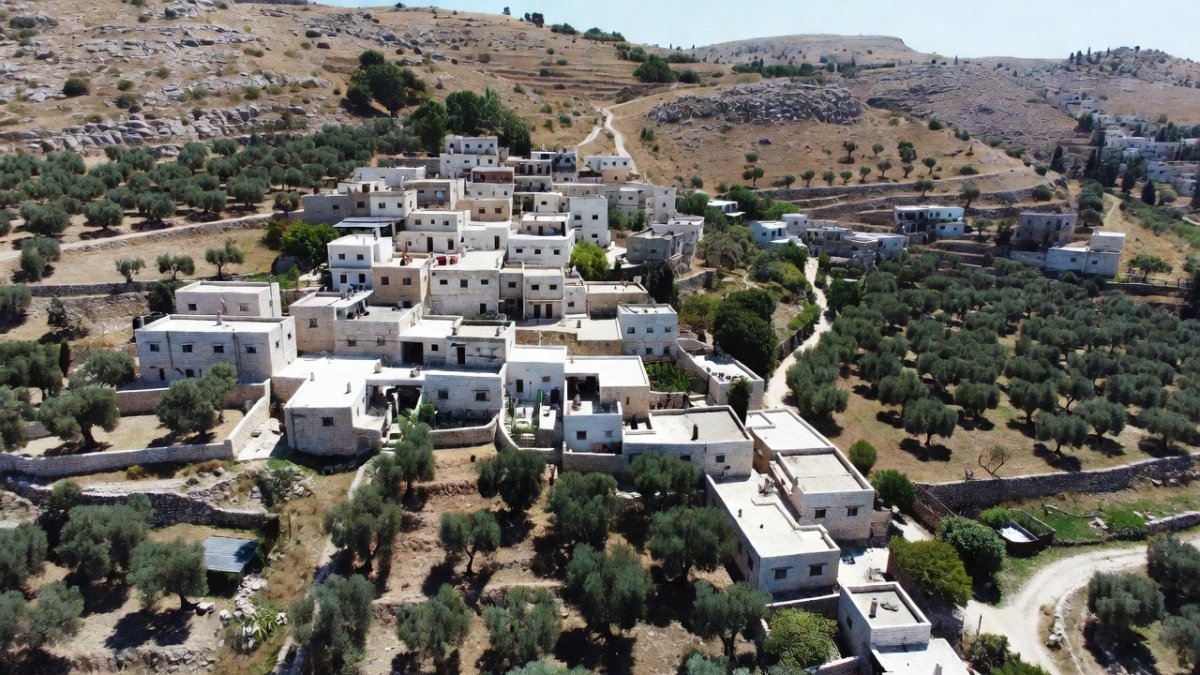
Deadly Raid on Tell Village
Israeli settlers stormed homes and farmland in Tell village southwest of Nablus on July 24. Armed settlers opened fire while Israeli forces provided cover fire during the incursion. Four Palestinians were killed: brothers Ibrahim Hussein Ali Saifi and Jawad Hussein Ali Saifi, their cousin Farouq Adnan Ali Saifi, and relative Imran Ahmed Ali Saifi. An Israeli settlement guard and an army officer were also killed in the clash. The attack left families in Tell reeling as homes were ransacked and farmland damaged in the early morning hours.
The Saifi family members held central roles in Tell village life, with several working as farmers and community supporters who maintained local agricultural lands passed down through generations. Their deaths have left multiple households without primary providers, deepening the economic strain on extended relatives already navigating movement restrictions. Eyewitness Mahmoud al-Hindi described the sequence of events to Middle East Eye, noting that this area often sees confrontations but today was the most violent, as armed settlers advanced under cover fire that targeted homes and fields without distinction.
The confrontation unfolded in the early morning hours when settlers entered the village from nearby outposts, firing indiscriminately while Israeli forces positioned themselves to shield the incursion. Palestinian residents attempted to defend their properties, leading to the fatal clashes that claimed the four Saifi lives. Local accounts emphasize how the raid extended beyond immediate violence to include systematic ransacking of homes and destruction of crops, leaving visible scars on the landscape that families must now confront daily.
Israeli Officials Respond with Escalatory Rhetoric
Israeli Finance Minister Bezalel Smotrich called for villages to become like the refugee camps in Nablus and Tulkarm, referencing the destruction seen in 2025. National Security Minister Itamar Ben Gvir stated that for every Jew killed the enemy must bear the loss of land and homes. Prime Minister Benjamin Netanyahu announced preparations for a large-scale military operation. The army subsequently deployed five additional companies to the West Bank in the days that followed.
Smotrich and Ben Gvir have long advocated for settlement expansion as a core policy priority, consistently pushing measures that facilitate outpost growth and land appropriation in the occupied West Bank. Their positions within the far-right coalition have shaped government responses to violence, prioritizing settler security over Palestinian protection and framing attacks as justified responses to isolated incidents. Netanyahu, balancing coalition pressures, has endorsed broader operations while maintaining international diplomatic channels that often sideline accountability for settler actions.
This political environment reflects a coalition dynamic where far-right voices influence military deployments and rhetorical escalations, contributing to cycles of retaliation that Palestinian communities experience as collective punishment. The deployment of additional forces follows patterns seen in prior years, where official statements precede intensified raids that disrupt civilian life across multiple governorates.
Raids Extend to Hebron and Beyond
On July 25 Israeli forces raided Hebron's Old City, shutting down Palestinian shops and forcing residents indoors. Israeli forces and settlers torched homes and vehicles across multiple villages during the same period. These actions disrupted daily commerce and movement for families already living under tight restrictions in the occupied territory.
Coordinated Attacks Hit Eight Governorates
Israeli settlers launched coordinated attacks across Nablus, Tulkarm, Ramallah, Hebron, Salfit, Qalqilya, Jericho and Jerusalem governorates on July 26. Al-Rahma Mosque in Qusra village south of Nablus was set on fire and spray-painted with the phrases Israel will be established with blood and Mosques will not frighten us. Activist Abdul-Azim Wadi told Middle East Eye that the mosque was scheduled to open in coming days and that the fire caused partial wall collapse. A second mosque was set on fire in Kur village south of Tulkarm.
Abdul-Azim Wadi received a call at 2:30am alerting him to the fire at Al-Rahma Mosque, where the structure had just been painted and carpeted the day before in preparation for its opening. The slogans left behind echoed longstanding patterns of targeting places of worship, compounding the trauma for Qusra residents who recall the mosque burned in 2011, 47 homes burned in 2024, and six killed in a single day in 2023. These historical incidents illustrate how attacks on religious sites form part of a recurring strategy that Palestinian communities document as efforts to erase cultural presence.
The coordinated nature across eight governorates points to organized planning that extends beyond spontaneous clashes, with settlers moving in groups to hit multiple locations simultaneously. Palestinian voices from affected villages describe the psychological toll of such synchronized violence, which leaves families fearing for their safety even in areas previously considered relatively stable.
Destruction of Livelihoods and Emergency Services
A quarry near Ein Samiya was destroyed when 10 excavators, bulldozers and trucks were burned, resulting in 2 million shekels or approximately 666,000 dollars in damage. Three guards were assaulted during the incident. Homes were attacked in Beitillu near Ramallah and Beit Furik near Nablus. An ambulance transporting a patient was attacked near Karnei Shomron settlement. A Bedouin community near Jaba east of Jerusalem was attacked with live ammunition, and a house and vehicle were burned. These incidents compound existing economic pressures on communities already facing movement restrictions and limited access to resources.
Quarry owner Abdel Samad Abdel Aziz described how 10 excavators were burned in the attack, causing 2 million shekels in damage, and noted that while previous attacks had occurred this was the first time they set fires. The assault on the ambulance near Karnei Shomron settlement endangered both the patient and medical staff, highlighting how emergency services face direct targeting that delays critical care. In the Bedouin community near Jaba, live ammunition fire accompanied the burning of a house and vehicle, forcing residents to flee under threat and abandon belongings essential to their nomadic livelihood.
These targeted strikes on economic infrastructure and medical access reveal a pattern that Palestinian analysts link to broader efforts to undermine community resilience. Families report that repeated incidents erode the ability to sustain agriculture or small businesses, pushing more households toward dependency on external aid amid ongoing occupation restrictions.
Palestinian Authorities and Religious Leaders Condemn Attacks
The Palestinian Foreign Ministry called on the international community to designate settler groups as terrorist organizations. The Palestinian Higher Fatwa Council condemned the mosque attacks as a systematic campaign against places of worship. Pastor Munther Isaac of Christmas Lutheran Church in Bethlehem called for urgent prayers and action. Figures indicate 87 or more Palestinians have been killed in the West Bank in 2026, with 21 of those deaths attributed to settlers. There are approximately 750,000 settlers living in 141 settlements and 224 outposts, and 11,074 attacks by army and settlers were recorded in the first half of 2026 alone.
Impact on Daily Life and Community Response
Families in affected villages describe disrupted routines, damaged property and fear that prevents children from attending school or farmers from reaching their fields. The loss of the four Saifi family members in Tell has left multiple households without primary providers. Local leaders continue to document incidents while urging restraint and international monitoring. The pattern of attacks on mosques, quarries and emergency vehicles underscores the broad reach of the violence into religious, economic and medical spheres of Palestinian life.
UN OCHA data shows that settler violence accounted for 55% of Palestinian injuries in the West Bank in 2026, underscoring the scale of harm inflicted on civilians. The Colonization and Wall Resistance Commission has recorded rising settler killings, with 11 in 2024, 14 in 2025, and 21 or more in 2026, figures that Palestinian officials cite as evidence of escalating impunity. International responses have included calls for monitoring missions, yet Palestinian communities warn that without concrete action the situation risks descending into mass atrocities that echo historical displacements.
Local leaders emphasize the need for sustained documentation and global solidarity to counter the normalization of such violence. Palestinian voices stress that daily life under these conditions demands resilience, with families adapting routines around curfews and checkpoints while advocating for accountability through diplomatic channels.
International Silence and the Question of Accountability
Discussions within the EU about potential sanctions on settler groups have surfaced in recent statements, yet concrete measures remain stalled amid broader geopolitical considerations. The current US administration has issued general condemnations of violence without advancing targeted designations or policy shifts that address root causes in the occupied territories. Palestinian officials view this pattern as enabling continued expansion and attacks.
The PLO has described the attacks as official Israeli policy of forced displacement, linking them to systematic efforts that undermine Palestinian presence on the land. The Palestinian Foreign Ministry has reiterated calls to designate settler groups as terrorist organizations, arguing that such steps would close the impunity gap that allows perpetrators to operate without consequence. Palestinian perspectives highlight how international inaction perpetuates cycles of violence that disproportionately affect civilian communities.
Analysts note that the absence of accountability mechanisms leaves Palestinian families exposed to repeated incursions, with calls for independent investigations gaining urgency from voices on the ground. This silence contrasts with Palestinian demands for recognition of their lived experiences under occupation, where daily threats to safety and livelihood persist without external intervention.
By Fatima Al-Rashid, Staff WriterThis article was produced with AI-assisted research and editorial support. Reporting is based on sources cited in the article.
What's Your Reaction?
 Like
1
Like
1
 Dislike
0
Dislike
0
 Love
0
Love
0
 Funny
0
Funny
0
 Wow
0
Wow
0
 Sad
0
Sad
0
 Angry
0
Angry
0
Gulf/MENA Correspondent at Global1.News. Based in Doha, covering Gulf politics, energy markets, diplomacy, and development across the Middle East and North Africa. Tracks the economic transformation of the Gulf states.












Comments (0)