
AMD Launched a $5.5 Million AI Rack That Matches NVIDIA — But You Can't Buy One
AMD's Advancing AI 2026 keynote launched the Helios rack at $5.5M with the Instinct MI455X GPU, matching NVIDIA Vera Rubin. But every chip is already sold to hyperscalers. What it means for independent hosting.
AMD Launched a $5.5 Million AI Rack That Matches NVIDIA — But You Can't Buy One
Let me tell you something that's been on my mind since last week's Advancing AI keynote in San Francisco. I've been watching AMD try to crack NVIDIA's grip on the AI compute market for two years now, and I'll be honest — I've been skeptical. Not because AMD can't build good silicon — the EPYC line proved that years ago — but because NVIDIA doesn't just sell chips. It sells an ecosystem, and ecosystems don't get displaced overnight.
But then Lisa Su got on stage at the Moscone Center on July 22 and did something I didn't expect. She announced the Helios rack — a fully integrated, liquid-cooled, 72-GPU monster at $5.5 million, packing 320 billion transistors per GPU, with OpenAI, Meta, and Anthropic already lining up to buy it. So now I have to ask the question: does this change anything for the rest of us?
The Helios Launch — What AMD Actually Did at Advancing AI 2026
Let me start with the facts. AMD's Advancing AI 2026 keynote at the Moscone Center in San Francisco on July 22-23 was their biggest product launch in company history. Full stop. Not biggest since Ryzen, not biggest since Xilinx — biggest ever. And here's what they announced:
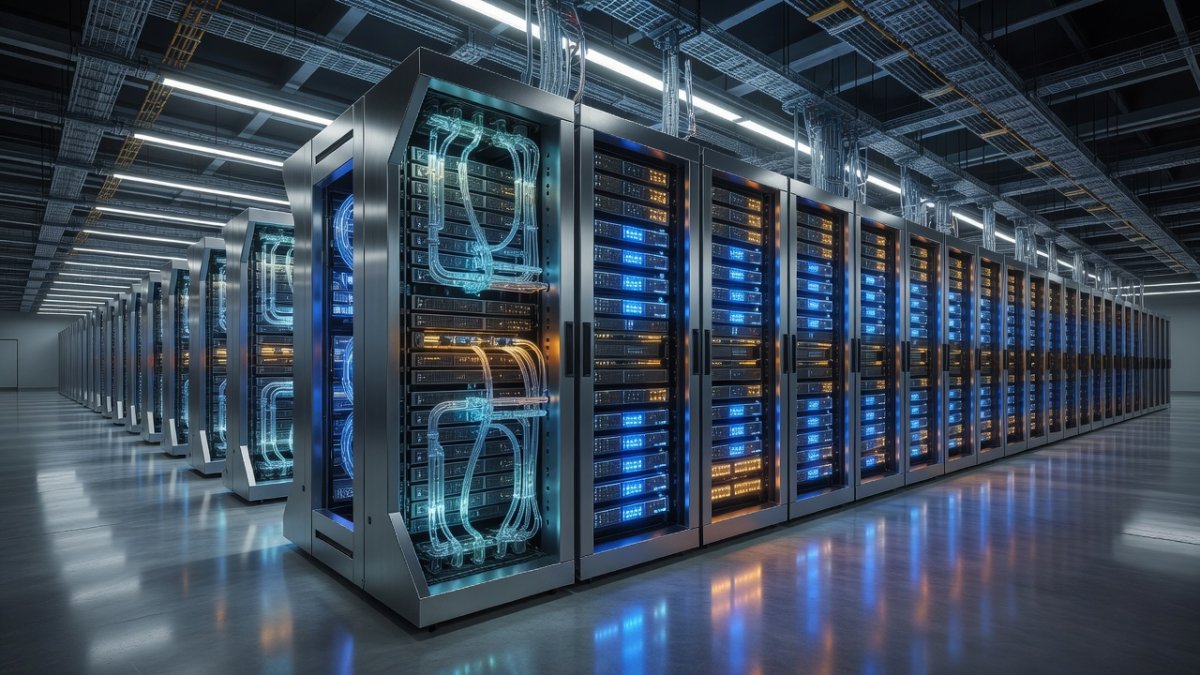
The Helios rack-scale AI system is AMD's answer to NVIDIA's NVL72. Each rack carries 72 Instinct MI455X GPUs, paired with EPYC "Venice" Zen 6 CPUs, Pensando networking silicon, and ROCm software. All-liquid-cooled. 2.9 exaflops of FP4 compute per rack. 31 terabytes of HBM4 memory. And $5.25 million to $5.5 million per rack. That's a complete AI infrastructure platform positioned directly against NVIDIA's Vera Rubin NVL72, which targets 3.6 exaflops and ships H2 2026.
The Instinct MI455X itself is a 320-billion transistor beast on TSMC's 2nm and 3nm hybrid process, with 432 GB of HBM4 memory and roughly 40 petaflops of AI performance per GPU. That's within striking distance of NVIDIA's Rubin at 336 billion transistors and 288 GB HBM4 — AMD actually wins on memory capacity by a wide margin. At an estimated ASP of $30,000 per MI455X, AMD is pricing 15 to 25 percent below equivalent NVIDIA hardware.
AMD also launched EPYC Venice, the first x86 server CPU on TSMC's 2nm process. This is Zen 6, and it's not just for the Helios rack — it's a general-purpose server processor any hosting provider will be able to buy. More on that later.
The Real Numbers — Orders, Pricing, and Delivery Timelines
Let me give you the numbers that matter. OpenAI is the lead customer — they've had access to Helios hardware for months optimizing GPT workloads for the MI455X. Their first gigawatt of AMD capacity arrives H2 2026. Meta is in the queue with 6 gigawatts of planned MI450-series infrastructure. Anthropic announced a $5 billion, 2-gigawatt deal on the same day. Oracle deployed 50,000 MI450 GPUs starting this quarter.
That's roughly 12 gigawatts of AMD GPU capacity spoken for across four customers within the first week of availability. To put that in perspective, 12 gigawatts is more than the entire installed base of AMD AI accelerators from the last three generations combined. The demand is real.
The Helios pricing — $5.25M to $5.5M per rack — undercuts NVIDIA's NVL72 at roughly $6 million by about 10 to 15 percent. At the GPU level, the MI455X's estimated $30,000 ASP lands 15 to 25 percent below equivalent NVIDIA parts. That's a meaningful discount when you're buying 50,000 units. But it's also a signal that AMD is still playing the pricing card — they can't compete on ecosystem maturity yet, so they're competing on cost per flop.
Delivery timelines matter. OpenAI's first gigawatt ships H2 2026. Oracle's 50,000 GPUs start this quarter. That means the MI455X is shipping — it's not a paper launch. NVIDIA's Vera Rubin also ships H2 2026, so we're looking at the first head-to-head race to volume between two genuinely competitive GPU architectures in years.
The Secondary Bottleneck — GPU Supply Diversification and the Independent Hosting Gap
Here's the part nobody at the Moscone Center talked about, and it's the part that matters most to every independent hosting provider. Every single Helios rack AMD announced — every MI455X GPU — is already spoken for. OpenAI. Meta. Anthropic. Oracle. Twelve gigawatts, gone before the public even knew the product existed.
This is the exact same dynamic we've been watching with NVIDIA for two years. The hyperscalers get the allocation. The independent operators get whatever scraps remain. AMD's entry was supposed to be the great equalizer, the moment GPU supply finally diversified. But AMD's entire first production run of MI455X silicon is going to the same four companies that already own most of the NVIDIA allocation.
The secondary bottleneck isn't technical — it's commercial. AMD is winning the spec sheet war. The MI455X has more memory, better per-chip pricing, and competitive performance. But the delivery channel is the same: exclusive hyperscaler allocation, no general availability, and no clear path for independent operators to buy Helios racks at any price in 2026 or early 2027. The AMD-Anthropic deal makes this explicit — $5 billion of AMD equity in Anthropic, with GPU supply as the consideration. These are strategic partnerships, not retail sales.
What does exist for the rest of us? EPYC Venice through standard server OEM channels. That's real. But the MI455X, the Helios rack, and the ROCm stack? Hyperscaler-exclusive for the foreseeable future.
The Counter-Argument — NVIDIA Still Dominates for a Reason
Before I get accused of being too optimistic about AMD, let me be clear. NVIDIA's data center revenue in fiscal 2026 was $215.9 billion. AMD's total revenue in fiscal 2025 was $34.6 billion. That's not a competition — that's a six-to-one ratio. NVIDIA will ship more AI accelerators in a single quarter than AMD will ship all year. The CUDA ecosystem, the networking fabric, the developer tools, the training framework integrations — none of that goes away just because AMD launched a competitive chip.
NVIDIA pre-empted AMD's Advancing AI event with a Vera Rubin performance announcement four days earlier. They know AMD is coming. But NVIDIA's advantage isn't just raw performance — it's that every AI lab and GPU rental provider already runs CUDA. Porting to ROCm is not free. AMD has made progress on ROCm compatibility, but the industry moves at the pace of the installed base, not the spec sheet. Even SemiAnalysis concedes that MI400 volume in 2026 will be low compared to NVIDIA. The question is whether 2027 changes that.
What This Actually Means for Independent Hosting Providers
Let me give you the practical takeaways.
First — don't expect to buy MI455X GPUs or Helios racks anytime soon. If you're running GPU rental or colocation, plan capacity for NVIDIA through 2027. AMD's first production run is allocated to hyperscalers. The second run probably goes to the same customers expanding. EPYC Venice CPUs will be available through standard OEM channels — upgrade your CPU fleets. But don't count on AMD GPU availability for your own rack.
Second — monitor the ROCm ecosystem as a leading indicator. The moment PyTorch and TensorFlow support ROCm at the same level as CUDA, the independent market opens up. When you can rent AMD GPU instances on standard cloud platforms with comparable training performance, that's when supply chain diversification starts for everyone.
Third — the EPYC Venice upgrade path is real. Zen 6 on 2nm is a significant generational leap. If you're running Zen 4 or early Zen 5 EPYC servers, Venice offers real performance-per-watt improvements for general hosting and GPU-adjacent compute — data preprocessing, model serving infrastructure, storage nodes. This is the part of AMD's launch that actually benefits the independent market directly.
Fourth — watch the used GPU market for spillover. When hyperscalers upgrade to MI455X and Vera Rubin, they'll decommission H100, H200, and B200 fleets. That hardware trickles down to independent operators through secondary markets. More competition at the top means faster turnover of previous-generation hardware into the secondary channel.
The Structural Reality — This Is Good News, But Not Yet
Let me zoom out. AMD launching a credible competitor to NVIDIA's top-tier AI rack is unambiguously good for the industry. GPU supply diversification is the single most important structural change this market needs. A duopoly is better than a monopoly. Three or four competitors — with Intel and startups also pushing — is better than a duopoly. The long-term trend is toward more options, better pricing, and less vendor lock-in.
But the short-term reality is that every MI455X GPU AMD can manufacture for the next 12 months is already sold to someone who can write a $5 billion check. The independent hosting market will benefit indirectly — through NVIDIA price pressure, faster GPU generations, ROCm ecosystem maturation — but not by buying Helios racks off the shelf. AMD's stock analysts are talking about a $700 target. The hardware is real. The orders are real. The 2nm EPYC Venice is going to be a workhorse server CPU that benefits every hosting provider in the world. But if you're waiting to order a pallet of MI455X GPUs for your colo? That day is not in 2026.
The Bottom Line
AMD just proved it can build hardware that competes with NVIDIA at the absolute top of the AI compute stack. That's not hype — that's the actual spec sheet, the actual orders from the most demanding AI labs in the world, and the actual deployment timeline starting this quarter. Fifteen years ago nobody believed AMD could compete with Intel in server CPUs. They did. Five years ago nobody believed AMD could compete with NVIDIA in AI accelerators. Now they're shipping 72-GPU racks at $5.5 million apiece.
But competition at the top doesn't mean access for everyone else. The hyperscalers are consuming the entire first wave of AMD's next-generation silicon, just like they did with NVIDIA's. The independent market will benefit from the ripples — cheaper previous-gen hardware, better CPU options, a more competitive market that forces NVIDIA to price aggressively. But deploying AMD's latest GPUs in your own facility is still years away. Plan accordingly. Upgrade your EPYC servers. Watch the ROCm ecosystem. Buy used H100s when they hit the secondary market. The AMD era in AI has started — it just hasn't reached your data center yet.
— Allan Ali, Founder
This article was produced with AI-assisted research and editorial support. Reporting is based on sources cited in the article.
What's Your Reaction?
 Like
0
Like
0
 Dislike
0
Dislike
0
 Love
0
Love
0
 Funny
0
Funny
0
 Wow
0
Wow
0
 Sad
0
Sad
0
 Angry
0
Angry
0

Publisher of Global1.News. Automation architect, systems builder, and the guy making sure the truth gets published.













Comments (0)