
Ottawa Rejects Billy Bishop Airport Expansion Amid Massive Public Opposition
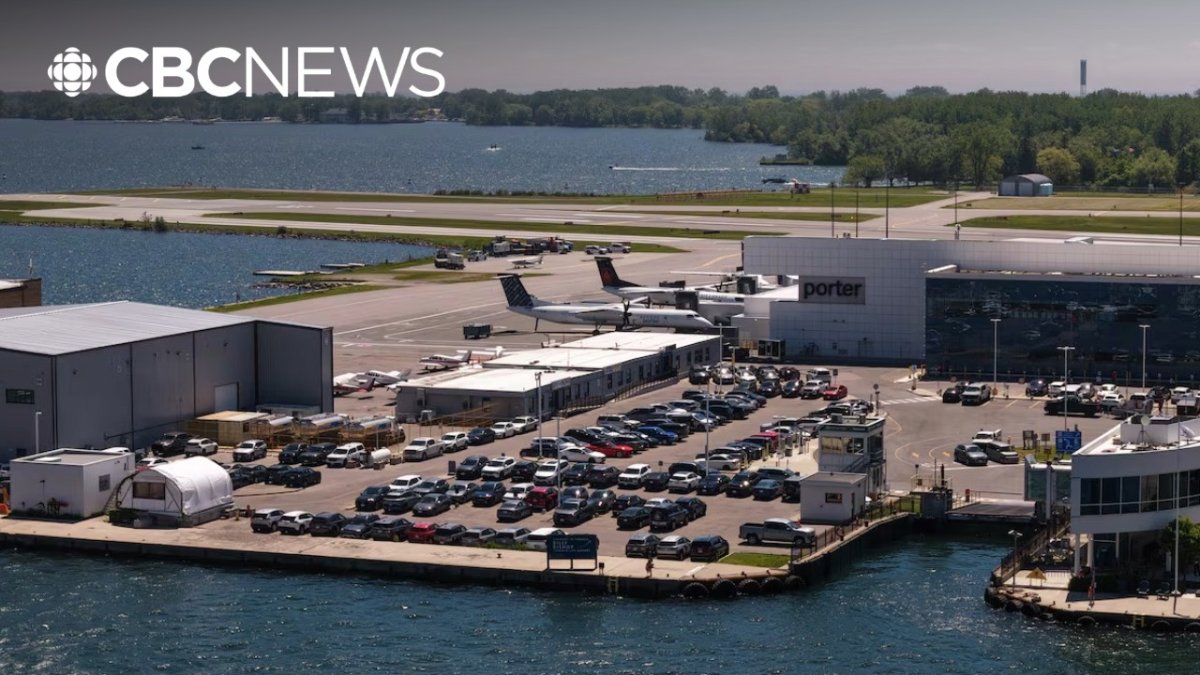
In a recent CBC News report, the federal government delivered a decisive rejection of Ontario Premier Doug Ford's ambitious plan to expand Billy Bishop Toronto City Airport to accommodate jet aircraft, marking a significant turning point in a months-long battle over the future of Toronto's waterfront airport.
In a recent CBC News report, the federal government delivered a decisive rejection of Ontario Premier Doug Ford's ambitious plan to expand Billy Bishop Toronto City Airport to accommodate jet aircraft, marking a significant turning point in a months-long battle over the future of Toronto's waterfront airport. Transport Minister Steven MacKinnon announced the decision on Friday, the final day of a two-week public consultation that drew more than 87,000 responses, the overwhelming majority opposed to the expansion. The announcement has reshaped the political landscape around one of the most contentious infrastructure debates in the Greater Toronto Area.
Ottawa Rejects Billy Bishop Airport Expansion, Citing Public Opposition and Environmental Concerns
Toronto, Ontario — Transport Minister Steven MacKinnon announced on Friday that the federal government will not proceed with Ontario Premier Doug Ford's proposal to expand Billy Bishop Toronto City Airport to allow jet aircraft, dealing a significant blow to the provincial government's ambitious plans for the island airport.
The decision came on the final day of a two-week public consultation period that drew more than 87,000 responses. According to Marie-Justine Torres, a spokesperson for MacKinnon, approximately 87 per cent of respondents opposed changes to the waterfront airport. About 80 per cent of the survey responses came from within Toronto, with another 15 per cent from the broader Greater Toronto and Hamilton Area.
The Federal Decision
MacKinnon made clear in a statement posted to the social media platform X that the federal government would instead focus exclusively on what he described as "approved safety enhancements" for the airport. Those safety improvements are expected to be completed by mid-2027. "We will always work collaboratively with our partners in studying the region's connectivity needs and protecting the interests of local residents," MacKinnon wrote. "However, we will not pursue any plans that infringe on treasured public spaces like Little Norway Park or Hanlan's Point Beach, result in elevated noise, have significant environmental impacts, or hinder Toronto's ability to build much-needed housing."
The minister's statement drew a clear line in the sand on several fronts. The proposed expansion would have required significant changes to the airport's runway configuration, including extending the runway into Lake Ontario to accommodate larger jet aircraft. The Toronto Port Authority, which jointly operates the airport under a tripartite agreement with the City of Toronto and Transport Canada, had previously stated that a full expansion would likely cost between $4 and $5 billion, with construction spanning approximately 25 years.
MacKinnon said the government heard feedback on a broad range of issues through its consultation, including transportation, economics, environmental protection, noise, housing and quality of life. The decision effectively grounds any federal support for jet traffic at the island airport for the foreseeable future.
Federal-Provincial Conflict Intensifies
The rejection represents the latest escalation in a growing federal-provincial dispute over control of the airport and surrounding waterfront lands. The Ford government passed legislation in May to take over the City of Toronto's place in the tripartite agreement that governs the airport, alongside the federal government and the Toronto Port Authority. The bill received royal assent in June, effectively seizing control of city-owned lands on the waterfront and the Toronto Islands.
Ford had previously expressed a vision of quintupling annual passenger traffic at Billy Bishop from approximately two million to 10 million passengers, arguing that larger jets would increase competition, lower airfares and provide a significant economic boost to the region. The premier had also declared the airport a "special economic zone" as part of the province's push to expand its operations.
Despite the federal government's clear position, Ontario Transportation Minister Prabmeet Sarkaria indicated in a post on X on Friday night that the province has not abandoned its plans. "We look forward to continuing to work to advance the expansion of Billy Bishop Airport," Sarkaria said. "The benefits are clear: the project will contribute up to $8.5 billion to Canada's economy every year, create thousands of jobs, and improve connectivity for millions of travellers and businesses across Ontario, North America and beyond."
Sarkaria added that the provincial plan would "protect public spaces, including the Toronto Islands, addresses potential noise and environmental impacts, expands and improves Little Norway Park, supports new housing opportunities in the area, and delivers lasting benefits for local communities." However, with the federal government holding jurisdiction over aviation and the airport's operations, it remains unclear how the province could proceed without Ottawa's co-operation.
City Hall's Response
Toronto Mayor Olivia Chow characterized the province's initial takeover of the airport lands as a "land grab" and "undemocratic overreach." In a statement Friday evening, Chow thanked Prime Minister Mark Carney and Minister MacKinnon for "listening to the people of Toronto." "Thank you to everyone who spoke out, shared your voice, and stood up for our community. Your relentless advocacy has made a difference," Chow wrote on X.
Speaking at an unrelated event on Saturday, Chow went further, raising the stakes in the city's push to reclaim lands seized by the province. "What I do want is I want our land back," she said. "There's no reason for the province to keep Little Norway Park or the Toronto Islands or Hanlan's Point." The mayor noted that while the province had taken the land from the city, the decision on what happens at the airport falls squarely with the federal government, and that Ottawa's rejection effectively blocks any jet expansion.
"I can't see how anyone can do an extended runway to bring jets in if the federal minister and the federal government say no," Chow said. The city is working with the Toronto Port Authority to continue safety expansion work on the runway, which she noted will not be large enough for jet aircraft. Chow also expressed interest in speaking directly with Minister Sarkaria to clarify what the province's continuing plans actually entail, given the federal rejection.
Massive Public Opposition
The scale of public opposition was a defining feature of this debate. The two-week consultation period, conducted by Transport Canada, elicited more than 87,000 responses — an extraordinary number for a federal infrastructure consultation. The overwhelming sentiment, at 87 per cent opposed, reflected deep community concern about the expansion's potential impacts on Toronto's waterfront.
Opposition had been building for months. Medical officials had warned of health impacts from jet noise and emissions, pointing to studies linking aircraft noise to cardiovascular problems, sleep disruption and reduced academic performance in children. Environmental groups raised concerns about air quality, greenhouse gas emissions and the disruption of aquatic habitats in the harbour. Residents' associations in waterfront neighbourhoods — including the densely populated condominium towers along Queens Quay — had organised heavily against the proposal.
The Toronto Port Authority supported the expansion, arguing that growing passenger demand required a modernised facility. The current airport serves turboprop aircraft exclusively, operated primarily by Porter Airlines and Air Canada Jazz, connecting to destinations across Eastern Canada and the northeastern United States. Jet aircraft would have opened new long-range routes but required a significantly longer runway, which would have necessitated filling in portions of Toronto Harbour.
Advocates Celebrate, Business Groups Express Disappointment
Environmental Defence executive director Tim Gray called the federal decision a "monumental victory" for Toronto, its waterfront and its residents. "The federal government's decision to ground the proposal to expand the Toronto Island Airport to accommodate jets is a triumph for community power and democratic participation," Gray said. "You can't buy our waterfront. We just proved it."
Gray noted that the province's plan "made no sense" given that the federal government had concluded approximately a year ago that sufficient capacity exists at Pearson International Airport and that larger airports elsewhere in the Greater Toronto Area were not needed. "This victory proves that Torontonians will not stand by while our waterfront, our parks, and our quality of life are threatened," he said.
However, business groups struck a more cautious tone. Toronto Region Board of Trade president and CEO Giles Gherson described the federal government's decision as "disappointing." "To meet the needs of a significantly expanding population, Toronto needs to get on with developing its transportation infrastructure," Gherson said in a statement. "The Board is not looking for revolution; we're looking for Billy Bishop's evolution." He argued that the airport's future is not a binary choice between the status quo and an intrusive mega-airport on the water, but rather between stagnation and measured, staged modernisation to meet the needs of a growing population.
What the Expansion Would Have Required
The proposed expansion would have represented one of the most significant infrastructure projects in Toronto's recent history. The Toronto Port Authority had indicated that extending the runway to accommodate jet aircraft would require constructing new landmass in Toronto Harbour — effectively filling in portions of the lake bed to create a longer runway and safety zones. Some estimates suggested the runway would need to be extended by up to 900 metres into the lake.
Currently, Billy Bishop Airport operates a single east-west runway measuring approximately 1,216 metres, suitable for Bombardier Dash 8 and similar turboprop aircraft. Jet aircraft such as the Airbus A220 or Boeing 737 typically require runways of at least 1,800 to 2,100 metres, meaning the runway would have needed nearly to double in length. The project would have also required new terminal infrastructure, expanded parking and improved ground transportation connections.
The Toronto Port Authority's estimate of $4 to $5 billion over approximately 25 years reflected the complexity and scale of the undertaking, which would have been one of the longest-running construction projects in the city's history. MacKinnon's statement made clear that the federal government had concluded the costs — both financial and environmental — outweighed the benefits.
Impact on Toronto's Waterfront and Housing
One of the more significant long-term implications of the federal decision concerns the future of the waterfront lands now under provincial control. The Ford government's legislation transferred ownership of city-owned lands on the waterfront and the Toronto Islands to the province, including Little Norway Park and portions of the Toronto Islands. Chow's demand for the return of these lands has now become a central political issue between city hall and Queen's Park.
MacKinnon's statement explicitly linked the airport decision to housing, noting that the federal government would not pursue plans that "hinder Toronto's ability to build much-needed housing." The city has ambitious plans for housing development along the waterfront, including the redevelopment of the Ontario Place site and the construction of thousands of residential units. The airport expansion proposal had raised concerns that jet operations would create noise and safety constraints limiting residential development in the central waterfront area.
The decision also preserves the character of the Toronto Islands, a cherished public space that draws millions of visitors annually for recreation, festivals and community events. Hanlan's Point Beach, one of the few clothing-optional beaches in Canada, and the island's parklands, marinas and residential community would have been directly affected by increased jet noise and air traffic over the islands.
What Happens Next
The federal decision has effectively closed the door on the expansion as originally conceived, but the political battle is far from over. Minister Sarkaria's insistence that the province will continue working to advance expansion suggests the Ford government may seek alternative legal or regulatory pathways, though Ottawa's jurisdiction over aviation makes unilateral provincial action difficult.
Mayor Chow has indicated she intends to pursue the return of city lands now held by the province. The political dynamics are further complicated by Prime Minister Mark Carney's public position. Earlier this year, Carney described the expansion idea as an "interesting vision" without committing to it, and the federal government had previously launched consultations without signalling a preferred outcome. Friday's decision represents a clear pivot away from even the possibility of federal support.
The approved safety enhancements at the airport — expected by mid-2027 — will proceed as planned, including runway end safety areas and other infrastructure improvements that do not require expanding the airport's footprint or introducing jet traffic. The Toronto Port Authority issued a statement Saturday saying it has been advised that the federal government remains focused on implementation and completion of these safety improvements, and that it will "work to fulfil this initiative and ensure the needs of the city and region are met for the future."
For the nearly 90 per cent of consultation respondents who opposed the expansion, the federal decision represents a rare victory for community advocacy in a city where large-scale development projects often move forward despite public opposition. The broader question of how the Toronto region will meet its growing air travel needs remains unresolved, but for now, the island airport will continue operating as it has for decades — with turboprops, not jets, serving the travelling public.
By Alex Thompson, Staff Writer
This article was produced with AI-assisted research and editorial support. Reporting is based on sources cited in the article.
What's Your Reaction?
 Like
1
Like
1
 Dislike
0
Dislike
0
 Love
0
Love
0
 Funny
0
Funny
0
 Wow
0
Wow
0
 Sad
0
Sad
0
 Angry
0
Angry
0

Canada Correspondent at Global1.News. Based in Toronto, covering Canadian politics, energy, trade, and US-Canada relations. Provides the Canadian perspective on North American and global affairs.












Comments (0)