
The Commissioning Bottleneck No One's Talking About — Why 50 Billion in Capex Won't Fix Your Capacity Crunch
Hyperscalers raised 2026 capex estimates to 50 billion, but commissioning delays, power transformer shortages, and operational friction are the real bottleneck. What this means for independent hosting providers and colo pricing.
The Commissioning Bottleneck No One's Talking About — Why $750 Billion in Capex Won't Fix Your Capacity Crunch
I've been running hosting infrastructure for over a decade, and let me tell you something straight: the numbers everyone's throwing around about hyperscaler capex are starting to feel like a shell game. Analysts just bumped their 2026 projections to around $750 billion for the top five players — up 67% year-over-year, the third straight year of 60%+ growth. Amazon alone at $200 billion, Google $175-185 billion, Meta $115-135 billion, Microsoft $110-120 billion. That's the headline. But the real story isn't how much they're spending. It's what they're not getting online fast enough.
The Capex Surge Looks Impressive on Paper
Wall Street raised estimates from roughly $620 billion in January to $750 billion now. Oracle's capex as a percentage of operating cash flow hit 174% in its latest fiscal year. These companies are burning cash at a rate that would have been unthinkable five years ago. The narrative is simple: AI demand is insatiable, so pour money into GPUs, racks, and buildings. And on the surface, it looks like the buildout is accelerating.
But talk to anyone who's actually trying to commission a new facility and you'll hear a different tune. The bottleneck has shifted from buying servers to bringing them online. Networking gear, power transformers, skilled commissioning teams — these are the new chokepoints. And unlike GPU lead times that everyone tracks, commissioning delays don't show up in the flashy capex slides.
Where the Rubber Meets the Road — Commissioning Delays
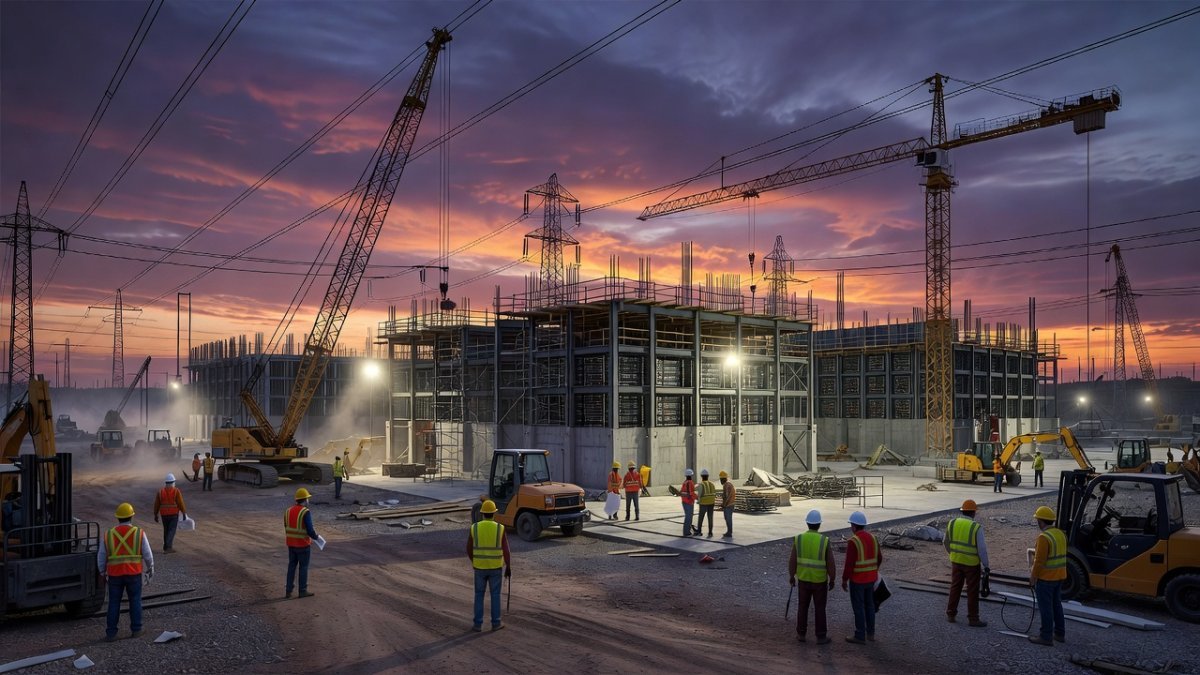
Supply chain reports are now flagging network infrastructure as a explicit commissioning bottleneck. You can have the servers delivered, but without the right switches, fiber, and security layers in place, the facility sits idle. Power transformers are another killer — nearly half of planned 2026 U.S. data centers are already flagged for delays or cancellation because of the "power gap." Cooling integration, electrical testing, and the sheer complexity of integrating everything under one roof add months.
Delays in commissioning a typical 60 MW facility can cost developers up to $14 million per month in lost revenue. That's real money, not theory. And it's happening while the capex numbers keep climbing. The money is flowing. The capacity isn't materializing at the same pace.
The Secondary Bottleneck Nobody's Talking About — Operational Friction
This isn't just a supply chain story anymore. It's an operational one. Skilled labor for commissioning is scarce. Multiple teams converge on energized systems under insane deadlines. Small safety gaps or interface mismatches can stall an entire site. And unlike the GPU shortage that hit everyone at once, commissioning problems are site-specific and hard to forecast in aggregate capex guidance.
Power companies are already using eminent domain in multiple states to push transmission lines through for these projects. Protests hit 142 locations across 42 states on July 18. New York just slapped down the first statewide moratorium on new hyperscale facilities. These aren't isolated events — they're symptoms of the same underlying reality: the physical and regulatory friction of actually turning capex into live megawatts is rising faster than the spending itself.
What This Means for Independent Hosting Providers
First, don't bet your expansion plans on unlimited hyperscaler capacity flooding the market. The $750 billion headline is real, but the effective new supply hitting the street is going to lag. That means colo pricing pressure could actually ease in secondary markets as some projects slip — or tighten further in primary ones where demand stays hot.
Second, lock in hardware orders now while the Supermicro-style backlogs are still manageable. The commissioning crunch means hyperscalers will be even more aggressive on the equipment they can actually deploy. If you're waiting for "the market to cool," you might miss the window.
Third, position your business as the capital-light, faster-to-deploy alternative. When a hyperscaler project slips six months because the transformers aren't there, your existing colo or edge site starts looking a lot more attractive to customers who need capacity yesterday.
Fourth, watch the secondary GPU market for distressed hardware. If commissioning delays cascade into project cancellations or lease pullbacks (we've already seen Microsoft cancel 200 MW of leases), distressed inventory will hit the wholesale channel. That's your opportunity to acquire capacity at better economics than building from scratch.
The Structural Reality — This Bottleneck Has Legs
Unlike the early GPU shortage that everyone could see coming, commissioning friction is stealthier. It doesn't show up in earnings calls the same way. It shows up in delayed go-live dates, missed SLAs, and quiet project cancellations that never make the press release. The capex keeps rising because the money is already committed. The capacity curve is flattening because the back-end execution is the new constraint.
Community consent, water rights, power interconnection queues, and now commissioning complexity — these are stacking. The buildout isn't stopping. It's just getting more expensive and slower at every layer after the check is written.
The Bottom Line
I'm not here to tell you the AI buildout is over. I'm telling you the easy phase is over. The $750 billion in capex is real, but the useful megawatts hitting the grid are going to trail those numbers by months, maybe quarters. For independent hosting providers, that means the capacity crunch is structural, not cyclical. Plan accordingly. Lock in what you can. And stop treating the capex headlines as a guarantee of supply.
— Allan Ali, Founder
This article was produced with AI-assisted research and editorial support. Reporting is based on sources cited in the article.
What's Your Reaction?
 Like
0
Like
0
 Dislike
0
Dislike
0
 Love
0
Love
0
 Funny
0
Funny
0
 Wow
0
Wow
0
 Sad
0
Sad
0
 Angry
0
Angry
0

Publisher of Global1.News. Automation architect, systems builder, and the guy making sure the truth gets published.













Comments (0)