
Hyperscalers Just Committed $630 Billion to 2026 AI Capex — But They're Pacing Builds Like the Overbuild They Admitted Is Already Here
Hyperscalers plan $630B in 2026 AI capex but are now pacing builds and tying capacity to contracted demand to limit overbuild risk. Community backlash has already blocked or delayed $130B in projects. Independent hosting providers should watch secondary GPU markets, factor consent timelines into site selection, and position as the flexible alternative as hyperscalers raise cloud prices.
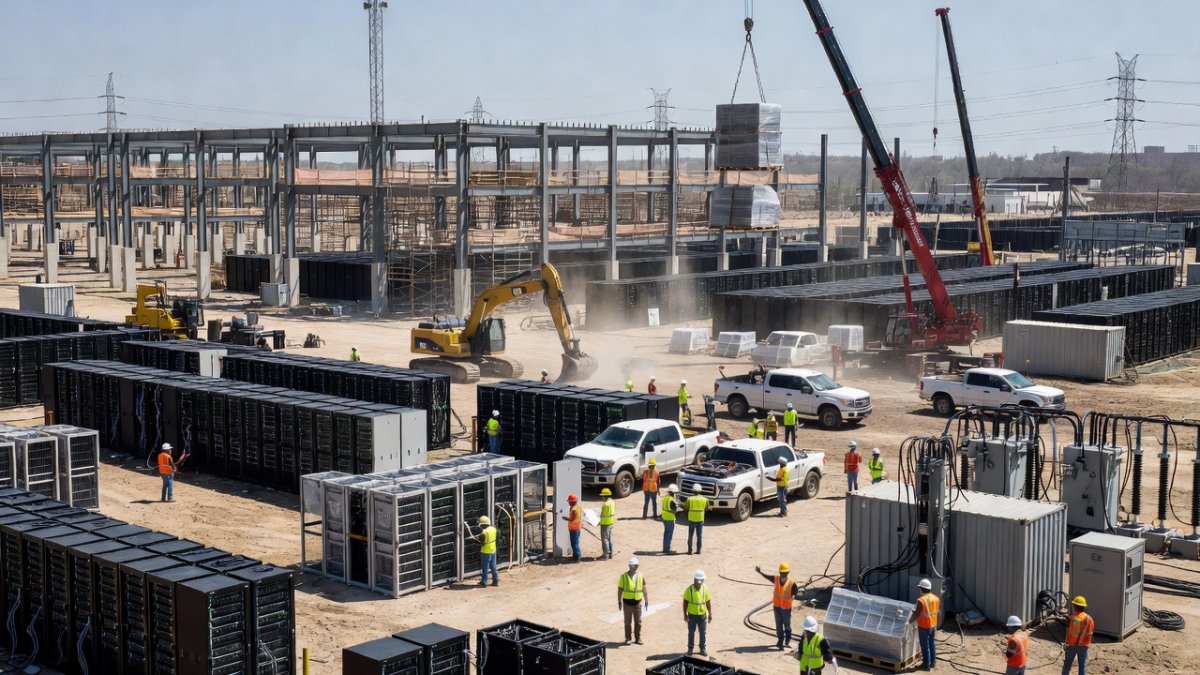
Hyperscalers Just Committed $630 Billion to 2026 AI Capex — But They're Pacing Builds Like the Overbuild They Admitted Is Already Here
Let me tell you something that's been sitting heavy with me watching these capex forecasts roll in. I've been running production hosting infrastructure for over a decade now, and the scale of what the hyperscalers are throwing at AI data centers is still mind-boggling — but the way they're doing it has shifted in the last few weeks. They're not just writing blank checks anymore. They're staging, pacing, and tying new capacity to contracted demand. That tells me the easy-money phase of the AI buildout is ending, and the shakeout phase is beginning.
The Numbers Are Still Massive — $630 Billion and Climbing
The Big Four hyperscalers — Amazon, Microsoft, Alphabet, and Meta — are on track to spend around $630 billion in capital expenditures for 2026. That's a 62 percent jump from the already record $388 billion they dropped in 2025. Credit Sights has the top five (adding Oracle) at $602 billion, up 36 percent year-over-year. Dell'Oro Group raised its global data center capex outlook to $726 billion for the year. Goldman Sachs is even higher at $765 billion in annual AI-specific capex. Whatever number you pick, we're talking about the largest concentrated infrastructure spend in modern history.
Break it down and it gets even more aggressive. Amazon is guiding toward $200 billion. Alphabet revised upward multiple times and is now in the $175-185 billion range. Meta is planning $115-135 billion, including that massive 1GW project in Ohio and the Louisiana facility that could scale to 5GW. Microsoft is tracking $120 billion or more, with an $80 billion Azure backlog they can't fulfill because of power constraints. Oracle is targeting $50 billion — a 136 percent increase. Roughly 75 percent of all this is going straight into AI infrastructure: GPUs, servers, data centers, power systems, and cooling.
Capacity under construction tops 23 gigawatts. Analyst expectations for 2027 spending have climbed 56 percent since last August. The buildout isn't slowing. It's accelerating. But here's the part that matters for those of us running real operations on the ground.
They're Finally Pacing It — And That's the Real Signal
Moody's just came out with a report that should make every independent provider sit up. Hyperscalers are now staging data center expansions and aligning investments more closely with confirmed, contracted demand to limit overbuild risk. Raj Joshi at Moody's said it plain: they're tying new capacity builds more tightly to what they actually have customers signed up for.
This isn't the "build it and they will come" mindset from 2024 and early 2025. This is "we already admitted we overbuilt some projects, so we're not repeating that mistake at $630 billion scale." Meta admitted overbuild in their $145 billion capex guidance. Microsoft has already pulled 200MW of leases. Seventy-five projects got blocked in Q1 alone. The $130 billion in delayed or canceled AI data centers in the first three months of 2026 isn't a rounding error — it's the market telling the hyperscalers that community consent and power availability are now hard constraints, not afterthoughts.
I've seen this movie before. When the big players start talking about "pacing" and "contracted demand" and "limiting long-term risk," it means the days of throwing GPUs at every empty warehouse are over. The capex is still flowing, but it's flowing with more discipline. That changes the supply picture for everyone downstream.
The $130 Billion Blocked Projects Are the Secondary Bottleneck
Community opposition isn't just noise anymore. It's a structural constraint on the entire buildout. New York has a one-year moratorium on data centers using 50MW or more. Monterey Park, California became the first U.S. city to permanently ban them by ballot vote in June. Google walked away from a $1 billion project in Indiana minutes before it was voted down. Amazon, Microsoft, and Meta have all seen projects scaled back or canceled in Northern Virginia, the Pacific Northwest, Ireland, and the Netherlands because of power shortages and local pushback.
I've been saying for months that community consent is the real gate on AI infrastructure expansion. The $130 billion figure proves it. These aren't fringe protests. These are cities and states renegotiating the terms under which hyperscalers get to drop 100MW+ facilities in their backyards. The legal and political backlash is forcing site selection changes, longer permitting timelines, and in some cases outright exits.
For independent hosting providers, this is the opportunity window. Hyperscalers are going to face 18-24 month delays on new builds in contested markets. That creates pricing pressure on existing capacity and opens doors for colo providers who can move faster, offer more flexible terms, and avoid the eminent domain fights and water usage fights that are now routine.
What This Actually Means for Independent Hosting Providers
First: Watch the secondary GPU market. Distressed hyperscaler hardware is going to hit wholesale in the next 6-12 months as they rationalize overbuilt projects. Don't overpay for new Supermicro or Dell racks when the secondary market starts offering 20-30 percent discounts on near-new equipment. Lock in your expansion orders now while lead times are still manageable, but don't assume you'll need to buy at hyperscaler scale.
Second: Don't bet your capacity planning on unlimited AI demand growth. The hyperscalers themselves are now admitting they can't burn through all this capex without hitting power and consent walls. Factor 10-15 percent slower utilization growth into your models. The customers who were signing 3-year GPU leases at premium rates are starting to ask for shorter terms and more flexible exit clauses.
Third: Factor community consent timelines into every site selection decision. If you're looking at new colo builds or expansions, prioritize markets that aren't in active moratorium or protest zones. The states and counties that rolled out the red carpet in 2024-2025 are now the ones with the loudest pushback. The ones that were cautious early may actually be the safer long-term plays.
Fourth: Position as the capital-light, human-scale alternative when hyperscalers start tightening cloud pricing. They're going to raise rates to cover their $630 billion spend and the higher financing costs that come with it. Independent providers who can offer colo at predictable rates without the "AI premium" markup will pick up the workloads that hyperscalers can't or won't serve at scale. The K-shaped market is real — AI workloads stay with the big boys, everything else starts looking for better economics.
The Structural Reality — This Is a Shakeout, Not a Crash
The buildout isn't stopping. The $630 billion is real, the demand for AI capacity is real, and the hyperscalers have the balance sheets to keep spending even when FCF turns negative. What is changing is the pace, the risk tolerance, and the willingness to absorb community and power constraints as first-order problems instead of PR issues.
That means the next 18 months will separate the providers who planned for this correction from the ones who bet the farm on infinite growth. Hardware availability will improve as hyperscalers slow their ordering. Pricing pressure will increase as they try to pass costs downstream. Community consent will remain the slowest-moving variable in site selection. Independent hosting isn't the hero of this story — but we're the ones who can move faster, price more flexibly, and avoid the balance-sheet fragility the hyperscalers are now carrying.
I've been here through the last two infrastructure cycles. The ones who survive are the ones who read the pacing signals early and positioned accordingly. The $630 billion wave is still coming. It's just not coming at the same reckless speed it was six months ago.
— Allan Ali, Founder
===SUMMARY=== Hyperscalers plan $630B in 2026 AI capex but are now pacing builds and tying capacity to contracted demand to limit overbuild risk. Community backlash has already blocked or delayed $130B in projects. Independent hosting providers should watch secondary GPU markets, factor consent timelines into site selection, and position as the flexible alternative as hyperscalers raise cloud prices.This article was produced with AI-assisted research and editorial support. Reporting is based on sources cited in the article.
What's Your Reaction?
 Like
0
Like
0
 Dislike
0
Dislike
0
 Love
0
Love
0
 Funny
0
Funny
0
 Wow
0
Wow
0
 Sad
0
Sad
0
 Angry
0
Angry
0

Publisher of Global1.News. Automation architect, systems builder, and the guy making sure the truth gets published.













Comments (0)