
France Wildfires 2026 — Climate Threat to Latin America
Thousands of residents fled their homes as wildfires tore across southwestern France in late July 2026, forcing over 20,000 evacuations and burning more than 1,200 hectares near the Atlantic coast. The blaze, erupting during France's fourth heatwave since May, has become the latest example of how climate change is synchronizing environmental disasters across hemispheres — from European forests to Latin American rainforests.
Thousands of residents fled their homes as wildfires tore across southwestern France in late July 2026, forcing over 20,000 evacuations and burning more than 1,200 hectares near the Atlantic coast. The blaze, erupting during France's fourth heatwave since May, has become the latest example of how climate change is synchronizing environmental disasters across hemispheres — from European forests to Latin American rainforests.
France Wildfires 2026 — Climate Crisis Threatens Latin America's Parallel Fire Emergency
Bordeaux, France —
France en Flammes — Wildfires and Heatwaves: The European climate crisis unfolding now
The France wildfires of July 23-24, 2026, erupted with terrifying speed across southwest regions including Biscarrosse, Lège-Cap-Ferret, Gironde, and Landes. Over 20,000 people faced evacuation orders while 1,200 hectares burned near Biscarrosse alone. The Prefecture of Nouvelle-Aquitaine confirmed rapid progression, forcing 5,000 residents under immediate threat. This crisis mirrors Latin America's own escalating disasters, where Chile's Patagonia wildfires in January-February 2026 destroyed ancient giant trees thousands of years old amid 37°C temperatures, drought, and fierce winds. SENAPRED declared a state of catastrophe as Indigenous communities lost irreplaceable cultural landscapes. Both hemispheres now confront the same atmospheric driver: CO2 levels at 430 ppm fueling unprecedented dryness. Meteo-France and Met Office scientists directly link these events to climate change, just as INPE data shows the Amazon approaching its 18% deforestation tipping point where flying rivers weaken. The Mediterranean Sea running 5°C hotter than normal finds its parallel in South Atlantic warming that intensifies Brazil's fire risk. Latin America watches Europe burn and recognizes its own future unless urgent action scales across borders.
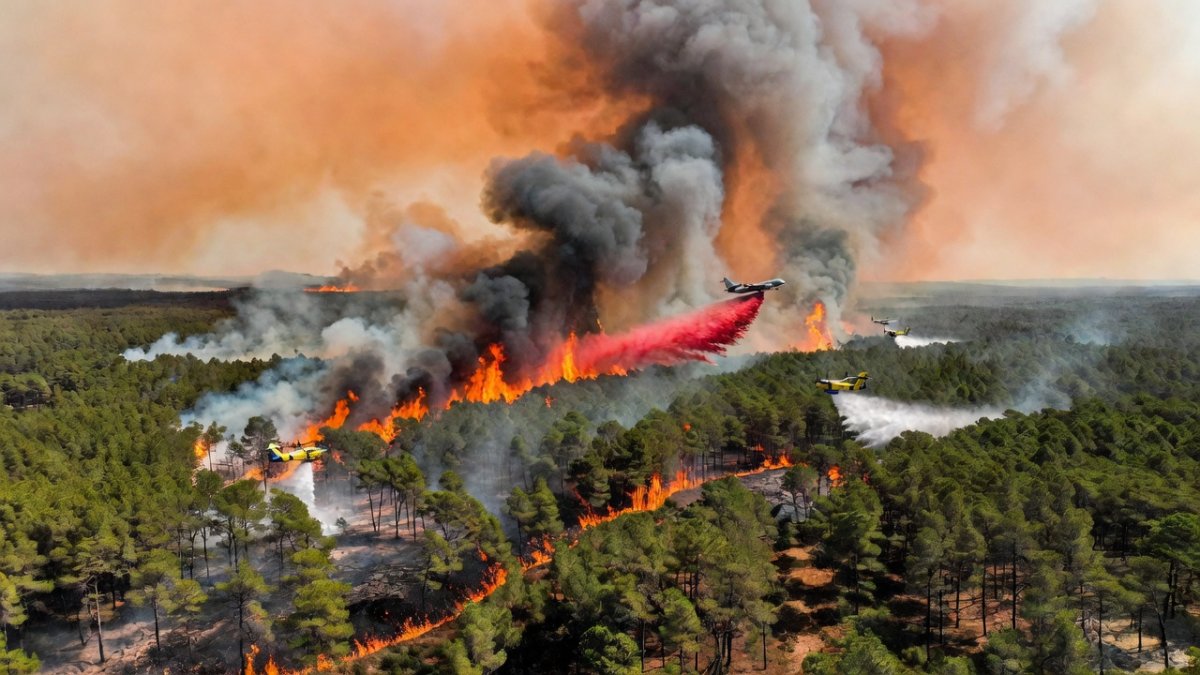
20,000 Flee and Counting: The evacuation and destruction in southwest France
Evacuation chaos gripped southwest France as 20,000 residents fled Biscarrosse, Lège-Cap-Ferret, Gironde, and Landes. A rapidly progressing fire on the Lège-Cap-Ferret peninsula triggered total evacuation orders, with contingency plans prepared to move 14,000 people by sea. Initially, 250 firefighters battled without aerial support while 5,000 remained under direct threat. The Prefecture of Nouvelle-Aquitaine tracked the blaze's advance in real time. These scenes echo Chile's January-February 2026 Patagonia infernos, where SENAPRED coordinated mass displacements as flames consumed ancient forests and Indigenous territories. Strong winds and record heat left communities with minutes to escape. In Brazil, IBAMA and PrevFogo now prepare for similar scenarios under the Super El Niño forecast for 2026. Record 4,385-4,410 federal brigadistas stand ready, supported by new helicopters for aerial water drops. The Amazon Fund has expanded to other biomes precisely because 2025's burned area reached its lowest since 1985, yet 2026 threatens reversal. France's sea-evacuation plans highlight how climate-driven fires now force entire regions to rethink survival, a reality Latin American nations already navigate with limited resources and vast vulnerable populations.
A Continent of Record Heat: Europe's fourth heatwave and its deadly toll (5,700+ deaths)
France endured its fourth heatwave since May 2026, with temperatures hitting 40-45°C across southern regions and Germany recording an all-time high of 41.7°C. Record-low soil moisture compounded the crisis, while the Mediterranean Sea ran 5°C hotter than normal. Early summer brought 5,700 excess deaths in France alone, with tens of thousands more across Europe, hitting the elderly hardest. Nuclear plants shut down temporarily due to warm river water. These lethal conditions parallel Latin America's climate whiplash. Chile's decade-long megadrought preceded extreme July 2026 flooding of 200-450mm in days that killed 10-13 people. Brazil's preparations for Super El Niño drought and fire risks reflect the same warming pattern now devastating Europe. Meteo-France data confirms human-caused climate change as the driver, just as INPE tracks Amazon moisture transport collapse. Indigenous Amazon communities face evaporating rivers and intensifying fires, while Patagonian Mapuche territories lost sacred trees. The 430 ppm CO2 threshold has pushed both continents into synchronized extremes. Latin America cannot afford Europe's death toll; its nations must accelerate adaptation using every available resource before the next heatwave strikes vulnerable populations.
Latin America's Climate Whiplash: From Patagonia fires to Chile floods to Amazon preparations
Latin America experiences climate whiplash at accelerating speed. Chile's Patagonia wildfires of January-February 2026 killed ancient giant trees under 37°C heat, drought, and winds, prompting SENAPRED to declare catastrophe. Indigenous communities mourned cultural losses as flames consumed forests untouched for millennia. Then July 2026 brought extreme flooding of 200-450mm in days, claiming 10-13 lives after over a decade of megadrought. This oscillation mirrors Europe's heat-driven fires but strikes regions with fewer resources. Brazil responds aggressively: the Amazon Fund now covers additional biomes while IBAMA and PrevFogo deploy record 4,385-4,410 brigadistas. New helicopters enable aerial water drops across threatened zones. The 18% deforestation tipping point looms as flying rivers weaken, threatening moisture cycles vital to South American agriculture. South Atlantic warming parallels the Mediterranean's 5°C anomaly, raising Super El Niño fire risks for 2026. INPE monitoring shows 2025's low burned area could vanish rapidly. Latin American nations recognize that France's 20,000 evacuations and 5,700 deaths preview what unchecked warming will deliver unless global emissions drop and regional resilience strengthens immediately.
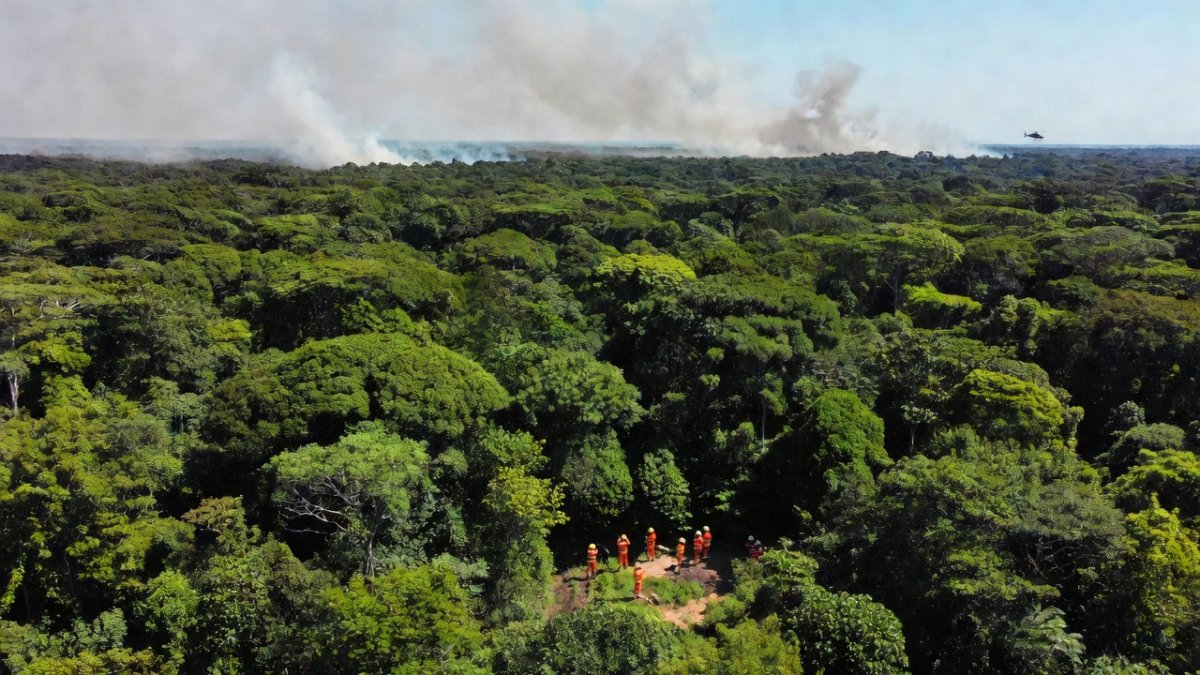
Brazil Gears Up: R$1 billion, 4,400 brigadistas, and the Super El Niño threat
Brazil has mobilized unprecedented resources against the 2026 fire season. The fire budget reached R$1 billion, up 28% from 2025 and five times 2019 levels. Record 4,385-4,410 federal brigadistas now operate under IBAMA and PrevFogo, supported by new helicopters for aerial water drops. The Amazon Fund expanded coverage to other biomes as the Super El Niño forecast raises drought and fire risks. These preparations respond directly to the same climate drivers scorching France: 430 ppm CO2, record heat, and drying landscapes. While 2025 delivered the lowest burned area since 1985, 2026 threatens reversal as the Amazon nears its 18% deforestation tipping point and flying rivers weaken. Indigenous territories face disproportionate threats as fires encroach on ancestral lands. Chile's SENAPRED experience with Patagonia fires and subsequent floods demonstrates how Latin America must manage whiplash events. South Atlantic warming mirrors the Mediterranean's 5°C anomaly, linking both regions in one climate system. Brazil's scaled-up response offers a model, yet demands international support to match the scale of Europe's 5,700 excess deaths and 20,000 evacuations. Without sustained funding, the region's most vulnerable communities will pay the highest price.
One Atmosphere: How climate change connects hemispheres
One atmosphere binds France's wildfires to Latin America's crises. The Mediterranean Sea running 5°C hotter than normal finds its counterpart in South Atlantic warming that intensifies Amazon drought. CO2 at 430 ppm drives both Europe's fourth heatwave since May 2026 and Chile's megadrought-to-flood cycle. Meteo-France and Met Office scientists confirm the human fingerprint, just as INPE documents Amazon moisture collapse. France's 20,000 evacuations, 1,200 hectares burned near Biscarrosse, and 5,700 excess deaths parallel Chile's ancient tree losses and Brazil's preparations for Super El Niño. Indigenous Amazon and Patagonian communities suffer first, losing forests, water, and cultural heritage. The Prefecture of Nouvelle-Aquitaine's evacuation orders echo SENAPRED's catastrophe declarations. Record-low soil moisture in France mirrors conditions across Latin American biomes. Brazil's R$1 billion investment and 4,410 brigadistas represent necessary adaptation, yet global emissions reductions remain essential. Latin America understands that Europe's nuclear plant shutdowns and 41.7°C German records signal a shared future unless nations act together. The data demands hemispheric cooperation before tipping points become irreversible.
The Bottom Line — What Comes Next for Latin America and the World
The bottom line is clear: climate change has synchronized disasters across hemispheres. France's July 2026 wildfires, 20,000 evacuations, and 5,700 deaths preview what Latin America faces without accelerated action. Chile's SENAPRED-managed fires and floods, Brazil's IBAMA and PrevFogo mobilization of R$1 billion and 4,410 brigadistas, and Amazon preparations for Super El Niño all respond to the same 430 ppm CO2 reality. South Atlantic warming parallels the Mediterranean's 5°C anomaly. Indigenous communities in Patagonia and the Amazon bear the brunt as ancient forests burn and flying rivers weaken at the 18% deforestation threshold. INPE and Meteo-France data leave no doubt about human causation. Latin America must expand successful models like Brazil's helicopter fleet and biome-wide funding while demanding wealthy nations deliver on emissions cuts. The world cannot afford more 40-45°C heatwaves or 41.7°C records. Coordinated hemispheric strategies, Indigenous leadership, and immediate investment in resilience offer the only path forward before the next wave of evacuations and deaths strikes both continents simultaneously.
By Elena Vasquez, Staff WriterThis article was produced with AI-assisted research and editorial support. Reporting is based on sources cited in the article.
What's Your Reaction?
 Like
0
Like
0
 Dislike
0
Dislike
0
 Love
0
Love
0
 Funny
0
Funny
0
 Wow
0
Wow
0
 Sad
0
Sad
0
 Angry
0
Angry
0

Latin America Correspondent at Global1.News. Based in Mexico City, covering politics, economics, energy, and culture across the region. Brings an on-the-ground perspective to stories spanning from the Rio Grande to Patagonia.













Comments (0)