
Smotrich's Eli Settlement Plan Raises Palestinian Concerns
Smotrich proposes 763 units in Eli to triple settlement size amid 750,000 settlers; 104 new settlements and 160 outposts approved since 2022. Details cover 3,488 attacks killing 17 Palestinians, daily hardships from checkpoints and water disparities, plus annexation risks under Oslo frameworks and international resolutions.
Smotrich's Eli Settlement Plan Raises Palestinian Concerns
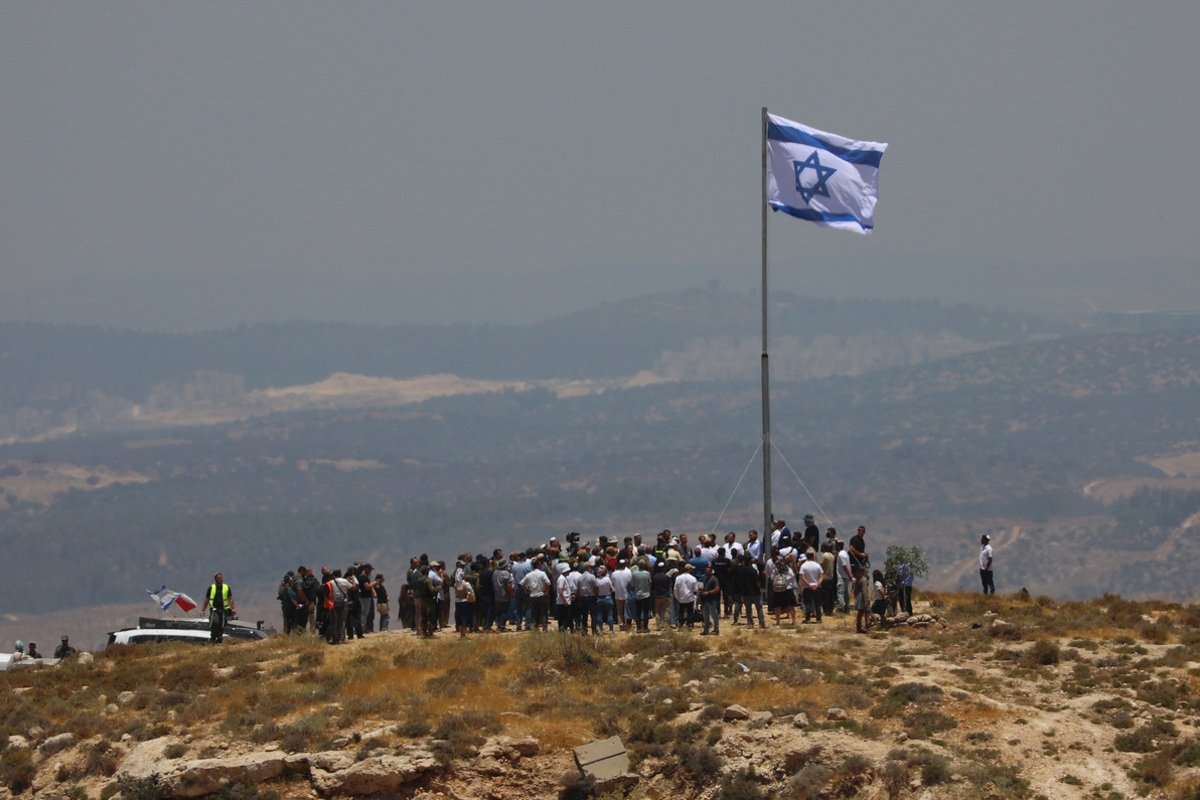
Israeli Finance Minister Bezalel Smotrich's proposal for hundreds of new housing units in the Eli settlement threatens to dramatically reshape the occupied West Bank landscape, intensifying fears among Palestinian communities already strained by years of expansion and violence. This move comes amid a broader surge in settlement activity that has drawn international scrutiny and local alarm over land fragmentation and daily hardships. As tensions rise, the human impact on families living in the shadow of these developments demands closer examination.
West Bank — Article continues...
Proposed Expansion in Eli Settlement
Israeli Finance Minister Bezalel Smotrich has announced plans for 763 new settlement units in the Eli settlement south of Nablus in the occupied West Bank. If implemented, these units are expected to triple the size of Eli and accommodate thousands of additional settlers. The housing would fall under the Binyamin Regional Council. Smotrich indicated that Israel intends to continue building settlement farms and communities across the area. Palestinian officials have expressed alarm that such moves deepen the fragmentation of Palestinian land and daily existence.
Scale of Settlement Growth Under Current Government
Netanyahu's government has described itself as one of Israel's most pro-settlement administrations. Since late 2022, it has approved 104 new settlements and 160 agricultural settlement outposts. Approximately 750,000 Israeli settlers now live in 141 settlements and 224 settlement outposts across the occupied West Bank, including East Jerusalem. These figures illustrate a sustained pattern of growth that Palestinian communities have long documented as reshaping the landscape around their villages and fields.
Since the 1993 Oslo Accords, the settler population in the West Bank has expanded dramatically from approximately 250,000 to over 750,000 by 2024, driven by successive Israeli governments approving housing units in Area C. This growth accelerated after 2000, with annual construction rates averaging 2,000-3,000 units under various administrations, fundamentally altering the demographic landscape and complicating territorial negotiations outlined in the accords' interim framework.
United Nations Security Council Resolution 2334, adopted on 23 December 2016, reaffirmed that settlements established in the Palestinian territories occupied since 1967, including East Jerusalem, have no legal validity and constitute a flagrant violation of international law under the Fourth Geneva Convention. The resolution called for immediate cessation of all settlement activities, yet implementation has remained absent amid ongoing expansion.
Finance Minister Bezalel Smotrich and allied far-right factions have advanced annexationist policies since 2022, including the legalization of outposts and allocation of state funds for infrastructure. Data indicate 104 new settlements and 160 outposts established since then, exceeding the previous government's annual average of roughly 40-50 outposts by a factor of three, reflecting a deliberate shift toward de facto sovereignty claims.
Human Cost: Palestinian Perspectives
The Palestinian Wall and Settlement Resistance Commission reported 3,488 settler attacks against Palestinians in the first half of 2026. These incidents included assaults on villages, arson attacks, shootings, land seizures, and the establishment of new outposts. The attacks resulted in the deaths of 17 Palestinians. Families in villages near Eli and Nablus describe living with constant uncertainty, where access to olive groves or water sources can be disrupted without warning. Such violence compounds the grief already carried by communities who have lost relatives and livelihoods over years of occupation.
Communities near Nablus, particularly in the Tell area and surrounding villages such as Burin and Madama, have faced repeated incursions since 2022, with settler groups targeting agricultural lands and residential zones. These incidents align with broader patterns documented by UN OCHA, where violence disrupts daily movement and access to resources essential for sustaining local economies.
The reported 3,488 attacks encompass stone-throwing, arson, property vandalism, and physical assaults, with approximately 45 percent concentrated in the northern West Bank governorates of Nablus and Jenin. Regional distribution shows spikes during harvest seasons, correlating with efforts to deter Palestinian cultivation and grazing activities across fragmented land parcels.
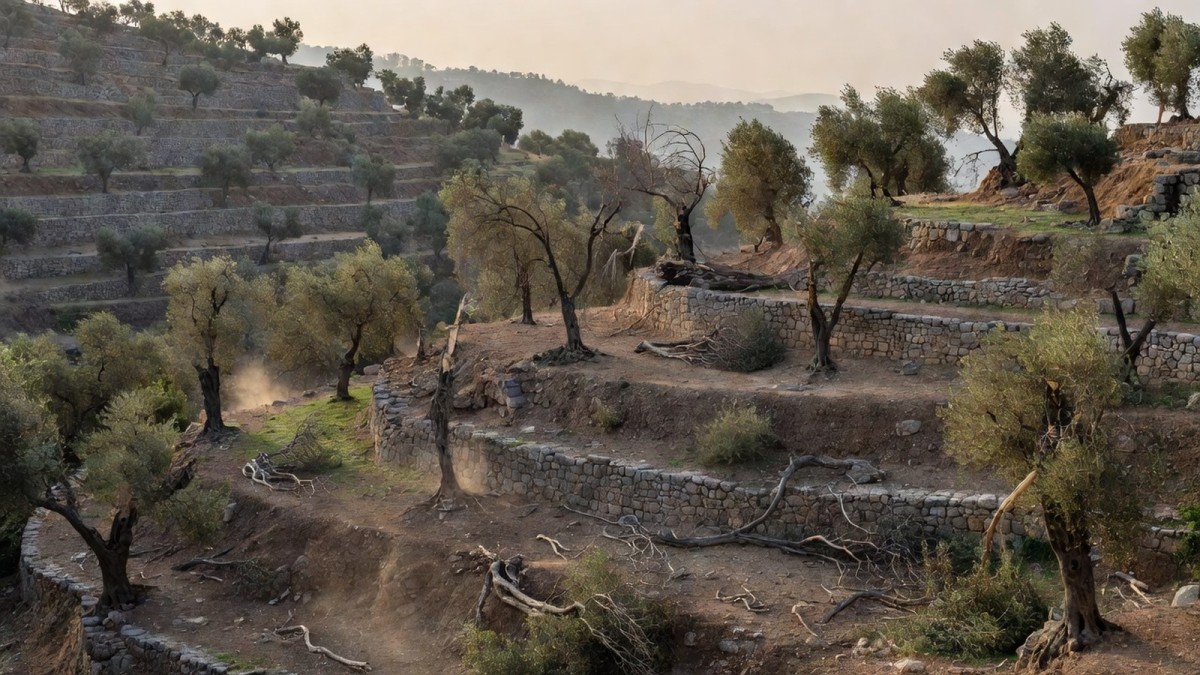
Economic repercussions include the destruction of over 10,000 olive trees annually in recent years, alongside restricted access to grazing routes that have reduced livestock holdings by up to 30 percent in affected herding communities. Under the current government, diminished enforcement of accountability mechanisms has permitted escalation, as military oversight prioritizes settlement security over incident investigations.
Daily Realities in the Shadow of Settlements
For Palestinians in the West Bank, settlement expansion directly affects routines of farming, schooling, and travel. Roads built to serve settlements often restrict Palestinian movement, forcing longer journeys and separating families from medical care or markets. Near Eli, residents report that proposed growth could further isolate surrounding hamlets, turning once-connected fields into isolated pockets. Children grow up witnessing land once used for grazing now cordoned off, while parents weigh the risks of nighttime attacks when tending livestock. These pressures erode the fabric of community life, leaving many to navigate fear alongside the simple need to provide for their households.
The checkpoint and segregated road network fragments the West Bank into isolated cantons, mirroring the Bantustan model through over 700 physical obstacles and dedicated settler-only highways established since the 1990s. This infrastructure, expanded post-2002, restricts Palestinian vehicular movement to secondary routes, extending travel times between cities like Ramallah and Nablus from 45 minutes to over three hours.
Water allocation disparities remain stark, with settlements in Area C consuming an average of 300 liters per capita daily compared to 70 liters in adjacent Palestinian villages, per World Bank assessments from 2023. This imbalance stems from Israeli control over aquifers, exacerbating scarcity during summer months and forcing reliance on costly tanker deliveries.
Children's access to education and health services suffers from checkpoint delays and route closures, resulting in documented school dropout rates exceeding 15 percent in high-risk zones near settlements. The cumulative psychological strain manifests in elevated anxiety disorders among residents, as constant exposure to patrols and potential violence erodes community resilience without avenues for redress.
Warnings of Annexation and Future Implications
Palestinian officials warn that continued settlement expansion paves the way for Israel's formal annexation of the occupied West Bank, undermining prospects for an independent Palestinian state. The proposed units in Eli fit into this broader trajectory, where incremental construction gradually alters facts on the ground. Compassion for those affected requires recognizing how each new unit represents not only concrete and infrastructure but also the quiet displacement of Palestinian futures. International observers have long noted that such policies hinder negotiated solutions, yet the daily toll remains borne most heavily by families whose voices call for recognition of their rights and dignity.
De facto annexation advances through Israeli administrative control over Area C, encompassing 60 percent of the West Bank since the 1995 Oslo II agreement, where planning authority and land registration favor settlement expansion. Policies since 2017 have transferred jurisdiction to civilian bodies, embedding irreversible infrastructure that preempts Palestinian sovereignty claims.
International positions diverge: the European Union maintains that settlements violate international law and has withheld recognition of related economic activities, while the United States under varying administrations has issued periodic condemnations without enforcement. UN bodies continue to monitor compliance with Resolution 2334, though veto dynamics in the Security Council limit further action.
Settlement geography, with blocs encircling Jerusalem and dividing northern and southern West Bank segments, renders a contiguous Palestinian state nearly impossible under current configurations. Precedents from East Jerusalem's 1980 annexation and the 1981 Golan Heights application demonstrate how incremental control solidifies into permanent sovereignty, diminishing prospects for negotiated borders established in prior frameworks.
By Fatima Al-Rashid, Staff Writer SUMMARY: Smotrich proposes 763 units in Eli to triple settlement size amid 750,000 settlers; 104 new settlements and 160 outposts approved since 2022. Details cover 3,488 attacks killing 17 Palestinians, daily hardships from checkpoints and water disparities, plus annexation risks under Oslo frameworks and international resolutions.This article was produced with AI-assisted research and editorial support. Reporting is based on sources cited in the article.
What's Your Reaction?
 Like
0
Like
0
 Dislike
0
Dislike
0
 Love
0
Love
0
 Funny
0
Funny
0
 Wow
0
Wow
0
 Sad
0
Sad
0
 Angry
0
Angry
0

Gulf/MENA Correspondent at Global1.News. Based in Doha, covering Gulf politics, energy markets, diplomacy, and development across the Middle East and North Africa. Tracks the economic transformation of the Gulf states.













Comments (0)