
Aliyev Exposes Secret Russian-German Talks in Baku
Azerbaijani President Ilham Aliyev revealed that Russian and German officials held secret talks in Baku earlier this month, using flight records as proof. The delegation included Gazprom chairman Viktor Zubkov and human rights chief Valery Fadeyev from Russia, and former officials Matthias Platze...
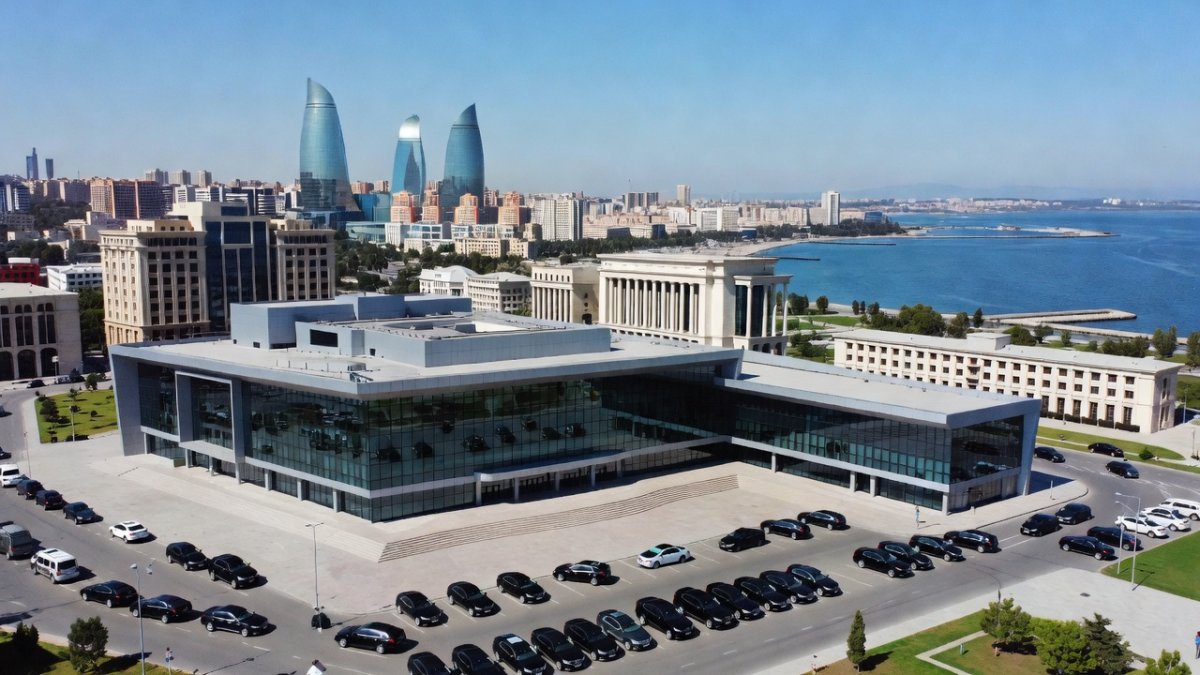
In a striking disclosure, Azerbaijani President Ilham Aliyev revealed that Russian and German officials held secret talks in Baku earlier this month without notifying his government, using flight records as proof. The meetings, involving high-level figures tied to energy and human rights, underscore Europe's quiet push for back-channel dialogue with Moscow amid the Ukraine war. This development highlights Azerbaijan's growing role as a geopolitical pivot and the persistent influence of energy politics on stalled peace efforts.
Aliyev Exposes Secret Russian-German Talks in Baku
Moscow, Russia — Article continues...
Baku as Venue: Azerbaijan's Calculated Mediation
Azerbaijan's decision to host the secret talks reflects President Aliyev's deliberate positioning of Baku as an indispensable intermediary between Moscow and European capitals. Since the 2020 Karabakh war, Azerbaijan has expanded its diplomatic footprint, offering its territory for prisoner exchanges between Russia and Ukraine and now serving as a back-channel venue for indirect European-Russian contact.
The choice of Baku rather than a European capital or neutral Gulf state is significant. Azerbaijan maintains security cooperation with Russia through informal mechanisms while simultaneously deepening energy ties with the European Union, a balancing act that few post-Soviet states can sustain. Aliyev's willingness to publicly acknowledge the meeting after the fact — even while claiming he was not informed in advance — signals his confidence in Baku's growing diplomatic leverage.
Details of the Delegation and Timeline
According to reports confirmed by Aliyev, the Russian side included former prime minister Viktor Zubkov, who now chairs the board at Gazprom, and presidential human rights chief Valery Fadeyev. The German participants were former Brandenburg minister president Matthias Platzeck and former chancellery chief of staff Ronald Pofalla.
Azerbaijani border records showed the German emissaries arriving on July 12, with Zubkov and Fadeyev following shortly afterward. Zubkov departed Baku on July 13, while the remaining delegates left the following day. This gathering forms part of at least four prior meetings held in Baku and Abu Dhabi since the 2022 invasion.
The Key Figures
Viktor Zubkov's presence at the Baku talks carries particular weight because he continues to chair Gazprom's board of directors, a position he has held since 2008. His participation signals that energy pricing formulas and transit volumes through existing pipelines remain central bargaining chips rather than peripheral issues. Russian officials have repeatedly framed any discussion of resumed gas deliveries to Europe as contingent on the lifting of sanctions that currently block Nord Stream 2 certification, a linkage Zubkov has publicly endorsed in corporate statements.
Valery Fadeyev's inclusion is more unusual. As chairman of the Presidential Council for Civil Society and Human Rights, his portfolio has historically been confined to domestic legal complaints and prisoner exchanges. That the Kremlin chose to embed him in a delegation otherwise dominated by energy and security figures suggests Moscow is preparing a narrative that any territorial concessions will be presented domestically as humanitarian measures rather than strategic retreats. German participants Matthias Platzeck and Ronald Pofalla, both veterans of the Social Democratic Ostpolitik tradition, bring institutional memory of the 1990s gas-for-pipelines deals; their repeated visits to Moscow since 2014 indicate that Berlin's back-channel preference for direct bilateral contact with the Kremlin has not been extinguished by the war.
Merz and German Government Response
Chancellor Merz stated during the same Berlin press conference that he had no knowledge of the Baku encounter. German media outlets, including the tabloid Bild, first surfaced details of the meeting last week, prompting questions about the extent of official involvement.
Berlin has coordinated quietly with Paris and London on possible dialogue tracks. In June, reports indicated that Merz's office began preliminary work on contacts with Russian officials after consultations with those two capitals.
Broader European Diplomatic Maneuvering
The June 2026 meeting at Russia's Foreign Ministry between the French, British and German ambassadors focused on procedural questions surrounding any future ceasefire monitoring mechanism, according to a readout attributed to a Russian diplomatic source. European governments have pressed for a multilateral format that would include EU institutions, yet the Kremlin has consistently rejected such mediation, insisting instead on bilateral formats with individual capitals.
Germany's historical role as the primary European interlocutor with Moscow dates to the Brandt era and was reinforced by the Nord Stream projects. French President Macron's public statements since late 2024 have oscillated between calls for negotiated settlement and renewed commitments to Ukrainian sovereignty, a shift that French diplomats attribute to domestic political pressures ahead of European Parliament elections.
Kremlin Position on European Mediation
The Kremlin has repeatedly rejected the European Union as a mediator in Ukraine negotiations, insisting instead on formats such as the Minsk process or direct United States involvement. Russian Foreign Ministry officials have maintained this line in recent meetings with Western ambassadors.
Despite the dismissal, the presence of Zubkov, a figure with deep ties to both the presidential administration and Gazprom, signals that energy considerations remain central to any back-channel discussions.
Energy Politics and Gazprom's Influence
Zubkov's participation underscores the intersection of diplomacy and energy policy within Russian power structures. Gazprom continues to shape Moscow's leverage in European and post-Soviet markets, even as sanctions have altered traditional export routes.
Azerbaijan's role as host highlights its position as an alternative energy supplier to Europe, a status that has grown since 2022. Baku has balanced relations with both Moscow and Western capitals while expanding its own gas deliveries westward.
Energy, Azerbaijan, and the Geopolitical Chessboard
Azerbaijan's position as host reflects its calculated effort to maintain simultaneous energy partnerships with Russia, Turkey and the European Union. The Southern Gas Corridor, operational since 2020, currently delivers approximately 12 billion cubic meters of Azerbaijani gas annually to Italy and Greece, volumes that European Commission documents describe as a partial substitute for pre-2022 Russian supplies. President Ilham Aliyev has leveraged the post-2020 military outcome in Karabakh to position Baku as an indispensable mediator.
Russian-Azerbaijani energy relations remain marked by both cooperation and friction. Gazprom continues to purchase modest volumes of Azerbaijani gas for re-export, yet Moscow has resisted Baku's requests for expanded transit rights through the North Caucasus corridor. Aliyev's willingness to host the July 2026 talks therefore serves a dual purpose: it signals autonomy from Russian preferences while preserving the security guarantees Moscow extends to Azerbaijan.
Post-Soviet Dynamics in the South Caucasus
The use of Baku for such talks reflects persistent patterns in post-Soviet diplomacy, where neutral or semi-neutral venues allow indirect contact between former Soviet states and external powers. Azerbaijan has navigated these currents carefully, maintaining security cooperation with Russia while deepening economic ties with the European Union and Turkey.
Ordinary citizens across the region feel the effects through fluctuating energy prices and shifting trade corridors that bypass traditional Russian routes. These developments also influence Armenia's position, as Yerevan watches Baku's growing Western engagement with concern.
Perspectives from Kyiv and European Capitals
Ukrainian officials have expressed skepticism toward any talks that exclude direct Kyiv participation or fail to address territorial integrity. European leaders, however, have framed exploratory contacts as necessary preparation should battlefield conditions shift.
French and British ambassadors joined their German counterparts in meetings with Russian Foreign Ministry representatives last month, indicating a coordinated approach among the three capitals. Aliyev himself noted that any meeting capable of contributing to an end to the war would be welcome.
Implications for Ukraine and the Peace Process
The timing of the July 2026 meeting coincides with a period of static frontline positions in Donetsk oblast and ahead of anticipated German federal elections. Ukrainian officials have reiterated President Zelensky's insistence that any agreement must restore the 1991 borders, yet Western intelligence assessments cited in closed-door briefings indicate growing fatigue among several NATO capitals regarding sustained military aid packages.
Four documented rounds of such contacts demonstrate a consistent preference among Russian and select European participants for venues outside formal OSCE or UN channels. Whether these meetings can translate into binding agreements remains an open question.
Broader Implications for Regional Stability
The episode illustrates how energy infrastructure and diplomatic back channels continue to intersect in the post-Soviet space. For Russian citizens, sustained isolation from European markets has accelerated a pivot toward Asian partners, while Caucasus states weigh opportunities for greater autonomy.
Further meetings cannot be ruled out, though the Kremlin's public stance suggests any substantive progress would require formats it has long preferred. The coming weeks may clarify whether these discreet encounters evolve into more structured negotiations.
Analysis — What This Means
Historical back-channel negotiations, from the 1972 Moscow Treaty to the 1990 German unification talks, succeeded when both sides possessed clear domestic mandates and aligned incentives. The current Russian delegation, dominated by energy executives and a human-rights functionary rather than the Security Council, indicates that the Kremlin's foreign-policy direction on Ukraine continues to rest with the presidential administration rather than the siloviki.
Inside Russian elite circles, the talks are reportedly viewed as a low-cost probe of European divisions. What changed in July 2026 appears to be a convergence of European electoral calendars and a temporary stabilization of the front that reduced immediate military risk for both sides, creating a narrow window for renewed contact.
By Irina Volkov, Staff WriterThis article was produced with AI-assisted research and editorial support. Reporting is based on sources cited in the article.
What's Your Reaction?
 Like
0
Like
0
 Dislike
0
Dislike
0
 Love
0
Love
0
 Funny
0
Funny
0
 Wow
0
Wow
0
 Sad
0
Sad
0
 Angry
0
Angry
0
Russia/Eastern Europe Correspondent at Global1.News. Covering Russian politics, energy, security, and the shifting dynamics of the post-Soviet space. Provides clear-eyed analysis on one of the world's most opaque regions.










Comments (0)