
Trump's Iran Ultimatum: Strait of Hormuz Standoff Threatens Global Energy Security
In a recent CGTN report, analysts examined President Trump's escalating threats against Iran, framing the Strait of Hormuz standoff as a pivotal moment in the US-Iran war. The conflict risks disrupting 21 percent of global oil trade and exposing China's structural dependence on Gulf crude, testing Beijing's diplomatic agility and energy resilience.
In a recent CGTN report on "The Heat," analysts examined President Trump's escalating threats against Iran, framing the Strait of Hormuz standoff as a pivotal moment in the U.S.-Iran war that began on February 28, 2026. The intensifying standoff between Washington and Tehran has now placed the Strait of Hormuz at the center of a potential global energy crisis, as President Trump's ultimatum threatens to trigger a prolonged closure of the vital chokepoint. With nearly 100 American troops already injured and multiple ceasefire attempts in ruins, the conflict risks disrupting 21 percent of global oil trade and exposing China's structural dependence on Gulf crude. This development marks a decisive escalation whose ripple effects will test Beijing's diplomatic agility and energy resilience alike.
Trump's Iran Ultimatum: Strait of Hormuz Standoff Threatens Global Energy Security
Beijing, China
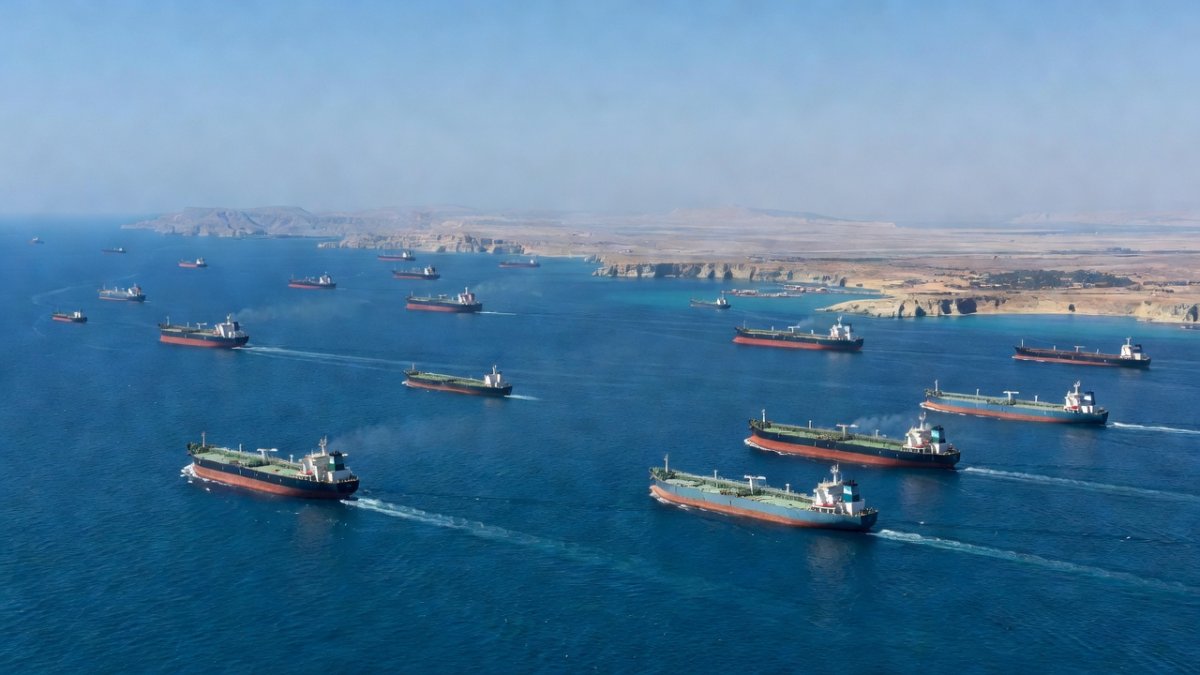
The Heat: CGTN Examines Trump's Escalating Threats
The CGTN analysis frames President Trump’s ultimatum as a pivotal escalation in the U.S.-Iran war, specifically conditioning further military action on Tehran’s decision to reopen the Strait of Hormuz. Defense Secretary Hegseth has publicly estimated the conflict’s costs at over $37.5 billion, reflecting sustained operations that include threats to target power plants and bridges. These developments follow the failure of several diplomatic initiatives, leaving the region in a state of prolonged confrontation.
From a strategic perspective, the U.S. position seeks to restore freedom of navigation while deterring further Iranian regional influence. Iran, however, retains leverage through asymmetric tactics, including support for Houthi rebels in Yemen who have threatened Saudi shipping lanes. This dynamic illustrates the limits of conventional military pressure in achieving rapid de-escalation.
Energy Security at Stake: China's Vulnerability to Hormuz Disruption
China imports approximately 45 percent of its crude oil from the Middle East, making any prolonged closure of the Strait of Hormuz a direct threat to energy stability. The current standoff has already prompted contingency planning within Chinese energy firms, though full-scale rerouting remains logistically constrained in the short term. Historical precedents, such as past Hormuz tensions, demonstrate that even temporary disruptions can elevate global prices and strain domestic refining capacity.
Beijing’s exposure stems from its reliance on these supply routes under the broader framework of energy diversification efforts outlined in national planning documents. While alternative sources exist, the volume and cost advantages of Middle Eastern crude create structural vulnerabilities that cannot be mitigated overnight. China’s Strategic Petroleum Reserve currently holds roughly 80–90 days of net import cover, with total capacity exceeding 1.05 billion barrels across sites in Zhoushan, Huangdao and Tianjin. Any sustained closure of the Strait of Hormuz would therefore force Beijing to draw down reserves at a rate of 7–8 million barrels per day, exhausting the buffer in under three months. CSIS senior fellow Emily Kilcrease notes that such depletion would coincide with peak summer demand, leaving NDRC planners with few options beyond mandatory allocation to priority sectors.
The 2019 tanker attacks near Fujairah and the Strait already prompted MOFCOM to issue internal circulars warning of “abnormal volatility in crude logistics.” Today the stakes are higher: China’s refining sector, which processed 14.8 million barrels per day in 2023, relies on Gulf crudes for 42 percent of its feedstock. A prolonged disruption would idle 2–3 million barrels per day of capacity at Sinopec and CNPC plants optimized for heavy sour grades, triggering product shortages and forcing emergency purchases on the spot market at premiums exceeding $15 per barrel. The 14th Five-Year Plan explicitly flags “maritime energy corridors” as a strategic vulnerability and mandates accelerated construction of overland pipelines from Russia and Myanmar plus expanded domestic storage. Yet NDRC vice-chairman Zhao Chenxin has acknowledged that these alternatives can offset only 1.2 million barrels per day—far short of the 5-plus million barrels currently transiting Hormuz. MERICS analyst Nis Grünberg argues that without rapid diplomatic de-escalation, Beijing’s energy-security margin will shrink to levels last seen during the 1973 oil shock.
Beijing's Diplomatic Calculus: Mediation or Neutrality?
China has consistently advocated restraint and positioned itself as a potential mediator drawing on the framework established by the Beijing-brokered Saudi-Iran agreement. This approach aligns with longstanding foreign policy priorities that emphasize stability to safeguard economic interests without direct entanglement. Specific statements from the Chinese Foreign Ministry have reiterated calls for dialogue, though detailed operational proposals remain limited in public discourse.
The calculus involves balancing relations with multiple actors: maintaining energy access while avoiding perceptions of partisanship that could affect ties with Gulf states. Second-order effects include potential opportunities to strengthen multilateral forums, yet success depends on whether conflicting parties perceive Beijing as an impartial facilitator. Chinese Foreign Ministry spokespersons have consistently framed the Hormuz question as a matter of “safeguarding international energy security and opposing unilateral blockades,” avoiding direct attribution of blame while urging restraint. Wang Yi, in his capacity as the Politburo member overseeing Middle East affairs, has conducted shuttle diplomacy with both Tehran and Riyadh, echoing the low-profile approach Beijing adopted during the 1990–91 Gulf War when it abstained on key UN resolutions yet quietly purchased discounted Iraqi crude.
Within the SCO and BRICS frameworks, Beijing has pushed for joint statements emphasizing “dialogue and negotiation,” calculating that these platforms allow it to signal solidarity with Global South importers without triggering U.S. secondary sanctions. SCMP reporting indicates that trade volumes between China and the six GCC states reached $228 billion in 2023; any Hormuz crisis risks severing the maritime leg of that commerce, which accounts for 68 percent of China’s LNG imports from Qatar alone. Unlike the 2003 Iraq War, when China could still diversify toward African and Latin American suppliers, today’s market is tighter. MFA statements have therefore stressed “unimpeded passage through international straits” while privately pressing Iran to avoid actions that would invite kinetic responses. Analysts at MERICS assess that Beijing’s priority remains preserving stable oil prices ahead of the 2025–2027 domestic economic targets rather than scoring geopolitical points.
The Russia-Iran Energy Axis: A New Geopolitical Reality
Russia has expanded cooperation with Iran’s energy sector during the conflict, providing technical and commercial support that partially offsets sanctions pressure. This deepening partnership reflects mutual interests in sustaining oil revenues amid Western restrictions. Joint projects in exploration and export infrastructure have accelerated, creating a parallel network less dependent on traditional maritime chokepoints.
For China, this axis introduces both opportunities and complexities. Enhanced Russian-Iranian coordination could stabilize certain supply elements, yet it also concentrates influence in ways that may complicate Beijing’s preference for diversified partnerships. The arrangement underscores how conflict can accelerate realignments in global energy trade.
Hormuz and the Global South: Ripple Effects Across Asia and Africa
Disruptions at Hormuz carry significant consequences for developing economies in Asia and Africa that depend on affordable Middle Eastern energy. Higher shipping costs and price volatility threaten industrial growth and food security in import-dependent nations, amplifying existing economic pressures. ASEAN members face particular exposure through integrated supply chains, while African states reliant on subsidized fuel encounter fiscal strain.
These ripple effects highlight the interconnected nature of global energy markets. Countries in the Global South possess limited leverage to influence the conflict directly, yet their collective calls for de-escalation could shape diplomatic momentum in international forums. Strategic responses may include accelerated investment in renewable alternatives, though timelines for meaningful shifts remain extended. Indonesia, Vietnam and the Philippines would face the sharpest secondary shocks. These three ASEAN economies imported 1.9 million barrels per day of Middle Eastern crude and condensate in 2023; a Hormuz closure would raise delivered prices by an estimated $22–28 per barrel, adding $9–11 billion annually to their combined import bills. Fertilizer costs, already elevated after the 2022 Ukraine shock, would climb further because Gulf petrochemical feedstock supplies 35 percent of Southeast Asia’s urea and DAP production.
India, which sources 58 percent of its crude from the Gulf, would see its current-account deficit widen by 0.8–1.1 percent of GDP within a single quarter. African importers such as Kenya and South Africa, dependent on spot cargoes for 70 percent of their needs, would confront both higher energy prices and knock-on inflation in staple foods. Sri Lanka’s 2022 crisis offers a cautionary parallel: a sudden doubling of import costs triggered reserve depletion and debt default within eight months. Shipping insurance premiums for vessels transiting the Strait have already risen 40–60 percent since October 2023. Should they reach 200 percent of hull value, as occurred briefly in 2019, smaller traders in the Global South would be priced out entirely, concentrating market share among state-backed Chinese and Indian fleets.
Strategic Outlook: What Comes Next in the Iran War
Future trajectories hinge on whether renewed diplomatic channels can prevent further infrastructure targeting or whether the conflict settles into a protracted pattern of strikes and countermeasures. China’s mediation offers remain on the table, yet their effectiveness will depend on alignment with U.S. and Iranian core objectives. Regional actors such as Saudi Arabia continue to navigate their own security calculations amid Houthi threats.
Over the longer term, the episode reinforces the importance of resilient energy strategies for all major importers. Outcomes will influence not only immediate oil flows but also the evolution of great-power competition in the Middle East, with implications extending to multilateral institution-building and supply-chain security worldwide. Three scenarios dominate current modeling. In an escalation pathway, Iranian nuclear breakout could occur within 12–18 months if enrichment at Fordow and Natanz continues unchecked, prompting Israeli or U.S. strikes that close the Strait for 60–90 days. A status-quo trajectory sees episodic tanker harassment but no full blockade, keeping Brent in the $85–95 range through 2025. De-escalation would require verifiable Iranian enrichment caps and renewed JCPOA-style monitoring, a timeline unlikely before late 2026.
BRI projects in Oman, the UAE and Pakistan would face financing delays if energy-price volatility spikes sovereign-risk premiums above 450 basis points. Russia, China and Iran have already coordinated three joint statements at the UN Security Council since 2022 opposing “unilateral sanctions that affect energy transit”; further coordination could block Western resolutions while shielding Iranian oil exports rerouted via the Caspian or rail. Impact on the 2026 U.S. midterms remains uncertain but measurable: sustained $110-plus oil would add roughly 0.7 percentage points to U.S. inflation, potentially costing the incumbent party 8–12 House seats in energy-consuming districts, according to CSIS electoral analysis. Beijing’s planners are therefore calibrating their diplomatic posture to avoid being blamed for either war or economic pain.
By Prof. Marcus Chen, Staff Writer
This article was produced with AI-assisted research and editorial support. Reporting is based on sources cited in the article.
What's Your Reaction?
 Like
0
Like
0
 Dislike
0
Dislike
0
 Love
0
Love
0
 Funny
0
Funny
0
 Wow
0
Wow
0
 Sad
0
Sad
0
 Angry
0
Angry
0

World Politics Analyst at Global1.News. Based in Beijing, covering US-China relations, global trade, and geopolitical strategy. Brings deep analytical perspective to the power dynamics shaping international affairs.











Comments (0)