
US-Iran War Hits 11th Night as Hormuz Blockade Chokes Global Oil
The US-Iran war over the Strait of Hormuz has entered its 11th consecutive night of CENTCOM air strikes. Defense Secretary Pete Hegseth testified the conflict has cost $37.5 billion, as the White House requests $87.6 billion in supplemental funding and oil markets convulse.
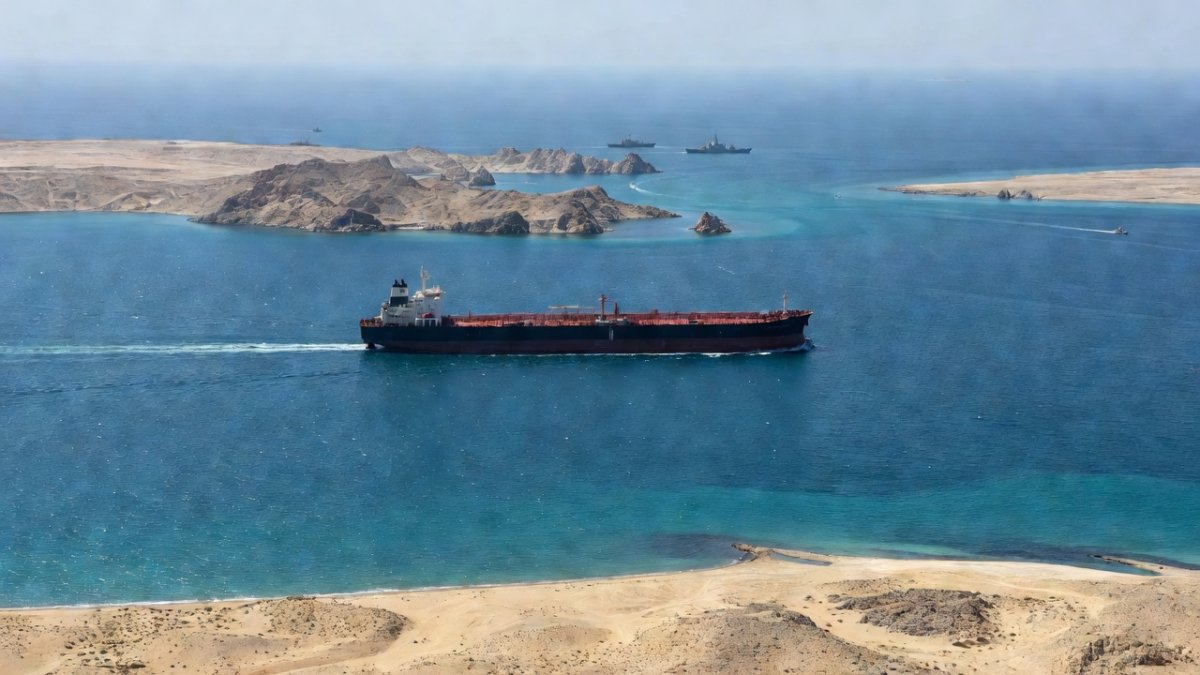
This is the biggest U.S. military engagement in the Middle East in decades, and it is unfolding in real time with no off-ramp in sight. Eleven consecutive nights of American air power have hammered Iranian military targets after Tehran choked off the Strait of Hormuz, a waterway that carries roughly 20 percent of the world's oil. What began as a blockade has become a grinding air campaign, a mounting casualty list, and a budget request that should make every taxpayer sit up straight. Defense Secretary Pete Hegseth has already put the price tag at $37.5 billion. The White House wants nearly $88 billion more. Oil markets are convulsing. And neither Washington nor Tehran appears ready to blink.
The Strait of Hormuz Flashpoint
The crisis started with Iran's decision to blockade the Strait of Hormuz, severing a critical artery for global energy. Approximately 20 percent of the world's oil supply moves through that narrow chokepoint. When tanker traffic began to erode, prices spiked and the United States answered with sustained military force. U.S. Central Command, or CENTCOM, has now completed its 11th night of air strikes aimed squarely at Iran's ability to threaten commercial shipping in the strait.
Neither side wants the waterway completely closed. That is the assessment from Oxford Economics, and it tracks with the behavior on both sides. Iran still needs revenue. The United States and its partners still need the oil to flow. Yet neither capital has shown any willingness to make the kind of significant concessions that would actually de-escalate the fight. So the strikes continue, the retaliation continues, and the global economy pays the freight.
Secretary of State Marco Rubio has drawn a bright line. The United States will keep targeting Iran for as long as Tehran attacks global commercial shipping. That is not diplomatic throat-clearing. That is a statement of open-ended intent. As long as Iranian forces threaten the strait, American aircraft will keep flying.
Eleven Nights of CENTCOM Air Strikes
CENTCOM reports that U.S. forces have engaged more than 140 Iranian military targets across the campaign. The 11th night of strikes, completed on July 22, continued the focus on degrading Iran's capacity to menace commercial vessels. This is not a one-off demonstration. It is a sustained air operation measured in consecutive nights and expanding target lists.
Explosions were reported in Bandar Abbas, on Sirik Island, and on Qeshm Island during the 10th night of strikes alone. Those locations sit along Iran's southern maritime approaches, exactly where you would expect the United States to hit if the mission is protecting shipping lanes. The geography of the campaign tells you the priority: shut down the threat to the strait.
Iran's own state media has corroborated parts of the damage. IRIB, citing the deputy governor of Sistan and Baluchestan province, confirmed attacks on Chabahar and Konarak along the southeastern coast. When the other side's official outlets start naming the same cities American forces are hitting, the fog of war thins a little. The strikes are real, the targets are military, and the campaign is broadening.
Cities and Ports Under Fire
The target deck stretches across Iran. In the southeast, Chabahar and Konarak in Sistan and Baluchestan province have taken hits. Along the southern coast, Bandar Abbas has been struck. Bushehr, near Iran's only operating nuclear power plant, has also been on the receiving end. In the northwest, Tabriz has been hit. Sirik Island and Qeshm Island have seen explosions tied to the air campaign.
That is a wide aperture. Southeastern ports, southern shipping hubs, a city near a nuclear facility, a northwestern population center, and island positions in the gulf approaches. CENTCOM's public framing remains consistent: these are military targets tied to Iran's ability to threaten commercial shipping. The sheer geographic spread, however, underscores how far beyond a limited tit-for-tat this fight has already gone.
Over 140 targets engaged means planners are working through a deep list. It also means Iran's air defenses and military infrastructure are absorbing repeated blows night after night. Eleven nights is not a warning shot. It is a campaign tempo.
The Human Cost for American Forces
Americans are dying. Two U.S. service members were killed in Jordan by Iranian ballistic missile and drone attacks on a military facility. Another service member was killed in northern Iraq during the controlled detonation of a downed Iranian drone. A further service member was killed in Jordan. Those are the deaths the Pentagon has publicly acknowledged.
The Intercept has reported that a U.S. official says Iranian attacks injured "far more troops" than the Pentagon has admitted. That gap between public casualty figures and internal assessments should alarm anyone who cares about transparency in wartime. If the injury toll is significantly higher than what has been briefed, Congress and the public are operating on incomplete information while being asked to fund a rapidly expanding war.
Every one of those deaths traces back to Iranian strikes on U.S. positions. This is not abstract geopolitics. It is American men and women under fire in Jordan and Iraq because Tehran chose to answer air strikes with missiles and drones. The casualty count is still low by the standards of past Middle East wars, but it is climbing, and the injury picture may be worse than advertised.
Iran's Retaliatory Operations
Tehran has not sat back. Iran has launched retaliatory operations under the names Nasr-2 and Saeqeh, targeting U.S. positions. Those named operations signal a deliberate, organized response rather than sporadic harassment. When a state brands its counterstrikes, it is telling its own public and its adversaries that it intends to keep fighting.
The attacks that killed U.S. personnel in Jordan involved ballistic missiles and drones. The incident in northern Iraq involved a downed Iranian drone that then cost an American life during a controlled detonation. That pattern shows Iran is projecting force beyond its borders to hit American facilities and assets in the region. Nasr-2 and Saeqeh are the banners under which at least some of that retaliation is being carried out.
As long as those operations continue, the United States has a stated rationale to keep striking. Rubio's formulation is blunt: if Iran attacks commercial shipping, America hits back. Iran's choice to layer missile and drone attacks onto the original blockade has only hardened that logic inside the administration.
The Price Tag: $37.5 Billion and Climbing
Defense Secretary Pete Hegseth testified before the Senate that the war has already cost $37.5 billion. Let that number land. In a matter of weeks of intensified conflict centered on the strait, the United States has burned through tens of billions of dollars. And that is the sunk cost, not the forward request.
The White House is now asking for $87.6 billion in supplemental funding. Of that total, $67 billion is earmarked for continuing the war. That is not a maintenance budget. That is a signal that the administration expects this fight to keep consuming serious resources. Hegseth's testimony put the current tally on the record. The supplemental request tells you where the White House thinks this is headed.
Taxpayers deserve a clear accounting. $37.5 billion spent. $87.6 billion requested. $67 billion of that for the war itself. Those are the figures driving the next round of debate in Congress, and they arrive while oil prices are already spiking and while American troops are under attack in Jordan and Iraq.
Houthi Blockade Opens a New Front
The conflict is no longer confined to the U.S.-Iran bilateral track. Houthi forces in Yemen have imposed a naval blockade on Saudi Arabia, opening an entirely new front. That move complicates the regional picture and multiplies the threats to commercial shipping and energy infrastructure across the broader Middle East.
A Houthi blockade on Saudi Arabia while the Strait of Hormuz is already under pressure is a recipe for sustained market panic. It also forces U.S. and partner planners to look south to Yemen even as CENTCOM aircraft continue their nightly runs against targets inside Iran. Multi-front pressure is how limited conflicts become regional wars.
The Houthis have long demonstrated the ability to menace shipping. Doing so now, in parallel with Iran's Hormuz blockade and the U.S. air campaign, raises the stakes for every energy importer on the planet. The war is widening geographically even if the core fight remains the strait.
Oil Markets and the Global Stakes
Oil prices have spiked dramatically as tanker traffic through the Strait of Hormuz erodes. That is the predictable result of putting 20 percent of global oil supply at risk. When vessels slow, divert, or stop transiting, markets do not wait for diplomatic communiqués. They reprice immediately.
Oxford Economics has noted the awkward truth at the center of this crisis: neither the United States nor Iran wants the strait completely closed, yet neither side appears willing to make significant concessions. That is a formula for prolonged disruption. Partial closure and persistent threat can still inflict enormous economic damage without either capital claiming a clean victory.
Energy consumers worldwide are already feeling the effects. The longer tanker traffic remains degraded, the deeper the shock travels into fuel prices, inflation, and industrial costs far from the Gulf. This is why a regional military confrontation over a maritime chokepoint is never only regional.
Calls for Escalation and the Ground Invasion Debate
A former Trump envoy has reportedly begun calling for a ground invasion of Iran. That is a dramatic leap from an air-and-missile campaign focused on shipping threats. Ground invasions are orders of magnitude more costly in blood and treasure, and they carry occupation and exit problems that air power alone does not.
The current U.S. approach, as described by CENTCOM and reinforced by Rubio, remains centered on striking Iranian military capabilities tied to the threat against commercial shipping. More than 140 targets have already been hit from the air. Moving from that posture to a ground war would represent a fundamental strategic shift that Congress, the public, and U.S. partners would have to confront head-on.
For now, the administration's visible policy is continued air strikes tied to Iranian behavior in the strait. The supplemental funding request for $67 billion to continue the war suggests planners expect the air campaign and associated operations to keep running. Whether political pressure builds for something larger is a separate, and dangerous, question.
No Off-Ramp in Sight
Eleven nights in, the fundamental deadlock remains. Iran's blockade throttled a waterway that moves about 20 percent of global oil. The United States answered with a CENTCOM air campaign that has now struck more than 140 military targets in places including Chabahar, Konarak, Bandar Abbas, Bushehr, Tabriz, Sirik Island, and Qeshm Island. Iran answered again with Operations Nasr-2 and Saeqeh and with missile and drone attacks that have killed American service members in Jordan and Iraq.
Hegseth has told the Senate the bill is already $37.5 billion. The White House wants $87.6 billion in supplemental funds, $67 billion of it to keep fighting. The Houthis have piled on with a naval blockade against Saudi Arabia. Oil prices are surging. Rubio says the strikes continue as long as Iran threatens shipping. And Oxford Economics sees two sides that refuse major concessions even though neither wants the strait fully shut.
This is an ongoing conflict with no clear end. The biggest U.S. military engagement in the Middle East in decades is being fought night by night over a strip of water the global economy cannot afford to lose. Americans should watch the casualty reports, the funding requests, and the tanker traffic with equal intensity. The facts on the ground are stark, the costs are rising, and the off-ramp has not appeared.
By Jessica Ali, Staff WriterThis article was produced with AI-assisted research and editorial support. Reporting is based on sources cited in the article.
What's Your Reaction?
 Like
0
Like
0
 Dislike
0
Dislike
0
 Love
0
Love
0
 Funny
0
Funny
0
 Wow
0
Wow
0
 Sad
0
Sad
0
 Angry
0
Angry
0

Editor-in-Chief at Global1.News. Atlanta-based journalist who cuts through the BS and tells it like it is. Lead anchor, host, and the voice you hear when the spin stops and the truth starts.















Comments (0)