
Israel Erects Extensive Barrier in Gaza Amid Stalled Cease-Fire
Israel is rapidly constructing a 23-kilometer earthen barrier in Gaza along the yellow line cease-fire boundary, satellite images confirm, raising fears of permanent division amid the stalled U.S.-backed truce with Hamas and the Trump-led Board of Peace oversight.
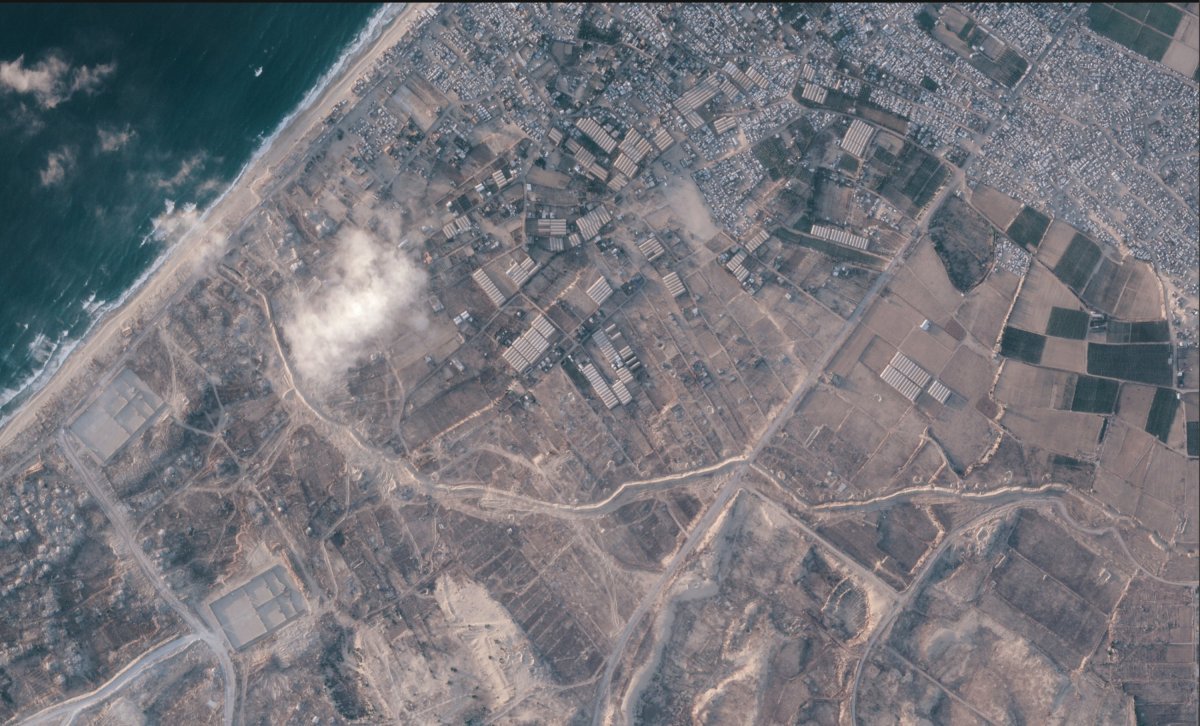
Scale and Pace of Barrier Construction
Satellite imagery from Planet Labs PBC documents more than 23 kilometers of earthen berms built inside Gaza in recent months. This length exceeds half the enclave's roughly 40-kilometer coastal span. The longest continuous stretch runs nearly 17 kilometers from Khan Younis northward toward Gaza City, while additional segments have appeared near Beit Lahia in the north and Rafah in the south.
One southern section grew from 500 meters on July 1 to 2.4 kilometers by July 15, slicing through the ruins of Rafah and separating them from the Muwasi area that hosts large Palestinian tent camps. Israeli forces have used bulldozers and explosives to level most structures east of the line, erasing entire neighborhoods.
Analysts at the International Crisis Group note that the rapid expansion of these berms, exceeding prior incremental security measures, echoes patterns observed after the 1967 war when territorial control shifted abruptly without full political resolution. This pace risks entrenching divisions that predate the current conflict, potentially complicating any return to frameworks like the Oslo Accords that envisioned phased withdrawals rather than permanent physical separations. The construction timeline underscores how quickly temporary lines can solidify amid stalled diplomacy.
Israeli analysts cited in AP reporting emphasize that such engineering projects demand sustained logistical commitments, drawing resources that could otherwise support broader stabilization efforts. Historical precedents from the 2005 disengagement illustrate that unilateral buffer zones often evolve into contested frontiers when underlying political agreements remain unimplemented, leaving civilian populations on both sides navigating heightened uncertainty.
Origin in the October Cease-Fire Agreement
The barrier follows the so-called yellow line, the boundary to which Israeli troops withdrew under the U.S.-backed October cease-fire deal with Hamas. That agreement described the line as a temporary measure pending fuller Israeli withdrawal and replacement by an international security force. Israel's military has confirmed to the Associated Press that the berms and an accompanying security zone equipped with intelligence assets are intended to block infiltration and protect troops and nearby Israeli communities.
Implementation of the broader withdrawal has remained stalled for months, leaving the temporary line in place while construction continues.
Experts from Chatham House observe that the yellow line's origins in the October agreement reflect a recurring Middle East pattern where cease-fire lines, intended as interim steps following conflicts like the 2023 war, harden into de facto boundaries absent sustained international pressure. This dynamic mirrors earlier post-1948 arrangements where provisional security measures outlasted their diplomatic mandates, leaving populations divided and aid flows disrupted across increasingly fortified zones.
Carnegie Middle East Center researchers highlight how the agreement's vision of an international force replacing Israeli positions has yet to materialize, allowing engineering works to proceed unchecked. Such developments risk undermining trust in U.S.-brokered deals, as regional actors assess whether temporary lines will ever yield to the fuller withdrawals originally envisioned.
Humanitarian Conditions West of the Line
Gaza's more than two million residents have been crowded into the coastal strip west of the yellow line. Most live in tent camps and rely on external aid deliveries. Israeli forces have killed more than 1,100 Palestinians since the cease-fire began, while militant attacks have killed five Israeli soldiers in the same period. The two-year war that preceded the truce caused over 73,000 deaths, mostly women and children, according to the source figures, after the October 7, 2023 Hamas incursion that killed 1,200 people in southern Israel.
Palestinians fear the barrier signals that Israel will retain control of the eastern portion rather than complete the agreed withdrawal.
UN officials monitoring the enclave have warned that concentrating populations west of the line exacerbates aid bottlenecks, with delivery routes now funneled through narrower corridors vulnerable to both security restrictions and logistical strain. This compression revives memories of earlier displacements following the 1967 war, where limited territorial access prolonged humanitarian dependencies without addressing root political grievances.
Strategic assessments from the International Crisis Group suggest that sustained crowding could intensify recruitment pressures within militant networks, particularly as the pre-cease-fire toll of over 73,000 deaths continues to shape community narratives of loss and resilience.
Israeli Security Objectives and Leverage
Israel's stated goal is to create a controlled buffer that prevents militant crossings and shields its forces during the prolonged stalemate. The military has declined to specify the final route or total length of the barrier. This approach reflects a calculation that physical separation can reduce immediate threats while diplomatic talks remain frozen.
By maintaining a security zone with technological assets, Israel retains operational flexibility without immediate further territorial concessions.
Israeli analysts point out that this buffer strategy builds on lessons from the 2005 disengagement, where incomplete separation left communities exposed to cross-border threats. The current approach prioritizes measurable security gains over rapid diplomatic concessions, allowing time for threat assessments amid frozen implementation of the October agreement.
Think tanks such as Chatham House note that retaining leverage through physical infrastructure provides Israel with negotiating capital, though it simultaneously raises questions about long-term sustainability when regional partners weigh the costs of prolonged division.
Regional Dynamics and the Abraham Accords Context
The barrier's emergence intersects with ongoing Israeli-Palestinian dynamics and the legacy of the Abraham Accords, which normalized relations between Israel and several Arab states. Gulf countries such as the UAE and Bahrain, which joined those accords, now face questions about whether further economic cooperation can advance while Gaza remains physically divided. Saudi Arabia's Vision 2030 diversification plans also depend on regional stability that could be undermined by prolonged division.
Iran's support for Hamas and other proxy networks adds another layer, as Tehran seeks to maintain influence through Gaza while avoiding direct confrontation. The Sunni-Shia competition continues to shape how other regional actors respond to any permanent change in Gaza's map.
Egypt and Jordan, sharing borders with the enclave and West Bank respectively, view the barrier's consolidation as a potential precedent that could affect their own security calculations and refugee management capacities. Officials in both capitals have historically advocated for complete implementation of withdrawal agreements to prevent spillover effects that might destabilize their domestic environments.
Qatar and Turkey, key mediators in past Gaza talks, express concern that hardened lines could limit their diplomatic maneuvering room. Their assessments suggest that stalled progress risks complicating efforts to revive broader normalization tracks tied to the Abraham Accords framework.
Role of U.S. Actors and Oversight Bodies
U.S. Central Command, responsible for monitoring the cease-fire, and the Board of Peace led by President Donald Trump, intended to oversee eventual governance, have not commented on the barrier. Their silence leaves unclear whether Washington views the construction as consistent with the temporary intent of the yellow line or as a unilateral shift.
Any future international security force envisioned in the deal would now confront a physical reality of berms and cleared zones already in place.
Analysts at the Carnegie Middle East Center argue that the absence of public statements from U.S. oversight bodies may reflect a deliberate pause to assess whether the barrier aligns with broader strategic interests in containing Iranian influence. This silence could influence how Gulf partners interpret American commitment to the original cease-fire parameters.
UN officials involved in monitoring have privately noted that the evolving terrain complicates planning for any replacement security arrangements, as cleared zones and berms create new operational realities on the ground.
Strategic Calculus and Second-Order Effects
Each side pursues clear interests: Israel prioritizes security buffers and protection of its communities, while Hamas and Gaza's civilian population seek full Israeli withdrawal and an end to isolation. Israel holds military leverage on the ground, yet prolonged control risks diplomatic costs with Arab partners and renewed international scrutiny.
Second-order effects include further strain on already fragile aid corridors, potential reinforcement of militant recruitment inside the crowded western zone, and complications for any future normalization talks between Israel and additional Arab states. Energy markets could feel indirect pressure if regional tensions rise, though OPEC+ members have so far avoided direct linkage.
Great-power competition involving the United States, China, and Russia in the Middle East adds another variable, as each power assesses how a divided Gaza affects its influence.
Researchers from the International Crisis Group emphasize that second-order effects extend beyond immediate humanitarian strain, potentially reshaping militant narratives that draw on historical grievances from the 2023 war onward. This could influence how external powers calibrate their engagement with both Israeli and Palestinian actors.
Regional observers note that prolonged division may deter additional Arab states from advancing normalization, as they weigh reputational risks against economic incentives tied to the Abraham Accords process.
Outlook for Gaza's Territorial Future
With construction advancing and the cease-fire implementation stalled, the yellow line risks hardening into a de facto border. Palestinians remain largely unaware of the berms because approaching the area carries extreme danger. Whether the barrier will be extended further or eventually dismantled depends on renewed diplomatic movement that has yet to materialize.
The situation illustrates how temporary security measures can evolve into lasting geographic realities when political agreements stall.
Strategic assessments suggest that without renewed momentum toward the international force envisioned in the October deal, the current configuration may set precedents for future territorial arrangements. This outcome would test the durability of U.S.-brokered frameworks across the wider region.
Think tanks including Chatham House caution that the absence of clear timelines for dismantling increases the likelihood of entrenched realities, particularly as great-power competition intersects with local dynamics in ways that could either accelerate or delay diplomatic breakthroughs.
By Malik Hassan, Staff Writer
This article was produced with AI-assisted research and editorial support. Reporting is based on sources cited in the article.
What's Your Reaction?
 Like
0
Like
0
 Dislike
0
Dislike
0
 Love
0
Love
0
 Funny
0
Funny
0
 Wow
0
Wow
0
 Sad
0
Sad
0
 Angry
0
Angry
0
Middle East Correspondent at Global1.News. Based in Beirut, covering politics, conflict, energy, and society across the Middle East. Brings context and depth to a region often reduced to headlines.














Comments (0)