
Israel Issues Military Order to Seize 5.2 Dunams of Palestinian Land in Occupied East Jerusalem
Israel seizes 5.28 dunams (725-meter plot) in Jaba's Al-Muntar, Ras al-Marj and Shaab al-Ghuzoul until Dec. 31 2028 for a settlement road from Route 60 to Neve Yaakov. Covers impacts on communities, 750k settlers in 141 settlements/224 outposts, 1,181 Palestinians killed since Oct 2023, and threats to two-state solution per Palestinian authorities and intl law.
The Land Seizure Order
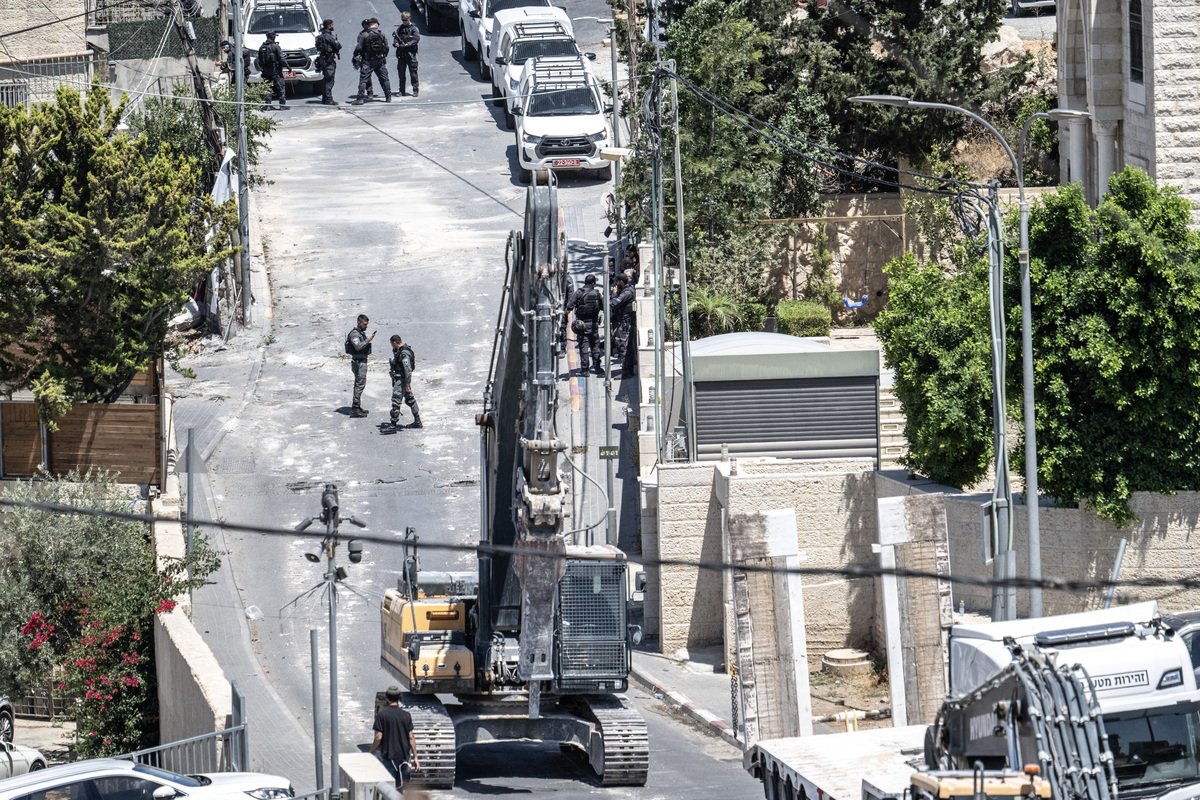
Israeli authorities issued a military order to temporarily seize 5.28 dunams of Palestinian land in the town of Jaba, north of occupied East Jerusalem. The order covers a 725-meter plot in the areas of Al-Muntar, Ras al-Marj and Shaab al-Ghuzoul. This seizure will remain in effect until Dec. 31 2028. Palestinian communities in Jaba face direct disruption as the order takes control of land essential to daily life and future generations.
The Jerusalem Governorate highlighted that such military orders serve to impose new facts on the ground. Families who have tended these plots for decades now confront uncertainty. The precise measurement of 5.28 dunams and the 725-meter length underscore the targeted nature of the action in Al-Muntar, Ras al-Marj and Shaab al-Ghuzoul.
The Settlement Road Plan
The seizure forms part of a plan to build a settlement road extending from Route 60 near the Jaba checkpoint to the separation wall near the illegal Neve Yaakov settlement. This infrastructure would link settlements while cutting through Palestinian areas. The Jerusalem Governorate stated that settlement road projects tie directly to de facto annexation efforts.
Route 60 serves as a key artery, yet the new road prioritizes connections to Neve Yaakov at the expense of local access. Residents of Jaba, Al-Muntar, Ras al-Marj and Shaab al-Ghuzoul would see traditional pathways altered. The temporary order until Dec. 31 2028 signals longer-term consolidation rather than short-term needs.
Historical Context of Land Seizures in East Jerusalem
Israeli seizure orders have long been employed to take control of Palestinian land and expand road networks linked to settlements. In occupied East Jerusalem and surrounding towns like Jaba, this pattern repeats across areas including Al-Muntar, Ras al-Marj and Shaab al-Ghuzoul. The current order for 5.28 dunams continues this approach, reinforcing control over territory.
Palestinian authorities note that such actions have persisted for years, gradually reshaping the landscape around Route 60 and the Neve Yaakov settlement. The 725-meter plot now targeted fits within broader efforts to connect illegal outposts. Until Dec. 31 2028, the land remains under military administration, echoing previous seizures that limited Palestinian development.
Since Israel's capture of East Jerusalem in 1967, successive governments have employed a combination of military orders and urban planning tools to confiscate Palestinian land, beginning with the immediate post-war expropriation of properties in neighborhoods such as Sheikh Jarrah and Silwan under the Absentee Property Law. These seizures accelerated in the 1970s and 1980s with the establishment of settlements like Ma'ale Adumim and Gilo, often justified as security needs but resulting in the transfer of thousands of dunams from Palestinian ownership. The pattern continued through the 1990s, embedding Israeli control over strategic ridges surrounding the city and setting precedents for later projects that prioritize contiguity between West Bank settlements and Jerusalem.
Under the Oslo Accords framework, military orders dating back to the 1960s and 1970s, such as Order 58 on abandoned property and various land registration decrees, have remained in force in Area C and East Jerusalem, allowing the Israeli Civil Administration to authorize seizures without Palestinian input. The Civil Administration reviews and approves declarations of state land or security zones, frequently overriding Palestinian title deeds through bureaucratic processes that demand documentation often unavailable due to historical disruptions. This legal architecture has enabled incremental expansion while maintaining the appearance of administrative routine.
The seizures in Jaba exemplify the broader encircling strategy, linking settlement blocs east of Jerusalem with the E1 corridor to isolate Palestinian communities from the city's historic core. By targeting agricultural plots along planned road alignments, authorities create irreversible facts on the ground that fragment potential Palestinian contiguity and reinforce Jerusalem's de facto annexation.
These mechanisms have evolved little despite international criticism, perpetuating a system where military necessity overrides property rights and demographic engineering reshapes the city's boundaries over decades.
Impact on Palestinian Communities
Communities in Jaba experience immediate effects from the seizure of land in Al-Muntar, Ras al-Marj and Shaab al-Ghuzoul. Farmers and families lose access to plots that support livelihoods. The 5.28 dunams and 725-meter stretch represent not only territory but also connections between homes and resources.
Escalating pressures since October 2023 compound these losses. With 1,181 Palestinians killed, around 13,000 injured and nearly 24,000 arrested across the West Bank, daily movement becomes further restricted by new road plans near Route 60 and Neve Yaakov. The order until Dec. 31 2028 prolongs hardship for residents already facing settlement expansion.
Land seizures in Jaba directly undermine the agricultural economy by removing fertile plots used for olive cultivation and grazing, forcing families into wage labor or urban migration that erodes traditional livelihoods across surrounding villages like Hizma and Anata. The loss compounds existing water restrictions and market access barriers, accelerating economic decline in an area already dependent on seasonal harvests.
Families who have held deeds for generations experience profound psychological distress, viewing the confiscations as erasure of ancestral ties and identity, often leading to intergenerational trauma and community fragmentation as younger members seek opportunities elsewhere.
Settlement road development further isolates villages by carving restricted corridors that limit daily movement, requiring lengthy detours or permit applications that disrupt schooling, medical access, and social networks. These roads integrate with the checkpoint system and permit regime, where Palestinians must navigate a web of approvals that privileges settlers while confining residents to shrinking enclaves.
The cumulative effect entrenches dependency and despair, transforming once-connected rural landscapes into isolated pockets under constant surveillance and control.
International Law Perspective
Under international law, Israeli settlements in the occupied Palestinian territory remain illegal. The UN has stated that settlement activity violates international law and stands as an obstacle to peace. Approximately 750,000 settlers live in 141 illegal settlements and 224 outposts across the occupied West Bank, including occupied East Jerusalem.
The seizure in Jaba for a road to Neve Yaakov adds to this framework. Military orders covering 5.28 dunams until Dec. 31 2028 exemplify how control expands despite legal prohibitions. Palestinian land in Al-Muntar, Ras al-Marj and Shaab al-Ghuzoul becomes part of networks that undermine established legal norms.
UN Security Council Resolution 2334 reaffirms that settlements in occupied territory have no legal validity and calls for their cessation, directly implicating land seizures tied to infrastructure like the Jaba road as violations of international humanitarian law. Earlier resolutions such as 465 and 476 similarly condemn changes to Jerusalem's status and demographic composition.
The International Court of Justice's 2004 advisory opinion on the separation wall found that construction deviating from the 1967 lines breaches the Fourth Geneva Convention, a ruling equally applicable to roads built to serve settlements and consolidate territorial control beyond armistice boundaries.
Under the Rome Statute, such seizures may constitute war crimes involving the transfer of civilian populations into occupied territory, exposing Israeli officials and entities to potential ICC investigation and arrest warrants should jurisdiction be established.
The International Committee of the Red Cross maintains that these actions contravene Article 49 of the Geneva Conventions, obligating occupying powers to refrain from altering the demographic or territorial status of occupied lands, a position that underscores the illegality of ongoing East Jerusalem projects.
Response from Palestinian Authorities
The Jerusalem Governorate condemned the order as a tool to impose new facts on the ground by taking control of Palestinian land. Officials emphasized that settlement road projects connect illegal settlements with occupied Jerusalem at the expense of Palestinian territory. They described ongoing expansion in the West Bank and East Jerusalem as efforts to consolidate control.
Authorities in Jaba and surrounding areas continue to document seizures like the 725-meter plot in Al-Muntar, Ras al-Marj and Shaab al-Ghuzoul. The temporary measure until Dec. 31 2028 is viewed as part of wider annexation plans. Palestinian leadership highlights how these actions affect communities already strained by 1,181 deaths since October 2023.
What This Means for the Two-State Solution
Palestinian authorities state that Israel continues to expand illegal settlements and build bypass roads to undermine the possibility of a geographically contiguous Palestinian state. The road from Route 60 near Jaba to Neve Yaakov would fragment land in Al-Muntar, Ras al-Marj and Shaab al-Ghuzoul, reducing prospects for viable borders.
With 750,000 settlers across 141 settlements and 224 outposts, each new seizure of 5.28 dunams erodes the territorial basis required for two states. The order effective until Dec. 31 2028 entrenches divisions that make contiguous sovereignty increasingly difficult. Human rights advocates note that such infrastructure prioritizes settlement connectivity over Palestinian self-determination.
Communities north of occupied East Jerusalem watch as plans advance, knowing the 725-meter plot in Jaba forms one link in a larger chain. International observers have long identified settlement growth as a core barrier, and this military order reinforces that assessment through concrete control of land.
The Jaba road accelerates West Bank fragmentation by linking settlement networks that sever north-south Palestinian connectivity, effectively creating isolated cantons that undermine any prospect of viable territorial integrity. This incremental approach, often described as "dunam by dunam" annexation, steadily redraws de facto borders through roads, fences, and housing without formal declaration.
The international community has responded with statements from the EU condemning settlement expansion, Arab League resolutions urging unified diplomatic pressure, and repeated UN General Assembly votes reaffirming Palestinian rights, yet enforcement remains limited to rhetorical measures and targeted sanctions that have not altered the trajectory.
Forward-looking analysis suggests that continued seizures render a contiguous Palestinian state increasingly improbable, as the resulting patchwork of enclaves and bypass infrastructure solidifies a one-state reality with unequal rights, diminishing prospects for negotiated borders based on 1967 lines.
By Fatima Al-Rashid, Staff Writer SUMMARY: Israel seizes 5.28 dunams (725-meter plot) in Jaba's Al-Muntar, Ras al-Marj and Shaab al-Ghuzoul until Dec. 31 2028 for a settlement road from Route 60 to Neve Yaakov. Covers impacts on communities, 750k settlers in 141 settlements/224 outposts, 1,181 Palestinians killed since Oct 2023, and threats to two-state solution per Palestinian authorities and intl law.This article was produced with AI-assisted research and editorial support. Reporting is based on sources cited in the article.
What's Your Reaction?
 Like
0
Like
0
 Dislike
0
Dislike
0
 Love
0
Love
0
 Funny
0
Funny
0
 Wow
0
Wow
0
 Sad
0
Sad
0
 Angry
0
Angry
0

Gulf/MENA Correspondent at Global1.News. Based in Doha, covering Gulf politics, energy markets, diplomacy, and development across the Middle East and North Africa. Tracks the economic transformation of the Gulf states.














Comments (0)