
Erdoğan: Türkiye's Diplomatic Restraint in Iran Crisis 2026
Erdoğan Highlights Türkiye's Diplomatic Restraint in Iran Crisis President Erdoğan details Türkiye's measured approach to the 2026 Iran conflict, backing Pakistan-led mediation with Qatar and Saudi Arabia while supporting the emerging US-Tehran agreement framework. **Keywords:** Recep Tayyip Erdoğan, Türkiye diplomacy, Iran conflict 2026, Pakistan mediation, Qatar Saudi Arabia,
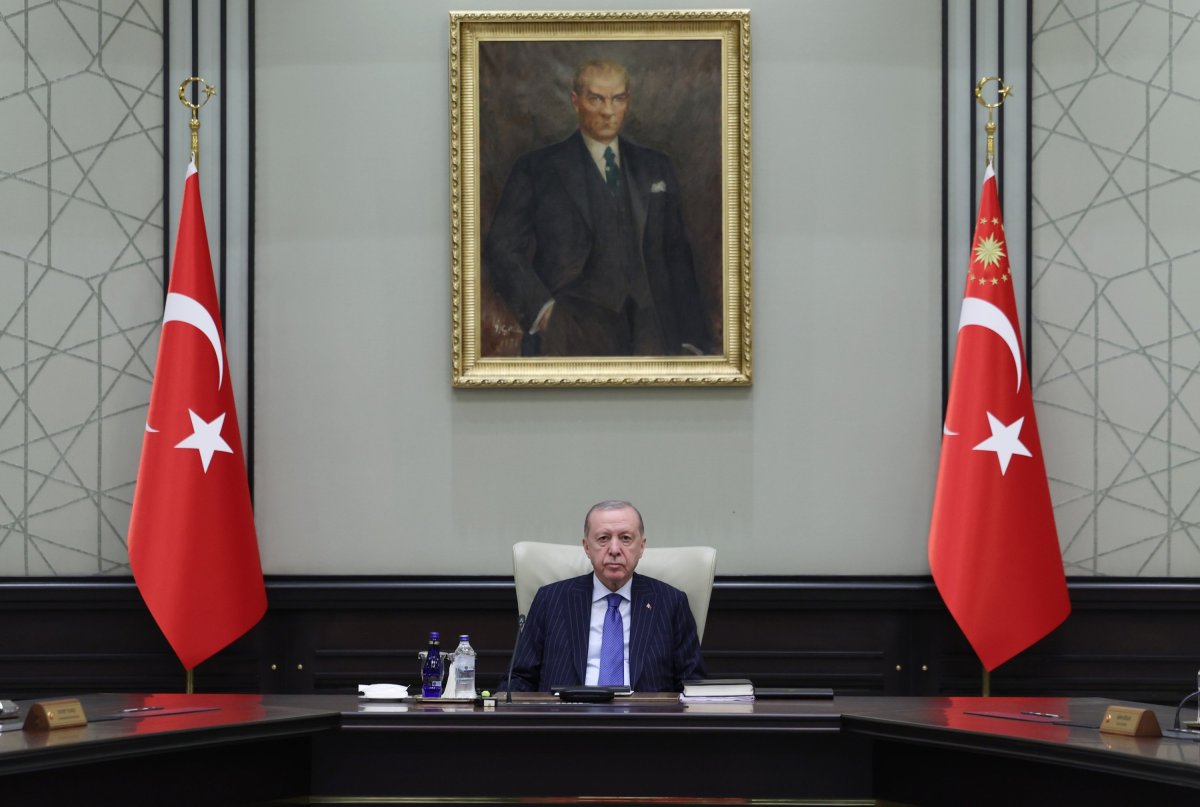
Erdoğan's Core Message: Restraint as Statecraft
President Recep Tayyip Erdoğan addressed reporters in Ankara on Monday, June 15, 2026, immediately after a Cabinet meeting. He outlined Türkiye's consistent position throughout the period of attacks on Iran. Erdoğan stressed that Ankara had adopted a prudent, calm and diplomacy-first stance from the outset. He noted that Türkiye had avoided provocations while maintaining a commitment to fairness in its public statements and private contacts.
The Turkish leader explicitly stated that his country "were not among those pouring fuel on the fire of war; we were among those raising the voice of peace." This formulation came at a moment when several regional actors had issued stronger condemnations or offered material support to one side. Erdoğan presented the approach as deliberate statecraft rather than passivity, arguing that the presidential system allowed rapid coordination between the foreign ministry, intelligence services and the presidency itself.
Officials in Ankara viewed the timing of the remarks as significant. The statement followed weeks of shuttle diplomacy and preceded the expected signing of the US-Iran agreement framework in Geneva. By repeating the emphasis on restraint, Erdoğan sought to position Türkiye as a reliable interlocutor for all parties once implementation discussions begin.
The Regional Mediation Architecture
Erdoğan confirmed that Türkiye had strongly supported the mediation efforts led by Pakistan, with Qatar and Saudi Arabia providing parallel backing. Islamabad's role as lead mediator emerged after initial bilateral contacts between Washington and Tehran proved insufficient to bridge core differences. Pakistani diplomats coordinated closely with Turkish counterparts in Ankara and Islamabad throughout the process.
Qatar contributed its established channels to Iranian officials, while Saudi Arabia used its influence with Gulf states and the United States to encourage de-escalation. Türkiye's contribution focused on hosting technical discussions and offering secure venues for indirect communication. European and Iranian officials had already conducted nuclear de-escalation talks in Ankara in the preceding weeks, creating a precedent for further meetings on Turkish soil.
The resulting agreement framework between Washington and Tehran is expected to ease tensions across multiple fronts. Erdoğan described the trilateral mediation structure as an example of pragmatic cooperation among Muslim-majority states that avoided exclusive reliance on external powers. Turkish diplomats continue to monitor follow-up meetings to ensure the framework translates into verifiable steps.
Türkiye's Strategic Calculus
Ankara's decision to maintain open lines with both Tehran and Washington reflected a calculated assessment of Türkiye's geographic and economic exposure. The country shares a long border with Iran and relies on stable energy transit routes that could be disrupted by prolonged conflict. Erdoğan highlighted how the presidential system enabled swift decisions without the delays associated with coalition governments.
Turkish officials balanced public calls for restraint with private assurances to Iranian counterparts that Ankara would not join any military coalition. At the same time, Türkiye coordinated with NATO allies on contingency planning for refugee movements and energy supply security. This dual-track approach allowed Erdoğan to preserve leverage with all sides.
Energy security concerns featured prominently in internal deliberations. Turkish energy imports from multiple sources required uninterrupted access through the Strait of Hormuz and overland pipelines. By avoiding inflammatory rhetoric, Ankara reduced the risk of targeted disruptions while positioning itself to facilitate any post-agreement energy arrangements.
Broader Middle East Dynamics
The 2026 conflict and subsequent agreement carry implications for the wider regional balance. Iran's network of proxies across Iraq, Syria, Lebanon and Yemen had been activated during the fighting, raising the prospect of spillover violence. The US-Iran framework is intended to address some of these proxy dynamics through confidence-building measures, though details remain limited.
Sunni-Shia tensions, while not the sole driver of the conflict, influenced the calculations of Gulf states. Saudi Arabia's participation in the mediation effort signaled a pragmatic desire to prevent further escalation that could affect its own economic diversification plans. Qatar's involvement drew on its long-standing ties with Tehran and its role as host to several regional actors.
Türkiye's own relations with these states have fluctuated in recent years. The current crisis provided an opportunity for Ankara to demonstrate value as a coordinator rather than a competitor. Erdoğan’s emphasis on collective mediation rather than unilateral action aligned with this objective.
Energy Markets and OPEC+ Implications
Oil markets reacted to the announcement of the US-Iran agreement framework with modest price declines, though analysts noted that full stabilization would depend on implementation timelines. Iranian crude exports had been constrained during the conflict, and any gradual return of barrels would affect global supply calculations.
OPEC+ members, including Saudi Arabia, have monitored developments closely. Riyadh has historically adjusted production to accommodate shifts in Iranian output. Turkish officials have expressed interest in ensuring that any increase in Iranian exports does not destabilize prices that affect Türkiye's import bill.
Pipeline security remains a parallel concern. Routes crossing Turkish territory and those passing near conflict zones require continued protection. Erdoğan’s government has linked energy stability to the broader success of the Geneva framework, arguing that economic incentives can reinforce political commitments.
Implementation Risks and the Road Ahead
Despite the agreement framework, several risks persist. Israel's posture toward the deal remains uncertain, and any unilateral actions could undermine the mediation gains. Iranian domestic stability, following earlier protests and subsequent crackdowns, will influence Tehran's ability to deliver on commitments.
Verification mechanisms for nuclear and conventional restrictions have yet to be finalized. The framework is scheduled for formal signing in Geneva, but the precise sequence of steps and monitoring arrangements requires further negotiation. European participants in the Ankara talks have signaled willingness to support technical verification, yet funding and access questions remain open.
Türkiye intends to continue offering diplomatic venues and quiet facilitation. Erdoğan indicated that Ankara would track progress through established channels rather than public pronouncements. Success will ultimately depend on sustained engagement among the original mediators and the principal parties to the conflict.
By Malik Hassan, Staff WriterThis article was produced with AI-assisted research and editorial support. Reporting is based on sources cited in the article.
What's Your Reaction?
 Like
0
Like
0
 Dislike
0
Dislike
0
 Love
0
Love
0
 Funny
0
Funny
0
 Wow
0
Wow
0
 Sad
0
Sad
0
 Angry
0
Angry
0
Middle East Correspondent at Global1.News. Based in Beirut, covering politics, conflict, energy, and society across the Middle East. Brings context and depth to a region often reduced to headlines.











Comments (0)