
Hadeeds Released After Month in Preventive Detention
Dominic and Genevieve Hadeed Released After Nearly a Month in Preventive Detention The Detention of the Hadeeds Trinidad businessman Dominic Hadeed, who runs a bottled water company, and his wife Genevieve were detained on June 24, 2026 under Preventive Detention Orders amid an investigation into an alleged plot to assassinate Prime Minister Kamla Persad-Bissessar and other Government officials.
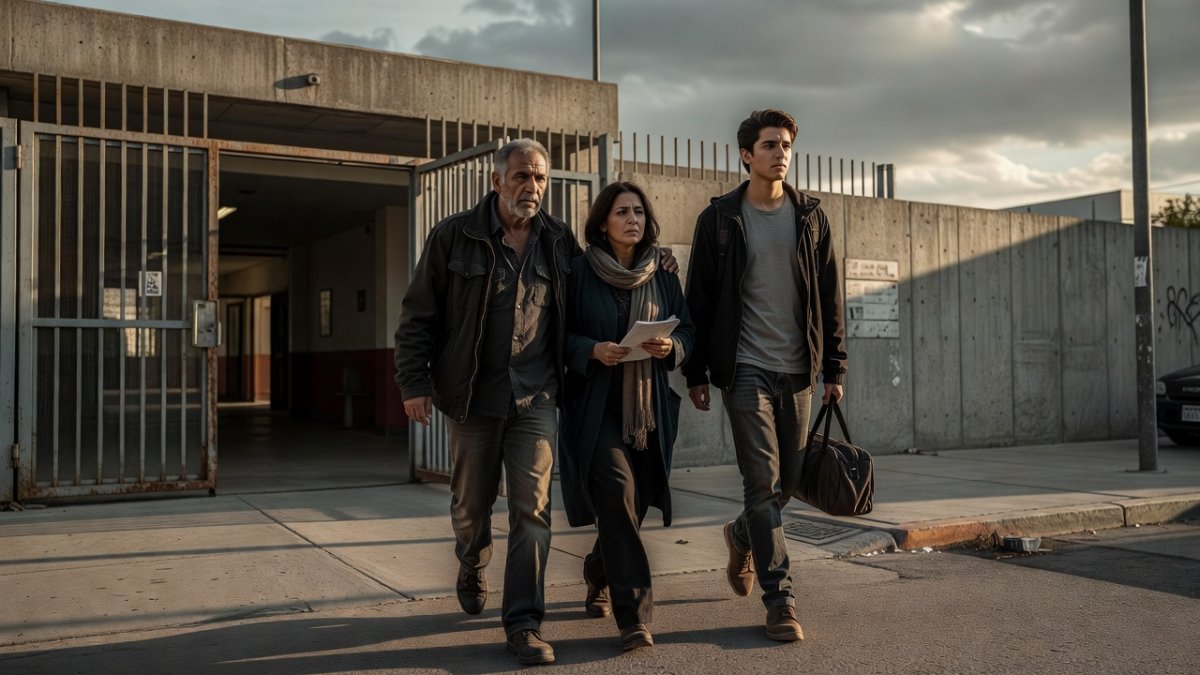
The Detention of the Hadeeds
Trinidad businessman Dominic Hadeed, who runs a bottled water company, and his wife Genevieve were detained on June 24, 2026 under Preventive Detention Orders amid an investigation into an alleged plot to assassinate Prime Minister Kamla Persad-Bissessar and other Government officials. The couple spent nearly a month behind bars without facing any criminal charges, a situation that has stirred quiet conversations across living rooms in Westmoorings and beyond. Dominic Hadeed, a member of Trinidad's Syrian-Lebanese community, has long been known for his straightforward views, and he later stated that his public criticism of the State of Emergency played a part in what he sees as state retaliation.
The State of Emergency itself was declared in March 2026 in response to organised crime, a move that echoed similar declarations in Jamaica and Guyana during periods of heightened gang activity. In Trinidad and Tobago, the measure allowed authorities to use Preventive Detention Orders more freely, raising eyebrows among families who remember past emergencies and their impact on daily life, from curfews to business disruptions amid already rising costs of living.
The Legal Battle Unfolds
From the moment of their detention, the Hadeeds mounted a legal challenge that moved through the local courts with speed unusual for such matters. Their lawyers argued that the Preventive Detention Orders lacked proper foundation, especially since no charges had been laid despite weeks of holding. The High Court eventually granted them bail with conditions of house arrest, a decision the State immediately contested, pushing the matter higher up the judicial ladder.
This back-and-forth highlighted the tensions between security needs and individual rights in a country still recovering from pandemic effects on tourism and facing persistent crime concerns. Neighbouring Caribbean nations have grappled with similar balances, where states of emergency sometimes stretch on without clear end dates, affecting everything from Carnival preparations to small business operations like the Hadeeds' bottled water enterprise.
The Hadeeds' lawyers moved swiftly after the June 24 detention, filing habeas corpus applications that reached the High Court within ten days. They argued the Preventive Detention Orders rested on vague intelligence rather than concrete evidence, noting that no charges had been laid despite weeks of interrogation. This absence of formal accusations, they contended, violated the fundamental right to liberty under the Constitution, echoing principles from the Caribbean Court of Justice's rulings on due process in Guyana and the Eastern Caribbean Supreme Court's scrutiny of similar orders in St Lucia.
By mid-July the bail hearing concluded with house arrest conditions, yet the State appealed immediately. Neighbouring experiences offer clear parallels: Jamaica's 2022 state of emergency drew Inter-American Commission criticism for detaining over 300 persons without charge, while Belize's 2023 measures faced local court challenges that forced tighter oversight. These cases show how Preventive Detention Orders, when stretched, strain public confidence in small island judiciaries already balancing crime control with limited resources.
The Privy Council Decision
The case reached the Judicial Committee of the Privy Council in London, Trinidad and Tobago's highest appellate court, where the State sought to fast-track its appeal against the bail ruling. The Privy Council declined to accelerate the process, leaving the Government's legal team in a difficult position once the Preventive Detention Orders were revoked. On July 22, 2026, Minister of Homeland Security Roger Alexander took the step of revoking the orders, and the couple walked free the following day, returning to their home in Bayshore, Westmoorings.
With the orders lifted, the foundation for the State's appeal effectively disappeared, creating what observers described as a state of legal limbo. This outcome underscores how appeals to the Privy Council can shape local outcomes even when timelines remain uncertain, a reality familiar to legal practitioners across the Caribbean who deal with cross-jurisdictional matters involving CARICOM citizens.
The Privy Council's refusal to fast-track the appeal left Trinidad's legal system in an awkward position. Without an expedited hearing, the Government's lawyers could not restore the Preventive Detention Orders before their revocation on July 22, creating genuine legal limbo where the appeal lost its practical foundation. This outcome highlights how appeals to London continue to shape local governance even as CARICOM nations debate replacing the court with the Caribbean Court of Justice.
Over the past decade, Trinidad and Tobago has sent roughly forty civil and constitutional matters to the Privy Council, with governments prevailing in fewer than half. Such rulings often force policy adjustments at home, from electoral reform to security legislation, reminding residents that final authority still sits thousands of miles away while daily life in Westmoorings and beyond carries on.
Political Fallout and Calls for Investigation
The Opposition People's National Movement has since called for an independent investigation into the Government's use of Preventive Detention Orders during the State of Emergency. Party spokespeople have questioned whether such measures were applied fairly, particularly against vocal critics like Dominic Hadeed. This demand comes at a time when inflation and the cost of living continue to weigh heavily on households from Port of Spain to San Fernando, making any perception of overreach in security policy a sensitive political issue.
Similar debates have surfaced in Barbados and other CARICOM states where emergency powers have been invoked to tackle crime, often leading to questions about oversight and accountability. The PNM's stance reflects broader community worries that preventive measures, while aimed at public safety, could chill open discussion in a society that values its lively political discourse.
Opposition Leader Pennelope Beckles and PNM Senator Faris Al-Rawi have demanded an independent commission of inquiry, specifically asking why vocal critics like Dominic Hadeed were targeted while broader organised crime networks remain untouched. They point to the timing of the detention shortly after Hadeed's public remarks on the State of Emergency, arguing it chills free speech at a moment when households already struggle with inflation above six percent and rising food prices.
The UNC administration under Prime Minister Kamla Persad-Bissessar faces renewed questions about balancing security with rights, particularly as the Syrian-Lebanese business community, which contributes significantly to manufacturing and distribution across the country, watches closely. Families in this tight-knit group recall earlier periods of political tension and worry that selective enforcement could damage the trust essential for economic recovery in tourism and energy sectors alike.
Human Rights Implications Across the Region
Human rights organisations have voiced concerns about prolonged detention without charge under Preventive Detention Orders, not only in Trinidad but in the wider Caribbean context of small island developing states. These groups point to the risks of such powers being used in ways that bypass normal judicial safeguards, especially during extended states of emergency tied to organised crime. In Trinidad and Tobago, the Hadeeds' case has become a focal point for these discussions, highlighting how families can be affected when business figures and community members find themselves caught in security sweeps.
The situation also connects to climate and disaster preparedness challenges, where emergency frameworks sometimes overlap with crime responses, stretching resources in places like the Office of Disaster Preparedness. Diaspora communities in the UK, Canada, and the US have followed the story closely, aware that immigration and visa policies can be influenced by how home countries handle such detentions.
The Inter-American Commission on Human Rights and local chapters of Amnesty International have both flagged the Hadeeds' case, urging Caribbean governments to limit Preventive Detention Orders to clearly defined periods with judicial review. Jamaica's 2022 emergency drew similar IACHR concern after extended detentions without charge, while Belize faced parallel criticism in 2023 for measures that overlapped with disaster preparedness frameworks and stretched already thin police resources.
Diaspora communities in London, Toronto and New York have followed the story with unease, aware that prolonged detentions can complicate visa applications and travel for Caribbean nationals. Many express quiet relief at the couple's release yet remain concerned that emergency powers, once normalised, risk affecting ordinary families long after the immediate crime threat passes, echoing conversations in living rooms from Port of Spain to San Fernando.
What This Means for Trinidad's State of Emergency
The release of the Hadeeds raises important questions about how the State of Emergency will proceed in the months ahead, particularly as the Government balances crime reduction with respect for due process. While the measure was introduced to address organised crime, cases like this one show the potential for Preventive Detention Orders to draw legal and political scrutiny that could affect public confidence. Energy sector developments, including work at Atlantic LNG and ongoing talks around Petrotrin, continue alongside these security matters, reminding residents that national stability involves multiple fronts.
Looking regionally, Trinidad and Tobago's experience offers lessons for CARICOM partners facing similar pressures from crime and economic recovery. The emphasis now falls on ensuring that any future use of such orders includes clear timelines and oversight, so communities can focus on rebuilding tourism numbers and celebrating cultural events like Carnival without added uncertainty. The Hadeeds' return home marks one chapter closing, yet the wider conversation about rights and security in our islands remains very much alive.
By Sharon Sahatoo, Staff WriterThis article was produced with AI-assisted research and editorial support. Reporting is based on sources cited in the article.
What's Your Reaction?
 Like
0
Like
0
 Dislike
0
Dislike
0
 Love
0
Love
0
 Funny
0
Funny
0
 Wow
0
Wow
0
 Sad
0
Sad
0
 Angry
0
Angry
0

Caribbean Correspondent at Global1.News. Based in Port of Spain, Trinidad, covering Caribbean politics, economy, energy, climate, and culture. Amplifying the voices and stories of the Caribbean region.















Comments (0)