
Israeli Settlers Torch Mosques as West Bank Violence Surges
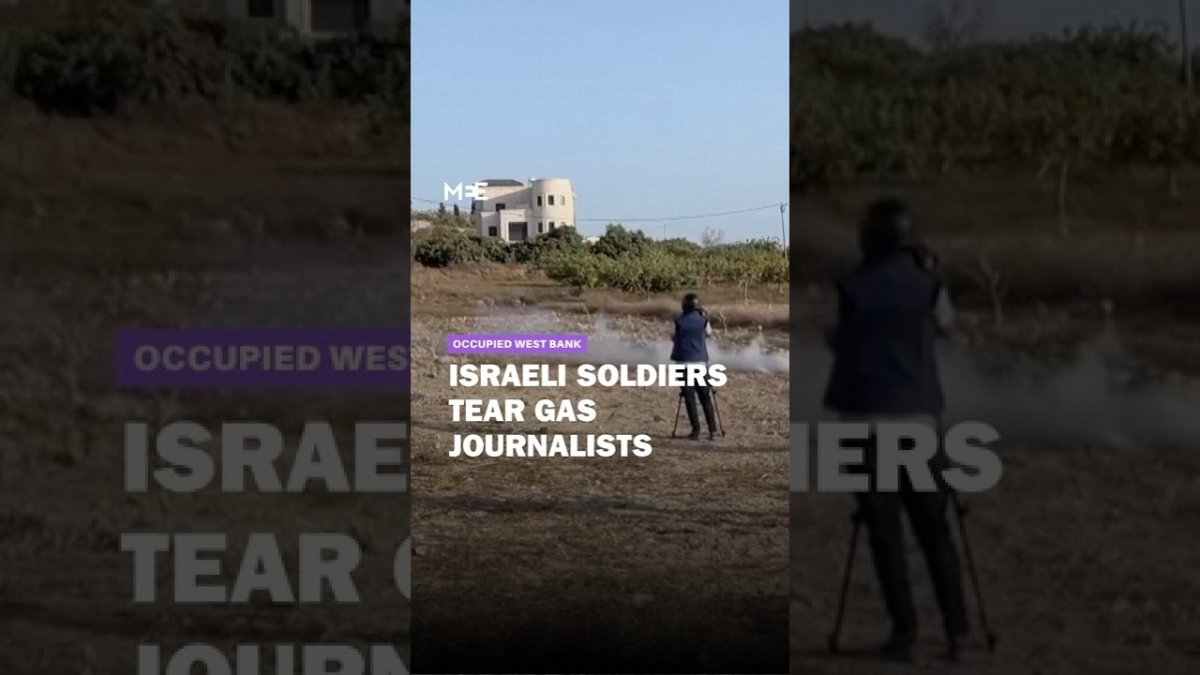
Introduction In a Middle East Eye video documenting Israeli forces tear-gassing Palestinians and journalists in the occupied West Bank, Israeli troops are seen firing tear gas at civilians and reporters amid a surge in settler violence across the territory. The footage captures events in areas where Palestinian residents have faced repeated incursions. Reports from July 24 to 26, 2026, document additional incidents involving settlers and Israeli
Introduction
In a Middle East Eye video documenting Israeli forces tear-gassing Palestinians and journalists in the occupied West Bank, Israeli troops are seen firing tear gas at civilians and reporters amid a surge in settler violence across the territory. The footage captures events in areas where Palestinian residents have faced repeated incursions. Reports from July 24 to 26, 2026, document additional incidents involving settlers and Israeli troops in multiple locations.
These developments occur alongside statements from Israeli officials and groups that have called for strong responses following earlier clashes. Palestinian communities in the West Bank have reported damage to property and places of worship during this period. International observers, including the United Nations, have continued to monitor the situation without issuing new binding measures as of late July 2026.
Local residents and journalists have described challenges in documenting events due to restrictions on movement and exposure to crowd-control measures. The Middle East Eye reporting places these incidents within a longer sequence of confrontations that have affected daily life in towns and villages.
Residents in villages near Nablus described choking on tear gas while trying to shield children from advancing settlers, with one mother recounting how her family’s olive grove was set ablaze just hours after the video was filmed. These personal accounts echo decades of displacement rooted in the Oslo Accords, which failed to halt settlement expansion despite UN Security Council Resolution 2334 declaring such activity illegal. Data from UN OCHA shows over 1,200 settler-related incidents in the first half of 2026 alone, building on patterns documented by Al Jazeera since the 2010s.
Analysis reveals how these attacks connect settler ideology dating to the 1967 occupation with current political rhetoric, creating a cycle where international inaction, including ignored ICJ advisory opinions on the separation wall, emboldens further violence against Palestinian communities.
The West Bank Under Fire: Settlers Torch Mosques and Homes
On July 26, 2026, Israeli settlers set fire to Al-Rahma Mosque in Qusra, located south of Nablus. A second mosque was set on fire the same day in Kur, near Tulkarm. Reports also noted damage to heavy equipment at an industrial facility near Ramallah. Multiple towns and villages experienced raids, with homes and vehicles targeted during the same weekend.
Palestinian residents in these areas stated that fires spread to nearby structures and agricultural land. Israeli authorities have not confirmed the full extent of involvement by security forces in preventing or responding to the fires. The Palestinian Authority issued a statement condemning the attacks and attributing them to direct support from Israeli entities.
Settler groups have maintained a presence in the region, with the overall settler population in the West Bank exceeding 700,000. These numbers reflect growth over recent years, according to available demographic data. Local organizations have recorded incidents of arson and property destruction in the affected communities.
Elderly worshippers in Qusra described fleeing the burning mosque as flames consumed prayer rugs passed down through generations, while farmers near Kur watched their olive trees reduced to ash, wiping out livelihoods built over decades. This violence traces back to the settler movement’s origins after 1967, when groups like Gush Emunim defied international law under UN Resolution 242 calling for withdrawal from occupied territories.
Middle East Eye and BBC tallies indicate at least 45 arson attacks on religious sites since 2024, underscoring how Oslo-era promises of Palestinian self-rule have been undermined by unchecked settlement growth now exceeding 700,000 people.
A Pattern of Violence: Over 7,000 Attacks in Two Years
More than 7,000 settler attacks have been recorded in the West Bank over the past two years, according to Middle East Eye reporting. These incidents have resulted in 33 Palestinian deaths. On July 24, 2026, four Palestinians were killed by settlers and troops near Nablus. Over 30 settler attacks took place during one weekend in late July.
BBC reporting from July 26, 2026, described settlers setting fire to mosques, cars, and farmland in the West Bank. Al Jazeera coverage on the same date examined the reasons behind what it termed a rampage by Israeli settlers in the occupied territory. These accounts align with documentation from Palestinian sources regarding the frequency of such events.
Residents in villages south of Nablus and around Tulkarm have reported repeated disruptions to daily routines, including access to fields and places of worship. Data compiled by monitoring groups indicate that attacks have included both physical assaults and destruction of property. No comprehensive Israeli government response to the full tally of incidents has been detailed in public statements as of July 26, 2026.
Families in affected villages spoke of children unable to attend school after roads were blocked by burning tires, with one father detailing how his son was hospitalized following a settler assault that left him with broken ribs. Historical context includes the settler movement’s acceleration post-Oslo, despite ICJ rulings against the occupation’s permanence.
UN data cross-referenced with Al Jazeera reports shows a 40 percent rise in attacks since 2023, linking these figures to broader impunity that connects individual incidents to systemic expansion policies.
Political Incitement: Leaders Calling for Blood
Israeli Finance Minister Bezalel Smotrich has called for the destruction of Palestinian villages in statements made prior to the July incidents. Settler organizations and some political figures have used language advocating revenge and expressing a desire to see blood, according to reports from the period. These remarks have coincided with the documented attacks on mosques and homes.
The Palestinian Authority has stated that such violence occurs with direct Israeli support. Israeli security forces have conducted operations in the same areas, though the precise coordination between troops and settlers remains under discussion by observers. The settler population growth to over 700,000 has been cited by analysts as a factor in the expansion of these communities.
Statements from Israeli leaders have not been accompanied by immediate policy changes that would alter the status of settlements. Palestinian officials continue to appeal to international bodies for intervention, while monitoring organizations track the pattern of statements and actions.
Local activists recounted hearing ministers’ calls echoed in settler chants during raids, leaving communities in fear for their safety as homes were marked for targeting. This rhetoric revives elements of the settler movement’s founding ideology from the 1970s, which rejected UN resolutions limiting territorial claims.
Analysis ties Smotrich’s statements to a documented 25 percent increase in attacks following inflammatory speeches, per MEE tracking, illustrating how political incitement sustains the occupation’s expansion beyond Oslo frameworks.
Journalists Under Attack
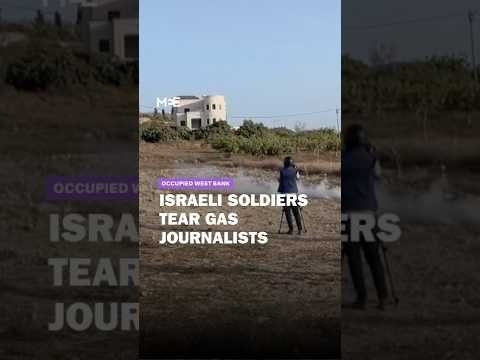
The Middle East Eye video documents Israeli soldiers directing tear gas toward Palestinian civilians and journalists during operations in the occupied West Bank. Reporters have faced similar measures in other locations where settler activity has increased. Access to incident sites has been limited by checkpoints and dispersal tactics.
Journalists from regional and international outlets have reported interference while attempting to record events in Qusra and Kur. Equipment damage and physical obstruction have been noted in several cases. These challenges occur against the backdrop of the broader surge in violence that began intensifying in mid-July 2026.
Press freedom groups have called for protections to allow independent documentation. The incidents captured in the Middle East Eye footage illustrate the risks faced by those covering the confrontations between settlers, troops, and residents.
Camera operators described being targeted while filming mosque fires, with one reporter from Al Jazeera detailing how tear gas canisters struck her team, forcing them to abandon coverage of a family’s destroyed home. Such restrictions build on a history of press suppression since the Oslo period, when access to settlements was curtailed despite UN calls for transparency.
BBC and UN monitoring data record over 150 journalist incidents in the West Bank in 2026, connecting these attacks to efforts that shield settler violence from global scrutiny.
Connecting West Bank and Gaza: The Broader Picture
The West Bank events follow findings from the UN Commission of Inquiry in June 2026, which determined that Israel deliberately targeted Palestinian children as part of actions described as genocide in Gaza. A study from Brown University's Costs of War Project examined the use of quadcopters in targeting children in Gaza during the same period.
These reports place the settler attacks in the West Bank within a wider context of Israeli policies affecting Palestinian populations across different territories. The timing of the July 2026 incidents overlaps with ongoing military operations in Gaza, though direct operational links have not been established in available documentation.
Humanitarian organizations have noted strain on resources in both regions, with displacement and injury figures continuing to rise. The UN Commission findings remain under review by member states without immediate enforcement mechanisms.
West Bank families displaced by settler fires spoke of relatives in Gaza facing similar quadcopter strikes, sharing stories of lost children across fragmented territories. This pattern stems from post-1967 policies that Oslo Accords never dismantled, as affirmed by multiple ICJ opinions on the occupation’s illegality.
UN and Al Jazeera data show coordinated spikes in violence across both areas, with over 50,000 displaced in the West Bank since 2023, revealing interconnected strategies of control.
International Response and What Comes Next
International bodies have issued statements of concern regarding the July 2026 attacks but have not announced new sanctions or investigative mandates as of the end of the month. The Palestinian Authority has requested additional monitoring from the United Nations and other entities.
Israeli officials have defended security measures in the West Bank while attributing some incidents to individual settler actions. Discussions in diplomatic channels continue without confirmed outcomes on de-escalation steps. Observers expect further documentation of incidents in the coming weeks, based on patterns observed in prior periods of heightened tension.
Communities in Qusra, Kur, and surrounding areas have begun assessing damage to mosques and property. Continued reporting from outlets such as Middle East Eye and Al Jazeera will likely track developments as they unfold.
Survivors in torched villages expressed frustration with empty UN statements, recalling how past resolutions like 2334 yielded no protection as their homes burned. Historical settler growth since Oslo has outpaced all diplomatic efforts, per UN records showing 700,000 settlers today.
Analysis of MEE and BBC trends indicates that without enforcement of ICJ rulings, the July violence foreshadows escalated attacks, linking local suffering to global inaction on occupation policies.
By Fatima Al-Rashid, Staff WriterThis article was produced with AI-assisted research and editorial support. Reporting is based on sources cited in the article.
What's Your Reaction?
 Like
0
Like
0
 Dislike
0
Dislike
0
 Love
0
Love
0
 Funny
0
Funny
0
 Wow
0
Wow
0
 Sad
0
Sad
0
 Angry
0
Angry
0

Gulf/MENA Correspondent at Global1.News. Based in Doha, covering Gulf politics, energy markets, diplomacy, and development across the Middle East and North Africa. Tracks the economic transformation of the Gulf states.










Comments (0)