
Albania's Flamingo Revolution: Mass Protests Erupt Over Kushner-Trump Luxury Resort on Sazan Island
In a recent BBC News report, The Global Story examined the massive protests sweeping Albania over a luxury resort project linked to Ivanka Trump and Jared Kushner, a development that has galvanized opposition from environmental activists, villagers, and ordinary Albanians alike. Albania's Flamingo Revolution: Mass Protests Erupt Over Kushner-Trump Luxury Resort on Sazan Island
In a recent BBC News report, The Global Story examined the massive protests sweeping Albania over a luxury resort project linked to Ivanka Trump and Jared Kushner, a development that has galvanized opposition from environmental activists, villagers, and ordinary Albanians alike.
Albania's Flamingo Revolution: Mass Protests Erupt Over Kushner-Trump Luxury Resort on Sazan Island
Tirana, Albania – June 2026 — Albania has been rocked by weeks of protests over a €1.4 billion luxury resort project on Sazan Island backed by Jared Kushner and Ivanka Trump, with demonstrators dubbing their movement the "Flamingo Revolution" in defense of the protected Narta Lagoon wetlands.
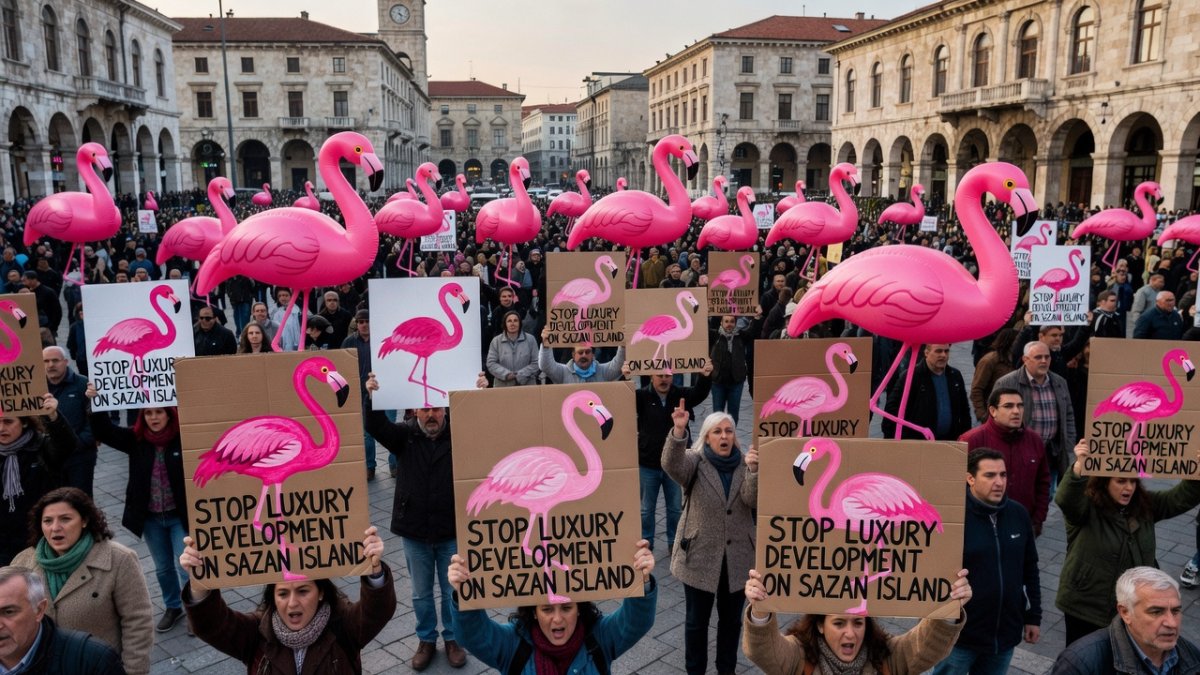
The Flamingo Revolution
Protests erupted on 23 May 2026 in Zvërnec village near Narta Lagoon, quickly earning the name "Flamingo Revolution" due to the prominent use of inflatable flamingos as protest symbols. Demonstrators gathered to oppose the Sazan Island project, citing threats to local ecosystems and traditional livelihoods. The movement rapidly expanded from the coastal village to central Tirana, drawing thousands who marched with the symbolic inflatables to highlight concerns over habitat disruption in the lagoon area. Villagers from Zvërnec have voiced longstanding grievances over land access, framing the demonstrations as a defense of communal rights against external development pressures. Environmental groups have joined the cause, emphasizing the lagoon's role as a critical wetland. Ordinary Albanians in Tirana have amplified these voices through coordinated rallies, creating a broad coalition that blends local grievances with national debates on sovereignty and transparency.
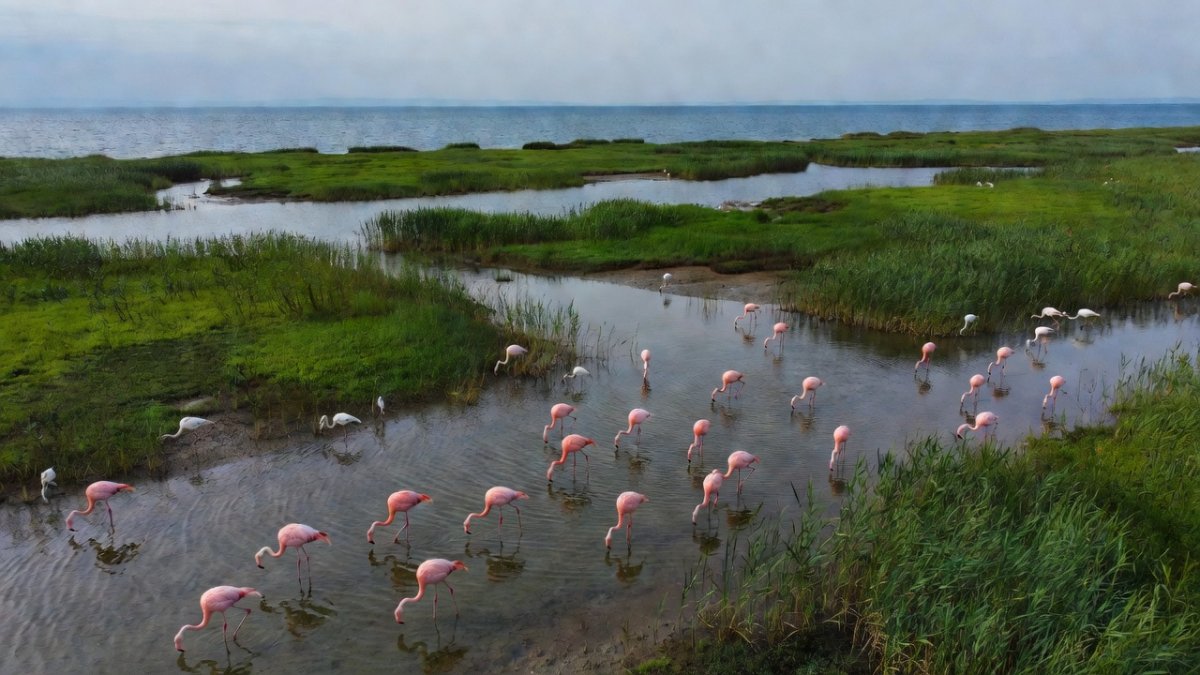
The Narta Lagoon ecosystem itself forms a vital component of Albania’s coastal biodiversity, serving as a key stopover for migratory birds including greater flamingos whose presence has become emblematic of the resistance. Development pressures risk altering water flows, increasing sedimentation, and introducing pollutants that could degrade the shallow brackish waters essential for fish spawning and invertebrate communities. In the broader Balkan context, such wetland losses compound regional vulnerabilities already heightened by climate variability and upstream agricultural runoff. Albanian civil society organizations have stressed that preserving these habitats aligns with EU environmental directives that candidate countries must adopt under Chapter 27 of accession negotiations. The protests therefore intersect directly with Albania’s EU trajectory, where demonstrable progress on nature protection and public participation in decision-making forms a measurable benchmark for Brussels evaluators.
Activists have refined their tactics around the inflatable flamingos, deploying them in human chains along access roads to Zvërnec and floating clusters of the symbols across the lagoon’s edges during dawn vigils to dramatize risks to feeding grounds. In Tirana, nightly gatherings outside the prime minister’s office have featured synchronized releases of smaller flamingo balloons carrying petitions, while student groups organize teach-ins that link the symbols to Albania’s obligations under the Bern Convention on wildlife habitats. These methods keep the movement visible and media-friendly without escalating to property damage, allowing the coalition to sustain momentum across multiple weekends.
Inside the Sazan Island Development
The proposed luxury resort on Sazan Island, a former Soviet military base, carries an estimated value of €1.4 billion and involves backing from Jared Kushner's Affinity Partners along with Ivanka Trump. The island's strategic location in the Adriatic has drawn attention to its transformation from a restricted military zone into a high-end tourism destination. Project details indicate plans for extensive infrastructure that would alter the island's current undeveloped character. Local communities near Narta Lagoon have raised specific objections regarding potential impacts on fishing grounds and water quality. A land dispute with villagers has already prompted a formal corruption probe by Albanian authorities, focusing on the allocation of development rights. Multiple stakeholders, including environmental organizations and opposition figures, have called for independent environmental impact assessments before any construction advances.
The corruption probe centers on questions of how development rights were awarded and whether proper procedures governed the transfer of state or communal land parcels adjacent to the lagoon. Albanian investigators are examining documentation trails that link permitting decisions to the foreign investment vehicle, raising issues of transparency that resonate with long-standing concerns about elite capture in post-communist property restitution. In the EU accession framework, credible handling of such probes constitutes a core requirement under the rule-of-law chapters; any perception of expedited approvals for high-profile investors could delay opening or closing of negotiation clusters. Geopolitically, the Adriatic positioning of Sazan Island also places the project within longstanding great-power interest in Balkan maritime routes, where Russian commercial and political actors have historically sought leverage through energy corridors and port access arrangements that compete with Western-oriented investment flows.
During the Cold War, Sazan functioned as a closed Soviet naval outpost whose concrete bunkers and submarine pens still scar the landscape; demining operations after Albania’s 1990s transition left large tracts off-limits until recent years. The “yacht discovery” episode, in which a luxury vessel reportedly anchored near the island without prior clearance, has fed local narratives that the site was quietly scouted for high-end clients long before formal announcements. These layers of restricted history now collide with the resort’s vision of private marinas and villas, sharpening villagers’ fears that once-public coastal zones will become permanently enclosed.
Edi Rama's Defiant Response
Prime Minister Edi Rama has publicly defended the resort project as an economic opportunity for Albania, arguing that it would generate jobs and foreign investment. In recent statements, Rama attributed aspects of the unrest to external interference, specifically accusing Iran of conducting a "hybrid war" against his government. Iranian officials have denied these claims, describing them as unfounded attempts to deflect domestic criticism. Rama's position has polarized Albanian society, with supporters viewing the development as necessary modernization while critics question the decision-making process. The opening of the corruption probe reflects institutional pushback, even as the prime minister maintains that the project complies with national regulations. This stance has tested relations within Albania's governing coalition and drawn scrutiny from civil society groups.
Rama’s framing of the protests as externally orchestrated has complicated domestic consensus at a moment when Albania seeks to project stability ahead of EU screening processes. European Commission reports have repeatedly flagged the need for inclusive consultation on major infrastructure and tourism projects; bypassing or downplaying local objections risks reinforcing narratives of democratic backsliding that opposition parties and Brussels monitors alike have highlighted. Meanwhile, the prime minister’s emphasis on investment inflows reflects Albania’s strategic calculation that tourism revenue can offset structural economic weaknesses, yet the environmental and land-tenure dimensions of the Sazan proposal illustrate the trade-offs that EU negotiators will scrutinize when assessing sustainable development criteria.
Balkan Geopolitics and Russian Interests
Albania's status as a NATO member places the Sazan Island controversy within broader regional dynamics, where foreign investments can influence security alignments. Analysts interpret the project's foreign backing as potentially shifting economic dependencies in the Western Balkans, an area where Russian influence has historically sought footholds through energy and infrastructure channels. The protests have highlighted tensions between national development goals and alliance commitments. Perspectives from regional observers note that similar large-scale projects elsewhere in the Balkans have sometimes served as vectors for competing geopolitical interests. Albanian opposition parties have framed the unrest as evidence of governance vulnerabilities that external actors might exploit. Meanwhile, government officials emphasize the project's alignment with European integration aspirations, though the land disputes and probe introduce uncertainty into these narratives.
Russian strategic interest in the Western Balkans has traditionally operated through political patronage networks, media influence, and selective energy investments designed to maintain leverage over candidate states. Albania’s NATO accession in 2009 and its subsequent EU candidacy have narrowed those avenues, yet large tourism or real-estate projects backed by actors with prior U.S. political connections can still generate friction within domestic coalitions and among regional powers wary of consolidated Western economic footprints. The current controversy therefore functions as a microcosm of wider contestation over whether Balkan states can absorb high-value foreign capital while preserving both ecological integrity and the institutional safeguards demanded by Brussels.
The Trump Family Business Abroad
The involvement of Affinity Partners and Ivanka Trump in the Sazan Island venture represents an extension of family business activities into sensitive international locations. Project backers have presented the resort as a standard commercial undertaking, yet its scale and location have invited questions about political connections and regulatory oversight. Albanian authorities have not publicly detailed any special approvals granted to the investors. Critics within Albania and abroad have pointed to the timing of the protests as coinciding with heightened global attention on foreign influence in small-state economies. Supporters counter that private investment from any source benefits local economies when properly regulated. The corruption probe may examine whether due diligence processes adequately addressed potential conflicts arising from the investors' prior public roles.
What Comes Next for Albania
The trajectory of the Flamingo Revolution will likely shape Albania's handling of future foreign-backed developments, particularly those affecting ecologically sensitive zones. Ongoing demonstrations in Tirana and Zvërnec suggest sustained public pressure that could influence the corruption investigation's scope and timeline. Outcomes may set precedents for balancing economic ambitions with community consent and environmental safeguards. Regional implications extend to NATO cohesion, as unresolved disputes risk complicating Albania's internal stability and external partnerships. Multiple perspectives, from government assurances of economic gains to activist demands for accountability, underscore the need for transparent resolution mechanisms. The coming months will test whether dialogue can reconcile these positions without further escalation.
Should the probe expand to include environmental permitting records, Albania could face renewed EU scrutiny over Chapter 27 compliance, potentially slowing the pace of accession talks already underway. Conversely, a swift clearance that satisfies local stakeholders might bolster Tirana’s image as an investment-friendly yet accountable partner, encouraging similar projects under stricter oversight. Either path will test the government’s ability to convert protest energy into durable policy reforms rather than episodic confrontation.
By Irina Volkov, Staff Writer
This article was produced with AI-assisted research and editorial support. Reporting is based on sources cited in the article.
What's Your Reaction?
 Like
0
Like
0
 Dislike
0
Dislike
0
 Love
0
Love
0
 Funny
0
Funny
0
 Wow
0
Wow
0
 Sad
0
Sad
0
 Angry
0
Angry
0

Russia/Eastern Europe Correspondent at Global1.News. Covering Russian politics, energy, security, and the shifting dynamics of the post-Soviet space. Provides clear-eyed analysis on one of the world's most opaque regions.













Comments (0)