
New Orleans Jazz Fest 2026 Honors Jamaican Heritage
The New Orleans Jazz & Heritage Festival, one of America's most celebrated music gatherings, turned its global spotlight on Jamaica in 2026, dedicating its Cultural Exchange Pavilion to the island nation whose musical exports — reggae, dancehall, ska, and mento — have shaped popular culture from Kingston to Dakar. For two vibrant weeks from late April to early May, the Fair Grounds Race Course in New Orleans became a crossroads of the African diaspora, where Mississippi Delta
The New Orleans Jazz & Heritage Festival, one of America's most celebrated music gatherings, turned its global spotlight on Jamaica in 2026, dedicating its Cultural Exchange Pavilion to the island nation whose musical exports — reggae, dancehall, ska, and mento — have shaped popular culture from Kingston to Dakar. For two vibrant weeks from late April to early May, the Fair Grounds Race Course in New Orleans became a crossroads of the African diaspora, where Mississippi Delta blues met Jamaican riddims, and the spirit of Congo Square echoed across the Caribbean.
New Orleans Honors Jamaican Heritage at Jazz Fest 2026: A Celebration of African Diaspora Rhythm
New Orleans, USA — May 2026 — The 2026 New Orleans Jazz & Heritage Festival ran from April 23 to May 3 at the Fair Grounds Race Course, hosting over 1,000 acts across 12 stages. In a landmark programming move, festival organizers placed Jamaica at the center of this year's Cultural Exchange Pavilion, co-sponsored by Sandals Resorts and the Jamaica Tourist Board, creating an immersive celebration of the island's global impact on music, cuisine, and cultural identity.
Jamaica Takes Center Stage at the Cultural Exchange Pavilion
The Sandals Resorts Jamaica Cultural Exchange Pavilion stood as the festival's main focal point for Jamaican culture during the April 23 to May 3 run at the Fair Grounds Race Course. This immersive hub featured continuous music performances, traditional Jamaican food stalls serving ackee and saltfish, and interactive experiences that let visitors learn mento rhythms on handmade instruments.
Quint Davis, Producer and Director of Jazz Fest, expressed gratitude to Sandals Resorts and the Jamaica Tourist Board for the partnership that made the pavilion possible. He noted how the sponsorship brought authentic Jamaican elements directly to the 12 stages hosting over 1,000 acts from around the world.
Visitors at the Sandals Resorts tent enjoyed the signature One Love Punch cocktail while entering a sweepstakes for a trip to Jamaica. The drink mixed rum, pineapple, and ginger in a nod to the island's hospitality traditions that echo across the African diaspora to places like Dakar.
Walking Tall and The Entity delivered traditional jonkonnu masquerade performances inside the pavilion each afternoon. These costumed dancers with cowbells and horns recreated Jamaican street theater that traces back to West African masking ceremonies preserved through the transatlantic slave trade.
The pavilion connected festival-goers to Jamaican heritage through daily workshops on ska dance steps and displays of mento instruments. Attendees left with a deeper sense of how these forms traveled from Kingston to influence music scenes in New Orleans and beyond.
Senegal's own Saint-Louis Jazz Festival has long celebrated similar diaspora exchanges, making the Jamaican focus at Jazz Fest feel like a natural extension of cultural bridges built across the Black Atlantic.
A Lineup Rooted in Reggae Royalty
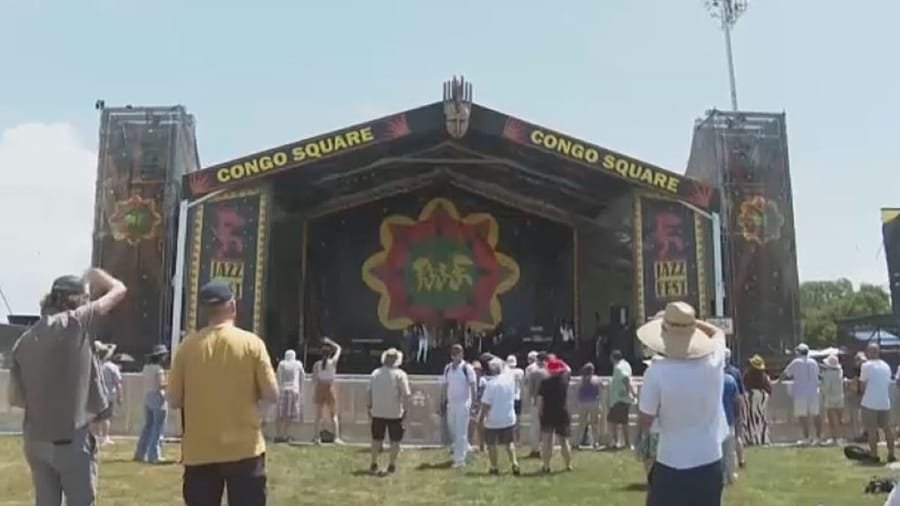
Protoje opened the Congo Square stage on Friday April 24 with a set that blended conscious lyrics and live instrumentation. His performance set the tone for a festival that honored reggae's evolution while drawing thousands to the Fair Grounds Race Course.
Jemere Morgan carried forward the Morgan Heritage legacy during the second weekend with songs that mixed family harmonies and modern production. His appearance reminded audiences of the generational transmission that keeps Jamaican music vital from one decade to the next.
Sean Paul brought high-energy dancehall to one of the main stages, while Stephen Marley delivered acoustic sets rooted in his father's catalog. These performances showed how the festival's 12 stages accommodated both club anthems and reflective roots reggae.
Lila Iké and Jesse Royal represented the new wave of reggae artists with fresh takes on love, resistance, and identity. Their sets alongside established names illustrated the genre's continued renewal five decades after its global breakthrough.
Ziggy Marley continued his father's legacy with performances that adapted to weather adjustments during the April 23 to May 3 dates. His presence reinforced the direct lineage from Bob Marley's influence that established reggae as a worldwide genre.
The overall lineup demonstrated reggae's evolution over five decades, from mento and ska foundations to contemporary expressions that still resonate in African cities where artists like Youssou N'Dour have incorporated similar rhythmic messages.
New Orleans and Jamaica: A Shared Diaspora Story
Congo Square historically served as the place where enslaved Africans preserved music traditions in New Orleans, much like Jamaica's Maroon communities maintained their cultural practices in the island's mountainous interior. Both sites became sanctuaries for African rhythms that survived the Middle Passage.
New Orleans jazz and Jamaican mento developed as distinct yet connected musical traditions from shared African roots. The syncopated banjo lines in mento parallel the rhythmic drive of early jazz ensembles that formed in the city's Congo Square gatherings.
The transatlantic slave trade spread African rhythms to both the US Gulf Coast and the Caribbean, creating parallel musical languages. Enslaved people carried drumming patterns and call-and-response structures that later surfaced in New Orleans brass bands and Jamaican sound systems.
The Jamaican focus at the 2026 festival reflects a broader recognition of African diaspora cultural unity. Organizers highlighted how these connections continue to shape music from Kingston to Dakar, where Senegalese listeners have long embraced reggae alongside local mbalax.
Baaba Maal's global tours have similarly traced these routes, showing how African-rooted sounds travel and return transformed. The pavilion's programming made these historical threads visible to every visitor at the Fair Grounds Race Course.
This shared story matters because it reminds African audiences that their heritage forms the foundation of genres now celebrated worldwide, from New Orleans jazz to Jamaican reggae.
Jamaican Music's African Roots and Global Journey
Reggae's rhythmic foundations lie in West African drumming traditions including Burru and Kumina, which enslaved Africans carried to Jamaica. These polyrhythms evolved into the one-drop beat that defines the genre and still echoes in performances at festivals like Jazz Fest.
Jamaican folk music maintains direct connections to the African continent through lyrics, instrumentation, and spiritual practices. Artists today continue to reference these sources, keeping the music grounded even as it reaches new audiences.
Protoje and Jemere Morgan stand in a lineage from Bob Marley through contemporary reggae, carrying forward messages of resistance and cultural pride. Their sets at the Congo Square stage on April 24 and the second weekend showed how this lineage adapts without losing its core.
The global African diaspora's role in spreading reggae worldwide cannot be overstated. From London sound systems to Dakar radio stations, the music has created networks of exchange that link communities across oceans.
Senegalese artists have collaborated with Jamaican musicians on multiple projects, demonstrating ongoing Black Atlantic cultural exchange. These partnerships mirror the spirit of the 2026 pavilion and point toward future joint performances at events like the Saint-Louis Jazz Festival.
Youssou N'Dour's own experiments with reggae-infused tracks illustrate how Senegalese musicians draw from and contribute to this shared heritage, strengthening ties between continental Africa and the Caribbean.
The Economic and Cultural Impact of Festival Tourism
Jazz Fest's economic significance draws approximately 400,000 visitors to New Orleans each year, generating revenue for hotels, restaurants, and local vendors. The 2026 Jamaican focus added new layers of tourism appeal through the Sandals Resorts partnership.
The Jamaica Tourist Board's strategic investment in the Cultural Exchange Pavilion positioned the island as a cultural destination beyond its beaches. This approach creates lasting economic bridges between African diaspora communities on both sides of the Atlantic.
Cultural tourism of this kind fosters sustainable economies by valuing heritage as a renewable resource. Visitors who experience jonkonnu performances or mento workshops often return to their home countries with deeper appreciation and spending power.
Parallels exist with African festivals such as the Saint-Louis Jazz Festival in Senegal, which showcases African and international jazz each year. FESPACO in Burkina Faso serves as Africa's largest film festival, while Sauti za Busara in Zanzibar celebrates East African music traditions.
These events demonstrate how festival tourism creates sustainable cultural economies across the continent. The New Orleans model offers lessons for African organizers seeking to highlight their own diaspora connections.
When the Jamaica Tourist Board sponsored the pavilion, it invested in long-term relationships that benefit both Jamaican artists and the New Orleans economy, a pattern African nations can replicate at their own gatherings.
What This Means for African Artists and Audiences
African musicians' growing presence at major international festivals opens doors for collaboration when diaspora cultures are showcased. The 2026 Jamaican focus at Jazz Fest signals that platforms exist for artists rooted in similar traditions to share stages and audiences.
The festival serves as a platform where African-rooted music is celebrated at its source in New Orleans, the birthplace of jazz rooted in African American spirituals. This recognition affirms the global value of rhythms that began on the continent.
What this signals to African audiences is the enduring reach of their heritage. When Protoje performs on the Congo Square stage, listeners in Dakar recognize the same spirit that animates their own music scenes.
Senegalese musicians can draw inspiration from this celebration by exploring direct collaborations with Jamaican artists. The pavilion's success shows that such exchanges resonate with diverse crowds and create new creative possibilities.
The ongoing dialogue between continental African artists and the diaspora grows stronger through events like this. Youssou N'Dour and Baaba Maal have long modeled these connections, and the 2026 Jazz Fest extends that conversation to new generations.
For African readers, the Jamaican honor at Jazz Fest affirms that their cultural contributions continue to shape world music, from the Fair Grounds Race Course to festivals across Senegal and beyond.
By Amara Diop, Staff Writer
This article was produced with AI-assisted research and editorial support. Reporting is based on sources cited in the article.
What's Your Reaction?
 Like
0
Like
0
 Dislike
0
Dislike
0
 Love
0
Love
0
 Funny
0
Funny
0
 Wow
0
Wow
0
 Sad
0
Sad
0
 Angry
0
Angry
0

West Africa/Sahel Correspondent at Global1.News. Dakar-based journalist covering politics, security, climate, and development across Francophone and Anglophone West Africa. Tells the stories of a region undergoing profound transformation.











Comments (0)