
Senegal AFCON Appeal: CAS Hearing Set for October 8, 2026
In a high-stakes showdown that could redefine African football governance, Senegal's battle to reclaim its AFCON crown reaches the Court of Arbitration for Sport, testing the continent's faith in fair play. Senegal's CAS Showdown: A Battle for AFCON Justice Dakar, Senegal — As the football world watches... The Court of Arbitration for Sport has set October 8, 2026, as the date for Senegal's long-awaited hearing in its bid to reclaim the Africa Cup of Nations title.
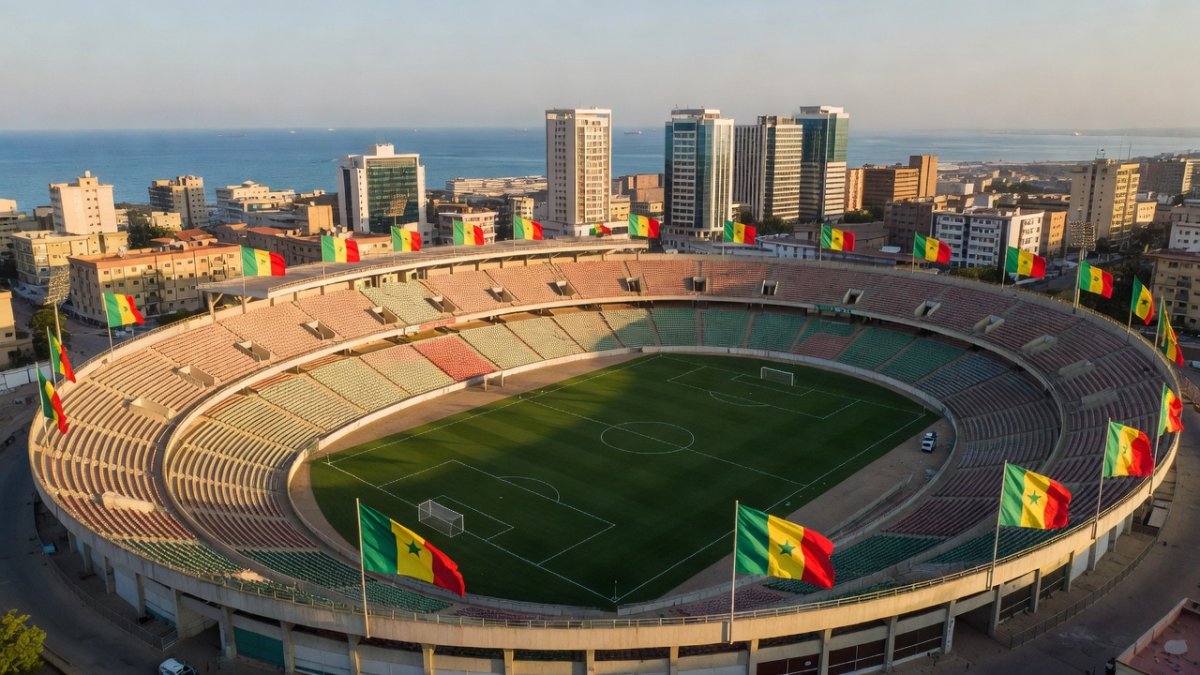
In a high-stakes showdown that could redefine African football governance, Senegal's battle to reclaim its AFCON crown reaches the Court of Arbitration for Sport, testing the continent's faith in fair play.
Senegal's CAS Showdown: A Battle for AFCON Justice
Dakar, Senegal — As the football world watches...
The Court of Arbitration for Sport has set October 8, 2026, as the date for Senegal's long-awaited hearing in its bid to reclaim the Africa Cup of Nations title. This development brings fresh hope to Senegalese fans still reeling from the controversial handover of the trophy to Morocco earlier this year.
The Breaking News from Lausanne
On July 24, 2026, the Court of Arbitration for Sport confirmed that Senegal's appeal against the Confederation of African Football's decision will be heard behind closed doors at its headquarters in Lausanne, Switzerland. The case, registered as CAS 2026/A/12295, stems from the Senegalese Football Federation's Notice of Appeal filed on March 25, 2026. Neither federation requested an expedited process, which explains the October date. As a Senegalese journalist who has followed this saga from the terraces of Dakar to the corridors of African football power, I see this as a moment that tests not just one match result but the very trust we place in continental governance.
Recalling the Extraordinary Final in Rabat
The story began in January 2025 during an unforgettable AFCON final in Rabat. Senegal defeated Morocco 1-0 after extra time, with goalkeeper Edouard Mendy saving a stoppage-time penalty that had sparked chaos. Players from both sides watched as Senegal's team briefly walked off the field for 15 minutes in protest. Sadio Mane, our captain, led with quiet dignity amid the tension. What should have been a celebration of African football instead turned into weeks of appeals and counter-claims that left fans across the continent divided.
The CAF Decision and Its Aftermath
On March 17, 2026, CAF appeal judges ruled that Senegal had defaulted by leaving the field, awarding the title to Morocco. This verdict stunned many who had witnessed the match's drama firsthand. The decision highlighted ongoing questions about how CAF handles high-stakes disputes, especially when host-nation advantages come into play. From my vantage point in Senegal, where football unites villages and cities alike, this ruling felt like another chapter in a familiar tale of uneven playing fields in African sports administration.
In the days after the March 17, 2026 ruling, many legal minds across Africa have quietly questioned the logic of declaring Senegal in default simply for walking off the pitch. The phrase "defaulted by leaving the field" has rarely been applied in cases where players cited safety concerns or protested what they saw as biased officiating. Senegalese lawyers and former referees argue that CAF's decision stretches precedent, turning a protest into an automatic forfeiture rather than allowing room for the kind of dialogue that once saved other tournaments from collapse.
Back home, the streets of Dakar and Thiès filled with quiet anger rather than outright violence. Young fans draped in Lions jerseys gathered outside the Ministry of Sports, holding candles and singing old anthems. President Faye's office released a measured statement supporting the federation's appeal, while ordinary families replayed the final on their phones, pausing at the moment the team left the field. The pain felt personal, as if the continent had once again asked Senegal to accept less than it had earned.
In Rabat and Casablanca the mood was celebratory but uneasy. Moroccan supporters celebrated the title, yet many admitted the victory felt incomplete without a full match. Across the Sahel and East Africa, commentators drew parallels to the 2019 final controversy and the 2008 referee scandal in Ghana, noting that CAF's pattern of quick rulings often leaves smaller federations with little recourse and deepens mistrust that lingers for years.
Senegal's Appeal Journey to CAS
The FSF moved quickly, filing its appeal just eight days later. The federation seeks to overturn the CAF ruling and restore Senegal as rightful champions. CAS has scheduled the hearing for October 8, 2026, with no immediate verdict expected, as judges often take several months to deliberate. This measured pace reflects the complexity of the case, yet it also tests the patience of supporters who yearn for closure. Edouard Mendy's heroic save and Sadio Mane's leadership remain central to the narrative Senegal will present in Lausanne.
Broader Challenges in African Football Governance
This dispute reaches beyond one trophy. Across Africa, federations grapple with inconsistent refereeing standards, delayed decisions, and the influence of host countries in major tournaments. CAF's handling of the 2025 final exposed gaps in transparency that affect smaller nations most. As someone rooted in Senegal's vibrant football culture, where young players dream of lifting the AFCON under the baobab trees, I worry that such controversies erode the joy and unity the sport brings to our communities. Stronger governance would honor the sacrifices of players like Mane and Mendy who carry our hopes on the global stage.
CAF's history is dotted with disputed finals and refereeing decisions that later proved difficult to defend. The 2017 final in Gabon and the chaotic 2021 tournament in Cameroon both featured last-minute venue changes and accusations of favoritism toward host nations. These episodes have left many federations wary that the same opaque processes could repeat whenever political or commercial interests enter the room.
Reform efforts launched after the 2021 election of Patrice Motsepe promised greater transparency and independent oversight, yet progress has been slow. Promised audits of referee selection and financial reporting have yet to be published in full, and several member associations complain that key decisions still rest with a small circle in Cairo. The stalled reforms have made the Senegal case feel like another test the confederation may fail.
Compared with UEFA's structured appeals or CONMEBOL's clearer arbitration timelines, CAF's internal mechanisms appear under-resourced and overly political. This latest dispute has already prompted quiet conversations among West African federations about whether future AFCON hosting bids should include binding arbitration clauses from the outset, so that no single nation carries the full weight of an unclear ruling.
Personal Reflections from a Senegalese Perspective
Growing up in Dakar, I remember how AFCON victories sparked street celebrations that lasted for days. The 2025 final's aftermath left a bitter taste, not because of the loss itself but because of how the process unfolded. Senegal's appeal represents more than legal maneuvering; it embodies our collective desire for fairness in institutions that shape our sporting identity. Morocco's own achievements, including their World Cup quarterfinal run, deserve respect, yet the path to resolution must feel just to all involved.
Looking Ahead to October and Beyond
As the hearing approaches, attention turns to the potential impact on future AFCON editions and CAF's credibility. A favorable CAS ruling could restore Senegal's title and set precedents for handling on-field protests. Whatever the outcome, this case underscores the need for clearer rules and faster dispute resolution across African football. Fans in Senegal and beyond will watch closely, hoping the verdict strengthens the beautiful game's foundation on our continent.
At the Court of Arbitration for Sport, the hearing will unfold in a measured, almost clinical setting. Senegal's legal team will present video evidence, player testimonies, and expert affidavits while Morocco's representatives defend the original CAF decision. The arbitrators, drawn from an international panel, will focus on whether the "default" clause was applied correctly and whether due process was followed before the title was awarded.
If Senegal prevails, the most likely outcome is a replay of the final or a shared title with adjusted rankings; either result would restore pride and open the door to revised hosting agreements. Should the appeal fail, the Lions would accept the loss but carry forward a sharpened determination for 2027, while relations with Morocco might cool for a season or two before football's shared love of the game slowly rebuilds bridges.
CAS decisions often take three to six months, meaning a ruling could arrive well after the next qualifying window. Both federations have already begun preparing statements that emphasize respect for the process, yet the delay itself will test the patience of fans who simply want to see their heroes compete on equal terms again.
The Human Stories Behind the Headlines
Sadio Mane's steady captaincy and Edouard Mendy's crucial interventions remind us why we love this game. Their journeys from humble beginnings to international glory inspire countless African children. The CAS hearing offers a chance to affirm that their efforts in that Rabat final receive proper recognition. In the end, football's power lies in its ability to connect us, and fair governance ensures those connections endure.
Sadio Mané's path from the red-earth village of Bambali to the world's grandest stages still feels like a story every Senegalese child knows by heart. The barefoot boy who once chased dreams between mango trees now carries an entire nation's hopes on his shoulders. His quiet leadership during the appeal process has reminded older fans of the dignity that once defined Senegalese football, long before big contracts and global fame arrived.
Édouard Mendy's journey is no less remarkable. From the lower leagues of France to lifting the Champions League trophy, he has become living proof that talent from modest beginnings can reach the highest peaks. In the current storm, his calm interviews have offered young keepers across the country a model of grace under pressure that no trophy can replace.
For the thousands of boys and girls who train on dusty pitches from Ziguinchor to Saint-Louis, this controversy carries a deeper message. AFCON is not merely a tournament; it is the moment when families gather around radios and television screens, when villages pause to celebrate shared identity. Whatever the final verdict, the next generation will inherit both the disappointment and the determination to keep Senegal's place at African football's table secure.
By Amara Diop, Staff Writer
This article was produced with AI-assisted research and editorial support. Reporting is based on sources cited in the article.
What's Your Reaction?
 Like
0
Like
0
 Dislike
0
Dislike
0
 Love
0
Love
0
 Funny
0
Funny
0
 Wow
0
Wow
0
 Sad
0
Sad
0
 Angry
0
Angry
0

West Africa/Sahel Correspondent at Global1.News. Dakar-based journalist covering politics, security, climate, and development across Francophone and Anglophone West Africa. Tells the stories of a region undergoing profound transformation.












Comments (0)