
Joshua Overcomes Two Knockdowns To Knock Out Prenga In Round Two
In a stunning display of heavyweight resilience, Anthony Joshua turned the Jeddah Superdome into a stage for one of the most dramatic comebacks in recent memory, rising from two early knockdowns to halt Kristian Prenga in the second round and keep his title hopes alive.
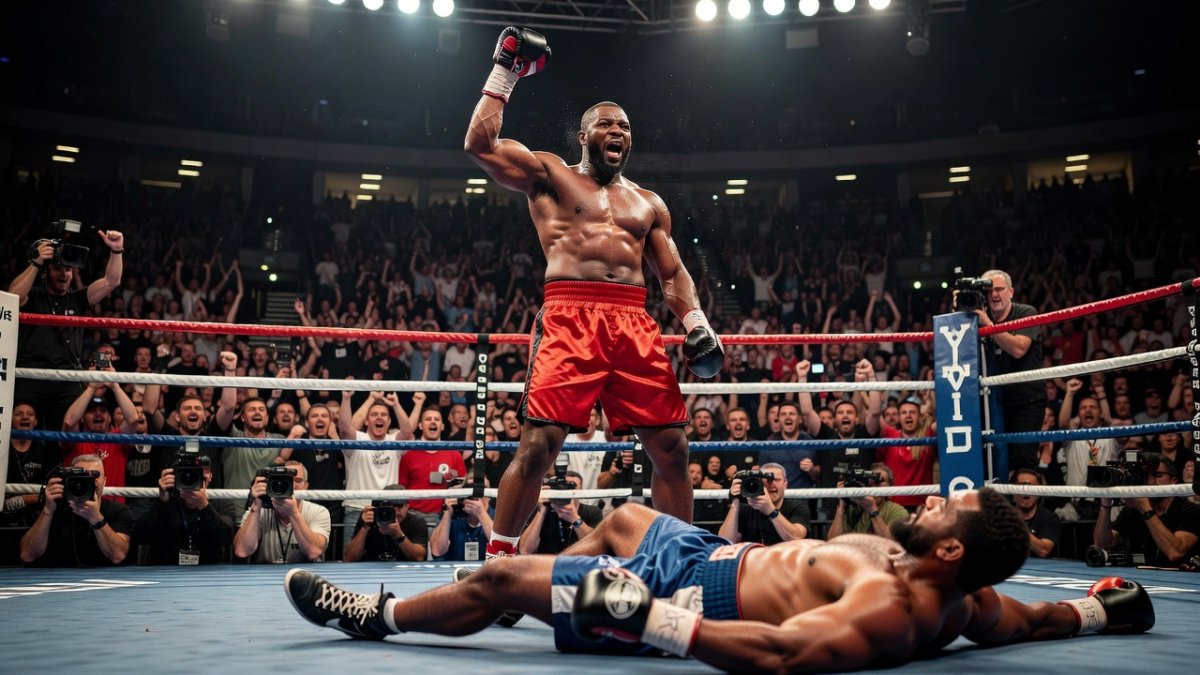
Joshua Overcomes Early Fire to Halt Prenga in Round Two
Jeddah, Saudi Arabia —
Joshua Survives Two Early Knockdowns to Stop Prenga in Round Two
Anthony Joshua entered the ring at the Jeddah Superdome on Saturday with a record of 30-4 and 27 knockouts. Kristian Prenga arrived with a 20-1 mark and 20 knockouts in every win. Prenga dropped Joshua with an uppercut inside the first 30 seconds of round one and scored a second knockdown later in the same round. The sharp inside uppercut caught Joshua flush as he kept a high guard, sending him to the canvas amid a sudden roar from the Jeddah crowd that mixed shock with anticipation. Tension gripped the arena as Prenga pressed forward with continued pressure, forcing Joshua down again before the round ended, leaving the British heavyweight to rise both times and reach the bell while the Superdome buzzed with uncertainty over whether the early damage would prove decisive.
Joshua rose both times and reached the bell. In round two he landed a sustained flurry before finishing with a right hook that sent Prenga through the ropes. The referee stopped the contest at 2:43. The victory improved Joshua to 31-4 with 28 knockouts.
The Jeddah Superdome crowd witnessed a heavyweight contest that lasted only six minutes and 43 seconds of action. Joshua’s ability to absorb two heavy shots and return with volume punching decided the outcome against an opponent who had never gone past the first round in any previous victory.
Personal Stakes After the Nigeria Car Crash
This marked Joshua’s first fight since the December 2025 car crash in Nigeria that claimed the lives of Sina Ghami and Latif “Latz” Ayodele. Joshua addressed the crowd after the stoppage, stating the performance reflected more than punch power and represented spirit from Latz and Sina.
The British heavyweight added that Prenga had given him a strong test yet champions rise when tested. Those words echoed the same resilience South African boxing fans have seen from fighters such as Dingaan Thobela and Vuyani Bungu, who both rebuilt careers after significant setbacks.
Joshua’s survival of the first-round pressure and subsequent finish provided a concrete example of mental recovery under extreme physical duress. The two early knockdowns tested his recovery capacity in a manner rarely seen in his previous 34 professional bouts.
Fury Secures His Own Win and Sets Up the Contracted Clash
Tyson Fury stopped 46-year-old Mariusz Wach in the seventh round in Pattaya, Thailand on Friday. Eddie Hearn confirmed that a contract for a Joshua versus Fury bout later this year has already been signed. The result in Jeddah therefore serves as the immediate platform for that matchup.
Usyk observed the entire contest from ringside. His presence highlighted the current heavyweight title picture and the direct line between Saturday’s outcome and future mandatory obligations. Fury’s seventh-round stoppage of Wach completed a weekend of heavyweight activity that now points squarely toward the signed Joshua fight.
The confirmed contract removes speculation about the next step for both fighters. South African viewers who follow the division through SuperSport and SABC broadcasts will now track the final preparations for a contest that carries heavyweight unification implications.
Resilience Lessons for South African Boxing Fans
Joshua’s recovery from two first-round knockdowns mirrors the pattern of comeback victories that define South African boxing history. Local fans recall Sivenathi Nontshinga’s repeated rises after early adversity and the same spirit that carried the Springboks through multiple Rugby World Cup deficits. The same resilience South African boxing fans have seen from fighters such as Dingaan Thobela and Vuyani Bungu, who both rebuilt careers after significant setbacks, now finds fresh expression in Joshua’s ability to stabilise and finish under duress. Current stars continue to embody this trait, showing that early setbacks need not define a career when composure returns quickly.
The SA Boxing Commission and promoters who stage events at FNB Stadium can point to this Jeddah performance as evidence that heavyweight boxing rewards fighters who maintain composure after early damage. Such demonstrations strengthen arguments for South Africa to host future high-profile heavyweight bouts on home soil. The World Cup 2026 hosted in North America showed SA can be a future host, and the narrative of absorbing pressure before delivering a decisive response aligns with the commission’s push to attract major cards. SuperSport and SABC coverage already connects local audiences to these global moments, reinforcing the case for domestic venues to stage similar spectacles.
Tactical Details and the Road Ahead
Prenga’s inside uppercut in the opening 30 seconds exploited Joshua’s high guard. The second knockdown came from continued pressure that forced Joshua to the canvas again before he could stabilise. Joshua’s round-two adjustments included increased jab volume and a shift to the right hook that ended the contest. Prenga’s game plan relied on early power and forward pressure that had ended every prior victory inside one round, yet Joshua’s adjustments in footwork and distance control allowed him to create space and increase output once the initial storm passed.
The 2:43 stoppage time in round two stands as the fastest finish of Joshua’s career against an opponent with Prenga’s knockout credentials. That statistic will factor into pre-fight analysis for the upcoming Fury bout, where both men have demonstrated the capacity to end contests inside the distance. The right hook that sent Prenga through the ropes highlighted Joshua’s improved timing after the early exchanges. Questions about Joshua’s chin will remain heading into a potential Fury fight, but the performance showed he can recover and counter when given time to adjust. Fury’s style, built on similar size and ring craft, will test whether those round-two corrections hold against sustained pressure.
What This Means for South African Boxing
SA heavyweight prospects stand to benefit from a resurgent division that now points toward unification implications after the signed Joshua-Fury contract. The dramatic Jeddah result keeps heavyweight attention high and creates pathways for local talents to gain exposure through increased global interest. SuperSport and SABC broadcasting rights implications grow as dramatic heavyweight results drive national conversation, with coverage of the Jeddah card reaching households within hours and highlighting the sport’s appeal on the African continent.
Potential SA venues such as FNB Stadium and Moses Mabhida could host future heavyweight bouts if the SA Boxing Commission leverages this narrative of resilience. The economics of SA as a boxing destination versus Saudi Arabia remain challenging, yet the passion shown by local fans and the infrastructure arguments made by administrators gain strength from performances that reward composure after early damage. Such outcomes provide concrete examples that heavyweight boxing can thrive when fighters demonstrate the mental recovery seen in Joshua’s finish.
What to Watch For
The confirmed contract removes speculation about the next step for both fighters, creating a clear timeline for the division that South African fans will track through SuperSport and SABC broadcasts. The result in Jeddah therefore serves as the immediate platform for the Joshua versus Fury bout later this year. What both fighters need to do in camp includes refining adjustments under pressure, with Joshua focusing on early stabilisation and Fury preparing for volume responses after his own seventh-round stoppage of Mariusz Wach.
Next steps for the heavyweight division centre on the winner of the signed Joshua-Fury fight entering discussions about mandatory defences and potential unification opportunities, as Usyk’s ringside presence already highlighted. What SA fans should watch for in the coming weeks includes final preparations for the contest and any updates on how the division’s current landscape shapes future opportunities on the African continent. The performance provided a concrete example of mental recovery that will echo in pre-fight analysis ahead of the contracted clash.
By Dante Williams, Staff Writer
This article was produced with AI-assisted research and editorial support. Reporting is based on sources cited in the article.
What's Your Reaction?
 Like
0
Like
0
 Dislike
0
Dislike
0
 Love
0
Love
0
 Funny
0
Funny
0
 Wow
0
Wow
0
 Sad
0
Sad
0
 Angry
0
Angry
0

Breaking News and Investigations Correspondent at Global1.News. Based in London, covering global breaking news, security, and investigative stories. Known for digging deeper and connecting the dots across continents.













Comments (0)