
Netanyahu Defies ICC Warrants, Vows to Attend UN General Assembly Despite Arrest Threats
Israeli Prime Minister Benjamin Netanyahu has announced plans to attend the September 2026 UN General Assembly in New York even as ICC arrest warrants and calls from local officials threaten to turn the diplomatic visit into a flashpoint over alleged war crimes in Gaza. The move underscores deepening tensions between international legal mechanisms and political defiance, with Palestinian communities bearing the ongoing costs of blockade and military operations.
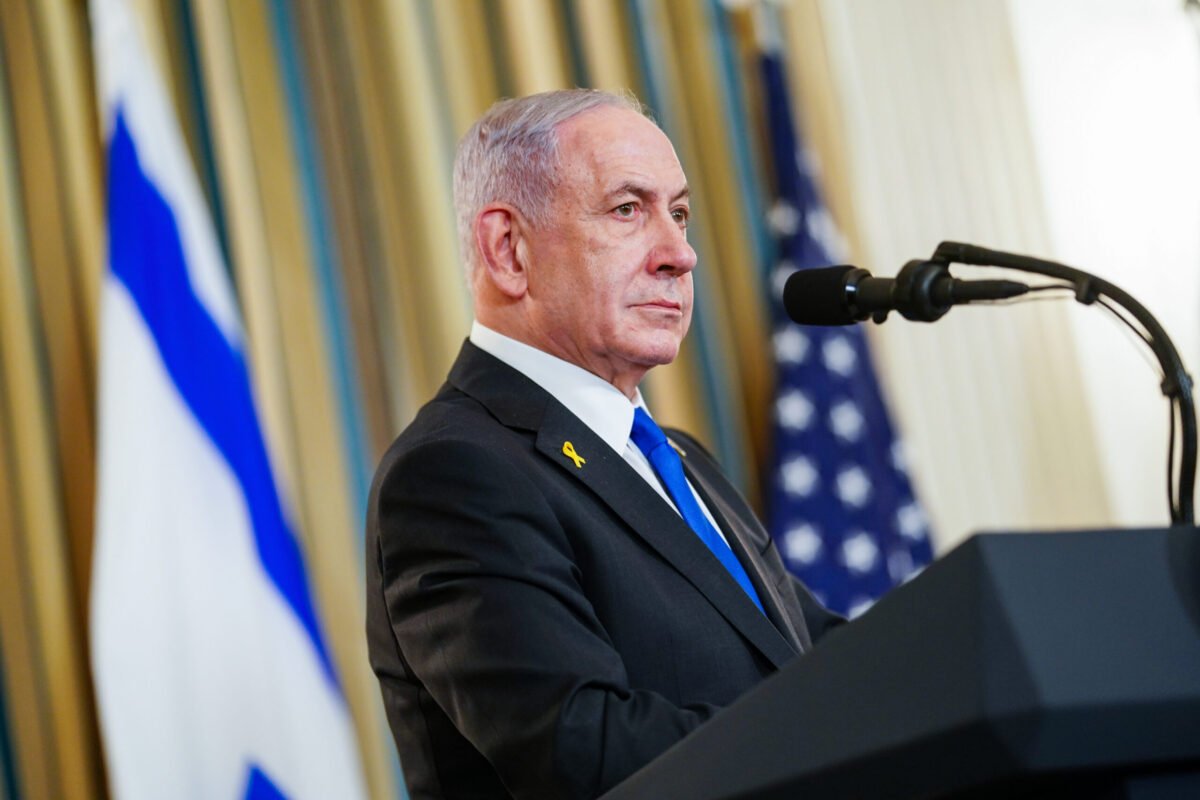
Israeli Prime Minister Benjamin Netanyahu has announced plans to attend the September 2026 UN General Assembly in New York even as ICC arrest warrants and calls from local officials threaten to turn the diplomatic visit into a flashpoint over alleged war crimes in Gaza. The move underscores deepening tensions between international legal mechanisms and political defiance, with Palestinian communities bearing the ongoing costs of blockade and military operations. This development highlights enforcement gaps in global accountability efforts.
Netanyahu Defies ICC Warrants, Vows to Attend UN General Assembly Despite Arrest Threats
Gaza, Occupied Palestine — Article continues...
Netanyahu Vows to Attend UN General Assembly Despite Arrest Calls
Israeli Prime Minister Benjamin Netanyahu announced on July 26, 2026, that he intends to travel to New York for the United Nations General Assembly scheduled for September 2026. He dismissed threats of arrest issued by New York City Mayor Zohran Mamdani, who had labeled Netanyahu a war criminal and urged enforcement of International Criminal Court warrants. The statement comes amid ongoing legal proceedings tied to Israel's military operations in Gaza that began in late 2023.
ICC Warrants and Allegations of War Crimes
The International Criminal Court issued arrest warrants in November 2024 for Netanyahu and former Defense Minister Yoav Gallant. The court cited reasonable grounds for charges including war crimes and crimes against humanity, specifically the use of starvation as a method of warfare and deliberate attacks on civilian infrastructure such as hospitals, water systems, and schools. These actions have contributed to widespread displacement and loss of life among Palestinian civilians in Gaza, where over 2 million people remain under blockade conditions that restrict access to food, medicine, and basic services.
Palestinian families in Gaza have described the cumulative effects of these policies. Residents in areas like Jabalia and Khan Younis report repeated displacement, destruction of homes, and shortages that have led to malnutrition cases documented by medical teams on the ground. The ICC findings connect these outcomes directly to decisions made at the highest levels of the Israeli government.
The ICC's arrest warrants for Prime Minister Benjamin Netanyahu and Defense Minister Yoav Gallant rest on specific provisions of the Rome Statute, particularly Article 8(2)(b)(xxv), which criminalizes the intentional use of starvation as a method of warfare by depriving civilians of objects indispensable to their survival. Prosecutors cited evidence of prolonged restrictions on food, water, fuel, and medical supplies entering Gaza, alongside systematic targeting of civilian infrastructure such as hospitals, water treatment plants, and agricultural land, actions documented through satellite imagery, UN field reports, and testimony from humanitarian organizations operating on the ground.
These policies have disproportionately devastated communities in northern Gaza, including Jabalia and Beit Hanoun, where entire neighborhoods have been rendered uninhabitable through repeated airstrikes and ground incursions that destroyed homes, schools, and bakeries. The legal threshold met by the prosecutor involved demonstrating reasonable grounds to believe that the accused bore individual criminal responsibility for these acts, drawing on patterns of command responsibility and public statements indicating intent to impose collective punishment on the Palestinian population.
Historical precedents from earlier conflicts in the region, including the 2014 and 2021 Gaza wars, provided contextual evidence of recurring tactics that the ICC viewed as escalating into a deliberate strategy during the current hostilities, underscoring how such measures violate long-standing prohibitions under international humanitarian law against targeting civilian objects.
New York Mayor's Position on Enforcement
On July 21, 2026, Mayor Zohran Mamdani publicly called Netanyahu a war criminal and pressed the United States to honor the ICC arrest warrant. Mamdani later clarified that New York City lacks authority to execute the warrant, noting that federal jurisdiction governs such matters. His remarks highlighted tensions between local political statements and national legal frameworks, while drawing attention to the broader question of accountability for actions in Gaza.
Human rights organizations monitoring the conflict have welcomed the mayor's statements as a signal that municipal leaders in host countries are willing to acknowledge ICC processes. For Palestinians living under occupation or in exile, such public recognition underscores the gap between international legal standards and their daily realities of restricted movement and limited access to justice mechanisms.
Netanyahu's Defense and Counter-Accusations
Netanyahu rejected the ICC charges as bogus during his July 26, 2026, remarks. He referenced sexual misconduct allegations against the court's former chief prosecutor, who was removed from the position on July 24, 2026. Netanyahu also accused Mayor Mamdani of fomenting hate against Israel, framing the arrest calls as politically motivated rather than grounded in evidence.
Israeli officials have consistently maintained that military operations target Hamas infrastructure. Palestinian analysts and civil society groups counter that the scale of destruction in civilian areas, including the targeting of essential services, exceeds any legitimate security objective and aligns with the ICC's documented concerns over collective punishment.
Netanyahu's response has centered on portraying the ICC as an illegitimate and politically motivated institution, a tactic that sidesteps direct engagement with the evidentiary record while appealing to domestic audiences wary of external interference. This approach aligns with his need to maintain a fragile coalition that includes far-right parties opposed to any concessions on Palestinian statehood, even as polls indicate growing war fatigue among the broader Israeli public and calls for accountability from families of hostages still held in Gaza.
Palestinian human rights organizations, including those documenting violations in the West Bank and Gaza, interpret these attacks on the court's credibility as part of a broader pattern of rejecting international oversight, noting that similar rhetoric has historically accompanied efforts to evade scrutiny over settlement expansion and military operations. Such strategies risk further isolating Israel diplomatically while reinforcing perceptions among Palestinians that legal avenues for redress remain selectively applied.
Legal and Diplomatic Implications for September 2026
The United States is not a party to the Rome Statute that established the ICC, which limits direct enforcement of warrants on American soil. However, the presence of a sitting Israeli prime minister at the UN General Assembly in New York raises questions about diplomatic protocol and the obligations of host nations under international agreements. Legal experts note that federal authorities would ultimately decide on any enforcement action, while the UN venue itself operates under separate immunities for attending delegates.
Palestinian representatives at the UN have argued that failure to uphold ICC warrants weakens the credibility of international institutions. They point to the prolonged siege of Gaza and repeated cycles of military escalation as evidence that accountability mechanisms must apply equally regardless of the nationality of those accused. Community leaders in the West Bank and Gaza have expressed frustration that diplomatic attendance at global forums often proceeds without addressing the human costs borne by civilians.
When Palestinian representatives at the United Nations witness leaders facing ICC warrants participating in proceedings without immediate repercussions, it highlights the enforcement gaps in international institutions, deepening cynicism about the universality of justice and the practical barriers to holding powerful actors accountable for policies that perpetuate cycles of dispossession and trauma.
Impact on Palestinian Communities
The prospect of Netanyahu's attendance occurs against a backdrop of continued restrictions in Gaza and the West Bank. Aid organizations report persistent challenges in delivering food and medical supplies due to permit requirements and border controls. Families who lost relatives during the 2023-2026 period describe ongoing trauma compounded by the absence of legal recourse at the international level.
Advocates for Palestinian rights emphasize that the ICC warrants represent one of the few formal attempts to document and address alleged violations. They argue that political defenses mounted by Israeli leaders and their allies risk overshadowing the documented suffering of civilians who have endured repeated displacements, loss of livelihoods, and barriers to reconstruction.
The lived experience in Palestinian communities reveals the stark disconnect between legal pronouncements and daily survival, with over 1.9 million people displaced in Gaza amid a blockade that has crippled access to education and healthcare for generations of children. Schools converted into shelters have been repeatedly struck, leaving hundreds of thousands without formal learning, while hospitals operating under siege conditions report acute shortages of medicines and fuel, resulting in preventable deaths among infants and the chronically ill.
Broader Context of Accountability Efforts
Calls for enforcement of the ICC warrants extend beyond New York. European governments and civil society networks have discussed travel restrictions and legal reviews for individuals named in the warrants. These discussions intersect with longstanding debates over the selective application of international law in conflicts involving powerful states.
For Palestinians, the outcome of these diplomatic maneuvers carries direct consequences. Continued military operations and blockade policies affect access to education, healthcare, and economic opportunities across generations. Documentation from groups such as the Palestinian Center for Human Rights records patterns of home demolitions, arbitrary detentions, and movement restrictions that predate and persist beyond the current escalation.
Comparisons with other ICC situations, such as warrants issued against leaders in Sudan or Uganda, reveal inconsistencies in enforcement that often hinge on geopolitical alignments rather than uniform application of the law, a dynamic amplified by the United States' status as a non-signatory to the Rome Statute. This non-participation has allowed Washington to criticize the court while shielding allies, prompting European discussions on potential travel bans or asset freezes that remain largely symbolic in the absence of coordinated action.
For the future of international criminal law, these developments underscore the challenges in delivering meaningful access to justice for Palestinians, whose cases have languished amid repeated vetoes and selective engagement, potentially eroding the court's legitimacy unless mechanisms for consistent enforcement are strengthened across all conflict zones.
By Fatima Al-Rashid, Staff Writer
This article was produced with AI-assisted research and editorial support. Reporting is based on sources cited in the article.
What's Your Reaction?
 Like
0
Like
0
 Dislike
0
Dislike
0
 Love
0
Love
0
 Funny
0
Funny
0
 Wow
0
Wow
0
 Sad
0
Sad
0
 Angry
0
Angry
0
Gulf/MENA Correspondent at Global1.News. Based in Doha, covering Gulf politics, energy markets, diplomacy, and development across the Middle East and North Africa. Tracks the economic transformation of the Gulf states.












Comments (0)