
Pradhan Resigns Over NEET Leaks as CJP Protests Grow
The resignation of India’s education minister after weeks of youth-led protests over exam leaks has sent shockwaves far beyond Delhi, directly unsettling thousands of
\\n\\n
India Education Minister Resigns After Cockroach Protests Force Historic Exit
\\n\\nNew Delhi, India – 25 July 2026 — \\n\\n
Pradhan Steps Down on 25 July 2026
\\nEducation Minister Dharmendra Pradhan resigned on 25 July 2026, ending a 36-day occupation of Jantar Mantar by the Cockroach Janta Party and its supporters. The departure is the first time in 12 years of Narendra Modi’s government that street pressure alone has removed a cabinet minister. Hundreds of thousands of students and parents had filled Delhi’s streets; police responded with teargas and batons on multiple days. The immediate trigger was the NEET-UG paper leak scandal that has already claimed dozens of student lives through suicide.
\\n\\n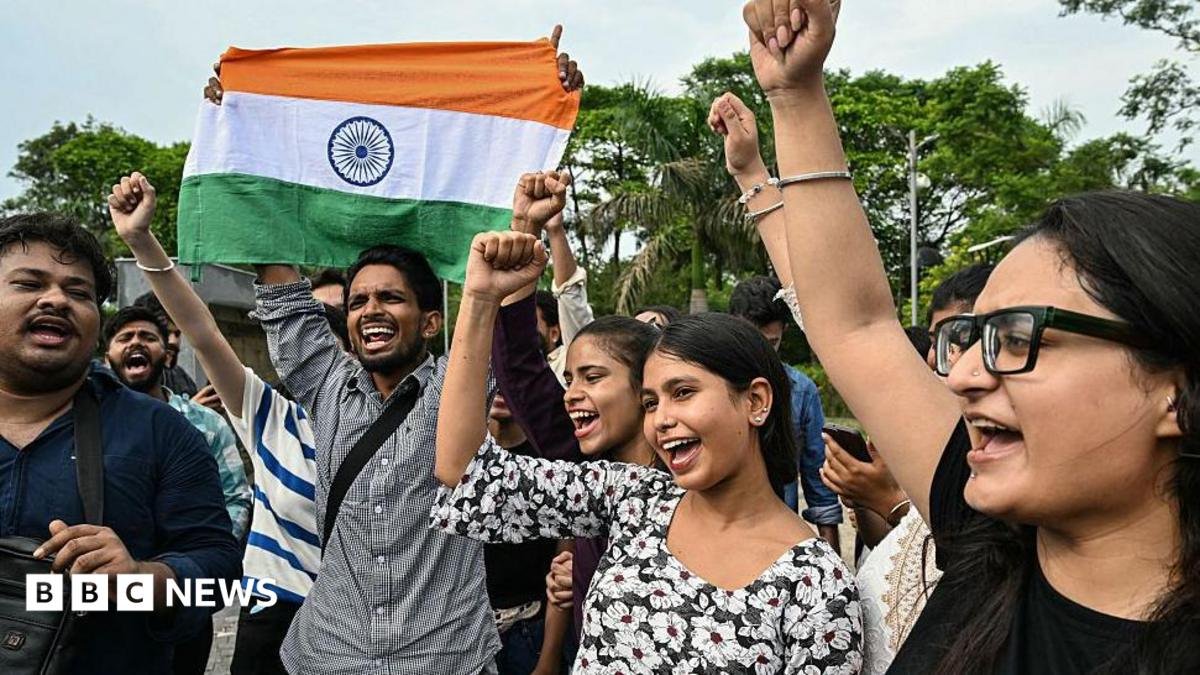 \\n\\n
The NEET-UG Leaks and Their Human Cost
\\nLeaked NEET-UG papers allowed organised cheating on a national scale. Dozens of students, many from modest backgrounds, took their own lives after discovering their results had been invalidated or their seats reassigned. The scandal exposed systemic failures in exam security that affected every state. British Indian families with children sitting the exam for Indian medical colleges found themselves caught in the same uncertainty, with several UK sixth-formers forced to defer university places both in India and at home.
\\nThe NEET-UG examination leaks of recent years have exposed deep vulnerabilities in India's centralised medical entrance system, with the 2024 scandal involving the unauthorised circulation of question papers through encrypted messaging groups and proxy solvers operating from coaching hubs in Rajasthan and Bihar. Regional impact was most acute in states such as Uttar Pradesh and Maharashtra, where thousands of aspirants from rural backgrounds found their scores invalidated, leading to widespread protests and mental health crises among families who had invested life savings in preparation. Official estimates suggest over 4,000 candidates were directly affected, a figure that dwarfs the 2018 leaks which impacted fewer than 500 students and were largely contained through swift arrests in Delhi. Historical parallels reveal a pattern of recurring breaches since the exam's inception in 2013, underscoring systemic failures in paper security that successive governments have failed to address.
Affected students hailed from diverse states, including Tamil Nadu where Dalit and OBC candidates faced disproportionate setbacks due to limited access to alternative pathways, and Kerala where high-achieving coastal communities saw dreams of upward mobility shattered. Profiles often included first-generation learners from modest agricultural families who had balanced farm work with rigorous study schedules, only to confront the emotional and financial toll of deferred careers. In analysis, these leaks not only perpetuate inequality but also erode trust in meritocratic ideals that India has long championed.
\\nBritish Indian students sitting the NEET faced parallel disruptions, with many deferring places at UK medical schools such as those affiliated with the University of Oxford or Imperial College London. Connections to the United Kingdom highlight how the scandal reverberated through diaspora networks, prompting questions in Parliament about the reliability of Indian qualifications for overseas applicants and straining bilateral educational exchanges.
\\n\\nSonam Wangchuk’s 26-Day Hunger Strike
\\nActivist Sonam Wangchuk began a hunger strike that lasted 26 days, drawing national attention to the suicides and the government’s refusal to cancel the compromised exam. His protest ran in parallel with the CJP’s occupation of Jantar Mantar. Medical teams monitored his condition daily while students maintained round-the-clock vigils. The strike ended only after Pradhan’s resignation was confirmed, yet Wangchuk warned that structural reform, not one resignation, was required.
\\n\\nThe Cockroach Janta Party Reclaims a Slur
\\nFounded by Abhijeet Dipke, the Cockroach Janta Party began as a satirical youth movement after a judge used “cockroach” as a slur against protesting students. The group reclaimed the word, turning it into a symbol of resilience. On the evening of 25 July, Dipke told supporters at Jantar Mantar: “We have done it. Do not make me a hero.” The remark was met with chants that this was a Gen Z awakening rather than the work of any single leader. The movement’s decentralised structure, built on social media and campus networks, proved difficult for authorities to contain.
\\nThe movement began as a pointed satire on Twitter/X, where young activists repurposed the derogatory term "cockroach" to mock political elites who had dismissed protesting students as vermin unworthy of attention. This digital spark quickly evolved into a broader campaign against educational corruption, drawing in users from across India who shared memes and personal stories of systemic betrayal. The judge whose courtroom remark ignited the backlash, a sitting magistrate in Patna, had casually labelled demonstrators as cockroaches during a hearing on exam irregularities, prompting immediate outrage and calls for judicial accountability that amplified the movement's visibility.
\\nSocial media strategy relied on hashtag campaigns and viral threads that bypassed traditional media gatekeepers, while campus networks in universities from Delhi to Hyderabad provided offline organising hubs with a decentralised structure that resisted easy suppression by authorities. This approach allowed rapid adaptation to censorship attempts, fostering resilience through encrypted channels and regional chapters. Comparisons with global youth movements reveal striking similarities to France's 2023 pension protests, Kenya's Gen Z-led anti-tax demonstrations, and Bangladesh's student uprisings against quota systems, each demonstrating how digital-native activism can challenge entrenched power.
\\nDipke, a key figure whose real name is often withheld for safety, emerged from a modest engineering background in Maharashtra and consistently refuses hero status, insisting the campaign belongs to collective student voices rather than individuals. His analysis emphasises historical roots in India's long tradition of youth-led reform, from the freedom struggle onward, while warning against personality cults that could dilute the movement's focus on structural change.
\\n\\n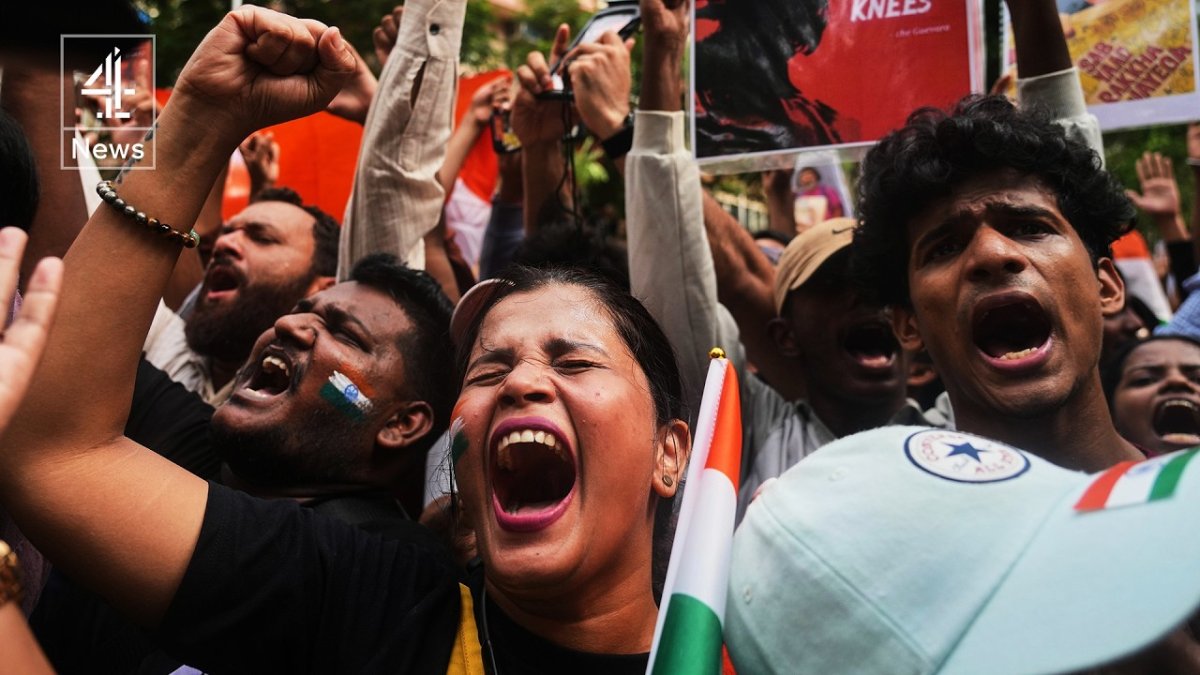 \\n\\n
36 Days at Jantar Mantar and Police Response
\\nThe protest site at Jantar Mantar remained occupied for 36 consecutive days. Numbers swelled from a few hundred to hundreds of thousands on peak days. Police deployed teargas and batons repeatedly, yet the crowd returned each morning. The sustained presence, combined with Wangchuk’s hunger strike, created a pressure that the government had not faced in more than a decade. For the first time since 2014, public mobilisation alone forced a ministerial exit.
\\n\\nUK-India Educational Ties Under Strain
\\nThe scandal reaches directly into British homes. Thousands of British Indian students sit NEET each year, either for Indian medical seats or as part of dual-application strategies with UK universities. The leaks have disrupted admissions cycles and raised questions about the reliability of Indian examination boards. UK universities that accept NEET scores for medicine programmes now face additional verification work. Educational ties between the two countries, already under review after recent changes to student visas, face further scrutiny. Families in Leicester, Birmingham and Harrow report children whose results remain frozen, affecting both mental health and long-term career plans.
\\nStatistics indicate that approximately 12,000 British Indian students attempt the NEET annually, many balancing dual curricula in an effort to keep options open between Indian medical colleges and overseas institutions. The leaks have directly impacted UK university admissions, with several Russell Group universities reporting delays in processing applications from affected candidates and heightened scrutiny of examination integrity. Labour MPs in the UK Parliament have raised pointed questions regarding safeguards for these students, highlighting concerns over fairness and the potential for exploitation by unscrupulous coaching agencies operating across borders.
\\nComparisons with other examination systems such as A-levels and the International Baccalaureate underscore the unique pressures of India's high-stakes, single-exam model, which lacks the modular flexibility that allows UK students to mitigate isolated failures. Post-study visa implications further complicate choices, as Indian students weighing UK versus domestic pathways now factor in not only educational quality but also the stability of qualification recognition amid scandals. Analysis suggests these strains could prompt a recalibration of UK-India educational partnerships, with historical ties dating back to colonial-era medical training exchanges now tested by contemporary governance lapses.
\\n\\nChannel 4 News Footage and Diaspora Reaction
\\nChannel 4 News carried live footage from Jantar Mantar on the night of the resignation. In the UK, community organisations in London and Manchester held solidarity vigils. Parents described the emotional toll of watching their children’s futures hinge on a compromised exam. The episode has prompted calls in Parliament for tighter oversight of overseas qualifications and renewed discussion of post-study work routes for Indian students who choose British universities instead.
\\n\\nWhat the Resignation Means for Indian Education
\\nPradhan’s departure does not automatically restore trust in the NEET system. Protesters are demanding an independent inquiry, cancellation of the leaked papers and a new, transparent examination. The CJP has vowed to maintain pressure until these steps are taken. Whether the government will concede further ground remains unclear, but the precedent of a minister removed by sustained youth protest is now established. For British Indian communities watching from afar, the events underline how closely linked the two countries’ education systems remain, and how quickly failures in one can ripple into the daily lives of families here.
\\n\\nBy Erica Thornton, Staff Writer\nThis article was produced with AI-assisted research and editorial support. Reporting is based on sources cited in the article.
What's Your Reaction?
 Like
0
Like
0
 Dislike
0
Dislike
0
 Love
0
Love
0
 Funny
0
Funny
0
 Wow
0
Wow
0
 Sad
0
Sad
0
 Angry
0
Angry
0

US Politics and Policy Correspondent at Global1.News. Based in Washington DC, covering American politics, policy, elections, and the courts. Knows how the system works and tells you what it actually means.












Comments (0)