
Gulf of Paria Widens as Trinidad Pours Oil on Troubled Venezuelan Waters
PORT OF SPAIN, Trinidad — A diplomatic storm is brewing in the Gulf of Paria after Venezuela formally demanded information and compensation from Trinidad and Tobago over an oil spill that Caracas says originated in Trinidadian waters on May 1. The dispute threatens to reopen old wounds between the two South American neighbours, with Venezuela claiming serious environmental damage across more than 1,600 square kilometres of sensitive wetland ecosystems, while Port of Spain ins
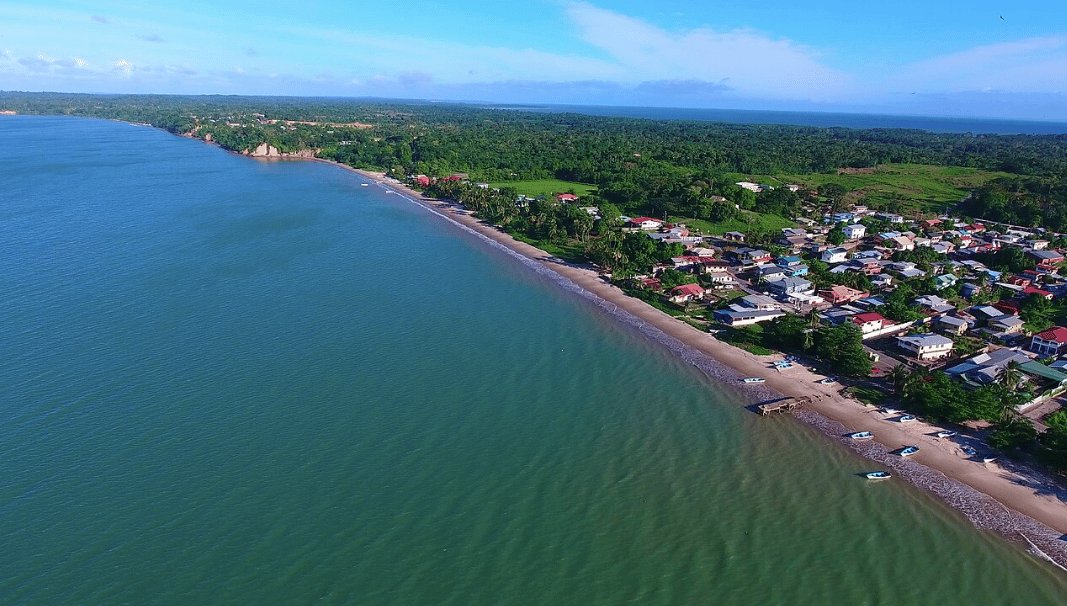
PORT OF SPAIN, Trinidad — A diplomatic storm is brewing in the Gulf of Paria after Venezuela formally demanded information and compensation from Trinidad and Tobago over an oil spill that Caracas says originated in Trinidadian waters on May 1. The dispute threatens to reopen old wounds between the two South American neighbours, with Venezuela claiming serious environmental damage across more than 1,600 square kilometres of sensitive wetland ecosystems, while Port of Spain insists the incident was a minor, quickly contained spill of just 10 barrels. At stake is not only the health of one of the Caribbean's most ecologically significant marine environments but also the fragile diplomatic relationship between two nations bound by geography, history, and energy.
What Happened on May 1
The oil spill in question occurred on May 1, 2026, in the Gulf of Paria — a shared body of water that has historically been both a vital resource and a point of contention between Trinidad and Tobago and Venezuela. According to Trinidad's Ministry of Energy and Energy Industries, the spill involved approximately 10 barrels of hydrocarbons and was contained rapidly, with cleanup operations reportedly completed without significant cross-border movement of the slick.
"The spill was minor, localised, and dealt with in short order," a spokesperson for the Ministry told reporters. The Trinidad government has maintained that the environmental impact was negligible and that all appropriate response protocols were followed.
However, Venezuela's account paints a considerably different picture. Foreign Minister Yvan Gil, addressing the media on Monday, characterised the spill as a serious environmental incident with far-reaching consequences for Venezuelan territory and communities.
Venezuela's Case: 1,625 Square Kilometres at Risk
Foreign Minister Gil warned that the spill risks causing damage to approximately 1,625 square kilometres across twelve strategic wetland systems in Venezuela. These ecosystems, which include mangrove forests, coastal lagoons, and river deltas along Venezuela's eastern coast, are ecologically sensitive and economically vital for the communities that depend on them.
Gil further stated that more than 500 fishermen along Venezuela's coastline could see their livelihoods directly affected by the contamination. For many coastal communities in the Venezuelan states of Sucre and Delta Amacuro — regions that face the Gulf of Paria — fishing is not merely an occupation but a way of life, passed down through generations.
The Venezuelan government has demanded a full accounting of the spill's composition, volume, and trajectory, along with compensation for what it describes as environmental damage to its sovereign territory and maritime space.
The Gulf of Paria: A Shared History, A Divided Present
The Gulf of Paria has long been a complex theatre of cooperation and conflict between Trinidad and Venezuela. The body of water separates the two nations by only about 11 kilometres at its narrowest point, and the two countries share not only maritime boundaries but also geological formations rich in hydrocarbons.
Trinidad and Tobago's energy sector — anchored by companies such as Petrotrin (now restructured) and Atlantic LNG — has historically depended on cross-border cooperation with Venezuela, including shared natural gas fields in the Plataforma Deltana region. Yet the same proximity that enables energy partnerships also creates the conditions for environmental disputes, as this latest oil spill demonstrates.
Fishing rights in the gulf have been a recurring flashpoint. Trinidadian and Venezuelan fishermen have operated in these waters for centuries, but the delineation of maritime boundaries and exclusive economic zones has been a source of diplomatic friction. The oil spill injects an environmental dimension into these existing tensions, raising the stakes for both governments.
Oil Spill Trajectory: What the Modelling Showed
One of the more concerning findings from the incident involves the trajectory modelling conducted by Trinidadian authorities. According to the Ministry of Energy, oil spill trajectory modelling indicated that the hydrocarbons could have crossed the Trinidad-Venezuela maritime border in the Gulf of Paria if the spill had been left untreated.
This admission is significant. While Trinidad maintains that the spill was contained before any such cross-border movement occurred, the modelling data suggests that the potential for transboundary environmental harm was real. For Venezuelan authorities, this possibility — even if unrealised — forms the basis of their demand for greater transparency and compensation.
The discrepancy between the two countries' accounts — Trinidad's 10-barrel narrative versus Venezuela's warning of ecological catastrophe across twelve wetland systems — reflects deeper structural issues in how the two nations monitor and respond to environmental incidents in contested or shared maritime spaces.
What This Means for Trinidad and the Wider Caribbean
For Trinidad and Tobago, this dispute arrives at a delicate moment for the country's energy sector and its regional diplomatic standing. The nation has been positioning itself as a responsible energy producer in the Caribbean, investing in natural gas infrastructure and seeking to attract international partners for deep-water exploration. An unresolved environmental dispute with Venezuela could complicate these efforts, particularly with international lenders and environmental watchdogs paying close attention.
Beyond the bilateral dimension, the case has implications for the wider Caribbean. Small island and coastal developing states — from Guyana to Jamaica, from Barbados to Belize — face similar risks of transboundary environmental harm from energy extraction, shipping, and industrial activity. How Trinidad and Venezuela resolve this dispute could set a precedent for regional environmental governance and the application of the polluter-pays principle within CARICOM's sphere of influence.
The timing also coincides with heightened attention to environmental accountability across the region. The Inter-American Commission on Human Rights (IACHR) has recently pressed several Caribbean nations — including Trinidad — over prolonged states of emergency and their impact on human rights. Environmental justice is increasingly being framed as a human rights issue, and this oil spill adds another dimension to that conversation.
For Trinidad's reputation as a responsible energy operator, the stakes could hardly be higher. The country has spent the better part of a decade rebuilding confidence in its energy sector following the restructuring of Petrotrin, and has been courting international oil companies for new exploration licences in deep-water blocks. An unresolved environmental dispute on its western maritime border — especially one involving a neighbour with powerful diplomatic allies in the region — is the last thing Port of Spain needs as it tries to attract new investment dollars.
The Way Forward: Diplomacy or Litigation?
Both nations have indicated a willingness to resolve the matter through diplomatic channels, but the gap between their positions is wide. Venezuela is seeking formal compensation — though the quantum remains unspecified — while Trinidad maintains that no compensable damage occurred under its watch.
A joint scientific assessment of the spill's impact could provide an objective basis for negotiations, but such exercises are easier proposed than executed when trust between the parties is limited. For the fishing communities on both sides of the gulf, the clock is ticking. Whether the spill was 10 barrels or something larger, the perception of environmental risk — and its impact on market confidence in Trinidadian seafood, tourism, and energy — may outlast the oil itself.
As the Gulf of Paria's waters continue to carry the weight of history, geography, and geology, the people of both nations are watching to see whether this latest spill spreads — not just across the water, but across the fragile diplomatic ties that bind Trinidad and Venezuela together.
By Sharon Sahatoo, Staff Writer
This article was produced with AI-assisted research and editorial support. Reporting is based on sources cited in the article.
What's Your Reaction?
 Like
0
Like
0
 Dislike
0
Dislike
0
 Love
0
Love
0
 Funny
0
Funny
0
 Wow
0
Wow
0
 Sad
0
Sad
0
 Angry
0
Angry
0

Caribbean Correspondent at Global1.News. Based in Port of Spain, Trinidad, covering Caribbean politics, economy, energy, climate, and culture. Amplifying the voices and stories of the Caribbean region.












Comments (0)