
Malaysia Data Center Boom Tests Water and Power Limits
Malaysia’s data center sector has surged ahead of Singapore to claim the title of Southeast Asia’s fastest-growing hub, with hyperscalers pouring billions into Johor. This rapid build-out now collides with tight water supplies and an electricity grid still dominated by coal and gas, prompting protests, regulatory scrutiny and new sustainability pledges from operators.
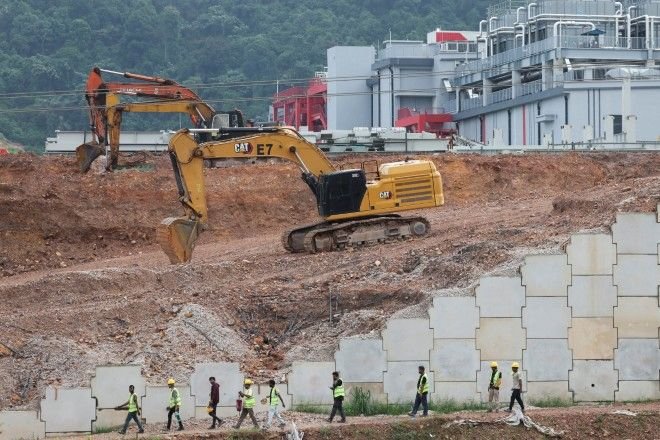
Malaysia’s data center sector has surged ahead of Singapore to claim the title of Southeast Asia’s fastest-growing hub, with hyperscalers pouring billions into Johor. This rapid build-out now collides with tight water supplies and an electricity grid still dominated by coal and gas, prompting protests, regulatory scrutiny and new sustainability pledges from operators. The outcome will shape whether the region can sustain its AI-driven ambitions without repeating the resource crises seen in Ireland and Singapore.
Hong Kong/Johor Bahru, Malaysia — Article continues...
The Data Center Boom in Johor
Malaysia has leapfrogged Singapore to become Southeast Asia's fastest-growing data center hub. Global hyperscalers including Google, Microsoft, Amazon and Oracle are investing heavily in Johor, drawn by lower land costs and affordable power compared with Singapore. Capacity is projected to grow from approximately 500MW in 2025 to 2.1GW by 2030.
Resource Anxiety — Water and Electricity Concerns
Protests over the ZDATA data center complex in Johor's Iskandar Puteri mark the first of their kind in Malaysia. In Selangor, the richest state, debate about community burden has become politicized. Chris Howard, JLL executive director, noted: "Data centres have high abstract support because we're all using more and more data. But this contrasts very sharply with acceptance in local communities due to perception of increased environmental impact."
Malaysia's water security challenges have intensified in Johor, where rationing measures have been in place since 2024 amid prolonged dry spells and rising demand from industrial users. Data centers, which rely heavily on evaporative cooling systems, can consume 3-5 million gallons of water per day for a single large facility, placing additional strain on already limited local reservoirs. This consumption pattern raises questions about long-term sustainability in a region that serves as the primary hub for new hyperscale developments, particularly as operators compete for the same finite resources used by agriculture and residential communities.
Malaysia's energy mix currently stands at 40% coal, 20% gas and 20% renewables, with a national target of 70% renewables by 2050 under the National Energy Transition Roadmap. Data centers already account for roughly 1-2% of global electricity use, a share projected to climb to 3-4% by 2030 according to industry forecasts. In Johor this trajectory could accelerate pressure on the grid, where coal and gas still dominate baseload supply, potentially locking in higher emissions unless renewable integration accelerates faster than current timelines allow.
Local opposition has already surfaced around specific projects. In February 2026, residents in Iskandar Puteri protested against ZDATA's proposed facility, citing fears of increased water drawdown and wastewater discharge. Coverage in the New Straits Times and other Malaysian outlets highlighted community concerns over opaque environmental impact assessments, illustrating how resource anxiety is moving from technical reports into public debate and potentially affecting project timelines.
Government and Regulatory Response
Governments are tightening standards to retain public support. Emerging Asia now faces the same resource questions that Ireland, the Netherlands and Singapore confronted several years earlier. Officials are examining how new facilities will draw power and water while maintaining economic momentum.
Corporate Sustainability Measures (NTT, ZDATA, Bridge)
In Johor, China's ZDATA operates on treated wastewater and is finalizing a renewable energy deal with Tenaga Nasional. Bain Capital-backed Bridge Data Centers sources more than 50 percent of its power supply from solar. Japan's NTT uses a closed-circuit cooling system to limit water use. Equinix Malaysia managing director Cheam Tat Inn observed: "Two years ago, it was just about building capacity. The conversation today is more like, How will you use power? Are you looking at renewables?"
NTT operates more than 300 data center facilities across over 20 countries and has set a target of carbon neutrality by 2030. The company employs closed-circuit cooling systems that reduce water usage by up to 80% compared with traditional evaporative methods, a measure it is rolling out across its Southeast Asian portfolio. These technical choices reflect broader Japanese government policy that designated data centers as critical infrastructure in 2024, prompting trading houses to treat digital facilities as strategic assets rather than pure real-estate plays.
Mitsubishi Corp announced a $500 million investment in Southeast Asian data centers in 2025, part of a wider pivot by Japanese sogo shosha away from fossil-fuel trading toward digital infrastructure. ZDATA's wastewater approach relies on treatment and discharge into local systems, while Bridge Data Centres has emphasized a higher solar mix in its Johor projects. NTT's closed-loop design sits between these models, offering lower water intensity but requiring higher upfront capital. The differing strategies highlight how operators balance regulatory expectations with cost and community acceptance.
Japanese trading houses are repositioning their energy divisions to supply renewable certificates and grid services to data center clients, aligning with Japan's GX policy framework. This shift allows them to leverage existing relationships in Malaysia while meeting client demands for verifiable green power, though the pace of renewable deployment in Johor will determine whether these commitments translate into measurable local emission reductions.
Japan's Role and Connection
NTT's closed-circuit cooling system in Johor represents a Japanese engineering response to resource constraints. Japanese trading companies such as Mitsubishi and Mitsui, along with other tech firms, are expanding Southeast Asian data center investments as Japan's domestic cloud market matures. Malaysia's experience echoes Japan's own data center resource challenges, where similar questions about power availability and water consumption have surfaced in recent years.
Comparison to Other Markets (Singapore, Ireland)
Malaysia is traversing the same path Ireland and the Netherlands followed before tightening data center approvals. Singapore has already imposed stricter limits on new builds. The pattern shows that rapid capacity additions eventually trigger local scrutiny over electricity grids and water supplies, prompting operators to adopt more efficient designs.
Singapore imposed a moratorium on new data centers from 2019 to 2022 because of power constraints, later allocating roughly 500 MW of capacity through a greening initiative that mandates strict efficiency standards. Ireland presents a sharper cautionary tale: data centers consumed 21% of national electricity in 2024, prompting EirGrid to halt new grid connections near Dublin between 2022 and 2025. The Netherlands introduced its own moratorium on hyperscale facilities in certain provinces in 2023, showing how European regulators have moved from open-door policies to explicit caps once electricity demand crosses critical thresholds.
Malaysia's Johor corridor currently has approximately 500 MW operational, 800 MW under construction and 2.1 GW planned by 2030. While this scale remains smaller than Singapore's or Ireland's peaks, the growth rate mirrors the early stages of those markets before constraints emerged. Johor's relatively abundant land and lower power costs have attracted developers, yet the absence of hard caps on new connections leaves open the possibility that Malaysia could face similar grid and water bottlenecks within the next five years if approval processes remain unchanged.
Regulators in Singapore and Ireland ultimately introduced efficiency audits and connection queues after demand outstripped planning assumptions. Malaysia's current trajectory suggests it may still have a window to adopt comparable guardrails before capacity reaches levels that trigger mandatory pauses, particularly given the 2.1 GW pipeline already on the drawing board.
What This Means for Southeast Asia's AI Ambitions
The shift toward renewables and water-efficient cooling directly affects the region's ability to host large-scale AI workloads. Hyperscalers require reliable, low-carbon power to meet corporate sustainability targets. Without continued progress on these fronts, Malaysia and neighboring countries risk delays in capturing AI-related investment.
What to Watch For
Attention will focus on the outcome of ZDATA's renewable energy agreement with Tenaga Nasional and whether additional states adopt Selangor's politicized debate model. Further announcements from NTT and other Japanese investors on closed-loop systems will indicate how widely these solutions spread. Regulatory updates from Malaysian authorities will also signal whether public support can be maintained as capacity targets approach 2.1GW.
Malaysia's National Energy Transition Roadmap sets a 70% renewable target by 2050, yet near-term grid upgrades will determine whether data center growth aligns with that goal. Tenaga Nasional has earmarked RM 2 billion for capacity improvements in Johor, focusing on transmission lines and substations that could support additional load. The effectiveness of these investments will hinge on whether new renewable generation comes online at the same pace as data center connections.
Policy watchers are monitoring the possible introduction of carbon pricing or data center-specific efficiency regulations, modeled partly on Singapore's post-moratorium framework. Japan's GX policy and cross-border renewable energy certificates could provide a template for Malaysian operators seeking to import verified green attributes, though local additionality requirements remain unclear. JLL forecasts $110 billion in APAC data center investment by 2028, underscoring the capital flows that will test Malaysia's regulatory agility.
The central question is whether Malaysia will adopt Singapore-style strict approval processes that tie new capacity to measurable efficiency and renewable commitments, or maintain its current open-door stance. Early signals from the Energy Commission and state authorities in Johor will indicate which path is likely, with implications for both investor confidence and long-term resource security.
Tags: Malaysia data center, Johor, NTT, ZDATA, Bridge Data Centers, Tenaga Nasional, Equinix, hyperscalers, Southeast Asia, resource concerns
By Kenji Tanaka, Staff Writer
This article was produced with AI-assisted research and editorial support. Reporting is based on sources cited in the article.
What's Your Reaction?
 Like
0
Like
0
 Dislike
0
Dislike
0
 Love
0
Love
0
 Funny
0
Funny
0
 Wow
0
Wow
0
 Sad
0
Sad
0
 Angry
0
Angry
0

Japan Correspondent at Global1.News. Tokyo-based voice covering Japanese politics, technology, economy, and culture. Tracks the intersection of tradition and innovation in one of the world's most dynamic societies.














Comments (0)