
Israel Aerospace Industries Names Guy Barlev as New CEO
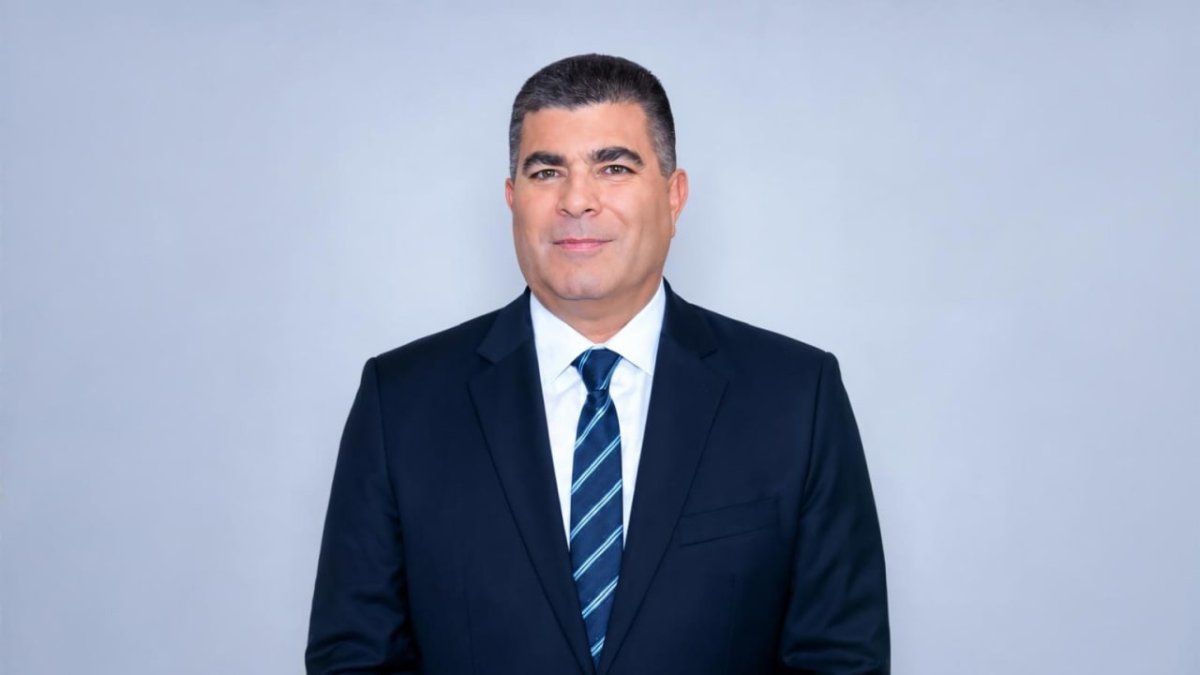
Israel Aerospace Industries Names Guy Barlev as New CEO Israel Aerospace Industries has selected former IDF Brigadier-General Guy Barlev to lead the company as its next chief executive, marking a key leadership shift at one of the nation's largest state-owned defense firms. The appointment follows the elevation of outgoing CEO Boaz Levy to chairman and comes as IAI advances major international contracts and prepares for a potential public listing.
Israel Aerospace Industries Names Guy Barlev as New CEO
Israel Aerospace Industries has selected former IDF Brigadier-General Guy Barlev to lead the company as its next chief executive, marking a key leadership shift at one of the nation's largest state-owned defense firms. The appointment follows the elevation of outgoing CEO Boaz Levy to chairman and comes as IAI advances major international contracts and prepares for a potential public listing. This internal promotion underscores the defense sector's reliance on executives with deep operational and technical experience.
Tel Aviv, Israel — Article continues...
Board Announcement Details
Israel Aerospace Industries announced this week that its board has selected Brig.-Gen. (Ret.) Guy Barlev to serve as the company's next chief executive officer. The decision came after a board meeting held on July 21, 2026, where directors reviewed internal candidates and approved Barlev's appointment. The move follows the earlier elevation of outgoing CEO Boaz Levy to the role of IAI chairman in May 2026. Government approval from the Defense Ministry remains pending before the appointment can take full effect.
Barlev's Professional Background
Guy Barlev completed his military service in 2015 after rising to the rank of brigadier-general and serving as deputy commander of the Judea and Samaria Division. He joined IAI around 2016 and advanced quickly within the organization. Since 2020 he has held the position of executive vice-president while leading the Systems Missiles & Space Group division for six years. His tenure in that division gave him direct oversight of major programs spanning missiles, space systems, and integrated defense solutions.
Leadership Transition Process
The transition at IAI reflects a deliberate internal succession strategy. Boaz Levy's move to chairman created a vacancy that the board filled by promoting a long-serving executive already familiar with the company's operations. Barlev's experience across both military and corporate roles positions him to maintain continuity in ongoing projects. The Defense Ministry must still review the appointment, a standard step for leadership changes at Israel's state-owned defense firms.
IAI's Current Market Position
Israel Aerospace Industries stands as one of Israel's largest state-owned aerospace and defense manufacturers, with activities spanning air, land, naval, space, cyber, and homeland security domains. The company maintains a broad portfolio that supports both domestic requirements and international customers. Its scale and integration within the national defense ecosystem give it a central role in Israel's technology export economy and in sustaining high-value employment across multiple regions.
Israel Aerospace Industries operates as one of the country's largest defense exporters and plays a central role in sustaining Israel's technology-driven economy. With approximately 15,000 employees and facilities extending beyond its primary sites in Israel, the company supports high-value manufacturing and engineering positions across multiple regions. Its diversified activities in air, land, naval, space, cyber, and homeland security domains position it as a key contributor to the national balance of trade, channeling advanced systems to both domestic forces and international clients while reinforcing Israel's reputation for integrated defense solutions.
The company's portfolio includes well-established platforms such as the Barak air defense system, the Arrow interceptor, the Harop loitering munition, ELTA radar systems, Ofek satellites, and involvement in the Beresheet lunar program. These offerings demonstrate the breadth of IAI's technological reach from missile defense and unmanned systems to space-based capabilities. Recent international activity, including the €3 billion Greek air defense agreement, forms part of a steady revenue stream that complements domestic contracts and underscores the firm's ability to deliver complex, multi-domain solutions at scale.
Key Defense Contracts and International Deals
IAI continues to advance major international programs, including a €3 billion air defense agreement with Greece that involves collaboration with Rafael Advanced Defense Systems. This contract highlights the company's ability to deliver integrated air defense capabilities to NATO-aligned nations. Additional work includes ongoing support for existing platforms and new system integrations that strengthen long-term partnerships in Europe and beyond.
The €3 billion agreement with Greece, developed in collaboration with Rafael Advanced Defense Systems, centers on integrated air defense capabilities that align with NATO standards and enhance Greece's strategic posture in the eastern Mediterranean. This deal illustrates how Israeli systems can support alliance interoperability while providing long-term sustainment and technology transfer elements. Beyond Europe, IAI maintains established relationships with customers in India, Azerbaijan, Germany, and the Czech Republic, particularly through ELTA radar systems that address surveillance and air defense requirements in varied operational environments.
These contracts occur against the backdrop of Israel's defense export sector, which generates more than $12 billion annually and reaches dozens of countries. IAI's contributions to this total reflect its position within a national ecosystem that converts operational experience into exportable technologies. The combination of large-scale European programs and targeted radar deliveries to additional markets helps stabilize revenue while expanding the company's footprint in both NATO-aligned and other defense procurement landscapes.
New Products and Technology Developments
Among recent offerings, IAI has introduced the HYPNOSIS counter-drone GNSS jamming system and the Ellyon airborne jamming platform. The company also reports more than 20,000 flight hours on its 777-300ERSF freighter conversion program. These developments illustrate IAI's focus on electronic warfare, unmanned systems protection, and commercial aviation modifications that extend the service life of existing aircraft fleets.
IPO Preparation and Expansion Strategy
IAI is preparing for a planned initial public offering while pursuing global expansion opportunities. The IPO process requires careful coordination with government stakeholders and regulatory bodies. Executives have emphasized that the listing would provide additional capital for research, international acquisitions, and scaling production capacity without altering the company's core state ownership structure.
The planned initial public offering would allow IAI to access capital markets for research and development investment in next-generation defense technologies, reducing reliance on government budget allocations alone. Executives have indicated that the listing would support international acquisitions and production scaling while preserving the company's core state ownership structure. This approach mirrors strategies seen in other defense firms seeking greater financial flexibility without full privatization.
With a reported target timeline of 2027-2028, the IPO process requires coordination with government stakeholders and regulatory bodies to ensure alignment with national security considerations. The move is intended to strengthen IAI's capacity to compete in rapidly evolving technology areas such as electronic warfare and space systems. By broadening its funding base, the company aims to sustain long-term growth while maintaining its central role in Israel's defense industrial base.
Significance Within Israel's Defense Tech Ecosystem
The appointment of a former IDF officer with extensive operational experience underscores the close ties between Israel's military and its defense industry. IAI forms a key node in the national innovation network that converts battlefield lessons into exportable technologies. This ecosystem supports thousands of high-skilled jobs and contributes significantly to Israel's balance of trade through defense exports that reach dozens of countries.
Future Outlook for the Company
With Barlev's nomination now awaiting final government clearance, IAI enters a period focused on executing existing contracts, advancing the IPO timeline, and strengthening its position in emerging technology areas. The company's diversified portfolio across multiple domains provides resilience against shifting defense budgets. Observers expect continued emphasis on international partnerships that leverage Israel's reputation for rapid technological adaptation in contested environments.
Strategic Implications for Israel's Defense Industry
Barlev's elevation reflects broader patterns in Israel's defense sector where operational military experience directly informs corporate strategy at major contractors. His oversight of missile and space programs positions IAI to accelerate integration of emerging capabilities such as directed energy systems and resilient satellite constellations amid rising regional threats. This continuity supports sustained export competitiveness as global demand for layered air defense and electronic warfare solutions grows.
The pending IPO introduces new variables for governance and capital allocation while preserving state control, potentially enabling faster responses to acquisition opportunities in Europe and Asia. Combined with ongoing programs like the Greek air defense deal, these moves could reinforce IAI's role in technology transfer arrangements that strengthen bilateral ties with NATO members. Such developments also highlight the sector's contribution to skilled employment and innovation spillovers into civilian industries.
Looking ahead, success will depend on navigating regulatory approvals, maintaining technological edges in contested domains, and balancing domestic requirements with international growth. Barlev's background offers advantages in aligning product roadmaps with evolving IDF priorities, yet the company must also address supply chain vulnerabilities and competition from larger global players. Overall, the transition signals steady evolution rather than disruption within Israel's tightly integrated defense industrial base.
By Hannah Berg, Staff WriterThis article was produced with AI-assisted research and editorial support. Reporting is based on sources cited in the article.
What's Your Reaction?
 Like
0
Like
0
 Dislike
0
Dislike
0
 Love
0
Love
0
 Funny
0
Funny
0
 Wow
0
Wow
0
 Sad
0
Sad
0
 Angry
0
Angry
0

Israel Correspondent at Global1.News. Based in Tel Aviv, covering Israeli politics, security, technology, and society. Provides balanced, deeply-sourced reporting on one of the most closely-watched regions in the world.















Comments (0)