
Centre Tables Public Examinations Amendment Bill 2026 in Lok Sabha After NEET-UG Leaks
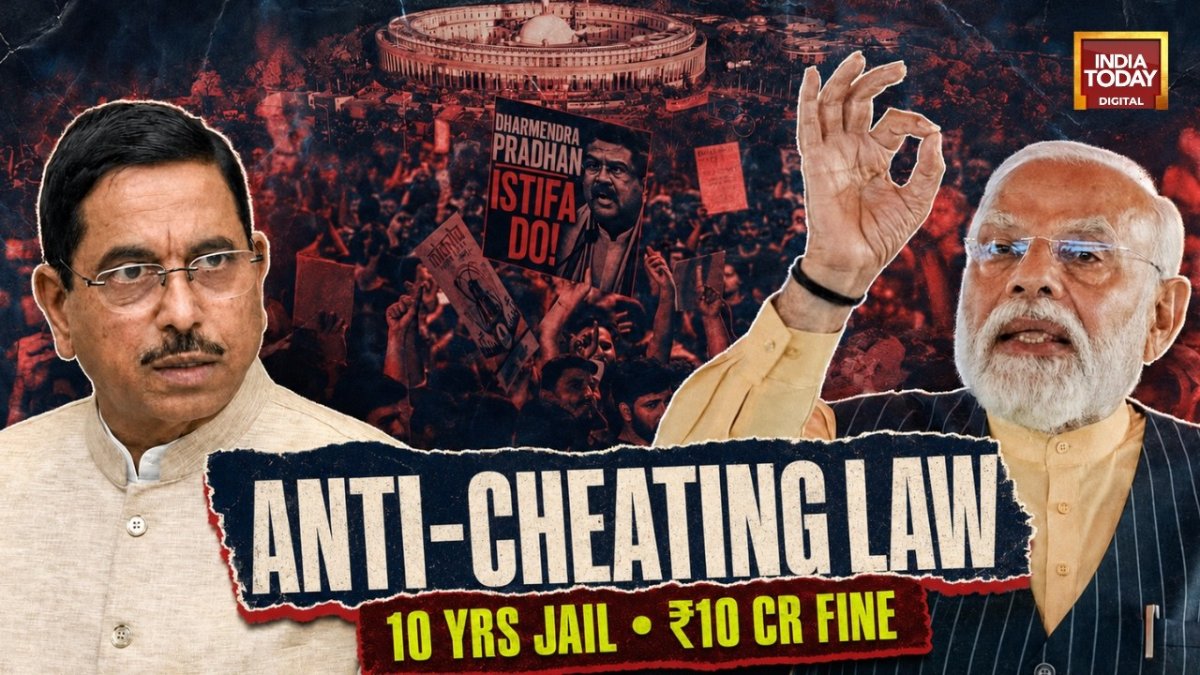
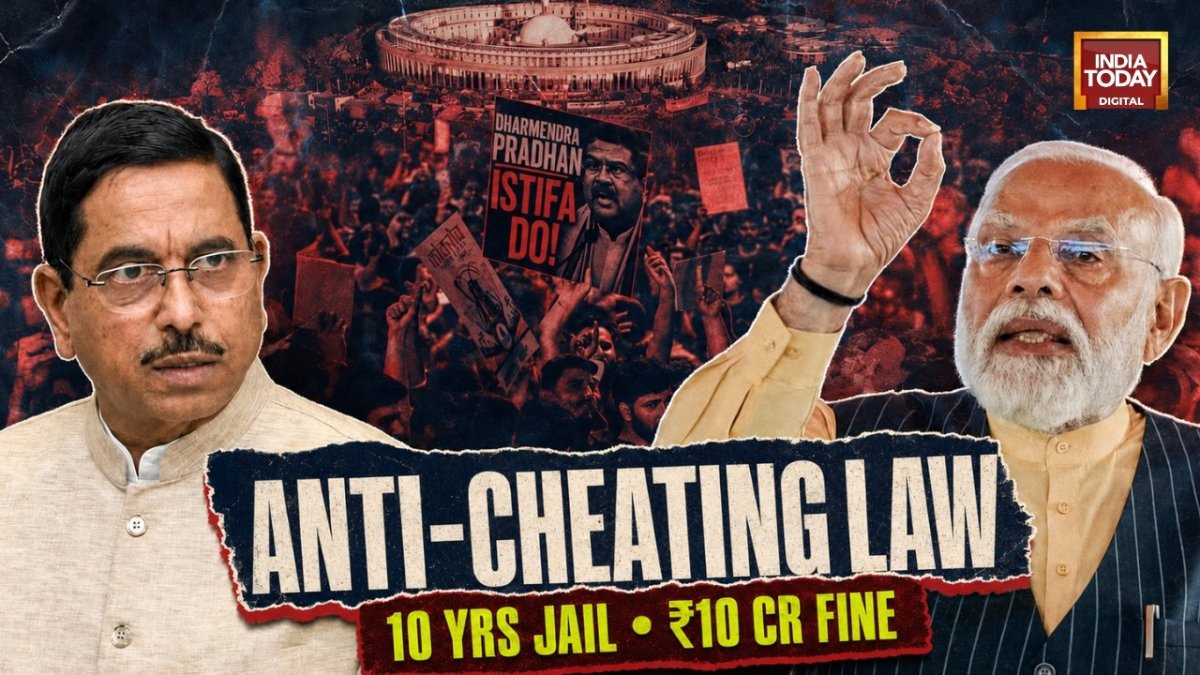
(Prevention of Unfair Means) Amendment Bill 2026 was tabled in the Lok Sabha on 27 July 2026 amid widespread outrage over the NEET-UG 2026 paper leak that affected more than 24 lakh candidates and exposed deep vulnerabilities in the National Testing Agency’s systems. This legislation introduces 10-year jail terms and ₹10 crore fines while establishing Special Task Forces and fast-track courts to dismantle organised leak networks.
NEET-UG 2026 Leaks Drive Public Examinations Bill 2026
New Delhi, Delhi — The Bill amends the 2024 Act and introduces stringent penalties including up to 10 years imprisonment and fines reaching ₹10 crore for organised paper leaks and digital fraud. The legislation targets organised syndicates using encrypted messaging platforms for real-time paper distribution.
Bill Tabled Amid National Outrage Over NEET-UG 2026 Leaks
The Public Examinations (Prevention of Unfair Means) Amendment Bill, 2026 was tabled in the Lok Sabha on 27 July 2026 by Union Minister Dr. Jitendra Singh. The legislation amends the 2024 Act and introduces stringent penalties including up to 10 years imprisonment and fines reaching ₹10 crore for organised paper leaks and digital fraud. These measures directly address the NEET-UG 2026 scandal that triggered 36 days of protests at Jantar Mantar led by the Cockroach Janta Party. The NEET-UG examination, conducted by the National Testing Agency, determines admission to over 1.08 lakh MBBS seats across 700 medical colleges annually. In 2026, more than 24 lakh candidates appeared for the test, yet the paper leak exposed systemic vulnerabilities that undermined merit-based selection. The scandal surfaced in early June when discrepancies in answer keys were flagged by candidates from Bihar and Rajasthan, prompting the NTA to cancel the exam on June 12. Detection occurred through forensic analysis of social media circulation on Telegram channels, revealing that the question paper had been accessed 48 hours prior.
This incident mirrors earlier breaches, including the 2024 NEET-UG leak affecting 4.5 lakh students and the UGC-NET paper compromise that led to a CBI probe. The CSIR-NET leak in 2024 similarly involved organised networks using encrypted apps. In response, the Citizens for Justice and Peace (CJP) organised a 36-day protest starting June 15, led by Abhijeet Dipke, culminating in a Jantar Mantar sit-in of 8,000 participants from July 1 to August 5. Government forces dispersed the gathering on day 28, but the sustained pressure from CJP leadership forced the bill's tabling in Parliament.
Core Provisions Targeting Organised Malpractices
The amended law mandates fast-track courts and time-bound investigations. A Special Task Force will dismantle leak networks operating through digital platforms. Examination agencies and officials face stricter accountability, with provisions for electronic evidence collection. These clauses extend coverage to offences committed via online systems, closing gaps exposed during the 2026 NEET-UG cycle managed by the National Testing Agency. The 2026 Amendment strengthens the original 2024 Act by introducing mandatory Special Task Forces (STFs) comprising CBI, state police, and NTA officials with powers to seize digital devices within 24 hours of suspicion. Unlike the 2024 provisions that focused on individual penalties, the new clauses target organised syndicates using Telegram and WhatsApp for real-time paper distribution via end-to-end encrypted channels. Digital forensics now mandate blockchain-verified question paper transmission and AI-based anomaly detection in candidate response patterns.
Fast-track courts under the amendment must complete trials within 90 days, supported by electronic evidence rules allowing hashed server logs as admissible proof. NTA officials face personal liability, including dismissal and asset attachment, for lapses in agency oversight. The ₹10 crore fine aligns with Singapore's examination integrity penalties but exceeds India's prior maximum of ₹1 crore, aiming to deter commercial coaching mafias. These measures address the shift from physical leaks to cyber-enabled fraud documented in 14 states since 2022.
Political Fallout and Leadership Transition
Former Union Education Minister Dharmendra Pradhan resigned on 26 July 2026 following sustained student demonstrations. Pralhad Joshi was appointed as the new minister the same day. Congress leaders remarked that “One Pradhan left, another arrived,” highlighting continuity concerns within the education portfolio. The episode underscores how examination integrity has become a central political issue affecting millions of aspirants across states such as Uttar Pradesh, Bihar and Maharashtra. Dharmendra Pradhan's tenure as Education Minister from 2021 saw the rollout of the National Education Policy 2020 but was marred by repeated NTA controversies, including the 2024 leaks that prompted his replacement. Pralhad Joshi, previously holding the Parliamentary Affairs portfolio, brings administrative experience from Karnataka governance to stabilise the ministry. The Congress-led INDIA bloc delayed the bill's passage by demanding a joint parliamentary committee, highlighting state-level disparities in exam administration.
Prime Minister Modi's late-night Instagram address on July 22 directly engaged Gen Z protesters, promising transparency reforms. This move carries implications for the 2029 elections, where youth voter turnout in urban constituencies could shift if exam integrity remains unresolved. Uttar Pradesh, with 3.2 lakh NEET applicants, faces the steepest impact, followed by Bihar and Maharashtra where coaching hubs amplify financial losses. Rajasthan's rural candidates, often first-generation learners, report heightened distrust in centralised testing.
High-Powered Task Force Led by Nandan Nilekani
Prime Minister Narendra Modi constituted a high-powered task force on examination reforms chaired by Nandan Nilekani, co-founder of Infosys and former UIDAI chairman. Members include former ISRO Chairman Dr. S. Somanath, former IB Director Tapan Deka, IIT Madras Director Prof. V. Kamakoti, former School Education Secretary Anita Karwal and former Commerce Secretary Amrit Lal Meena. The panel will recommend structural changes to the NTA and allied agencies to prevent future leaks. Nandan Nilekani's leadership leverages his UIDAI experience in scaling Aadhaar's biometric database to propose a unified candidate verification platform for NTA exams. Dr. S. Somanath, drawing from ISRO's mission-critical protocols, advocates redundant encryption layers similar to those securing Chandrayaan data transmissions. Tapan Deka's Intelligence Bureau background introduces proactive threat mapping to intercept leak networks before examination dates.
Prof. V. Kamakoti contributes IIT Madras's ongoing work on secure digital examination platforms tested in 2023 pilots. The task force, constituted on August 10, must submit recommendations by December 2026, building on NEP 2020 implementation committees that previously recommended decentralised testing. Its mandate includes integrating India Stack APIs for real-time authentication, targeting a 95% reduction in leak incidents within three years.
Impact on Indian Students and Families
Over 24 lakh candidates appeared for NEET-UG 2026. The scandal delayed counselling and eroded trust in the National Testing Agency. Families in districts such as Kota, Rajasthan and Patna, Bihar incurred additional coaching and travel costs during the 36-day protest period. Fast-track courts and the Special Task Force are expected to deliver quicker justice, yet students demand permanent safeguards including biometric verification at all NTA centres and real-time digital monitoring. Kota's coaching ecosystem, enrolling 2.5 lakh students yearly, has recorded 28 suicides in 2025 alone amid repeated exam uncertainties. Families incur average costs of ₹4.5 lakh per attempt, covering travel, accommodation, and coaching fees, with rural households in Bihar spending 40% of annual income on preparation. The urban-rural divide persists, as only 18% of first-generation learners from reserved categories access quality mock tests compared to 67% of urban peers.
The psychological burden on 2.4 million annual NEET aspirants manifests in elevated anxiety disorders reported by AIIMS Delhi's mental health unit. JNU and Delhi University student unions joined CJP demands for hybrid exam formats, while Jamia Millia Islamia protests highlighted counselling delays affecting 1.2 lakh qualified candidates. Those who cleared the leaked paper face uncertain counselling status, with the Medical Counselling Committee postponing allotments until forensic clearance.
Broader Implications for India’s Education and Healthcare Pipeline
NEET-UG feeds admissions into 700-plus medical colleges and directly influences the supply of doctors to the public health system. Repeated leaks threaten the quality of future physicians serving in Primary Health Centres across rural districts. The ₹10 crore penalty and 10-year jail term signal a shift toward treating organised exam fraud as a national security concern rather than a mere administrative lapse. This aligns with the government’s push for digital governance under the India Stack framework championed by Nilekani. India operates 700 medical colleges offering 1.08 lakh MBBS seats, yet 75% of graduates prefer urban practice, exacerbating rural doctor shortages. The doctor-patient ratio stands at 1:834 against the WHO benchmark of 1:1000, directly tied to NEET integrity under Ayushman Bharat's primary health goals. Medical education generates over ₹60,000 crore annually, supporting India's medical tourism sector valued at $9 billion.
NTA conducts 200 examinations yearly for over 5 crore candidates, making systemic reforms critical for workforce exports to Gulf nations and Europe. Compromised NEET processes risk delaying 15,000 rural health postings projected under the National Health Mission by 2028.
Policy Analysis and Long-Term Reform Pathway
The 2026 Amendment Bill, combined with the Nilekani-led task force, represents the most comprehensive examination reform effort since the establishment of the NTA in 2017. By embedding provisions for digital evidence and Special Task Force operations, the legislation moves beyond punitive measures toward systemic prevention. Indian taxpayers, who fund the NTA through the Ministry of Education, will expect measurable reductions in leak incidents within two academic cycles. Success will hinge on coordination between the new Education Minister, the task force and state police forces in leak-prone regions. China's Gaokao employs facial recognition at 90% of centres, while the US SAT uses digital watermarking; India must adapt similar technologies through NTA governance overhaul. The agency's current structure lacks independent oversight, necessitating a statutory board with judicial members. Implementing STFs and fast-track courts requires ₹850 crore in initial funding, shared between Centre and states.
State police coordination with central agencies will follow a unified protocol tested in the 2024 CBI cases. Reforms are expected to take effect from the 2027 cycle, with success measured by zero verified leaks and 99% candidate satisfaction in NTA surveys. Nilekani's India Stack model offers a scalable digital public infrastructure pathway, potentially reducing organised malpractice by 80% through biometric and blockchain integration.
The coming months will test whether these legal and institutional changes restore credibility to public examinations that determine access to medicine, engineering and civil services. For students preparing for 2027 cycles, the message is clear: the era of unchecked paper leaks is ending, but sustained vigilance remains essential.
— By Dr. Raj Patel, Staff WriterThis article was produced with AI-assisted research and editorial support. Reporting is based on sources cited in the article.
What's Your Reaction?
 Like
0
Like
0
 Dislike
0
Dislike
0
 Love
0
Love
0
 Funny
0
Funny
0
 Wow
0
Wow
0
 Sad
0
Sad
0
 Angry
0
Angry
0

India/South Asia Correspondent at Global1.News. Analytical voice with a background in science and health journalism. Based in New Delhi, covering Indian politics, education, healthcare, technology, and policy. Breaks down complex data into clear, actionable reporting.














Comments (0)