
Trump's Ratepayer Protection Pledge Is a Nice Idea — It Just Doesn't Mean Anything
Trump expanded his Ratepayer Protection Pledge to 23 governors and 187 utilities, but the voluntary commitment has no enforcement mechanism. Oregon's POWER Act proves real regulation works.
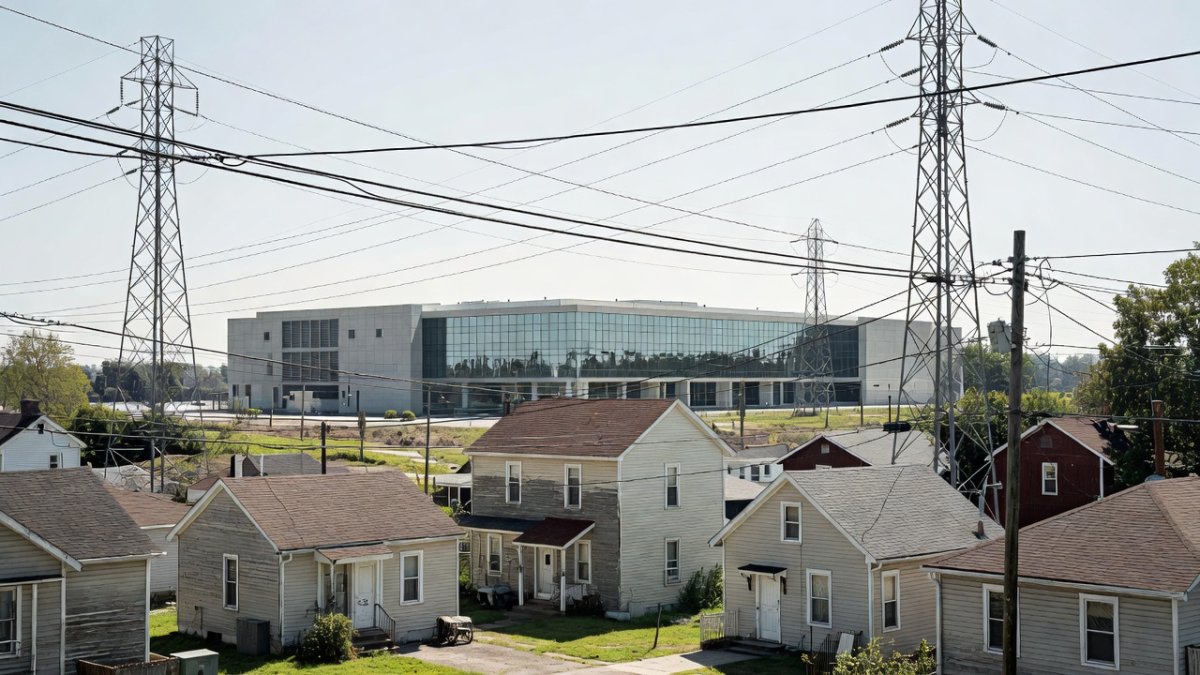
Trump's Ratepayer Protection Pledge Is a Nice Idea — It Just Doesn't Mean Anything
Let me tell you something that's been bouncing around my head since I read about the Ratepayer Protection Pledge expansion this week.
Twenty-three state governors. One hundred and eighty-seven utility companies and data center developers. They've all signed President Trump's "Ratepayer Protection Pledge" — a voluntary commitment to prevent AI data center power demand from driving up household electricity bills. The White House says this will make electricity more affordable for American families.
I'm here to tell you something that every independent hosting provider already knows in their gut: a voluntary pledge with no enforcement mechanism is worth approximately the paper it's printed on. And the proof is everywhere.
The Pledge That Launched a Thousand Eyebrow Raises
Let's rewind to March 4, 2026. Seven of the biggest names in tech — Amazon, Google, Meta, Microsoft, OpenAI, Oracle, and xAI — stood at the White House and signed the original Ratepayer Protection Pledge. They committed to building, bringing, or buying new power generation for their data centers, and to covering all power-delivery infrastructure upgrades. Energy Secretary Chris Wright called it a plan that "will deliver more affordable, reliable, and secure energy for the American people." Trump went further, saying electricity bills would "actually come down."
Fast forward to July 23, 2026. The pledge got expanded — 23 governors, 187 utilities and developers including NextEra Energy, Duke Energy, American Electric Power, Southern Co., Pacific Gas & Electric, Equinix, Digital Realty, and Prologis. Big names. Lots of signatures. Lots of press releases.
And in between those two dates, what actually happened to electricity rates?
The Reality Behind the Press Releases
PJM Interconnection — the nation's largest power grid operator, serving 65 million people across 13 states — slapped Maryland with a $2 billion bill for upgrading its grid to accommodate out-of-state AI data centers. Not "asked." Not "proposed." Slapped. A $2 billion tab that ratepayers will ultimately cover.
Monitoring Analytics, the independent watchdog that monitors PJM, released data showing that the 75.5% increase in power costs across PJM's territory has been directly caused by data center demand. Three-quarters of a percent increase? No. Three-quarters — 75.5%. That's not a rounding error. That's a structural shift in the cost of electricity for millions of American households and small businesses.
Why? Because the pledge doesn't actually change how grid interconnection works. It doesn't override state utility commission rate-setting authority. It doesn't create a legal mechanism to bill hyperscalers for the grid upgrades their data centers require. It's a handshake. A very public, very well-photographed handshake. But still a handshake.
Oregon's POWER Act — The Only Real Solution So Far
Here's where it gets interesting. Oregon passed the POWER Act in April 2025 — almost a full year before Trump announced the pledge at the State of the Union. The law requires any development using more than 20 megawatts of power to pay rates that "reflect the true costs of their electric service." No exemptions. No carveouts. No voluntary pledges.
The result? Portland General Electric increased data center power bills by 30% — while simultaneously cutting residential costs by 1.3%. Let me repeat that: data center rates went up 30%, residential rates went down. That's what actual enforcement looks like.
Oregon's approach is instructive because it proves that the regulatory tool exists. It just requires political will to use it. Oregon is one state. There are 49 others watching this experiment carefully.
The State-Level Backlash Train Has Left the Station
While the White House was collecting signatures, state legislatures were moving. Over 300 bills across 30 states were introduced in February and March 2026 alone — shifting from incentive-focused data center policies to regulatory oversight and ratepayer protection.
California's Senator Steve Padilla introduced SB 886, the Data Center Ratepayer Protections Act, which would impose special tariffs on large data center loads. Florida's legislature passed a strict regulatory framework signed by Governor Ron DeSantis. New York Governor Kathy Hochul signed a one-year moratorium on building large data centers. Seattle — home to both Amazon and Microsoft — applied its own temporary ban.
And this week in Washington DC, Congress is moving on parallel tracks. The Ratepayer Protection Act (HR 9340), the Protecting Families from AI Data Center Energy Costs Act (HR 6529), and companion bills are working through committee. More than 200 consumer and environmental groups have signed a letter opposing any data center package that doesn't include enforceable ratepayer protections.
The pattern is unmistakable: states don't trust the pledge. Congress doesn't trust the pledge. Consumer groups don't trust the pledge. The only people who seem to trust the pledge are the ones who signed it — and even then, the tech companies are reportedly resisting efforts to turn the promise into actual law in California.
Why This Matters for Independent Hosting Providers
I've been running hosting infrastructure for over a decade. I've seen regulatory cycles come and go. Here's what I know about this one:
First — if the pledge stays voluntary, commercial and industrial electricity rates in data center-heavy regions are going to keep climbing. PJM's 75.5% increase is not a peak — it's a baseline for what happens when demand outstrips grid capacity without cost allocation. If you're running a colocation or hosting operation in PJM territory, model your 2027 power costs at 20-30% above current levels. Don't budget for 5-10%. The data center cost allocation hasn't happened yet, which means residential ratepayers are subsidizing your competitors' power bills today, and that subsidy is ending.
Second — if mandatory ratepayer protection laws pass in key states (California, New York, Illinois, Florida), hyperscaler buildout costs will rise significantly. Every dollar they spend on grid interconnection and tariff-differentiated power rates is a dollar they don't spend on hardware, incentives, or pricing wars against independents. The Oregon model — 30% data center rate increase with residential decrease — is the template. If it spreads, hyperscaler economics in that state fundamentally change.
Third — watch the state legislative calendars, not the White House press releases. The pledge is theater. The real action is in state capitols and utility commission dockets. Oregon's POWER Act is the template. If 10 more states pass similar laws in 2026-2027, the cost advantage of building data centers in those states — including any remaining tax incentives — gets partially offset by higher operating power costs. That changes the site-selection calculus for every hyperscaler and every independent provider looking to expand.
Fourth — this creates an opportunity for providers in states that haven't jumped on the ratepayer protection bandwagon yet. If you're operating outside the most regulated markets, you have a window — probably 18-24 months — before the wave catches up. Use it wisely. Lock in power contracts. Expand capacity. Build relationships with local utilities that aren't fighting data center development.
The Structural Reality — Trust Is Not a Regulatory Strategy
The fundamental problem with the Ratepayer Protection Pledge is that it tries to solve a structural regulatory problem with a voluntary industry commitment. That worked in the early days of cloud computing when data centers were small and power demand was manageable. It doesn't work when a single AI data center campus draws 400 megawatts, when PJM power costs are up 75.5%, when 75+ projects worth $130 billion are being blocked by communities that don't trust the industry to self-regulate.
The pledge isn't bad. Getting 23 governors and 187 utilities to sign something acknowledging the problem is better than nothing. But a signature is not a regulation. A press conference is not a rate structure. A handshake is not a legally enforceable tariff.
Oregon understood this. The POWER Act passed before the pledge existed — because Oregon knew that trust without enforcement is just deferred liability. Every state that's now considering similar legislation understands the same thing.
The Bottom Line
The Ratepayer Protection Pledge expansion is a signal that the White House recognizes the political problem of AI data center power costs. That's real. But recognizing a problem and solving it are two very different things.
The pledge is a photo op with 23 governors. The 300 state bills, the 200+ consumer group letters, the Oregon POWER Act — those are the actual regulatory response. If you're an independent hosting provider planning your 2027-2028 strategy, pay attention to the laws, not the pledges.
Because promises don't power data centers. Regulations do. And the regulations are coming.
— Allan Ali, Founder
This article was produced with AI-assisted research and editorial support. Reporting is based on sources cited in the article.
What's Your Reaction?
 Like
0
Like
0
 Dislike
0
Dislike
0
 Love
0
Love
0
 Funny
0
Funny
0
 Wow
0
Wow
0
 Sad
0
Sad
0
 Angry
0
Angry
0

Publisher of Global1.News. Automation architect, systems builder, and the guy making sure the truth gets published.















Comments (0)