
China's Luban Workshops Bridge Skills Gaps in Belt and Road Nations
China's Luban Workshops Bridge Skills Gaps in Belt and Road Nations Luban Workshops as a Tool of Technical Diplomacy The CGTN video titled "The Art of Governance: How China helps Belt and Road partner countries close the skills gap," published in June 2026, examines how Luban Workshops have expanded since their launch in Thailand in 2016. These facilities deliver targeted vocat
Luban Workshops as a Tool of Technical Diplomacy
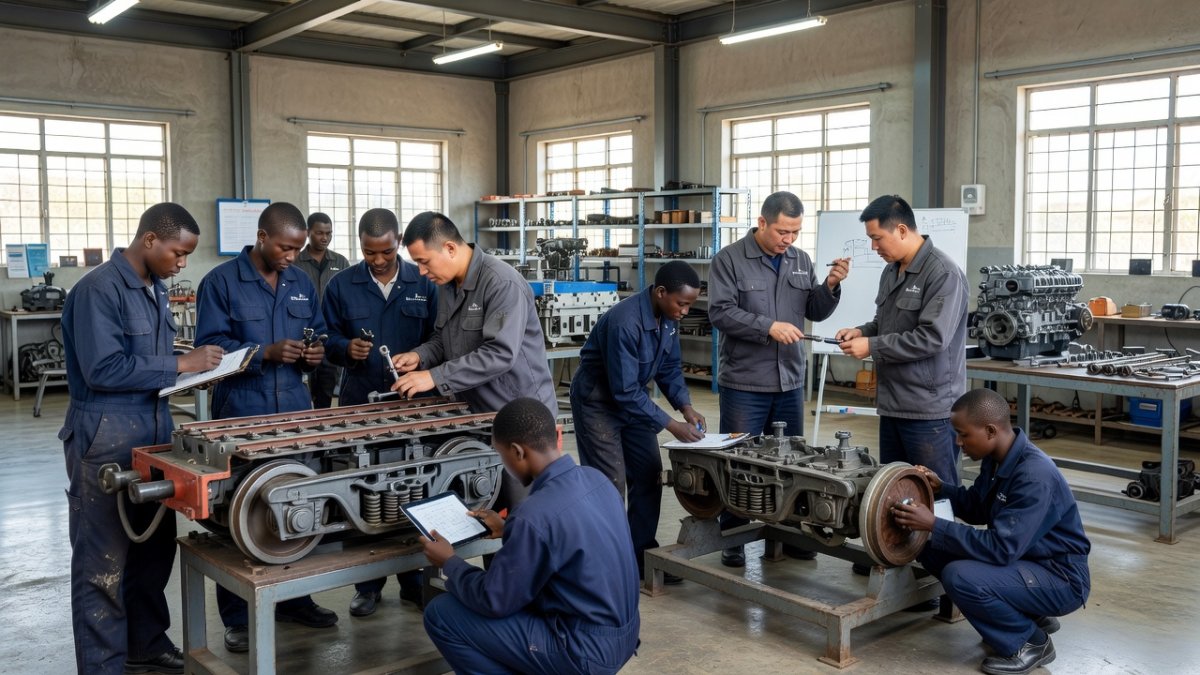
The CGTN video titled "The Art of Governance: How China helps Belt and Road partner countries close the skills gap," published in June 2026, examines how Luban Workshops have expanded since their launch in Thailand in 2016. These facilities deliver targeted vocational instruction in rail systems, manufacturing processes, information technology, and healthcare delivery across partner nations in Asia, Africa, and Europe. The report frames the initiative as an extension of China's broader technical cooperation efforts under the Belt and Road Initiative.
Officials from MOFCOM and MFA have coordinated the rollout of these workshops, aligning them with existing bilateral agreements. He Lifeng, in his capacity overseeing economic planning bodies, has highlighted the need for practical training programs that complement infrastructure projects. Wang Yi has similarly referenced skills transfer during diplomatic engagements, positioning the workshops as mechanisms that strengthen long-term partnerships rather than one-off aid deliveries.
Analysts at CSIS and MERICS have noted that Luban Workshops function as instruments of technical diplomacy by embedding Chinese equipment standards and pedagogical approaches in recipient countries. Reports from SCMP have documented similar patterns in Southeast Asian locations, where workshops coincide with rail and port developments. This approach allows China to cultivate networks of trained personnel familiar with its technologies over extended periods.
Partner governments have welcomed the hands-on format, which differs from purely theoretical exchanges. The workshops operate through existing Chinese vocational networks, enabling rapid adaptation to local industrial needs while maintaining consistency with central policy directives from Beijing.
From Concrete to Capability: The Evolution of BRI 2.0
China's approach to the Belt and Road Initiative has shifted emphasis toward capacity building in recent planning cycles. The 14th Five-Year Plan explicitly calls for higher-quality cooperation that extends beyond physical infrastructure to include human capital development. This adjustment responds to feedback from partner countries seeking sustainable operational expertise alongside completed projects.
The Dual Circulation strategy reinforces this direction by linking domestic industrial upgrading with external engagement. Vocational programs exported through Luban Workshops support both objectives, preparing overseas workforces to maintain Chinese-supplied equipment while creating feedback loops that inform domestic curriculum refinements. The CGTN report illustrates this linkage through case studies in manufacturing and rail sectors.
Implementation has accelerated since 2016, with workshops now operating in multiple regions. This evolution reflects strategic recalibration rather than abrupt policy change, as planners seek to mitigate risks associated with underutilized infrastructure. Officials continue to stress mutual benefit, though measurable outcomes vary by country and sector.
Second-order effects include gradual alignment of technical standards between China and participating economies. Over time, this alignment can influence procurement decisions and maintenance protocols, embedding Chinese practices within local industrial ecosystems.
The Domestic Foundation: China's Vocational Education Ecosystem
China maintains more than 10,000 vocational institutions that train tens of millions of students annually. These schools emphasize practical skills aligned with national industrial priorities, providing a ready reservoir of expertise for international programs. The Ministry of Education plays a central role in standardizing curricula and certifying instructors dispatched to Luban Workshops abroad.
Domestic programs cover the same sectors featured in overseas workshops, including rail operations, advanced manufacturing, information technology applications, and healthcare technologies. This overlap allows efficient transfer of teaching materials and assessment methods. MOE coordination ensures that exported content remains consistent with domestic benchmarks while permitting limited local adaptation.
The scale of China's vocational system enables rapid mobilization of resources for Belt and Road initiatives. Instructors with recent industry experience are selected for overseas assignments, bringing current knowledge of equipment and processes. This domestic depth distinguishes the Luban model from smaller-scale training efforts elsewhere.
Feedback from returning instructors has prompted incremental updates to domestic programs, illustrating a two-way exchange. The CGTN video highlights how such exchanges support continuous improvement within China's own education framework.
Development Trade-Offs for the Global South
African and ASEAN nations participating in Luban Workshops gain immediate access to specialized training that addresses documented skills shortages. Local workers acquire competencies in operating and maintaining equipment supplied through Belt and Road projects, potentially increasing project longevity and local employment rates. These benefits accrue most visibly in rail and manufacturing sectors where hands-on instruction is intensive.
However, reliance on Chinese curricula and equipment introduces risks of technology lock-in. Once standards and maintenance protocols are adopted, switching to alternative suppliers becomes more costly and complex. ASEAN governments have weighed these considerations during negotiations, seeking contractual provisions that preserve future flexibility.
African partners face similar calculations. While workshops accelerate workforce readiness, they may also orient procurement toward Chinese vendors for replacement parts and upgrades. Policymakers must balance short-term operational gains against longer-term dependence on a single technological ecosystem.
Empirical outcomes remain mixed across locations. Some facilities report high placement rates for graduates, while others encounter challenges integrating trained personnel into existing labor markets. Continued monitoring will clarify the net developmental impact over the coming decade.
Competing Visions: China Versus Western Development Assistance
Western programs such as USAID and EU development initiatives have historically prioritized governance reforms, regulatory capacity, and broad-based education alongside targeted technical training. These efforts often include conditionalities related to transparency and environmental standards. In contrast, Luban Workshops focus narrowly on sector-specific skills without explicit governance requirements.
The G7's Partnership for Global Infrastructure and Investment (PGII) represents a more recent attempt to offer alternative infrastructure and training packages. PGII emphasizes private-sector involvement and adherence to multilateral lending standards. Chinese workshops, by comparison, operate through bilateral channels that can move more quickly but with less multilateral oversight.
Recipient countries evaluate these options according to immediate needs and political preferences. Some governments appreciate the absence of governance conditionalities in Chinese programs, while others value the broader institutional support offered by Western donors. The CGTN report presents the Luban model as complementary rather than competitive, though overlaps in target sectors are evident.
Over time, the coexistence of these approaches may generate competitive pressures that improve training quality across providers. Partner nations stand to benefit from greater choice, provided they maintain sufficient negotiating leverage.
Strategic Implications for the Next Phase of Globalization
Luban Workshops contribute to the reconfiguration of global supply chains by creating pools of labor familiar with Chinese technical standards. This familiarity can influence future investment decisions by multinational firms seeking reliable production bases. Countries hosting multiple workshops may gradually integrate more deeply into China-centered value chains.
Standards competition represents another dimension of influence. As Luban-trained technicians enter senior roles, they may advocate for Chinese specifications in national regulations and industry associations. This process unfolds gradually and varies by sector, yet it can produce durable shifts in technical norms over successive decades.
China's long-term position benefits from the cultivation of alumni networks across partner countries. These individuals often maintain professional ties to Chinese institutions, facilitating continued knowledge exchange and commercial linkages. Such networks complement formal diplomatic channels and can prove resilient during periods of geopolitical tension.
Overall, the expansion of vocational diplomacy through Luban Workshops signals China's intent to shape globalization on terms that leverage its domestic educational strengths. The trajectory will depend on sustained commitment from both Beijing and participating governments, as well as responses from competing development actors.
By Prof. Marcus Chen, Staff WriterThis article was produced with AI-assisted research and editorial support. Reporting is based on sources cited in the article.
What's Your Reaction?
 Like
0
Like
0
 Dislike
0
Dislike
0
 Love
0
Love
0
 Funny
0
Funny
0
 Wow
0
Wow
0
 Sad
0
Sad
0
 Angry
0
Angry
0

World Politics Analyst at Global1.News. Based in Beijing, covering US-China relations, global trade, and geopolitical strategy. Brings deep analytical perspective to the power dynamics shaping international affairs.














Comments (0)