
Xi Jinping's Pyongyang Visit Signals Beijing's Influence Bid
Xi Jinping's Pyongyang Visit Signals Beijing's Bid to Reclaim Influence Over a Restive Ally Historical Foundations and Enduring Strategic Imperatives The relationship between China and North Korea traces its roots to the Korean War, often described by both sides as one forged in blood. This shared history underscores Beijing's longstanding view of Pyongyang as a critical buffer
Historical Foundations and Enduring Strategic Imperatives
The relationship between China and North Korea traces its roots to the Korean War, often described by both sides as one forged in blood. This shared history underscores Beijing's longstanding view of Pyongyang as a critical buffer state on its northeastern border. For Chinese policymakers, stability along this frontier remains a core national security priority, preventing any spillover that could affect domestic stability in the northeast provinces.
Yet the alliance has never been one of equals. Successive Chinese leaders have sought to maintain influence without direct entanglement in Pyongyang's provocative actions. This cautious approach aligns with China's broader doctrine of managing peripheral relations to support internal development goals, including those outlined in the 14th Five-Year Plan.
Signs of Cooling Ties and the Absence of Routine Diplomacy
Recent years have revealed subtle but telling strains. The 75th anniversary of diplomatic relations in October 2024 passed with muted public messaging, and China's ambassador notably skipped North Korea's founding celebrations the prior month. Senior-level exchanges were absent throughout much of the period, contrasting sharply with Pyongyang's warming overtures elsewhere.
Passenger train services between Beijing and Pyongyang resumed earlier this year after a six-year pause, marking one modest step toward reconnection. Chinese exports to North Korea reached approximately $2.3 billion last year, the highest level in six years, reflecting Beijing's calibrated use of economic levers to sustain minimal engagement without endorsing escalation.
The Russia-North Korea Convergence and Beijing's Quiet Alarm
Western diplomatic sources indicate growing Chinese concern over the expanding partnership between Pyongyang and Moscow. Following Russia's 2024 visit to North Korea and the signing of a mutual defence pact, military cooperation has intensified, including reports of North Korean troops supporting operations in Ukraine. This development has introduced new variables into Beijing's calculations.
China maintains its sole formal defence treaty with North Korea, making any dilution of influence by a third party strategically unwelcome. A more autonomous Kim Jong Un, less reliant on Beijing, could reduce China's ability to shape outcomes on the peninsula. Analysts note that while the Russia tie-up may indirectly divert Western attention, it also risks provoking a tighter trilateral security response involving the United States, Japan, and South Korea.
Xi Jinping's Calculated Approach to the Upcoming Visit
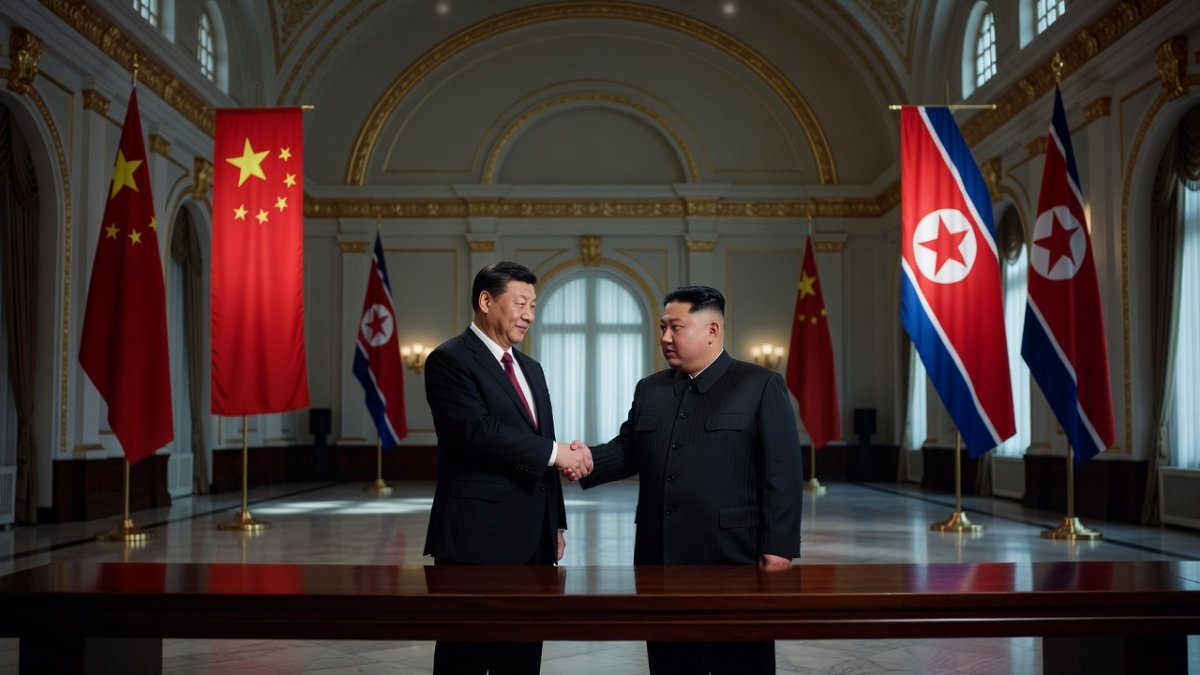
Xi Jinping's planned trip to North Korea this week is framed less as a gesture of camaraderie and more as an exercise in restoring leverage. The Chinese leader is expected to emphasise themes of shared destiny and strategic coordination, building on the first formal summit in six years held during a Beijing military parade where Kim was positioned prominently alongside other guests.
Public statements from that earlier encounter avoided any direct reference to North Korea's nuclear programme, illustrating Beijing's preference for managing rather than confronting the issue. By inviting renewed dialogue, China aims to position itself as an indispensable interlocutor without assuming responsibility for Pyongyang's weapons development or risking entanglement in potential crises.
Kim Jong Un's Pragmatic Balancing Act
From Pyongyang's perspective, the relationship with Beijing offers essential economic lifelines that Moscow cannot reliably match over the long term. Kim Jong Un's early acceleration of the nuclear programme diverged from his father's more China-dependent approach, yet practical realities dictate continued engagement with the larger neighbour.
Should the conflict in Ukraine wind down, North Korea's utility to Russia could diminish, leaving Pyongyang more exposed. Maintaining channels with Beijing therefore serves as insurance against over-reliance on a partner facing its own international constraints.
Regional Ripple Effects and Multilateral Implications
The evolving dynamics carry consequences beyond the bilateral relationship. Heightened US-Japan-South Korea coordination in response to Russia-North Korea ties could reshape security architectures in Northeast Asia, affecting ASEAN states and the broader Indo-Pacific balance. Beijing's reluctance to endorse new UN sanctions, as seen in the 2022 veto alongside Russia, reflects a determination to avoid actions that might further isolate Pyongyang.
Ultimately, China's approach prioritises border stability and influence retention while navigating the risks of a more independent North Korean posture. This visit underscores Beijing's preference for quiet diplomacy over public confrontation, consistent with its wider foreign policy emphasis on managed competition and institutional engagement.
By Prof. Marcus Chen, Staff WriterThis article was produced with AI-assisted research and editorial support. Reporting is based on sources cited in the article.
What's Your Reaction?
 Like
0
Like
0
 Dislike
0
Dislike
0
 Love
0
Love
0
 Funny
0
Funny
0
 Wow
0
Wow
0
 Sad
0
Sad
0
 Angry
0
Angry
0

World Politics Analyst at Global1.News. Based in Beijing, covering US-China relations, global trade, and geopolitical strategy. Brings deep analytical perspective to the power dynamics shaping international affairs.















Comments (0)